Alexander Theroux - Darconville’s Cat
Здесь есть возможность читать онлайн «Alexander Theroux - Darconville’s Cat» весь текст электронной книги совершенно бесплатно (целиком полную версию без сокращений). В некоторых случаях можно слушать аудио, скачать через торрент в формате fb2 и присутствует краткое содержание. Год выпуска: 1996, Издательство: Holt Paperbacks, Жанр: Современная проза, на английском языке. Описание произведения, (предисловие) а так же отзывы посетителей доступны на портале библиотеки ЛибКат.
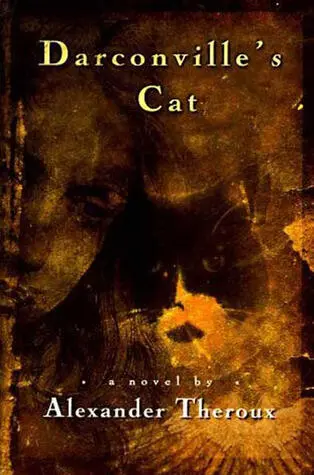
- Название:Darconville’s Cat
- Автор:
- Издательство:Holt Paperbacks
- Жанр:
- Год:1996
- ISBN:нет данных
- Рейтинг книги:3 / 5. Голосов: 2
-
Избранное:Добавить в избранное
- Отзывы:
-
Ваша оценка:
Darconville’s Cat: краткое содержание, описание и аннотация
Предлагаем к чтению аннотацию, описание, краткое содержание или предисловие (зависит от того, что написал сам автор книги «Darconville’s Cat»). Если вы не нашли необходимую информацию о книге — напишите в комментариях, мы постараемся отыскать её.
Darconville's Cat Its chapters embody a multiplicity of narrative forms, including a diary, a formal oration, an abecedarium, a sermon, a litany, a blank-verse play, poems, essays, parodies, and fables. It is an explosion of vocabulary, rich with comic invention and dark with infernal imagination.
Alexander Theroux restores words to life, invents others, liberates a language too long polluted by mutters and mumbles, anti-logic, and the inexact lunacies of the modern world where the possibility of communication itself is in question. An elegantly executed jailbreak from the ordinary,
is excessive; funny; uncompromising; a powerful epic, coming out of a tradition, yet contemporary, of both the sacred and the profane.
Darconville’s Cat — читать онлайн бесплатно полную книгу (весь текст) целиком
Ниже представлен текст книги, разбитый по страницам. Система сохранения места последней прочитанной страницы, позволяет с удобством читать онлайн бесплатно книгу «Darconville’s Cat», без необходимости каждый раз заново искать на чём Вы остановились. Поставьте закладку, и сможете в любой момент перейти на страницу, на которой закончили чтение.
Интервал:
Закладка:
“Yes.”
“Did you say Isabel Rawsthorne was whom was wanted?”
“Yes,” he said.
There was giggling on the other end, muffled by a hand. “Excuse me,” asked the voice, “but is this Govert?”
Govert? It was a shadow that seemed stronger than the substance that threw it.
“No. No, it isn’t.”
“Oh,” said Miss Blunder. “Well, I can’t seem to find her.”
Darconville stammered. He felt ridiculous. Govert: wasn’t he the no-see-um she once mentioned who lived near her somewhere in Fawx’s Mt? At Zutphen Farm or some such thing? O lax, thought Darconville, angel of thwarting demons, are you there? Quickly, he asked the girl to check again.
“She’s definitely not in. Can y’all try again later?”
“But are you certain?”
The girl hung up.
Darconville lowered the receiver, thought a moment, then called her name down the corridor. The name echoed back. It was imperative he find her, but where now should he look? He felt an appalling lack of energy as he dragged on his black coat, shut the office door, and, turning to avoid the nearest poster—”Mr. Comma empties his Colon” or whatever — went out.
Fog, with the smell of February. The dampness, settling in with dusk over the patches of snow, could be sharply felt by an easterly wind. The sky was a slate slab. Darconville walked slowly across the grounds, catching his muffler to his neck, and — but who was that?
“Hello.”
It almost seemed a question.
Isabel, huddled up, was sitting on the wooden bench under the magnolia tree in front of the English building, her brown eyes moist like beautiful Israfel’s and other angels who carry misfortune in their wings. Darconville kissed and hugged her, and she handed him a packet of photographs of herself — long requested, longer postponed— which, she said, smiling wistfully, was why she’d come. Then they simply sat together, preferring to keep silent, their two hands clasped like lost children in a world only suddenly found.
He couldn’t define it all at once, but the feeling of her there next to him, a grateful one, gave way to a strange, almost sensual spasm of sympathy for all she was. Isabel Rawsthorne’s loyalty — he should have known she’d be there waiting for him — kept faith with her humanity. It was precisely what he had ignored all his life, the humanizing redemption of someone else for whom he dearly cared. Her silence spoke volumes. He thought how little he’d written since meeting her. Very well, he thought, I haven’t written. But darkness had become light. Love, he saw, manifested itself not so much in the desire as in the need, and, who knew, perhaps less in the learning than in the loyalty. For the sudden recollection of his banter with the five girls, he felt chastised, for his lack of sympathy, ashamed.
To keep away from humankind, he suddenly saw, was to be its murderer. Dehumanized man was capable of enormities indescribable, and he bethought himself of what, in the absence of this child whose radiance outshone a Delia Robbia angel, he could become — what, some psychopath, caped in black, scuttling with a hook before his face like a soiled shadow through the fog of his imagination only to wound victims hatched from the disaffiliations of his cruel and selfish solitude? Horrifying! And although hatred was not so much beyond Darconville’s capabilities as beyond his comprehension, he trembled at the thought, as happens in nightmares, of what is left a heartless and inhuman force pursuing pure illusion.
O Isabel, O love, thought Darconville, turning to her, his heart swollen with what, because too overpowering, he couldn’t express. Instead, they both held hands, fearing to say what each thought the other knew but hoping that each would feel what both of them knew the other might be afraid to say.
XXV Miss Trappe’s Gift
And how reliable can any truth be that is got
By observing myself and then just inserting a Not?
— W. H. AUDEN, “The Way”THAT PARTICULAR DAY, Darconville found a surprise waiting for him upon returning from classes, for just as he opened the porch-door — with Spellvexit, as usual, in attendance on the upper landing and crying out — the cat skittered over something that came bouncing down the stairs. It was a cylinder, the contents of which he carefully fingertwisted out to find a rare Masanobu pillar-print of the eighteenth century, entitled Kuroi Koshaku Fujin —a black half-woman/half-bird, all beak and talons, plummeting downward. There was a note attached.
Dear Darconville,
I’d like to be a could-be
If I could not be an are,
For a could-be is a may-be
With a chance of reaching par;
I’d rather be a has-been
Than a might-have-been by far,
For a might-have-been has never been
But a has-been was an are.
THELMA TRAPPE
P.S. I wanted you to have this, being an artist (an “are”), not like me (a “might-have-been”). I have a cameo for Isabel. Maybe she can come visit me? But, oh, she must be busy.
Glad for the chance, Darconville underlined the postscript, put the note in an envelope, and posted it all to Isabel for her good attention. He stopped by Miss Trappe’s at the top of the hill to thank her and then hurried home to the mysterious packet.
XXVI The Nine Photographs
Yet to calculate is not in itself to analyze.
— EDGAR ALLAN POEISABEL was always mysterious. The prospect, then, that Darconville had of looking at the photographs she’d given him filled him with high expectation. The idea of formulating them, however, to the fancies he had of who she was only accentuated the premonition he had that he already knew, at least abstractly, for, although only a newly baptized considérant in her religion, he loved her. And yet it was with some misgivings that he prepared to pit the prosperous freedom of his partisan imagination against revelations already cross-examined by the facts and fingerprints of the past, a still world, while too small for her secret and his curiosity, belonging to quite another day.
Darconville locked the door. It had to be quiet. He had no idea what he was about to see but felt a sensuous pleasure as exciting as the intense rushing in his heart experienced whenever he met her. It may have seemed a packet of trifles, worth nothing, but it was a trifling part of the world where she lived, and that made the difference. He opened the envelope and out fell eight photographs — all different shapes and sizes — of Isabel at various ages. He bent forward under the light, extending his hands so that both stood against the coping of each picture, and studied them.
(1.) Isabel as a little tweeny : of the “adorable” genre, it shows her in a white hair-bow and frothy white pinafore, plump, clutching an ingot of chocolate and hopscotching over a manhole cover, twice the width of her size in height. Part sylphid, part crammed poultry, her legs even then are more Saxon than Norman.
(2.) Isabel as a premenstrual : her face, pigtails, and big milk-teeth show a comic sunniness and a kind of rubbernecking innocence, though there can be detected a sad fleer playing at the edge of her mouth. There is a noticeable birthmark beneath her eye (the answer to the question of her scar!). She doesn’t know she misses the father she knows is missing. The sleep in her eyes might seem to reflect, unfairly, on her I.Q. At this age, she’d have had a favorite ring with a pyrite stone, an imaginary friend named something like “Mr. Koodle,” and a tiny patent leather purse in which could be found five pennies, gum, and a skate-key.
(3.) Isabel as a high-school cheerleader : here she’s waving from an open car, after an Albemarle High School football game, and showing herself, if artificial, abloom. The chenille “A” on her sweater is just detectable under her heavy fur coat. In Adam’s fall we sinned all. The smile is forced, the drive for popularity uncharacteristic, the birthmark gone. (“I, without artifice, taught artifice.” St. Augustine)
Читать дальшеИнтервал:
Закладка:
Похожие книги на «Darconville’s Cat»
Представляем Вашему вниманию похожие книги на «Darconville’s Cat» списком для выбора. Мы отобрали схожую по названию и смыслу литературу в надежде предоставить читателям больше вариантов отыскать новые, интересные, ещё непрочитанные произведения.




Обсуждение, отзывы о книге «Darconville’s Cat» и просто собственные мнения читателей. Оставьте ваши комментарии, напишите, что Вы думаете о произведении, его смысле или главных героях. Укажите что конкретно понравилось, а что нет, и почему Вы так считаете.