Alexander Theroux - Darconville’s Cat
Здесь есть возможность читать онлайн «Alexander Theroux - Darconville’s Cat» весь текст электронной книги совершенно бесплатно (целиком полную версию без сокращений). В некоторых случаях можно слушать аудио, скачать через торрент в формате fb2 и присутствует краткое содержание. Год выпуска: 1996, Издательство: Holt Paperbacks, Жанр: Современная проза, на английском языке. Описание произведения, (предисловие) а так же отзывы посетителей доступны на портале библиотеки ЛибКат.
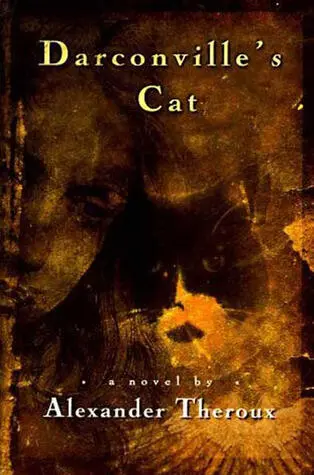
- Название:Darconville’s Cat
- Автор:
- Издательство:Holt Paperbacks
- Жанр:
- Год:1996
- ISBN:нет данных
- Рейтинг книги:3 / 5. Голосов: 2
-
Избранное:Добавить в избранное
- Отзывы:
-
Ваша оценка:
Darconville’s Cat: краткое содержание, описание и аннотация
Предлагаем к чтению аннотацию, описание, краткое содержание или предисловие (зависит от того, что написал сам автор книги «Darconville’s Cat»). Если вы не нашли необходимую информацию о книге — напишите в комментариях, мы постараемся отыскать её.
Darconville's Cat Its chapters embody a multiplicity of narrative forms, including a diary, a formal oration, an abecedarium, a sermon, a litany, a blank-verse play, poems, essays, parodies, and fables. It is an explosion of vocabulary, rich with comic invention and dark with infernal imagination.
Alexander Theroux restores words to life, invents others, liberates a language too long polluted by mutters and mumbles, anti-logic, and the inexact lunacies of the modern world where the possibility of communication itself is in question. An elegantly executed jailbreak from the ordinary,
is excessive; funny; uncompromising; a powerful epic, coming out of a tradition, yet contemporary, of both the sacred and the profane.
Darconville’s Cat — читать онлайн бесплатно полную книгу (весь текст) целиком
Ниже представлен текст книги, разбитый по страницам. Система сохранения места последней прочитанной страницы, позволяет с удобством читать онлайн бесплатно книгу «Darconville’s Cat», без необходимости каждый раз заново искать на чём Вы остановились. Поставьте закладку, и сможете в любой момент перейти на страницу, на которой закончили чтение.
Интервал:
Закладка:
“I’d use hot fudge.”
“I’d use syllabub,” said Robin Winglet, who majored in home economics.
“And what about that person-thing over in Fitts — what’s-her-face with the long hair?”
“The girl with the fat legs.”
Nobody knew her name. But the better to hear, they all moved closer, coming together not to praise but to bury. She couldn’t live in Fitts. That meant she was—
“ A freshman ?”
The cats perked their ears, ear-trumpeting in the direction of whatever noise anyone wanted to make. Beautiful Hypsipyle Poore, alone of all the others, didn’t say a word. She simply sat there, silent, touching up her lips with a bullet of cherry-frost lipstick. Hypsipyle, of course, made it an art. Before putting on the lipstick, for instance, she blotted her lips with a tissue, powdered lightly, then used a lip pencil along the natural contours of her lips, and finally with a lipstick of a similar color filled in the lip area — exactly! But she was listening all the while, listening harder than usual, for Darconville and Isabel Rawsthorne — especially to those who gave attention to such things— had not gone unnoticed. They had been seen together more than once, constituting a thousand times. Eyebrows, questions, had been raised. And the gossip raced, ab hoc et ab hac et ab illa . .
“Well, y’all can go run around the hoo-hum-hah,” moued lovely, spoiled, rich Pengwynne Custis, “because I’m invitin’ that boy to my recital next week and—”
“And, you watch, he won’t come ,” challenged Mona Lisa Drake, laughing and golfing Pengwynne on the knee. The girls all agreed and, with their pillows under their arms, turned to leave.
“Wait,” ordered Hypsipyle Poore, suddenly breaking her long silence and turning her flashing black eyes upon lovely, spoiled, rich Pengwynne Custis. “Shall I tell you why he won’t come?”
The silence was deafening. Everybody turned to her.
“Well,” questioned Pengwynne, closing her eyes haughtily, “why?”
Hypsipyle Poore put off her mask of burning gold.
“Because, honeychile,” said she, harder than usual, “you look like batshit !”
And, unsettled, Hypsipyle kicked everybody out of the room, crawled into bed, and snapped off the light — harder than usual.
XXIII A Promise Fulfilled
It can not be, nor ever yet hath beene
That fire should burne, with perfect heate and flame,
Without some matter for to yeeld the same.
— EDWARD DYERTHERE WAS TIME during the suitable interval of Finals Week for Darconville to write out the promised poem for Isabel. It went as follows:
Love, O what if in my dreaming wild
I could for you another world arrange
Not known before, by waking undefiled,
Daring out of common sleep adventure strange
And shape immortal joy of mortal pain?
Art resembles that, you know — the kind of dare
Nestorians of old acknowledged vain:
”No, what human is, godhead cannot share!”
But what if in this other world you grieve,
Undone by what in glory is too bright,
Remembering of humankind you leave
That which pleased you of earthly delight?
Out then on art! I’ll sleep but to wake—
Never to dream if never for your sake.
That night he ran over to the student union, slipped it into her mailbox — number 120—and walked home delighted with himself.
XXIV Giacomo-lo-Squarciatore
It is the nature of women to be fond of carrying weights.
— FRANCIS GALTONTHE TELEPHONE CALL seemed urgent: some student named Betsy, the unromantic praenomen matching her disposition, asking if Darconville minded very much giving her and her girlfriends some advice, so would he? It was a voice of shrill little bleats warring against, but intervenient with, the background noise of a dormitory corridor that sounded like Mafeking. Sitting in his office, Darconville could almost see her, squinched over, one ear plugged with a finger, nervously rubbing her left instep against the gastrocnemius of her right calf: she was in a dither. The girls at Quinsy College had hearts like chocolate bars, scored to break easily. Come ahead, said Darconville, come over.
So Darconville waited for them long after his classes had ended, his feet propped up on his desk. He was reading an old novel from his grandmother’s library— Giacomo-lo-Squarciatore (1888) — to pass the time.
“We’re ripping mad!” puffed Betsy Stride, breathless from the stairs, appearing in the doorway like a rising moon. She turned out to be one of his sophomores, a pompion-shaped grouchbag in a brown dress A-lined and middle-kneed who, in happier moods, was given to entertaining her girlfriends in the back row of Darconville’s class by ingeniously shooting elastic bands from the braces on her teeth. And then she motioned in four others — a group Darconville had seen together more than once slouching around campus like walking morts— who, obviously whelped together on a mission, one, Darconville saw, that would soon be his, stood before the desk. It looked as if they were going to group-step, kick, and burst into a Victorian music-hall number.
“Tell him, go ahead.”
Betsy judiciously castled two of her friends and moved a pawn forward with an impatient shove.
“It’s all right,” exclaimed Betsy, “tell him what happened. Well, aren’t you going to tell him? Mary Jane ?”
They made a perfect quincunx, all standing in place, with faces like apostle spoons, all deferring to each other as to who should present their petition, for it was clearly one of those irredentist ventures to restore a right or rectify a wrong, something invariably to do with library privileges, curfew extension, or some breach of the student moral code which at Quinsy was stricter than the Rites of Vesta. Darconville, now six months into the year, was becoming familiar with it all. The girls, most of them, actually worried about these rules, an anxiety, in fact, that over the year caused a good many of them to become overweight, and not a few who had come in September as thinifers would leave hopeless fattypuffs in June. The starchy comestibles in the Quinsy refectory, however, better construed to account for the condition of Betsy Stride, a girl so fat that were she wearing a white dress one could have shown a home-movie on her. Briefly, she had a beef — and, again, poked Mary Jane in the ribs.
“Well, I was studyin’ real late over at Smethwick last night,” began Mary Jane Kelly, shifting feet, “working on my project on shade-pulls. You know? Anyway, I—”
Darconville blinked.
“Shade-pulls?”
“My term paper. For Dr. Speetles’ education course. ‘The Effect of Insufficiently Pulled Shades in Classrooms on 4th-Grade Underachievers.’ “
“Continue.”
“I finished up for the night, see, and started walking back to my room—”
“Alone,” Betsy reminded her.
“Alone,” agreed her friend.
“ All alone.”
“Yes,” sighed Mary Jane, “ all alone. I was right tired, I guess, and” —she shrugged—”I don’t know, maybe I just imagined the whole thing.”
“You didn’t,” sniffed Betsy, shifting and looking away hurt as if suddenly betrayed.
Darconville looked at his watch. “And you saw a man,” he said, “following you.”
The girls all looked amazed, confirmed in their fears but astounded at the sudden conjecture: how did he know? This was a constant: the fumblingly speculative association in girls’ schools of any mysterious or unexplained mis-illumination with some foul and forbidden chthonian, male of course, wreaking havoc among them, and any apparition, whatever the circumstance, desperately cried out for immediate rehearsal, redressai, and report.
Читать дальшеИнтервал:
Закладка:
Похожие книги на «Darconville’s Cat»
Представляем Вашему вниманию похожие книги на «Darconville’s Cat» списком для выбора. Мы отобрали схожую по названию и смыслу литературу в надежде предоставить читателям больше вариантов отыскать новые, интересные, ещё непрочитанные произведения.









Обсуждение, отзывы о книге «Darconville’s Cat» и просто собственные мнения читателей. Оставьте ваши комментарии, напишите, что Вы думаете о произведении, его смысле или главных героях. Укажите что конкретно понравилось, а что нет, и почему Вы так считаете.