Alexander Theroux - Darconville’s Cat
Здесь есть возможность читать онлайн «Alexander Theroux - Darconville’s Cat» весь текст электронной книги совершенно бесплатно (целиком полную версию без сокращений). В некоторых случаях можно слушать аудио, скачать через торрент в формате fb2 и присутствует краткое содержание. Год выпуска: 1996, Издательство: Holt Paperbacks, Жанр: Современная проза, на английском языке. Описание произведения, (предисловие) а так же отзывы посетителей доступны на портале библиотеки ЛибКат.
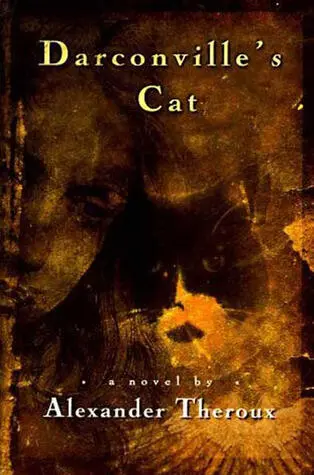
- Название:Darconville’s Cat
- Автор:
- Издательство:Holt Paperbacks
- Жанр:
- Год:1996
- ISBN:нет данных
- Рейтинг книги:3 / 5. Голосов: 2
-
Избранное:Добавить в избранное
- Отзывы:
-
Ваша оценка:
Darconville’s Cat: краткое содержание, описание и аннотация
Предлагаем к чтению аннотацию, описание, краткое содержание или предисловие (зависит от того, что написал сам автор книги «Darconville’s Cat»). Если вы не нашли необходимую информацию о книге — напишите в комментариях, мы постараемся отыскать её.
Darconville's Cat Its chapters embody a multiplicity of narrative forms, including a diary, a formal oration, an abecedarium, a sermon, a litany, a blank-verse play, poems, essays, parodies, and fables. It is an explosion of vocabulary, rich with comic invention and dark with infernal imagination.
Alexander Theroux restores words to life, invents others, liberates a language too long polluted by mutters and mumbles, anti-logic, and the inexact lunacies of the modern world where the possibility of communication itself is in question. An elegantly executed jailbreak from the ordinary,
is excessive; funny; uncompromising; a powerful epic, coming out of a tradition, yet contemporary, of both the sacred and the profane.
Darconville’s Cat — читать онлайн бесплатно полную книгу (весь текст) целиком
Ниже представлен текст книги, разбитый по страницам. Система сохранения места последней прочитанной страницы, позволяет с удобством читать онлайн бесплатно книгу «Darconville’s Cat», без необходимости каждый раз заново искать на чём Вы остановились. Поставьте закладку, и сможете в любой момент перейти на страницу, на которой закончили чтение.
Интервал:
Закладка:
Thinking of his own response to the photographs, he began, uncharacteristically, to dwell on the possible havoc that resulted from facts fully falling prey to the imagination.
Darconville suddenly had an idea. He wiped her tears and, shutting off the lights, took Despondency’s daughter, Much-Afraid, by the hand toward the bed where he cradled her head on a large pillow, loopholed her arm to his, and tried, for catharsis, to work the only witchcraft he knew: he would tell her a story. Isabel, closing her eyes and snuggling up to him, felt better already. “It’s a sad, sad story.”
Master Snickup’s Cloak
One morning, it was the Middle Ages.
The sun shone down on the foundling home at the end of Duck’s-foot Lane in the quiet little dorp of Sleutel in the Netherlands. The year was 1307 (by Pope Hilarius’s corrected calendar, of course ).
Master Snickup, a tiny ward there — wearing the black and red uniform of the home — gleefully played punchball against the cobbled wall beneath a yew tree near the town weigh-house .
It was a feast day: the Pardon of St. They. Cattle were blessed. Children processed. You heard litanies.
”Wat is Uw naam?” asked a new little orphan girl who suddenly appeared at his side, smiling, plumcheeked, and wearing a chaste wimple. Her beauty put to shame the roses of Paestum.
Superfecta — for this was the name of the flax-haired frokin— immediately stole Master Snickup’s heart quite away .
The two children, thereafter, spent day after day playing games of noughts-and-crosses, ducking mummy, backy-o, all the winkles, stickjaw, egg-in-cup, stitch-away-tailor
And skiprope, when they frisked and jumped to the jingle
”Do you love me,
Or do you not?
You told me once,
But I forgot.”
Happily, Master Snickup even did her chores for her, scowring cups, dipping tallow, and decoaling the squinches; he even did the washpots. She played the dulcimer.
A decade passed, just like that.
Superfecta, who’d bloomed into indescribable loveliness, now drew smiles from each and all. There is no potential for permanence, Master Snickup told his heart, without a fear of threat.
And so they were betrothed one day at the shrine of St. Puttock of Erpingham — and swapped gifts: he gave her two white pigeons and received from her a wonderful blue cloak .
Now, there lived on the verge of the village at that time one of the richest burghers in all Gelderland — the ill-living Mijnheer van Cats, an unctuous cheesegobbling fat pants who smoked a clay pipe and wanted sons .
But who’d be his wife? A purse of 2000 gulden was put up.
In vain, however, did the merchants of the guild offer up their daughters, a group of off-sorts who had pointed noses and pointed caps.
”Knapweed! Hake! Twisses!” screeched van Cats and hurled other unprintable names at them. Modest pious folk covered their eyes.
One winter dusk, it so turned out, the orphans were given a special dispensation to go to the Haymarket to watch the “illuminations.” Mijnheer van Cats, in attendance, sat up high on the balustrade of the guildhall, whereupon his gaze fell — fatefully — upon Superfecta. That little boompjes, thought he, will soon be mine .
An ouch of heavy gold was hers the day following; his, a sealed envelope, which he slit open with his pipestem. What could be the decision?
”Yaw, yaw,” guffawed the fat Dutchman.
A record of the wedding can be found to this day as a small entry in the old chronicle of Nuewenburgensis. You will do, as the diverb has it, what you are.
Master Snickup, disedged with grief, took up scrip and staff and, wearing only his blue cloak, set out to pick his way across Europe. He sought the antipodes.
Hither was yon, yon hither.
Mountains were climbed, mazes thrid. He crossed a sea that had no motion on the ship, “ What is Pseudonymry? ” and came to a desert where he said penances and fed on caper buds, dormice, and lentils. Still he pilgrimaged,
Reading the footprints of geese in the air,
To reach eventually the Black Sea where, living alone on an uncharted shale island, he chastized himself with thongs and subsisted only on air and dew. Rain fell on his blue cloak, which he sucked supplying himself with vitamin Bu.
Swallows sang upon his wrists.
“Sero te amavi ,” whispered Master Snickup to God — and prayed constantly with perfectly folded hands, a shape best fitted for that motion. Small furious devils hated that
And visited him in a variety of shapes and torments: six-fingered Anaks, freexes, nasicornous beetles, chain-shaking kobolds, Saûba ants, red-eyed swads, sorcerers who could disconnect their legs and flap about like bats, and pin-headed Hippopods, with reversed feet, who leapt instead of walked.
Master Snickup soon fell ill. But who could help? For ships in sight there were none.
The town of Sleutel, meanwhile, rang with news. Superfecta van Cats was delivered of a son. “A witty child! Can it swear? The father’s dearling! Give it two plums!” boasted its sire, butterballing it with his gouty feet.
But hear of more. Mijnheer van Cats, now fattened on perfidy itself, had turned syphilitic and even more hateful than before. He sang curses against his wife in the taproom and, roiling and hissing, streeled home drunk. He locked her nights in the black windmill. He chased her through town slashing her with timothies.
Sadism and farce are always inexplicably linked.
The orphanage, in the meantime, closed down — without so much as two coppers snapped together to prevent it, despite the bulging wallets of all the snap-boilers, razor-makers, brewers, and guilder-grubbing rentiers who lived thereabouts. O events! God could not believe man could be so cruel .
Winter settled hard over the Black Sea. The soul of Master Snickup now grew pure — a hagiographical commonplace — as his body grew diseased. He never washed his bed save with tears. The tattered blue cloak had become infested with worms and rotifers,
Which also battened on his holy flesh .
It snew. And on that desolate shale island, since fabled, Master Snickup one day actually looked into the heart of silence, rose and — with a tweak-and-shake of finger and thumb toward the sky — died. Rats performed the exequies .
The moon, suddenly, was o’ercast blood-red in an eclipse. Thunder rumbled. Boding?
Ill.
A rat flea, black in wing and hackle, flittered out of the shred of blue cloak and flew inland — as if carried along by destiny — toward the Crimean trading port of Kaffa. The infamous date was 1346 .
Stinks were soon smelt — in malt, barrels of sprats, chimney flues. Physicians lost patients in spates .
“The plague! The plague!” squealed the chief magistrate, biting his thumb, his fauces black, the streaks of jet vivid along his wicks and nose, and then dropped dead as a stone. Fires were lighted. The harbor was sealed .
But it was too late. Ships, laden with produce, had already set sail in the pestiferous winds and headed out along the trades to Constantinople, to Cyprus, to Sardinia, to Avignon, and points beyond —
Sleutel, among them: a town that, recently, had expanded and grown to the clink of gold in the guilds, the crackle of flames in the tile-kilns, and the mercantile sermons in the new protestant kerks.
Читать дальшеИнтервал:
Закладка:
Похожие книги на «Darconville’s Cat»
Представляем Вашему вниманию похожие книги на «Darconville’s Cat» списком для выбора. Мы отобрали схожую по названию и смыслу литературу в надежде предоставить читателям больше вариантов отыскать новые, интересные, ещё непрочитанные произведения.







Обсуждение, отзывы о книге «Darconville’s Cat» и просто собственные мнения читателей. Оставьте ваши комментарии, напишите, что Вы думаете о произведении, его смысле или главных героях. Укажите что конкретно понравилось, а что нет, и почему Вы так считаете.