Alexander Theroux - Darconville’s Cat
Здесь есть возможность читать онлайн «Alexander Theroux - Darconville’s Cat» весь текст электронной книги совершенно бесплатно (целиком полную версию без сокращений). В некоторых случаях можно слушать аудио, скачать через торрент в формате fb2 и присутствует краткое содержание. Год выпуска: 1996, Издательство: Holt Paperbacks, Жанр: Современная проза, на английском языке. Описание произведения, (предисловие) а так же отзывы посетителей доступны на портале библиотеки ЛибКат.
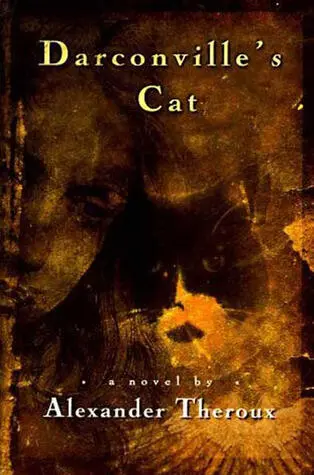
- Название:Darconville’s Cat
- Автор:
- Издательство:Holt Paperbacks
- Жанр:
- Год:1996
- ISBN:нет данных
- Рейтинг книги:3 / 5. Голосов: 2
-
Избранное:Добавить в избранное
- Отзывы:
-
Ваша оценка:
Darconville’s Cat: краткое содержание, описание и аннотация
Предлагаем к чтению аннотацию, описание, краткое содержание или предисловие (зависит от того, что написал сам автор книги «Darconville’s Cat»). Если вы не нашли необходимую информацию о книге — напишите в комментариях, мы постараемся отыскать её.
Darconville's Cat Its chapters embody a multiplicity of narrative forms, including a diary, a formal oration, an abecedarium, a sermon, a litany, a blank-verse play, poems, essays, parodies, and fables. It is an explosion of vocabulary, rich with comic invention and dark with infernal imagination.
Alexander Theroux restores words to life, invents others, liberates a language too long polluted by mutters and mumbles, anti-logic, and the inexact lunacies of the modern world where the possibility of communication itself is in question. An elegantly executed jailbreak from the ordinary,
is excessive; funny; uncompromising; a powerful epic, coming out of a tradition, yet contemporary, of both the sacred and the profane.
Darconville’s Cat — читать онлайн бесплатно полную книгу (весь текст) целиком
Ниже представлен текст книги, разбитый по страницам. Система сохранения места последней прочитанной страницы, позволяет с удобством читать онлайн бесплатно книгу «Darconville’s Cat», без необходимости каждый раз заново искать на чём Вы остановились. Поставьте закладку, и сможете в любой момент перейти на страницу, на которой закончили чтение.
Интервал:
Закладка:
Without a word, Darconville drove on, cradling Isabel’s head to his shoulder while she kept repeating through her tears, “It’s unfair! It’s unfair!”
They wound through country roads, a repetition of gimp fences, quirked barns, and fields with dead rusted machinery, for what seemed like hours, riding into and then around the low hills. Cattle, skewbald, roan, and dappled, drowsily munched tall grasses and meadow weeds as field upon field led past woodlands toward the mountains that, upon approach, seemed indefinitely prolonged. The mountains, however, surprising him, turned out to be more low hills, unimpressive and empty except for an occasional farmer or two who, never saluting, rolled by in old buckboards with sawn-oak wheels. Out of the hills now, they swung around returning by backroads eroded by spring branches and runs all bubbling along, an area at several points of which, Darconville noticed, stood small signs directing the way to: Zutphen Farm .
It was, Darconville remembered, the van der Slang property— Govert’s house.
Silently, Darconville kept to those directions. They jounced onto a fairly good road and, heading straight west, soon got clear of the woods when a large farm came into view. Isabel crouched lower, her mood of oppression seeming to darken here even more. The farm was larger by far than any in Fawx’s Mt, but grand, he thought, only by comparison, for on the mountain side of it were nothing but grim little shacks and hovels-with-tin-chimneys, whereas on the town side, though not much better, could be found a few normal but still insignificant spit-and-brick affairs of the modern stamp — the Shiftletts’ house was an example — built soon to bury. A white wooden fence by the dirt road circled the grounds of the van der Slangs’ where grazed some horses, goats, a herd of black cattle, and set back in a dim glade stood the main house, white and cold and silent. Surrounded by fat whin-blown meadowlands, it was one of those spacious farmhouses with high-ridged but sloping roofs and low projecting eaves under which hung flails, harnesses, various bits of husbandry. So, thought Darconville, there in that stronghold farm lived that broad-skirted and faceless Dutch urchin he feared; he saw himself as Ichabod Crane: a New England country schoolmaster and worthy-wight — in form and spirit like a supplejack (yielding but tough) — sojourning in that by-place of nature, in love, but somewhat out of his element and exposed to the commonness of rantipole heroes given to boorish practical jokes and rough country swains and bumpkins, standing back, envying his person, his address, and his girl.
A bowlegged woman in a bandanna and high rubber boots appeared in the near distance of that property feeding a goat. Darconville intended to say nothing but found he couldn’t.
“Could that,” he asked, driving past, “possibly have been Mrs. van der Slang?”
Slouched down, Isabel slowly peered up and then back in the direction of the receding figure. Are there silences, wondered Darconville at that moment, in which if one listens closely may be heard screams?
“Really?” she asked. “I didn’t even notice.”
“Maybe not.”
“ Maybe —” Isabel’s eyes flashed in anger.
“Not maybe you didn’t notice,” said Darconville, surprised, “maybe it wasn’t Mrs. van—”
“But,” repeated Isabel, exasperated, almost as if wanting of him what she wouldn’t of the figure, “I didn’t even notice.” Strange, thought Darconville, strange. And so there was nothing more said on the subject, which of course, he knew, was a good deal.
They spent much of the afternoon driving, exchanging small talk. Darconville would often ask ‘ innocent, almost childlike questions dealing with things Isabel might know and things she could never be expected to know, leading her through entire dialogues before arriving not at truth as such, but at some final irresolvable question of which, perhaps, they together — curiously — both loved to be ignorant. Actually, Isabel said rather little on such occasions, far less indeed on others, those predominantly of the social stamp. She never directly approached people: if she came upon people she wanted to know, she allowed herself only a smile to bridge the distance, and invariably they approached her, with Isabel feeling then the boon of sudden value she initially suspected neither of them had. Fair is not fair, he thought, but that which pleases. Helen was not, but whilst she was.
Darconville wanted badly to know her, her successive selves — why, in fact, he loved her. In a way, he wanted to be her, that much better to know. Perspective as seen, he thought, is never reality. Wasn’t a stopped clock correct twice a day? In fact, perspective was anti-creative, for if we painted what we actually saw — reality, say — we’d literally have to paint double images. Compensating, compromising, we look toward dead center only to contect what we’d know, to scrutinize the inscrutable. Isabel was inscrutable. Was he, for instance, Darconville wondered, charmed only by the fact that she lived a life of which essentially he knew nothing? Where so little was given, he thought, much was left to the imagination. The man in love, he knew, often constructed his beloved from the compilation of small data he was insistently delighted was so small. On the other hand, perhaps, maybe she was simply the product of his own temperament, the image, the reversed projection and “negative” of his own sensibility, opposed and complementary? Did she lead a life unknown to him to which he could gain right of entry only by loving her? Was he merely unloading on her the state of himself, the worth of the girl not in question, but only the quiddity of that state? And did her silences simply feed his own vanity whereby, giving him the illusion of intelligence, he saw reflected only the worth he pompously assumed he himself had?
Well, Darconville didn’t know, you see. He wanted only that she come to believe in the sublimity he felt, feel enough to believe the sublimity possible. Hope, after all, was as cheap as despair, and vision? Vision! It was perhaps nothing more than believing it could be arranged. Isabel was silent, yes, and mysterious beyond that. But those who saw in their loved one only what was obvious or actually present, concluded Darconville, were incapable of understanding the select activity of love and — fools curial! fools primipile! — addressed it with a solecism. The romance of imprecision is not the elision of the tired romance of the precise. Mint, in a glass of water, exhausts pounds of it. Whoso feels the meaning of eternity is in it. Q.E.D.
J’adoube , thought Darconville.
The sun fell behind the mountains, an income of cold breezes and blue dew now being felt along the high countryside of Fawx’s Mt. The woodlands of pin-oaks, sour gums, and box elders darkened. Clutching his arm, Isabel moved closer to Darconville, sleep drawing her head toward his chest. He drove on a bit further through gloomy dimbles and boggy slades and little unnamed places with boondock courthouses, then circled around near the funny little airport, a red wind-sock over a barren tract, on the outskirts of Charlottesville, and passing back through Stanardsville under a sky filled with clouds like weasel tracks bounced over narrow, lonely roads along which bordered tumbled-down stone walls and desolate dray-horse farms sticking up out of moss and moor, holt and hill, and then came again to the edge of Fawx’s Mt. where Darconville saw a roadhouse in a stand of pines — and pulled over.
It was a shabby place.
The hairy wabblefat at the grill — you couldn’t see at the neck where the head adhered — had an acromegalic jaw and a five o’clock shadow; he took a toothpick from his mouth and half turned. One of his eyes was milky with trachoma. The close air, as Darconville and Isabel sat down, smelled of sawmill gravy and fried meat. A jukebox was playing a country song about adultery. The waitress, a slatternly blonde with orange lipstick and a severe case of underbite, came over to the booth and unhooked an order pad from her hip. Darconville, ordering a coffee for himself and a hot chocolate for Isabel, asked the time. The waitress scratched a tiny spot in the nest of her hair with the sharp fingernail of her medical finger and, with a pencil, stabbed behind her in the direction of the clock. It was with unexpressed disbelief but a suddenly profound sense of mis-wish that, finding the time, he also read in faded letters pericycloid with the clockface the name of the establishment: Shiftlett’s —incontrovertible proof, thought Darconville, that demons were rife on earth. It was a Land of Sub-multiples!
Читать дальшеИнтервал:
Закладка:
Похожие книги на «Darconville’s Cat»
Представляем Вашему вниманию похожие книги на «Darconville’s Cat» списком для выбора. Мы отобрали схожую по названию и смыслу литературу в надежде предоставить читателям больше вариантов отыскать новые, интересные, ещё непрочитанные произведения.










Обсуждение, отзывы о книге «Darconville’s Cat» и просто собственные мнения читателей. Оставьте ваши комментарии, напишите, что Вы думаете о произведении, его смысле или главных героях. Укажите что конкретно понравилось, а что нет, и почему Вы так считаете.