Alexander Theroux - Darconville’s Cat
Здесь есть возможность читать онлайн «Alexander Theroux - Darconville’s Cat» весь текст электронной книги совершенно бесплатно (целиком полную версию без сокращений). В некоторых случаях можно слушать аудио, скачать через торрент в формате fb2 и присутствует краткое содержание. Год выпуска: 1996, Издательство: Holt Paperbacks, Жанр: Современная проза, на английском языке. Описание произведения, (предисловие) а так же отзывы посетителей доступны на портале библиотеки ЛибКат.
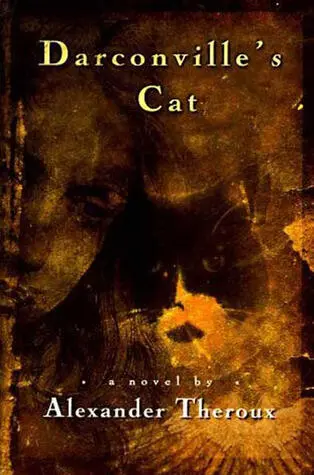
- Название:Darconville’s Cat
- Автор:
- Издательство:Holt Paperbacks
- Жанр:
- Год:1996
- ISBN:нет данных
- Рейтинг книги:3 / 5. Голосов: 2
-
Избранное:Добавить в избранное
- Отзывы:
-
Ваша оценка:
Darconville’s Cat: краткое содержание, описание и аннотация
Предлагаем к чтению аннотацию, описание, краткое содержание или предисловие (зависит от того, что написал сам автор книги «Darconville’s Cat»). Если вы не нашли необходимую информацию о книге — напишите в комментариях, мы постараемся отыскать её.
Darconville's Cat Its chapters embody a multiplicity of narrative forms, including a diary, a formal oration, an abecedarium, a sermon, a litany, a blank-verse play, poems, essays, parodies, and fables. It is an explosion of vocabulary, rich with comic invention and dark with infernal imagination.
Alexander Theroux restores words to life, invents others, liberates a language too long polluted by mutters and mumbles, anti-logic, and the inexact lunacies of the modern world where the possibility of communication itself is in question. An elegantly executed jailbreak from the ordinary,
is excessive; funny; uncompromising; a powerful epic, coming out of a tradition, yet contemporary, of both the sacred and the profane.
Darconville’s Cat — читать онлайн бесплатно полную книгу (весь текст) целиком
Ниже представлен текст книги, разбитый по страницам. Система сохранения места последней прочитанной страницы, позволяет с удобством читать онлайн бесплатно книгу «Darconville’s Cat», без необходимости каждый раз заново искать на чём Вы остановились. Поставьте закладку, и сможете в любой момент перейти на страницу, на которой закончили чтение.
Интервал:
Закладка:
Darconville saw his chance.
“At Zutphen Farm?”
Isabel looked away. There was nothing there for her, she promised. Yes, it was true she would walk over to visit when she had nothing else to do; the little farm-related chores there gave her pleasure, she said, but she didn’t do it for money, even though they were wealthy. She never really liked that family, she added, nor respected them very much.
And as she talked, Darconville put together what fragments he could: Captain van der Slang, rarely at home, was a semi-diplomatic species of merchant profiteer-with-schemes who, thunderballing the watery world in his blaue Schuyte from Libya to Newport News and shifting barrels of oil, natural gas, and pig-iron hither and yon, nourished pretensions of great significance. They were of the rentier class, the van der Slangs, supposititious zee-drainers who’d recently moved from somewhere in Delaware to Fawx’s Mt. and this particular farm the captain bought to keep his wife and family of idle boys busy. The mother, it was clear, was a hex-faced busybody who, while studiously avoiding the Shiftletts of low degree down the road, nevertheless patronized Isabel not only to help her with the farmwork but also because she harbored secret hopes of moral advancement for her foolish sons, both roughly of Isabel’s age, whose ambitions thus far, apparently, proved less than complete. (But Isabel gave no details on either of them.) The farm, in any case, was a going concern, and more, with great profits realized in selling livestock and breeding Black Angus cattle. The family, the richest in Fawx’s Mt., was nevertheless somewhat unpopular with the common serfs and chapped hands who hired out to that farm; rumor had it, said Isabel, rather circumspectly, that they cheated on their taxes, arbitrarily manumitted the help, and were remorseless in the matter of buying up more and more land. Their niggardliness was legendary. “You did mention once,” said Dar-conville quietly, wondering if, when a bullet traces a line, every point in that line sustains it, “that one of the sons—”
Isabel, watching his eyes, kissed him quickly and said, “I want you. I need you .”
Need, thought Darconville: the quaestor that sells indulgences love buys. It was true, however, that they hadn’t yet confessed their love, which, under the circumstances, nevertheless, seemed only a formality. There was more need for time to know than pressure to convince, in any case, wasn’t there? No, it was good that he’d come to Fawx’s Mt. For no reason, Darconville thought of Hypsipyle Poore, whose beauty somehow always outran her grace, and he thought of Aeneas’s passion for Dido, sudden and not sanctioned by the gods or favorable auspices, whereas the ultimate union with Lavinia, for whom he formed no such violent or hasty attachment, would have recommended itself to every noble Roman.
It was time to go, with Isabel yawning into her hand as Darconville got up to pay. The mesomorph turned from the grill and, wiping his hands on his pants-seat, took Darconville’s money — but not before suddenly and suspiciously tracing that stranger’s eye back to the photograph of the Knights of the Great Forrest, supplefaced in their framed repository. The proprietor never took his eyes off Darconville, not in ringing the cash register, not in returning the change.
Darconville said, “Thank you, Mr. Ayak.”
The man munched in a bronchiospasm — then crouched up menacingly into Darconville’s immediate vision, squinting like a mole through a musit. “Don’ mention it, boy,” he drawled cruelly, one eye coldly galvanizing into a hard marble, and then repeated slowly, “Don’ mention it.”
The night outside seemed fierce, inquisitive, with heavy masses of shapeless vapor working through the woods. The upper segment of the arch of the sky was all purple, blotched purple, and descending on all sides were bleak clouds thrusting their heads into the purple in mountain shapes. They drove away and weren’t a mile up the road before Darconville turned to Isabel to put her curiosity at rest: that road-house, he told her, was a meeting place for the Ku Klux Klan. Isabel arched an eyebrow, dubiously. But Darconville’s close friendship with a black minister in Quinsyburg, who’d once nearly been hoisted by them during the tense period when the public schools there had been closed (and a few hours of disbelief thereafter reading in the library), had some time ago put him in the picture. Not surprisingly, it was in just such small sheriffwicks and timber- and box-producing outbacks as Fawx’s Mt. — the land of the piney-wood folk — that they set up their hate factories and bigotoriums. Darconville told her about the Klan’s early playful pranks in Pulaski, Tennessee, and then recounted how that small group of unreconstructed bushwhackers, ill-concealed populists, and cut-rate anti-alienists who rode out hooded and nightied in the witchlight through lonely dingles and phantasmal swamps had grown into a nationwide klavern of “brothers-beneath-the-robe.” Theirs was a perpetual hallowe’en. They paid the initiation fee — the klectoken — and then, whenever they spied anything whatever alien, Catholic, wet, black, nullificationist, or remotely anti-American, they officially klonvokated, paraded, and clashed. There were four stages of klankraft, explained Darconville and, after due deliberation there back at the roadhouse, he found he could name them: K uno, duo, trio, and quad, or ordinary Klansmen, Knights Kamelia, Knights— Darconville tapped Isabel on the knee — of the Great Forrest, and at the top of the pyramid Knights of the Midnight Mystery. Ooooo-eee-ooo! Darconville could picture them: the little hoodoos creeping through low brush toward the midnight lodge, listening for noises, and then, after a few gymnastic handshakes, sitting around in their pinheaded cowls pantomancing each other by candlelight with stories of Communist carpetbaggers, secret hatchet factories run by niggers, and disgusting Romish excesses, for the actual proof of which they thrillfully displayed to each other little gingham bags-with-drawstrings especially manufactured for conveying out of convents the fruits of priestly lust.
They passed in silence the little collapsed schoolhouse (The Brig. Gen. Cadmus Wilcox School) where Isabel, on a former visit, once mentioned she attended the early grades, a pentecostal church painted red, and, finally, on the road to her house, a wooden building set back in a foliage of evergreens in front of which, in plaid shirts and neckerchiefs, a handful of Fawx Mountaineers smoked pipes while fiddlers inside were playing a medley of square-dance tunes: “Rats in the Meal Barrel,” “Frog Mouth,” “Got a Chaw of ‘Baccy from a Nigger,” etc.
“Who knows,” laughed Darconville, “that chap back there might have been a Kleagle, a Wizard, a Kligrapp, or a Kludd perhaps. Maybe even the Imperial Emperor himself!”
Isabel said, “You still haven’t explained why he seemed so angry. Maybe it was because you called him, what was it? — that name .”
“Ayak?”
“Yes.”
“ Ayak ,” said Darconville. “ ‘Are you a klansman?’ The response to which is Akia : ‘A klansman I am.’ “ Then Darconville dramatically swung out his arm and bowed. “ Kigy ! ‘Klansman, I greet you!’ “
Those words weren’t out of his mouth a second when straightway he was up and into the gravel driveway of the Shiftletts (the ones who weren’t the others) and shut off the motor. Suddenly a face — O brutafigura! — ballooned up at the car window out of the pitch-darkness. It was a fish-white pretext of eyes, nose, and mouth which, mis-aligned in God knows what tragic hypocaust of fate, instantly turned the roots of one’s hair to ice-needles. Horror dorsifixed Darconville. Immediately he felt — why? — a stab of profound love for Isabel but in the grip of sudden shock only heard her spool down the window to ask her uncle, in a diffident whisper, if he would like to meet Darconville.
Читать дальшеИнтервал:
Закладка:
Похожие книги на «Darconville’s Cat»
Представляем Вашему вниманию похожие книги на «Darconville’s Cat» списком для выбора. Мы отобрали схожую по названию и смыслу литературу в надежде предоставить читателям больше вариантов отыскать новые, интересные, ещё непрочитанные произведения.



Обсуждение, отзывы о книге «Darconville’s Cat» и просто собственные мнения читателей. Оставьте ваши комментарии, напишите, что Вы думаете о произведении, его смысле или главных героях. Укажите что конкретно понравилось, а что нет, и почему Вы так считаете.