Alexander Theroux - Darconville’s Cat
Здесь есть возможность читать онлайн «Alexander Theroux - Darconville’s Cat» весь текст электронной книги совершенно бесплатно (целиком полную версию без сокращений). В некоторых случаях можно слушать аудио, скачать через торрент в формате fb2 и присутствует краткое содержание. Год выпуска: 1996, Издательство: Holt Paperbacks, Жанр: Современная проза, на английском языке. Описание произведения, (предисловие) а так же отзывы посетителей доступны на портале библиотеки ЛибКат.
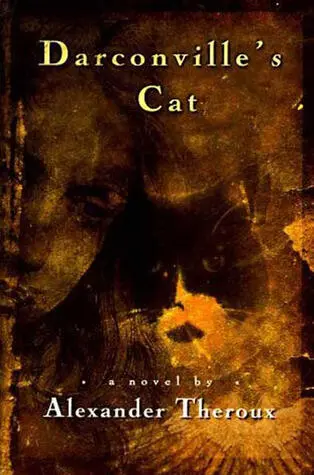
- Название:Darconville’s Cat
- Автор:
- Издательство:Holt Paperbacks
- Жанр:
- Год:1996
- ISBN:нет данных
- Рейтинг книги:3 / 5. Голосов: 2
-
Избранное:Добавить в избранное
- Отзывы:
-
Ваша оценка:
Darconville’s Cat: краткое содержание, описание и аннотация
Предлагаем к чтению аннотацию, описание, краткое содержание или предисловие (зависит от того, что написал сам автор книги «Darconville’s Cat»). Если вы не нашли необходимую информацию о книге — напишите в комментариях, мы постараемся отыскать её.
Darconville's Cat Its chapters embody a multiplicity of narrative forms, including a diary, a formal oration, an abecedarium, a sermon, a litany, a blank-verse play, poems, essays, parodies, and fables. It is an explosion of vocabulary, rich with comic invention and dark with infernal imagination.
Alexander Theroux restores words to life, invents others, liberates a language too long polluted by mutters and mumbles, anti-logic, and the inexact lunacies of the modern world where the possibility of communication itself is in question. An elegantly executed jailbreak from the ordinary,
is excessive; funny; uncompromising; a powerful epic, coming out of a tradition, yet contemporary, of both the sacred and the profane.
Darconville’s Cat — читать онлайн бесплатно полную книгу (весь текст) целиком
Ниже представлен текст книги, разбитый по страницам. Система сохранения места последней прочитанной страницы, позволяет с удобством читать онлайн бесплатно книгу «Darconville’s Cat», без необходимости каждый раз заново искать на чём Вы остановились. Поставьте закладку, и сможете в любой момент перейти на страницу, на которой закончили чтение.
Интервал:
Закладка:
But their most memorable film?
It was most certainly the Day of the Kite, one golden afternoon out on the Quinsyburg golf course over which, limitless, a perfect blue sky from mid-heaven down opened for the sun, heating its own shining light, to transfigure a rolling field to the Garden of Shiraz, the air holding the promise of dreams in it and blowing around the scent of flowers in washed wind.
“I’ll let out slack, you tug the mainline,” Darconville called out to her. The wind ghosted. She clicked her tongue and ran, tipping and toeing down the staircarpet of grass.
A jet-colored scalene affair, with little orange eyes and the contours of a bat, the kite staggered and upcut brainlessly across the air, then swooped in several tendentious circles, and suddenly shot straight up on tightening line. It shimmied out further and jiggered up to a tiny size. Isabel turned to Darconville, thirty yards or so behind her, and clapped her hands like a child, then suddenly racing after the floating string as he let go to pick up the camera. She leaped and got it, as Darconville whispered to himself:
”Followe thy faire sunne, unhappy shaddowe,
Though thou be blacke as night
And she made all of light.”
Quickly, he began to film her: gamboling, circulating, snudging the distant kite. Her shoulders jived with every puff and gust. Isabel wore a red jersey, white trousers, no shoes. The wanton air in twenty sweet forms danced after her fingers and flashed its transparent song about her golden hair, blowing as blond as once in the same light blew that of Helen, Polyxena, Guithera. The natural light, thought Darconville, that showed Socrates one God and disclosed to Democritus the atoms now epiphanized this dancing, peddling child whose laughter almost broke his heart. She skipped and ran and stretched up, actions revealing her more-than-a-moiety of thigh. It didn’t matter what wasn’t seen. Darconville had simply conceived light visible and found the girl he loved. He would have gone barefoot to Jerusalem, to the Great Khan’s Court, to the Far Indies to fetch her a bird to wear on her finger. She never seemed more beautiful.
“Look! It’s umpteen miles high!” cried Isabel, her untied hair drifting aerially behind her as she ran.
Darconville was now filming her shadow.
“That cloud, up there. Isn’t it beautiful! It’s shaped like a bird — a swan, look.” She turned and came over to him. “Is that true, that the swan sings when it dies?”
“I don’t know.”
He brought the camera close and shot her nose.
“No, really. What do you think?”
“The swan,” said Darconville, smiling, “remains silent all its life in order to sing well a single time.” A parable of art, he thought — and a perfect excuse, it delighted him to think, for having put aside my writing for you . Good: there was more piety in being human than human in being pious.
“What does it sing about, anyway, if it’s dying?”
Darconville happily replied, “It sings about, O, what of heaven it was always reminded of — but couldn’t have — on earth. Glaciers: clouds. The sea,” he said, “is the nightmare of the sky, you’ve heard that, haven’t you?”
“The sea?”
It was unbelievable. She seemed to freeze in a reverie, blankly studying a spot of nothing in the far distance, as if all of a sudden, to solve a riddle imposed on her from without, she were waiting for the answer she was incapable of giving to come. It was undeniably like something of unhappiness moving in her spirit, the look of a person who had discovered, not something she hadn’t known before, but something she had known before and didn’t want to hear again. He came over next to her and, as she turned abruptly, almost kissed her on the lips: an effleurage suddenly reminding her of where she was. She lowered her head with a slight blush.
“I mean,” said Darconville, taking her arm, “there is a sort of consolation in seeing that little thing squittering around up there, you know? It jigs, you could say, to synthesize worlds that have been separated, folding its wings and shooting upon its errand out of the Valley of Funnel and connecting even for a brief interval the five elements.”
“Five elements?”
“Earth, air, fire, water—”
“And?”
You , thought Darconville.
“And ether,” he said. “The quintessential.”
The kite caromed in the faraway air. As if preoccupied with one of her thoughts, Isabel tweaked the line and silently watched the tiny vessel plaintively tossing in the vast and mighty ocean above her. Preoccupied himself now, Darconville took the conversation a bit further.
“Sometime, Isabel,” he said, “open the Bible to the book of Genesis. There is a little fright there amid its exegetical thickets: the phrase, ‘And God saw that it was good,’ is for some reason omitted after the second day of Creation. You know what I mean?” Isabel wasn’t sure. “I mean, no one has ever figured that out. I’ve often thought, however, that—”
A gust of wind sent the kite into a lunatic figure-eight, whereupon, looking up, Isabel opened her mouth expectantly.
“—well, that on that particular day came the first disuniting of what God had created. The elements, if now separate, were once all one, an unindividuated world become multiple only in that it might be comprehended, and, say, in one thunderclap that hitherto indivisible ur-world suddenly banged into a vast network of intermundia : gases, air, flame, and huge chunks of smoking telluric mole flew out into a gravity-locked exosphere!” He waved his arms up. “The One became the Many.”
“What a pessimist you are,” said Isabel.
Darconville said: “But can’t you see that that is optimism? There,” he said, pointing up past the kite, “is our exit, inspected from an ingressive angle, camouflaged only by our fear of taking it. Vision overwhelms us! I don’t think vision is anything more than daring to seek unity, no matter the—”
Isabel put her hand on his mouth and said shhhh . .
“You remind me of poetry,” she said.
The black kite suddenly spiked out sideways, shivered, and then hooking started on a plummet to hell. Isabel cried out, her nates tightening. Reaching over, Darconville swiftly yanked the string. The kite swooped up, listed deferentially, and then nosedived almost on an aim down, downward, across the field into a tangled web of treelimbs, hanging upsidedown there as if brained. Isabel, disconsolate, her hands dropping, pulled her thumb. Tears sprang to her eyes.
Darconville, lifting her chin, hugged her close, a photogenic gold-blue mirage of that beautiful day. They walked slowly over toward the surrounding woods and silently inspected the ruined kite, dangling in pieces. A why sat in her eyes which he kissed, finding them grum, now gleaming with high-wrought inexpressibles. They stood silent, watching each other, Listening to the real words of the imaginary dialogue being whispered from heart to heart, and a very special closeness was theirs that afternoon, an eternal bond shaping itself in the late sun, the flower-scents of Eden, the windsong. Still, no name was put to their happiness, although a new happiness was understood as Darconville and Isabel, associate sole, left the field together hand in hand. A low-flying bird, trailing its legs across the sky, pulled in its wake the sunset and all the heat of its fire. Dusk crept in.
They returned to Darconville’s rooms, without a word.
It was so still: Darconville’s thumping heart, as he opened the door, was interrupted by a whisper not to turn on the light. He kissed her quickly, turned, and then turned back again desperately as if at last all the words lost on the desk behind her might now be spoken; but Isabel would have no words and, giving up in his arms, leaned into him with a long kiss, the obscure surrounding them as the flesh enclosed the soul, as if simply to explain how, in the course of love, the body took part in its affections. They couldn’t get close enough to each other, sucking out both breath and being as if to gain time for the merciful recognition between them both knew now they could never give up; and, needing suretyship no more, they together passed over questions like riddles not ignored but solved rather in the quiet but beseeching assurance of each other’s promised faith: did love yield or was it conquered? Was to rule by love to dominate by emotion? Did love fulfilled cease then to be love? Was to remove the mystery to take away the wonder? May one love only what one knows, or was love that which made knowledge possible? Did love have to have a meaning?
Читать дальшеИнтервал:
Закладка:
Похожие книги на «Darconville’s Cat»
Представляем Вашему вниманию похожие книги на «Darconville’s Cat» списком для выбора. Мы отобрали схожую по названию и смыслу литературу в надежде предоставить читателям больше вариантов отыскать новые, интересные, ещё непрочитанные произведения.


Обсуждение, отзывы о книге «Darconville’s Cat» и просто собственные мнения читателей. Оставьте ваши комментарии, напишите, что Вы думаете о произведении, его смысле или главных героях. Укажите что конкретно понравилось, а что нет, и почему Вы так считаете.