Kenzaburo Oe - Death by Water
Здесь есть возможность читать онлайн «Kenzaburo Oe - Death by Water» весь текст электронной книги совершенно бесплатно (целиком полную версию без сокращений). В некоторых случаях можно слушать аудио, скачать через торрент в формате fb2 и присутствует краткое содержание. Год выпуска: 2015, ISBN: 2015, Издательство: Grove/Atlantic, Inc., Жанр: Современная проза, на английском языке. Описание произведения, (предисловие) а так же отзывы посетителей доступны на портале библиотеки ЛибКат.
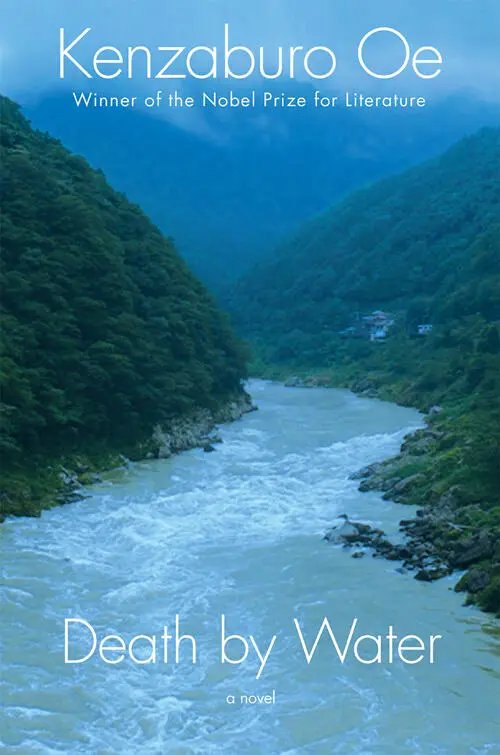
- Название:Death by Water
- Автор:
- Издательство:Grove/Atlantic, Inc.
- Жанр:
- Год:2015
- ISBN:9780802190871
- Рейтинг книги:3 / 5. Голосов: 1
-
Избранное:Добавить в избранное
- Отзывы:
-
Ваша оценка:
Death by Water: краткое содержание, описание и аннотация
Предлагаем к чтению аннотацию, описание, краткое содержание или предисловие (зависит от того, что написал сам автор книги «Death by Water»). Если вы не нашли необходимую информацию о книге — напишите в комментариях, мы постараемся отыскать её.
, his recurring protagonist and literary alter-ego returns to his hometown village in search of a red suitcase fabled to hold documents revealing the details of his father’s death during WWII: details that will serve as the foundation for his new, and final, novel.
Since his youth, renowned novelist Kogito Choko planned to fictionalize his father’s fatal drowning in order to fully process the loss. Stricken with guilt and regret over his failure to rescue his father, Choko has long been driven to discover why his father was boating on the river in a torrential storm. Though he remembers overhearing his father and a group of soldiers discussing an insurgent scheme to stage a suicide attack on Emperor Mikado, Choko cannot separate his memories from imagination and his family is hesitant to reveal the entire story. When the contents of the trunk turn out to offer little clarity, Choko abandons the novel in creative despair. Floundering as an artist, he’s haunted by fear that he may never write his tour de force. But when he collaborates with an avant-garde theater troupe dramatizing his early novels, Kogito is revitalized by revisiting his formative work and he finds the will to continue investigating his father’s demise.
Diving into the turbulent depths of legacy and mortality,
is an exquisite examination of resurfacing national and personal trauma, and the ways that storytelling can mend political, social, and familial rifts.
Death by Water — читать онлайн бесплатно полную книгу (весь текст) целиком
Ниже представлен текст книги, разбитый по страницам. Система сохранения места последней прочитанной страницы, позволяет с удобством читать онлайн бесплатно книгу «Death by Water», без необходимости каждый раз заново искать на чём Вы остановились. Поставьте закладку, и сможете в любой момент перейти на страницу, на которой закончили чтение.
Интервал:
Закладка:
“In the same spirit, let’s hope it will cheer Mr. Choko up to work with us as we try to dramatize the connection between ourselves, as modern-day women, and the brave women who carried out the uprising,” Unaiko said before we hung up. “I’d love it if we could give one last chance at creative fulfillment to the aging author who’s still tormenting himself after all these years, asleep and awake, because he wasn’t able to save his father from drowning!”
5
Clearly, Ricchan’s journal entries had been composed in the conscious knowledge that they would eventually be read by Unaiko and by me. Even so, I found them quite illuminating. One day I took Unaiko aside to talk about this, and she happened to mention that she was trying to respect Asa’s request not to pressure me into becoming involved in a new undertaking until I was ready. By then, though, I didn’t see any way (or, really, any reason) to refuse.
When the young troupe members heard I was on board with Unaiko’s project, they were gratifyingly happy. What struck me as remarkable was that they (Suke & Kaku, in particular) didn’t want me to simply take the original screenplay and adapt it into a stage play. Using Ricchan’s fieldwork as a jumping-off point, they wanted to see Unaiko’s personal vision brought to life, thus transforming the filmscript into an entirely new play. The rehearsal space had overflowed from the great room into the dining room as well, and that area became the main forum for discussing the project.
My initial participation consisted primarily of recalling details from my own script for the long-ago movie — scenes that hadn’t made the final cut. Ironically, the desire to share those very details with the world had been a large part of my original motivation for agreeing to participate in Sakura’s film.
I threw myself into creating a script to showcase the youthful, inventive style of this new offshoot of the Caveman Group. To that end, I resolved to tear apart all my carefully constructed materials, then reassemble them in a synthesized form that would be more compatible with the dog-tossing dynamic. I also set about removing all my personal materials — index cards, notebooks, and dictionaries — from the long bench in the great room to show my commitment to the project.
I was in the process of carrying those things upstairs when Unaiko, dressed in a professional-looking power suit, walked into the great room. She strode up to where I was standing with my arms full of books and said in a loud, accusatory tone, “What’s the world coming to if young folks can’t even lend a hand to help a senior citizen with the heavy lifting, especially when he’s going to be kindly donating his time to assist us?”
Apparently Masao and the other troupe members hadn’t noticed that I was engaged in removing my personal items, in response to someone’s tactful suggestion that the great room might be more efficiently used for our collaborative efforts if it were a bit tidier. Unaiko briskly took charge of transporting my multivolume set of the facsimile edition of The Golden Bough, pausing only to introduce me to a stranger who had come in a few minutes after she did. The man was dressed in a gray corduroy jacket worn over a high-collared black shirt and he projected a rather different public persona from Masao and the other young troupers, but I got the impression from the way they greeted him that he had already been assimilated into the group.
“This is my significant other,” Unaiko said casually. “He moonlights as a theater critic, but he also has a regular job. He came down to Matsuyama on business, and I went to pick him up at the airport. He has to go back to Tokyo on the evening flight, so I drove him down here hoping he could have a chance to visit with you, however briefly.
“How about it, Mr. Choko? I’ve heard you don’t let many people into your inner sanctum, but since this whole area is pretty much engulfed in chaos, would you be amenable to heading upstairs and having a little chat in your study? My guy here has a particular interest in the spaces where writers do their work. I think it might be partly because I told him about the time Asa gave me a guided tour of the bookshelves at your house in Tokyo.”
The new arrival (whose name I had yet to learn) gathered up the remaining books, while I grabbed the last few index cards and then led the way upstairs. Fortunately, Ricchan had found the time to put my bed in order, even though she’d had to take Akari to the Saya extra early that day.
In the room that doubled as my study and sleeping quarters there were windows facing north and south, and the room was flooded with light. The entire west wall was lined with bookshelves, with a large desk in front. When I was working I usually sat in a reclining chair with my feet propped on the desk chair and a drafting board balanced on my knees. Of course, these days all I was doing up here was reading, more or less aimlessly.
I dragged the reclining chair toward the southern wall and sat down. Gesturing at the desk chair, I said to the guest, “Please have a seat,” and he did. Unaiko, meanwhile, grabbed a footstool I used whenever I needed to reach something on the top shelves of the floor-to-ceiling bookcase and carried it over to complete our little circle.
“Would it be all right if I took a look at the books on that shelf?” the young man asked, pointing. Unaiko started to get up from her perch on the stool, but he put a restraining hand on her shoulder, then strolled to the bookcase. The shelf in question held a collection of my early and midcareer novels, and while the books weren’t all first editions they were from some of the earliest printings of each title. (I actually preferred the textures and colors of the covers of some of the earlier books to those of my more recent publications.)
“I started to read your books a short time before you won that big international literary prize,” the young man said. “This is kind of a funny story, but I happened to see in the newspaper that Kogito Choko had stopped writing fiction, and I somehow misunderstood and thought you had died. Anyway, the ‘obituary’ moved me to go out and buy paperbacks of all your backlist novels and read them for the first time, one by one. Because of that, I’ve never even seen most of these early books in hardcover, but just glancing at the titles brings back some pleasant memories for me.”
“From the beginning, even with the early books, I always chose the designer, and the handwritten calligraphy for the titles was done by Goro Hanawa,” I said. “In addition to being a famous filmmaker he was an exceptional calligrapher, and he was well known for his beautiful book designs.”
“For one of your earlier novels, In Our Time, the bookbinding was done in France, and I really liked the look of the title page, with the blind stamping of calligraphic kanji rendered by your mentor, Professor Musumi. I remember seeing the book on my father’s bookshelf.”
While the newcomer was talking, Unaiko jumped up and quickly pulled an extra copy of that book from the shelf. I used autographing the title page as an excuse to ask his name. “It’s Tatsuo Katsura,” he said, “but everyone calls me Katsura.”
“This makes me so happy!” he said a few moments later as he watched me sign the artistically blind-stamped page. “Back in the day, once I’d finished playing catch-up by reading your earlier works in paperback, whenever you published a new novel — in other words, every few years — I would read it as soon as it came out. I guess you could call me a fan, but because I didn’t start reading your books until I was in my thirties, I never got the feeling the author’s message was aimed directly at me. Putting my own experiences aside, isn’t it a fact that during the past twenty years or so, especially, you haven’t really been making an effort to write books that would appeal to a younger audience? To be honest, I can’t help getting the impression that you don’t really give a damn about being widely read.
Читать дальшеИнтервал:
Закладка:
Похожие книги на «Death by Water»
Представляем Вашему вниманию похожие книги на «Death by Water» списком для выбора. Мы отобрали схожую по названию и смыслу литературу в надежде предоставить читателям больше вариантов отыскать новые, интересные, ещё непрочитанные произведения.



Обсуждение, отзывы о книге «Death by Water» и просто собственные мнения читателей. Оставьте ваши комментарии, напишите, что Вы думаете о произведении, его смысле или главных героях. Укажите что конкретно понравилось, а что нет, и почему Вы так считаете.