Kenzaburo Oe - Death by Water
Здесь есть возможность читать онлайн «Kenzaburo Oe - Death by Water» весь текст электронной книги совершенно бесплатно (целиком полную версию без сокращений). В некоторых случаях можно слушать аудио, скачать через торрент в формате fb2 и присутствует краткое содержание. Год выпуска: 2015, ISBN: 2015, Издательство: Grove/Atlantic, Inc., Жанр: Современная проза, на английском языке. Описание произведения, (предисловие) а так же отзывы посетителей доступны на портале библиотеки ЛибКат.
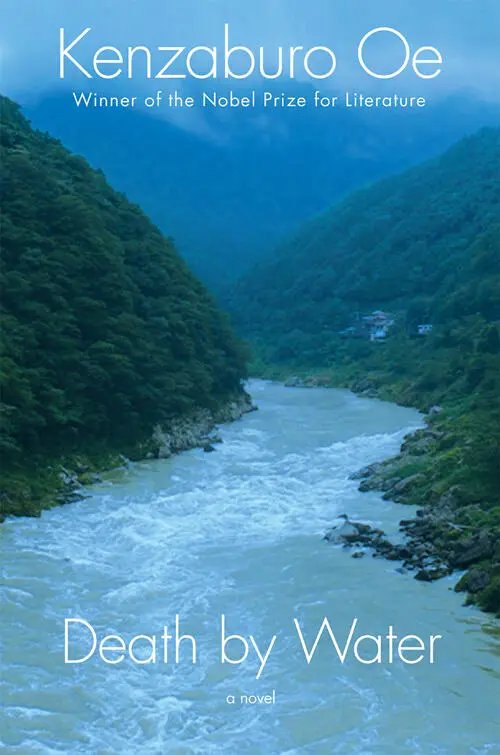
- Название:Death by Water
- Автор:
- Издательство:Grove/Atlantic, Inc.
- Жанр:
- Год:2015
- ISBN:9780802190871
- Рейтинг книги:3 / 5. Голосов: 1
-
Избранное:Добавить в избранное
- Отзывы:
-
Ваша оценка:
Death by Water: краткое содержание, описание и аннотация
Предлагаем к чтению аннотацию, описание, краткое содержание или предисловие (зависит от того, что написал сам автор книги «Death by Water»). Если вы не нашли необходимую информацию о книге — напишите в комментариях, мы постараемся отыскать её.
, his recurring protagonist and literary alter-ego returns to his hometown village in search of a red suitcase fabled to hold documents revealing the details of his father’s death during WWII: details that will serve as the foundation for his new, and final, novel.
Since his youth, renowned novelist Kogito Choko planned to fictionalize his father’s fatal drowning in order to fully process the loss. Stricken with guilt and regret over his failure to rescue his father, Choko has long been driven to discover why his father was boating on the river in a torrential storm. Though he remembers overhearing his father and a group of soldiers discussing an insurgent scheme to stage a suicide attack on Emperor Mikado, Choko cannot separate his memories from imagination and his family is hesitant to reveal the entire story. When the contents of the trunk turn out to offer little clarity, Choko abandons the novel in creative despair. Floundering as an artist, he’s haunted by fear that he may never write his tour de force. But when he collaborates with an avant-garde theater troupe dramatizing his early novels, Kogito is revitalized by revisiting his formative work and he finds the will to continue investigating his father’s demise.
Diving into the turbulent depths of legacy and mortality,
is an exquisite examination of resurfacing national and personal trauma, and the ways that storytelling can mend political, social, and familial rifts.
Death by Water — читать онлайн бесплатно полную книгу (весь текст) целиком
Ниже представлен текст книги, разбитый по страницам. Система сохранения места последней прочитанной страницы, позволяет с удобством читать онлайн бесплатно книгу «Death by Water», без необходимости каждый раз заново искать на чём Вы остановились. Поставьте закладку, и сможете в любой момент перейти на страницу, на которой закончили чтение.
Интервал:
Закладка:
Unaiko reached into her handbag for a giant notebook — a virtual duplicate of Masao’s omnipresent vade mecum — and extracted two photocopied sheets from between the pages. One depicted the front cover of my Iwanami Dictionary of Archaic Japanese , while the other was a replica of the page that included a definition of yorimashi.
Unaiko passed the page to me, and I proceeded to read the definition aloud. “ Usually when a soothsayer — it could be a mountain ascetic, or an esoteric Buddhist priest — offers a summoning prayer to invoke a certain deity or spirit, that entity will take possession of a medium. The medium is frequently a child with paranormal gifts who has been brought in to serve as the mouthpiece for the divine message or revelation from the god or spirit. That type of channeler is called a yorimashi.”
After I had finished reading, I continued in my own words. “Suppose, for example, that a highborn lady is suffering in childbirth. Based on the assumption that the problem is caused by an evil spirit or spirits, an attempt will be made to pacify it, or them. In order to appease a supernatural spirit, it first has to be summoned and provided with a voice through some sort of medium. In the exorcistic prayer chants mountain ascetics use for that purpose, the person who serves as a mediumistic mouthpiece is called a yorimashi. The young empress Kenreimon, who as you mentioned later became the tragic Lady Daibu, was the daughter of Kiyomori, of the Taira clan. The characters onstage represent some of the most powerful people of the era.”
“That’s totally true,” Unaiko said. “And the angry spirits that possessed me, as the medium, were nothing to sneeze at, either: cosmic heavy hitters, so to speak. As you probably know, there’s a whole slew of different terms for the disembodied entities I was channeling: departed souls, hungry ghosts, angry spirits, or whatever you want to call them.”
“Sometimes the spirit of someone who’s still alive will appear through a medium as well,” I said. “For example, the irate spirit of a priest named Shunkan who eventually died in exile on Kikaigashima — Devil’s Island — after having been banished there by Kiyomori.”
“That’s right!” Unaiko agreed. “Anyway, there are tons of spirits floating in the ether, and since we were on a tight budget I had to take on the job of portraying the different specters by myself. The basic concept was to create a classical version of our dog-tossing plays, so I did a fair amount of over-the-top ranting and raving along the way! The author of the play kindly took a liking to the idiosyncratic spin I put on it in rehearsals, and he even went to the trouble of writing a bunch of extra lines to clarify the lineage of the spirits, but it still took some fancy footwork for me to play all those different parts. When the author and director created the role — by which I mean those roles, plural — they were apparently visualizing the medium as a woman, but I managed to persuade them to let me portray the character as a young boy.”
“I think that was incredibly perceptive of you,” I said. “In one of my more arcane dictionaries, I noticed that the word yorimashi has etymological and mythological connotations of ‘a dead child.’ The kanji in question means ‘dead’ or ‘cadaver,’ and if you write it in its primitive pictographic form, it looks like this,” I explained as I drew a shape that resembled a turkey’s wishbone, or an extremely abstract human form, on the nearest scrap of paper.
“Oh, that’s adorable!” Unaiko exclaimed. “Actually, when I was brainstorming the role I used a certain someone as my model, and it was—”
“Kogii!” Masao jumped in, excitedly finishing Unaiko’s sentence for her. “Or rather, the Kogii doll that was hanging over our rehearsal space.”
“Exactly!” Unaiko exclaimed. “The Kogii doll was my inspiration, so at least the time we spent groping around for a way to dramatize the drowning novel wasn’t entirely in vain.”
“Since Unaiko’s still pretty amped from her experience on the big stage of Tokyo, this seems like as good a time as any to take a look at her artistic plans from here on out,” Masao said. “By the way,” he went on, “we’re very grateful for your generous financial sponsorship of Unaiko’s first solo flight — venturing out of the nest of the Caveman Group — and, of course, we greatly appreciate Chikashi’s and Asa’s support, too, especially the way they exercised their powers of persuasion on you! The Caveman Group has been on a temporary hiatus ever since our collaboration came to a halt, but I think this unforeseen confluence of circumstances has created a crucial make-or-break opportunity for Unaiko: a chance to try her wings in a big way. You’ve probably heard from Ricchan that they already have a solid plan in place, and it’s looking as if the first offering of Unaiko’s new group will be a stage-play version of the movie Meisuke’s Mother Marches Off to War —filtered through her trademark ‘dog-tossing’ template, of course. Even while she was madly running around in Tokyo, Unaiko has been thinking about this nonstop, and Ricchan has been doing her part down here by conducting background interviews and so on.
“When Unaiko asked Asa for advice on how to involve you in the project, Asa said that rather than standing at the crossroads of crisis and opportunity, as the saying goes, you were smack-dab in the middle of a crisis phase, and she thought it would be better not to pester you about anything just yet. She said she would be more than willing to provide guidance for the project, and she added that she would be happy to try to bring you into the fold after she returned. Anyway, Ricchan has been chronicling the progress on this end in a daily journal, and it struck me that it might be a good idea for everyone who is involved in this project — or at least the people who’ll be coming to the Forest House to work on it — to read Ricchan’s notes. I’d especially like for you to take a look at them, Mr. Choko, and I would be grateful if you could do it now, as a favor to all of us.”
4
I’ve been given the assignment of keeping a daybook, and I’m writing these entries in full awareness of the fact that they will eventually be read by Mr. Choko, who is old enough to be my father (at least). However, I’m also writing with the intention of making these notes available to any members of our troupe who might find their way into the rehearsal area of the Forest House. Since (unlike a diary) these pages are not for my eyes only, I will inevitably exercise a certain degree of self-censorship, but I would still like to try to write as freely and spontaneously as possible. I’m resigned to the fact that some readers may feel baffled by the inclusion of certain personal matters, and I may very well express some controversial views, but there’s nothing I can do about that. Needless to say, I hope all the readers will feel free to note their complaints or dissenting opinions right in the margins of these pages.
I’d like to start by talking about Unaiko. While she was working in Tokyo we kept in close touch by telephone, and one day I told her about how, out of the blue, Akari had shown me his copy of the final-draft screenplay for the film about Meisuke’s mother. With her usual focus, Unaiko immediately wanted to know how a certain pivotal scene had been put together. The scene in question shows the injured folk heroine being carried back to the village on an old storm shutter repurposed as a makeshift stretcher, and trying to figure out how to dramatize the final scene onstage has turned out to be a thorny problem. At present we’re trying to juggle the shooting script for the film along with Mr. Choko’s own notes from when he first agreed to get involved with that project and the rough draft he hammered out in the form of a novel before even starting the screenplay. Using those materials as a jumping-off point, I’ve been trying to create a new script in our own dramatic style. I’ve been agonizing over the best way to tell the story, and the pieces are just beginning to fall into place.
Читать дальшеИнтервал:
Закладка:
Похожие книги на «Death by Water»
Представляем Вашему вниманию похожие книги на «Death by Water» списком для выбора. Мы отобрали схожую по названию и смыслу литературу в надежде предоставить читателям больше вариантов отыскать новые, интересные, ещё непрочитанные произведения.




Обсуждение, отзывы о книге «Death by Water» и просто собственные мнения читателей. Оставьте ваши комментарии, напишите, что Вы думаете о произведении, его смысле или главных героях. Укажите что конкретно понравилось, а что нет, и почему Вы так считаете.