Kenzaburo Oe - Death by Water
Здесь есть возможность читать онлайн «Kenzaburo Oe - Death by Water» весь текст электронной книги совершенно бесплатно (целиком полную версию без сокращений). В некоторых случаях можно слушать аудио, скачать через торрент в формате fb2 и присутствует краткое содержание. Год выпуска: 2015, ISBN: 2015, Издательство: Grove/Atlantic, Inc., Жанр: Современная проза, на английском языке. Описание произведения, (предисловие) а так же отзывы посетителей доступны на портале библиотеки ЛибКат.
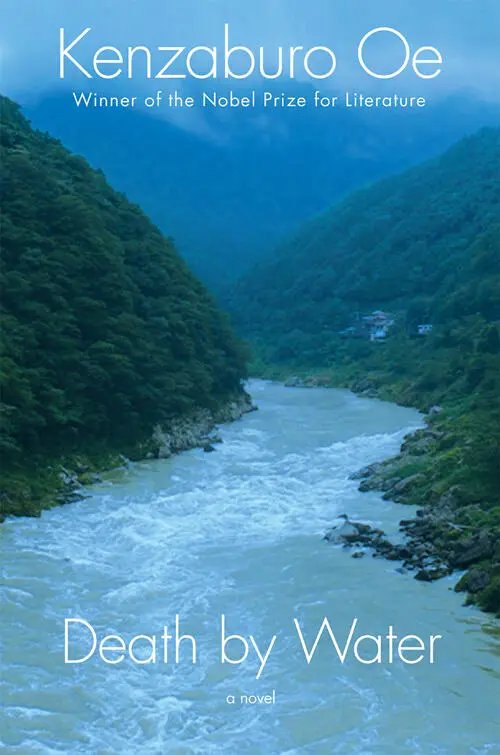
- Название:Death by Water
- Автор:
- Издательство:Grove/Atlantic, Inc.
- Жанр:
- Год:2015
- ISBN:9780802190871
- Рейтинг книги:3 / 5. Голосов: 1
-
Избранное:Добавить в избранное
- Отзывы:
-
Ваша оценка:
Death by Water: краткое содержание, описание и аннотация
Предлагаем к чтению аннотацию, описание, краткое содержание или предисловие (зависит от того, что написал сам автор книги «Death by Water»). Если вы не нашли необходимую информацию о книге — напишите в комментариях, мы постараемся отыскать её.
, his recurring protagonist and literary alter-ego returns to his hometown village in search of a red suitcase fabled to hold documents revealing the details of his father’s death during WWII: details that will serve as the foundation for his new, and final, novel.
Since his youth, renowned novelist Kogito Choko planned to fictionalize his father’s fatal drowning in order to fully process the loss. Stricken with guilt and regret over his failure to rescue his father, Choko has long been driven to discover why his father was boating on the river in a torrential storm. Though he remembers overhearing his father and a group of soldiers discussing an insurgent scheme to stage a suicide attack on Emperor Mikado, Choko cannot separate his memories from imagination and his family is hesitant to reveal the entire story. When the contents of the trunk turn out to offer little clarity, Choko abandons the novel in creative despair. Floundering as an artist, he’s haunted by fear that he may never write his tour de force. But when he collaborates with an avant-garde theater troupe dramatizing his early novels, Kogito is revitalized by revisiting his formative work and he finds the will to continue investigating his father’s demise.
Diving into the turbulent depths of legacy and mortality,
is an exquisite examination of resurfacing national and personal trauma, and the ways that storytelling can mend political, social, and familial rifts.
Death by Water — читать онлайн бесплатно полную книгу (весь текст) целиком
Ниже представлен текст книги, разбитый по страницам. Система сохранения места последней прочитанной страницы, позволяет с удобством читать онлайн бесплатно книгу «Death by Water», без необходимости каждый раз заново искать на чём Вы остановились. Поставьте закладку, и сможете в любой момент перейти на страницу, на которой закончили чтение.
Интервал:
Закладка:
I glanced at the small clock on the kitchen counter and saw that it was only five A.M. Then I set to work brewing four cups of fresh coffee in the coffeemaker Maki had recently sent down from the house in Tokyo; the amount was based on my expectation of visiting with Masao for the time it took to drink two large cups apiece. Ricchan was asleep in the west wing of the house, while Akari was in his room upstairs, and I knew no one else was likely to be up and about for another couple of hours, at least.
When Masao came inside, I caught a strong whiff of tobacco. He didn’t make any move to light up another cigarette, and I surmised that he had been lingering in front of the poetry stone for the primary purpose of having one last smoke before entering the house. Typically for him, Masao didn’t bother to break the ice with anything resembling the customary “long time no see” greetings. Instead, he resumed our conversation where we had left off, jumping right back into a topic he had evidently been continuing to think about during the intervening months.
“Lately Unaiko and Ricchan have been spending a lot of time here, pouring all their energy into the new project, so I’ve been holding down the fort at our headquarters in Matsuyama by myself,” he began. “I’ve kept busy taking inventory and getting organized, and in the process I reviewed all the works of yours that we’ve converted into stage plays so far.”
“Asa was saying how sorry she was your plan for dramatizing the drowning novel in conjunction with my own work on that book came to naught because of what happened on my part,” I said by way of indirect apology.
“Well, this has turned out to be the end of an era for us, so it’s given me a good chance to reflect and gain some perspective,” Masao said graciously. “Until now, converting Kogito Choko’s fiction into stage plays has been the mainstay of our work, which has caused some theater critics to suggest facetiously that the Caveman Group ought to change its name to something like ‘the People Who Live in the Cave of Kogito Choko.’ You know, the usual sarcasm and cheap plays on words.
“If your drowning novel had been completed, we were planning to find a way of combining it with whatever we had cooked up along the way to create a kind of contrapuntal synergy, to put it in musical terms. Capping off our ‘Choko phase’ with a big finale would have been a great way to thumb our noses at those cynical critics. Unaiko was approaching the project from a different angle, as usual, and some of the younger guys were talking about staging what they called ‘a living wake for Kogito Choko’ and using that as a selling point. I only heard the rough outlines, but I gathered it would have been a sort of retrospective.
“Anyway, as you may recall, the opening scene we had sketched out, before the whole project went to hell in a handbasket, depicted the launching of your father’s little rowboat onto the flooded river. That scene was inspired by your recurrent dream, so if the critics had wanted to make rude remarks about the Caveman Group’s dependence on the works of Kogito Choko … well, they might have had a valid point. It’s all moot now, of course, and today I’m more interested in discussing your uncanny alter ego, Kogii, who was in the boat with your father. As you know, we were going to give the vision physical form by making a Kogii doll and suspending it in the air above the stage, and even now, I still find myself wondering how that might have turned out. That’s actually what moved me to drop by this morning to talk to you.
“This may sound like a simplistic question,” Masao wound up, “but in the final analysis, what exactly was Kogii to you, anyway? Do you by any chance feel like kicking that question around for a while?”
“Sure, why not?” I said. “After all, you and your colleagues in the Caveman Group are the first people who have ever been willing to believe Kogii might actually have existed! When I was a child, no one else supported me the way you do. If I happened to mention matter-of-factly that Kogii was ‘right over there, right now,’ all I ever got in return was a giant dose of ridicule and teasing. I mean, some people pretended to believe, but I think they were just having fun at my expense. In the poem etched into the stone out back, when my mother mentions Kogii she appears to be referring to my childhood nickname. However, I believe she’s also talking in a subtle but unmistakable way about Akari. That’s evident, at least to me, from the way she says, You didn’t get Kogii ready…. Going up into the forest is obviously a metaphor for dying, and I’m certain she was chiding me for not having done enough to prepare Akari for death, in case he doesn’t outlive me.
“But when I talked about the recurrent dream, you folks came up with the idea of having Kogii appear early on as a sort of mannequin hovering over the boat as it takes off down the flooded river. I took that as a heartening sign, since it seemed to indicate that you weren’t dismissing Kogii as a phantom or something I hallucinated.”
“I guess it’s just what you might call my director’s habit, but I created a kind of questionnaire about Kogii,” Masao said. “Of course, when we learned that the drowning novel was out of the picture we had to stop working on our dramatization of the story, so these notes don’t have any practical application at this point. Even so, would you mind answering a few questions, just to resolve this gestalt for me?”
Before I’d had a chance to nod my assent, the ever-confident Masao had already opened the jumbo-size notebook balanced on his knees.
2
Masao:Mr. Choko, you’ve mentioned that the existence of your alter ego, Kogii, wasn’t acknowledged by the people around you, but in the course of her research Ricchan has run into a number of people who have said they remember hearing that you had a constant companion who was called ‘Kogii,’ like you, although no one ever actually saw the other child. One of those people was a classmate of yours who has become a leader of the farmers in the region, and another one — also a classmate, unsurprisingly — is a member of the family who owns the medical clinic in town. However, there wasn’t anybody who could say when Kogii first appeared, or how you and he met. It wasn’t her fault, of course, but Ricchan seems to feel that not having been able to interview your mother about a number of things — the uprising, and Kogii, and so on — has left some lamentable gaps in her research.
As I mentioned during our first conversation, we had won a prize and were embarking on the next stage of our group’s artistic evolution when I turned my attention to Kogii. I reread all your essays, hoping to find his first appearance. I mean, surely the initial encounter with a mystical being would be one of the major treasures in a child’s box of memories, right? I thought the evidence I was searching for must be hidden away somewhere in your published work, but I kept striking out. When it came to Kogii’s departure there was an abundance of detailed accounts, yet I couldn’t find a single description of how or when he first arrived on the scene. Ultimately, I concluded that by the time you became conscious of yourself as an entity living in this world, Kogii must already have been by your side.
We know Kogii couldn’t be seen by anyone but you. However, you always behaved as if you had a constant companion who was exactly like you — an identical twin, for all intents and purposes. I heard about it from your sister, Asa. She also told me that Kogii was your one and only playmate, so apparently you didn’t even interact with your only sister very often. She said she would often see you engaged in conversation, chattering at the invisible Kogii and then seeming to strain your ears to hear his reply, and she figured your friend must be telling you secrets about what went on in the realm of the forest. She thought the whole concept of Kogii must somehow have been overlaid with (or even inspired by) the folktales you children had heard from your mother and grandmother: the mythology of the forest that has shaped so many of your novels. You’ve written about a scenario in which kids go into the woods to play hide-and-seek, and both the hiders and the seekers became lost children who are still wandering deep in the forest to this day. Evidently Asa was intrigued by that dark fable, and she pestered your mother to tell her more, but your mom claimed not to know anything about it. Then when Asa suggested you might have invented the story on your own, your mother said that she didn’t think you would be able to make up such a sophisticated tale from scratch, so it was probably something you had heard from your grandmother. Then she went on to say that maybe when you were having all those intense conversations with a companion no one else could see, your pal was telling you stories. But then your mother added that, joking aside, it seemed likely you’d heard the story about the lost children from someone who had intimate knowledge of the forest. So what I’m wondering is, would it be accurate to say that Kogii’s main reason for existing was to keep you informed about whatever might be going on in the forest?
Читать дальшеИнтервал:
Закладка:
Похожие книги на «Death by Water»
Представляем Вашему вниманию похожие книги на «Death by Water» списком для выбора. Мы отобрали схожую по названию и смыслу литературу в надежде предоставить читателям больше вариантов отыскать новые, интересные, ещё непрочитанные произведения.



Обсуждение, отзывы о книге «Death by Water» и просто собственные мнения читателей. Оставьте ваши комментарии, напишите, что Вы думаете о произведении, его смысле или главных героях. Укажите что конкретно понравилось, а что нет, и почему Вы так считаете.