Kenzaburo Oe - Death by Water
Здесь есть возможность читать онлайн «Kenzaburo Oe - Death by Water» весь текст электронной книги совершенно бесплатно (целиком полную версию без сокращений). В некоторых случаях можно слушать аудио, скачать через торрент в формате fb2 и присутствует краткое содержание. Год выпуска: 2015, ISBN: 2015, Издательство: Grove/Atlantic, Inc., Жанр: Современная проза, на английском языке. Описание произведения, (предисловие) а так же отзывы посетителей доступны на портале библиотеки ЛибКат.
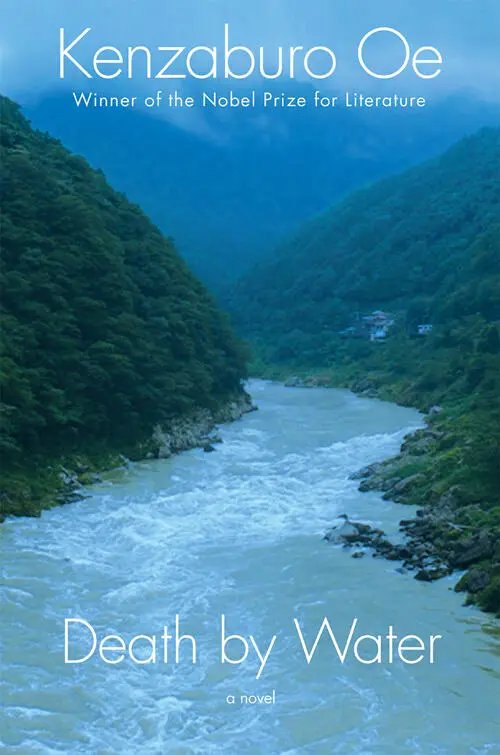
- Название:Death by Water
- Автор:
- Издательство:Grove/Atlantic, Inc.
- Жанр:
- Год:2015
- ISBN:9780802190871
- Рейтинг книги:3 / 5. Голосов: 1
-
Избранное:Добавить в избранное
- Отзывы:
-
Ваша оценка:
Death by Water: краткое содержание, описание и аннотация
Предлагаем к чтению аннотацию, описание, краткое содержание или предисловие (зависит от того, что написал сам автор книги «Death by Water»). Если вы не нашли необходимую информацию о книге — напишите в комментариях, мы постараемся отыскать её.
, his recurring protagonist and literary alter-ego returns to his hometown village in search of a red suitcase fabled to hold documents revealing the details of his father’s death during WWII: details that will serve as the foundation for his new, and final, novel.
Since his youth, renowned novelist Kogito Choko planned to fictionalize his father’s fatal drowning in order to fully process the loss. Stricken with guilt and regret over his failure to rescue his father, Choko has long been driven to discover why his father was boating on the river in a torrential storm. Though he remembers overhearing his father and a group of soldiers discussing an insurgent scheme to stage a suicide attack on Emperor Mikado, Choko cannot separate his memories from imagination and his family is hesitant to reveal the entire story. When the contents of the trunk turn out to offer little clarity, Choko abandons the novel in creative despair. Floundering as an artist, he’s haunted by fear that he may never write his tour de force. But when he collaborates with an avant-garde theater troupe dramatizing his early novels, Kogito is revitalized by revisiting his formative work and he finds the will to continue investigating his father’s demise.
Diving into the turbulent depths of legacy and mortality,
is an exquisite examination of resurfacing national and personal trauma, and the ways that storytelling can mend political, social, and familial rifts.
Death by Water — читать онлайн бесплатно полную книгу (весь текст) целиком
Ниже представлен текст книги, разбитый по страницам. Система сохранения места последней прочитанной страницы, позволяет с удобством читать онлайн бесплатно книгу «Death by Water», без необходимости каждый раз заново искать на чём Вы остановились. Поставьте закладку, и сможете в любой момент перейти на страницу, на которой закончили чтение.
Интервал:
Закладка:
“However, the truth is that I’m still left with a few nagging doubts. We aren’t talking about your conscious mind now but rather the unconscious, right? Either way, I doubt if you really understood the words you were hearing when you eavesdropped on those meetings, but somehow your dreaming mind was able to figure everything out, and the significance of what you’d overheard became clear in your dreams. Doesn’t that seem like a plausible explanation? On some level you knew there was a plan to steal a military plane and hide it at the Saya for future use, to bomb the Imperial Palace. And as you realized in your dream, the radical plan was the reason your father behaved so erratically during his last hours on earth. But the plan never came to fruition, and your unconscious mind invented the next scene.”
“Even so, the image of a warplane hidden on the grassy area of the Saya had no basis in reality,” I said. “I don’t know whether you’d call it fantasy, or the surreal inventiveness of the dreaming mind …”
“What do you mean, ‘fantasy’? The image was definitely grounded in fact, or at least in possibility. As I already told you, the issue of ‘borrowing’ the aircraft was a major sticking point in the endless discussions between your father and the military guys who were at your house. At that final meeting, they were talking about how Japan’s defeat in the war appeared to be much more imminent than they had been led to believe, and the discussion got very heated because your father kept insisting they ought to rush ahead with his favorite scheme, which involved a suicide attack on the Imperial Palace from the air. As I’ve mentioned, there were some new faces at the meeting: several young trainee pilots who were attending the Imperial Navy course in the village. They had been brought along by the usual army-officer participants, and they all went up to the Saya to dig out turpentine from the roots of the pine trees — needless to say, turpentine oil has dozens of uses, and like almost everything else it was in short supply during the war. Anyhow, I guess seeing the layout of the Saya gave the young pilots some ideas of their own, because after they returned to the house they were saying the best approach would be to ‘liberate’ a kamikaze plane at the airfield, make sure it was loaded with bombs, and then hide it somewhere around the Saya. You must remember that, at least; it was a major point of discussion.”
“Well, it’s not as if everything that went on at those drinking parties and meetings was clearly delineated in my dream, much less in my memory,” I said, shaking my head. “Even today, I’m still puzzled by many of the things I overheard. For example, the lines from The Golden Bough I read aloud a while ago were definitely circled in colored pencil by the Kochi Sensei, but I can’t help wondering why he placed so much emphasis on ‘killing the living God’ as a way of bringing rebirth and prosperity to a country. Did he really think those precepts could be applied directly to postwar realpolitik? I honestly don’t know. I mean, incendiary marginalia aside, there’s no actual proof my father (or his teacher) was reading The Golden Bough pragmatically, with the idea that its ancient mythologies could be translated into action to help steer this country’s imperial system through the postwar morass of chaos and disintegration. I know the others saw you as a kind of loyal retainer whose main job was to warm the sake and keep everyone’s cups filled, but it’s clear you were paying close attention to everything that went on in those meetings. So what I’d like to ask you now, Daio, is whether the group had a definite plan, in the form of a military strategy, to rescue this country from its postwar predicament, and if so, whether my father was the primary author of the plan.”
“Yes, most definitely,” Daio replied without hesitation. “At that point the strategy sessions had become deadly serious, and given the extent of your eavesdropping I’m surprised you even need to ask about your father’s role. He was the one who came up with the idea of bombing the Imperial Palace, but the others took the idea and ran with it, and some of the young military guys started talking about blowing up the big meteoric rock at the Saya to create a landing strip for the plane they were planning to steal. When he heard that, Choko Sensei got very upset and started shouting things like ‘What’s this nonsense about bombing the big rock? Do you really think I’m going to let a bunch of outsiders come in and deface the Saya? That spot isn’t some flash-in-the-pan landmark from the Meiji Era or something. It’s been an important local site since olden times, and you can’t just waltz in and start blowing things up to build a temporary airstrip!’ You must have heard that tirade, right?”
“Yes, I did,” I said. “To be honest, when I heard my father shouting I literally began to tremble. A moment later one of the officers came out into the hall where I was standing, still shaking like a leaf, and he said, ‘Listen, kiddo, we’re going to be talking about some important things from now on, so you’d better run along to the main house.’ So I did.
“It was much later when my father returned, and while I was aware that he and my mother were talking in low voices, I was in my bedroom so I couldn’t make out what they were saying. In retrospect I realize they were probably discussing my father’s decision to run away in his little boat. As a mere child, I couldn’t very well ask what was going on, but it was obvious the next day that my mother was helping my father get ready for a trip. At one point my father asked me to extract the tube from an old bicycle tire and blow it full of air, but that was nothing unusual. All day, from morning to evening, my chest seemed to be constricted with a vague feeling of anxiety, but I didn’t know why. During that time the military guys were still quietly holed up in the outbuilding next door. The scene I remember so vividly — my father’s departure on the stormy river — happened very late at night, long after my usual bedtime. I’m not sure what time it was, but …”
“So you didn’t really understand what you overheard outside the meeting room!” Daio interjected. “I always used to wonder how much you knew. I even suspected you might be feigning ignorance, but now I realize that wasn’t the case. Rather, I think your memories have been quarantined or frozen somewhere deep in your unconscious because the things you heard (the army officers clashing with your father about the Saya and so on) were just too confusing for your childish mind to deal with.
“Sorry, I don’t mean to monopolize the conversation, but I want to explain my theory. First, under the guidance of his teacher in Kochi, your father read The Golden Bough, with special emphasis on the part about the tradition of killing the old king to protect the country from succumbing to decay and debilitation, and that gave him the idea of bombing the Imperial Palace. He was able to get the army officers on board with this rather extreme plan, at least at first, and they started to get excited about it (to say the least) during the two-day drinking party masquerading as a policy meeting. But I really don’t think that discussion would have made sense to you, not only because you were an innocent child, but also because your formal education was based on the nationalistic, emperor-worshipping model. Actually, the thing that made the lightbulb go on in my head was seeing Unaiko’s ‘dog-tossing’ dramatization of Kokoro. That really got me thinking. The Sensei character in Kokoro talks about the ‘spirit of the age’ or ‘the spirit of the Meiji Era,’ right? In any case, during the performance someone from the audience asked whether a person like Sensei, who had turned his back both on his own era and on society in general, could really be said to have been influenced by the spirit of his age to the point where he ended up taking his own life when the era came to an end. As you know, that sparked a major ruckus, with stuffed dogs flying through the air in all directions.
Читать дальшеИнтервал:
Закладка:
Похожие книги на «Death by Water»
Представляем Вашему вниманию похожие книги на «Death by Water» списком для выбора. Мы отобрали схожую по названию и смыслу литературу в надежде предоставить читателям больше вариантов отыскать новые, интересные, ещё непрочитанные произведения.



Обсуждение, отзывы о книге «Death by Water» и просто собственные мнения читателей. Оставьте ваши комментарии, напишите, что Вы думаете о произведении, его смысле или главных героях. Укажите что конкретно понравилось, а что нет, и почему Вы так считаете.