Kenzaburo Oe - Death by Water
Здесь есть возможность читать онлайн «Kenzaburo Oe - Death by Water» весь текст электронной книги совершенно бесплатно (целиком полную версию без сокращений). В некоторых случаях можно слушать аудио, скачать через торрент в формате fb2 и присутствует краткое содержание. Год выпуска: 2015, ISBN: 2015, Издательство: Grove/Atlantic, Inc., Жанр: Современная проза, на английском языке. Описание произведения, (предисловие) а так же отзывы посетителей доступны на портале библиотеки ЛибКат.
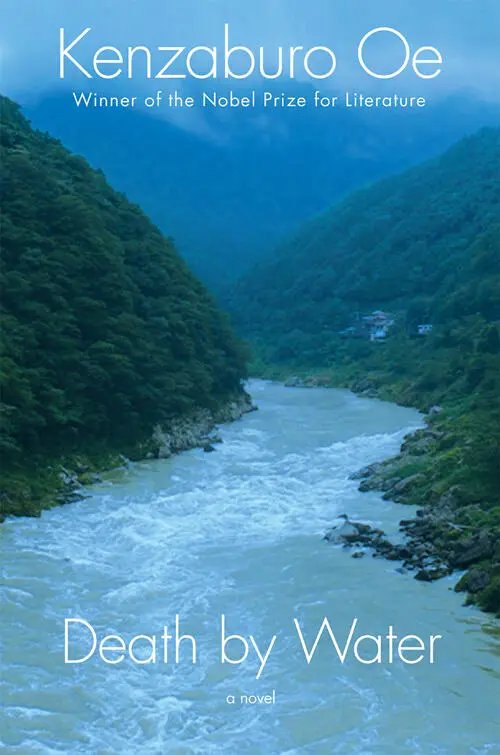
- Название:Death by Water
- Автор:
- Издательство:Grove/Atlantic, Inc.
- Жанр:
- Год:2015
- ISBN:9780802190871
- Рейтинг книги:3 / 5. Голосов: 1
-
Избранное:Добавить в избранное
- Отзывы:
-
Ваша оценка:
Death by Water: краткое содержание, описание и аннотация
Предлагаем к чтению аннотацию, описание, краткое содержание или предисловие (зависит от того, что написал сам автор книги «Death by Water»). Если вы не нашли необходимую информацию о книге — напишите в комментариях, мы постараемся отыскать её.
, his recurring protagonist and literary alter-ego returns to his hometown village in search of a red suitcase fabled to hold documents revealing the details of his father’s death during WWII: details that will serve as the foundation for his new, and final, novel.
Since his youth, renowned novelist Kogito Choko planned to fictionalize his father’s fatal drowning in order to fully process the loss. Stricken with guilt and regret over his failure to rescue his father, Choko has long been driven to discover why his father was boating on the river in a torrential storm. Though he remembers overhearing his father and a group of soldiers discussing an insurgent scheme to stage a suicide attack on Emperor Mikado, Choko cannot separate his memories from imagination and his family is hesitant to reveal the entire story. When the contents of the trunk turn out to offer little clarity, Choko abandons the novel in creative despair. Floundering as an artist, he’s haunted by fear that he may never write his tour de force. But when he collaborates with an avant-garde theater troupe dramatizing his early novels, Kogito is revitalized by revisiting his formative work and he finds the will to continue investigating his father’s demise.
Diving into the turbulent depths of legacy and mortality,
is an exquisite examination of resurfacing national and personal trauma, and the ways that storytelling can mend political, social, and familial rifts.
Death by Water — читать онлайн бесплатно полную книгу (весь текст) целиком
Ниже представлен текст книги, разбитый по страницам. Система сохранения места последней прочитанной страницы, позволяет с удобством читать онлайн бесплатно книгу «Death by Water», без необходимости каждый раз заново искать на чём Вы остановились. Поставьте закладку, и сможете в любой момент перейти на страницу, на которой закончили чтение.
Интервал:
Закладка:
“Anyhow, that somehow made me think about you, Kogito. Your early education had a militaristic slant, so the ‘spirit of the age’ you grew up in demanded total allegiance to an emperor who was believed to be a god incarnate. (I don’t believe a valid comparison can be drawn between those sentiments and the so-called spirit of Meiji Soseki wrote about, but that’s another discussion for another day.)
“Fifteen years or so ago, you turned down the emperor’s highest cultural award because of your unwavering belief in the principles of postwar democracy, and as a result my young disciples at the training camp (who were still totally committed to emperor worship) decided you were their archenemy. I think that was probably the motivation behind the practical joke they played, sending you a giant live turtle and telling you I was dead, but they could have just done it for mischief, pure and simple. As for me, I think if you’re going to talk about Kogito Choko in terms of the spirit of an age, there are two distinct facets. The first half of the Showa Era you grew up in — in other words, until 1945—revolved around a godlike emperor, while the second half, after the war, was shaped by democratic principles. I think your personal trajectory reflects that as well.
“So we have a ten-year-old boy who was born in the first half of the era and who is, in effect, a poster child for that period in history. This boy happens to overhear his father — whom he holds in great esteem — talking about a scheme in which some navy men, trained in piloting military aircraft, would stage a suicide attack to kill the living god — that is, the emperor. Does it really seem likely that a boy whose schooling was rooted in emperor-worshipping nationalism would be able to process such a radical idea? No, I think what young Kogito heard was so shocking that his conscious mind simply suppressed it. And the only thing the eavesdropping kid retained, indelibly lodged in his unconscious, was the image of the young pilots at the Saya practicing their takeoffs and landings — a fantasy scene he had only heard described through a wall. And there you have it: the source of your Saya dream. Of course, the additional details and embellishments were provided by your famously fertile imagination, which would later bear fruit in the form of novels, but mark my words: your imaginings were firmly based on things that were discussed in the meeting you were surreptitiously listening in on!”
Daio paused for a moment in triumph and then went on: “And so I’ve come to the conclusion that for you, as the unofficial representative of the spirit of the prewar half of the Showa Era, it was simply impossible to wrap your head around what you heard your father saying. On the one hand, your father was an outsider who had married into the village and had embraced many of the local traditions, and I think those stories had a deeper hold on his psyche than the ultranationalist dogma he was spouting to the young officers. The land around the Saya was considered by local folks to be the heart of the forest, so there was no way your father was going to let a bunch of young whippersnappers come charging in and tramp all over the ancient site, digging up the roots of the pine trees with pickaxes and trowels to get at the valuable turpentine, then adding insult to injury by proposing to raze that hallowed ground for use as an airstrip. That was the father you knew and looked up to. But on the other hand, from what you’d overheard it also sounded as if your father was the instigator of a crazy plan to kill the living god!
“I honestly believe your father was probably opposed to such radical tactics, in his heart, but maybe he had just reached a point where he felt the need for a grand symbolic act. So when it became clear that Japan was going to lose the war, he and his cohorts probably discussed a scenario wherein, if the emperor abdicated his throne, they would commit premeditated ritual suicide — you know, junshi. The truth is, Kogito, by the time your father reached the stage of talking about dispatching a kamikaze bomber to target the center of Tokyo, where the palace is, I think he had already resolved to end his own life, one way or another. I didn’t have the courage to tell you this before, but I never thought Choko Sensei was the type of man who would live a long, uneventful life and die a peaceful death in his own bed. To be honest, I don’t believe his drowning was an accident at all.”
4
There we stood, Daio and I, leaning against the big meteoric rock. The sun was sinking in the west, and the new growth on the trees around the Saya was shrouded in a rosy-hued haze. As I gazed at the forest I was picturing a faraway scene in Frazer’s ancient Forest of Nemi, where there wouldn’t yet have been any sign of the multifarious foliage we associate with modern-day Italy — no bay laurels, no olives, no oleanders, no citrus trees — and only the beeches and oaks would be growing in abundance. I thought with pleasure of the charmingly archaic language Frazer used to describe those trees: the beechwoods and oakwoods, with their deciduous foliage. …
Daio, meanwhile, was pointing toward the bottom of the hill. “Hey, look, Ricchan’s waving at us,” he observed. “Akari’s standing up as well, putting his cast back on by himself. I’m glad we were able to have this long chat, Kogito; I’ve been wanting to tell you some of these things for the longest time. When I heard from your mother that you were going away to college in Tokyo, I thought, Well then, I’d better study really hard and make sure I become the kind of person who can carry on an intelligent conversation with Kogito when he comes back, so I started taking correspondence courses right away, after you left. The tuition wasn’t terribly expensive, but the students were also required to go up to Tokyo once a year for some classroom time, and your mother helped me with the fees. Of course, after the war ended I wanted to keep the training camp going as a tribute to your father’s memory — after all, I was his number one disciple. As a result I was never able to live a normal life, and your mother was kind enough to sympathize with my situation.”
Daio and I quickly traversed the grassy downhill slope below the Saya, which was now completely in the shade. When we reached the sandy shore of the river, Daio used his one sturdy arm to grab a large bag that Ricchan had just finished packing and hoisted it onto his shoulder. Akari, who had clearly benefited from his rehab exercises, picked up the Boston bag and started to walk toward the van, with Ricchan by his side to lend support if needed. I brought up the rear of our little procession, trudging along in silence and carrying nothing except the immeasurable weight of the things Daio had just told me.
Daio had no reason to share in my wordless reverie, and after a few moments he spoke. “Kogito, it occurred to me that more than half a century has passed since Choko Sensei died prematurely, at the age of fifty. Most of the people who knew your father are gone as well, including your mother — who was larger than life in her own right — but she died without ever having said anything regarding her husband, as far as I know. I mean, seriously, not a single word! Asa told me how disappointed you were when you finally got to open the red leather trunk, which should theoretically have contained the papers and correspondence your father left behind, and didn’t find anything you could use. But on the bright side, as an indirect result of your discovery of the three volumes of The Golden Bough, I got to talk to you about some serious matters that have been weighing on my mind for years.
“I know I usually start blathering every time I meet up with you, while you seem to mostly listen in silence, and I’m always left with the feeling that I don’t really know what’s going on in your head. Actually, that’s been the case ever since you were a high school sophomore, when you brought Goro Hanawa to visit us at the training camp. Even after the intense conversation you and I just had, I still have no idea what you’re thinking, or feeling. Even so, it looks to me as though we’re both remembering the events of the night your father drowned, over and over again … and of course you keep reliving it in your dreams as well.
Читать дальшеИнтервал:
Закладка:
Похожие книги на «Death by Water»
Представляем Вашему вниманию похожие книги на «Death by Water» списком для выбора. Мы отобрали схожую по названию и смыслу литературу в надежде предоставить читателям больше вариантов отыскать новые, интересные, ещё непрочитанные произведения.




Обсуждение, отзывы о книге «Death by Water» и просто собственные мнения читателей. Оставьте ваши комментарии, напишите, что Вы думаете о произведении, его смысле или главных героях. Укажите что конкретно понравилось, а что нет, и почему Вы так считаете.