Kenzaburo Oe - Death by Water
Здесь есть возможность читать онлайн «Kenzaburo Oe - Death by Water» весь текст электронной книги совершенно бесплатно (целиком полную версию без сокращений). В некоторых случаях можно слушать аудио, скачать через торрент в формате fb2 и присутствует краткое содержание. Год выпуска: 2015, ISBN: 2015, Издательство: Grove/Atlantic, Inc., Жанр: Современная проза, на английском языке. Описание произведения, (предисловие) а так же отзывы посетителей доступны на портале библиотеки ЛибКат.
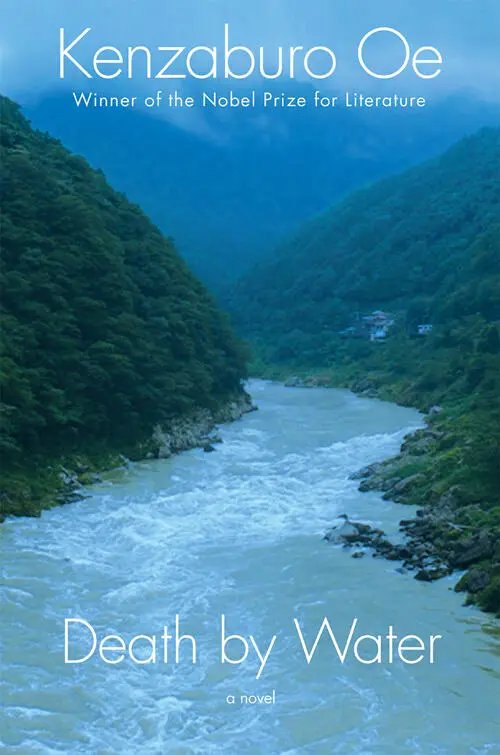
- Название:Death by Water
- Автор:
- Издательство:Grove/Atlantic, Inc.
- Жанр:
- Год:2015
- ISBN:9780802190871
- Рейтинг книги:3 / 5. Голосов: 1
-
Избранное:Добавить в избранное
- Отзывы:
-
Ваша оценка:
Death by Water: краткое содержание, описание и аннотация
Предлагаем к чтению аннотацию, описание, краткое содержание или предисловие (зависит от того, что написал сам автор книги «Death by Water»). Если вы не нашли необходимую информацию о книге — напишите в комментариях, мы постараемся отыскать её.
, his recurring protagonist and literary alter-ego returns to his hometown village in search of a red suitcase fabled to hold documents revealing the details of his father’s death during WWII: details that will serve as the foundation for his new, and final, novel.
Since his youth, renowned novelist Kogito Choko planned to fictionalize his father’s fatal drowning in order to fully process the loss. Stricken with guilt and regret over his failure to rescue his father, Choko has long been driven to discover why his father was boating on the river in a torrential storm. Though he remembers overhearing his father and a group of soldiers discussing an insurgent scheme to stage a suicide attack on Emperor Mikado, Choko cannot separate his memories from imagination and his family is hesitant to reveal the entire story. When the contents of the trunk turn out to offer little clarity, Choko abandons the novel in creative despair. Floundering as an artist, he’s haunted by fear that he may never write his tour de force. But when he collaborates with an avant-garde theater troupe dramatizing his early novels, Kogito is revitalized by revisiting his formative work and he finds the will to continue investigating his father’s demise.
Diving into the turbulent depths of legacy and mortality,
is an exquisite examination of resurfacing national and personal trauma, and the ways that storytelling can mend political, social, and familial rifts.
Death by Water — читать онлайн бесплатно полную книгу (весь текст) целиком
Ниже представлен текст книги, разбитый по страницам. Система сохранения места последней прочитанной страницы, позволяет с удобством читать онлайн бесплатно книгу «Death by Water», без необходимости каждый раз заново искать на чём Вы остановились. Поставьте закладку, и сможете в любой момент перейти на страницу, на которой закончили чтение.
Интервал:
Закладка:
“Oh, that reminds me. I know your mother told Asa that she thought your father had become frightened by what he’d gotten himself into, and that was why he tried to run away. (I gather you’ve listened to the recording she made?) Obviously, that isn’t how I see it, and I was there. I guess you’ve been processing everything in your own silent, inscrutable way, but I have finally come to the conclusion that no matter how much we speculate about your father’s motivations, no one will ever know for sure why he behaved as he did on that night. Maybe it’s one of those riddles that can never be solved.
“Well, here I am rambling on again, but I remembered just now that the officers were saying some rather rude things behind Choko Sensei’s back during those highly charged days before he died. And a word that cropped up more than once during those surreptitious conversations was mononoke (you know, in the sense of a supernatural spirit that possesses a living person). I wasn’t familiar with the word at the time, but when I encountered it later I remember thinking, Ah, so that’s what those officers were whispering about.
“Actually, on reflection, I used to hear that word in the officers’ private conversations even during the earlier time when they were getting along relatively well with your father. In the beginning, your father rarely participated in the officers’ discussions. But then he suddenly got very gung ho and vocal about everything, and he even went so far as to make the trek to the Kochi Sensei’s house to talk things over with him.
“I remember what one of the officers said: ‘As someone who was born and raised deep in this forest’—your father had deliberately given them that impression—’Old Man Choko gets all fired up about things to a degree that seems alarming to guys like us who were raised in cities and towns. It’s almost as if he’s been possessed by a spirit or a demon or a fox or something.’ The officer added that a person like your father could get totally carried away by his ideas and turn into a loose cannon. During that meeting your father and the officers had a difference of opinion about their plan, and they reached an impasse. By the next morning everybody knew he was planning to run away in his little rowboat, but while he was making the preparations for his departure none of the military guys made any effort to stop him. It wasn’t much past noon when they got into party mode and started drinking themselves silly, and they ordered me to fetch the red leather trunk. As I mentioned before, they somehow knew your father was planning to take it with him when he fled, and they obviously wanted to censor the contents and remove anything that might have incriminated them. Then around midnight you came over to the storehouse to retrieve the trunk.
“After your father left, I got a very clear sense that the military guys were all thinking that if your father rushed off in a panic and ended up drowning in the flooded river, it would be good riddance from their point of view, as long as he didn’t leave any evidence behind to implicate them. That’s why they didn’t try to stop him from going. They even made a point of warning me, as a very junior member of the group, not to do anything to dissuade Choko Sensei from his rash plan, so I just had to watch him go. After I assured them he really had taken off in his rowboat, it seemed to set their minds at ease. They even went with me to look for Sensei’s remains once it got light, since no one really expected him to survive his trip down the flooded river in the flimsy little boat.
“I’ll never forget what one of the officers said to one of his young cohorts right about then. He was talking about your father’s plan to steal a kamikaze bomber from the Yoshidahama airfield (an idea everyone had pretended to be enthusiastic about when it first came up) and he said, ‘Of course, to us, the plan seemed like a big joke all along!’ And then they both gave kind of a weak, mean-spirited laugh — I guess you’d call it a snigger. I still can’t forgive those two officers, although I suppose both of them are probably long since dead and gone.
“Only … I don’t mean to go on and on about this, but I can’t get it out of my mind. I really think the two of us — you still having the same dream after all these years, and me still obsessed with trying to figure out the truth about that night — are the only people left in the world who can even spare a thought for Choko Sensei anymore!”
At this point, I remembered a question I had been wanting to ask. “Daio, you seem to have very lucid memories about the night of the big flood and the following morning, but what about the red leather trunk I took to my father when he was already on board the boat? Do you know how much time elapsed before that trunk was finally returned to my mother?”
“Oh, the trunk,” Daio said. “Yeah, apparently it floated downstream and finally washed ashore a few kilometers past the spot where the boat capsized. It was retrieved by some fishermen and taken to the police station, and eventually (it could have been weeks, or months) the cops went to your house and returned it to your mother. As for the letters and papers that were inside, those had already been sifted through and censored by the officers. Whether the war had ended in victory or defeat for Japan, there was nothing left in the trunk to raise a warning flag for anyone on any side. No incriminating evidence at all — the officers made sure of that. Of course during that time of crisis, with the Occupation and whatnot, those local policemen certainly didn’t have time to be poring over an English-language edition of The Golden Bough looking for evidence of subversive activities! Until recently the only people who had seen inside the trunk in recent memory were your mother and your sister, as far as I know. And even though the trunk had been more or less sanitized by the officers, I guess those two strong women decided to keep the remaining contents out of your hands to avoid any possible negative repercussions from the drowning novel you wanted to write. In retrospect, maybe they were being overly cautious, but I guess they felt it was important to try to protect the family name from any hint of scandal.”
Daio paused for a moment, then continued. “Choko Sensei was — and still is — the most important teacher I’ve ever had, but to be honest, I hold your mother in even higher esteem. In my personal ranking system, she’s at the very top, above your father. From the time you were a child, I always believed you were no ordinary person. But since we’re ranking things, I’m sure you know your mother always thought Asa was a more balanced human being than you are, in a practical sense, and I think she died happy, knowing that Asa would outlive us all.
“I remember your mother used to say that in the House of Choko, the women never fail to outshine the men. Apparently it’s been true going back to your grandmother’s time. Or if you wanted to go even further, maybe you could include Meisuke’s mother. Your mother always said she might have been a distant relative of yours!”
PART THREE. These Fragments I Have Shored Against My Ruins
Chapter 12. All About Kogii
1
Very early one morning I heard the sound of something stirring outside, behind the Forest House. After lying awake, listening, for the better part of an hour, I finally got out of bed and ventured downstairs.
Masao Anai was standing in the back garden, gazing intently at the large, round poetry stone, and it occurred to me that this was the first time I’d seen him during my current sojourn in the forest. Masao raised his head and looked at me calmly, but his expression seemed to bear a tinge of disappointment. (My phrasing may be a trifle disingenuous, since I had been directly responsible for dashing his hopes.) At the same time, I discerned a kind of pellucid freshness in his gaze, as if he might be ready to let bygones be bygones and begin anew. When I caught Masao’s eye, through the window, I got the sense that he was picking up a similarly positive vibration from me.
Читать дальшеИнтервал:
Закладка:
Похожие книги на «Death by Water»
Представляем Вашему вниманию похожие книги на «Death by Water» списком для выбора. Мы отобрали схожую по названию и смыслу литературу в надежде предоставить читателям больше вариантов отыскать новые, интересные, ещё непрочитанные произведения.





Обсуждение, отзывы о книге «Death by Water» и просто собственные мнения читателей. Оставьте ваши комментарии, напишите, что Вы думаете о произведении, его смысле или главных героях. Укажите что конкретно понравилось, а что нет, и почему Вы так считаете.