Kenzaburo Oe - Death by Water
Здесь есть возможность читать онлайн «Kenzaburo Oe - Death by Water» весь текст электронной книги совершенно бесплатно (целиком полную версию без сокращений). В некоторых случаях можно слушать аудио, скачать через торрент в формате fb2 и присутствует краткое содержание. Год выпуска: 2015, ISBN: 2015, Издательство: Grove/Atlantic, Inc., Жанр: Современная проза, на английском языке. Описание произведения, (предисловие) а так же отзывы посетителей доступны на портале библиотеки ЛибКат.
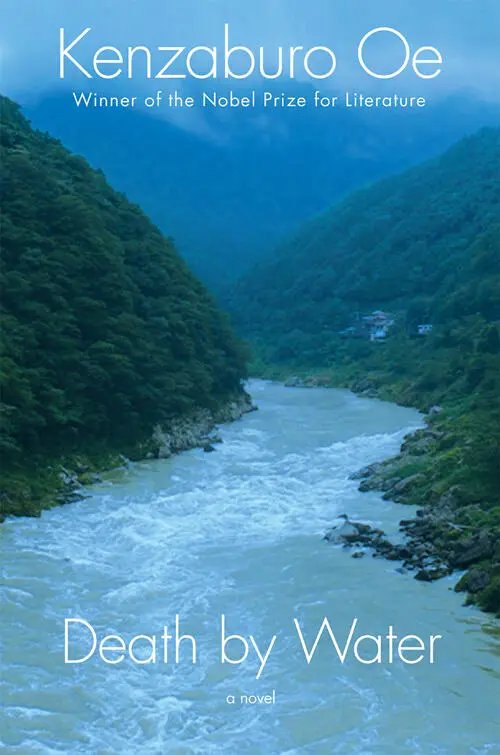
- Название:Death by Water
- Автор:
- Издательство:Grove/Atlantic, Inc.
- Жанр:
- Год:2015
- ISBN:9780802190871
- Рейтинг книги:3 / 5. Голосов: 1
-
Избранное:Добавить в избранное
- Отзывы:
-
Ваша оценка:
Death by Water: краткое содержание, описание и аннотация
Предлагаем к чтению аннотацию, описание, краткое содержание или предисловие (зависит от того, что написал сам автор книги «Death by Water»). Если вы не нашли необходимую информацию о книге — напишите в комментариях, мы постараемся отыскать её.
, his recurring protagonist and literary alter-ego returns to his hometown village in search of a red suitcase fabled to hold documents revealing the details of his father’s death during WWII: details that will serve as the foundation for his new, and final, novel.
Since his youth, renowned novelist Kogito Choko planned to fictionalize his father’s fatal drowning in order to fully process the loss. Stricken with guilt and regret over his failure to rescue his father, Choko has long been driven to discover why his father was boating on the river in a torrential storm. Though he remembers overhearing his father and a group of soldiers discussing an insurgent scheme to stage a suicide attack on Emperor Mikado, Choko cannot separate his memories from imagination and his family is hesitant to reveal the entire story. When the contents of the trunk turn out to offer little clarity, Choko abandons the novel in creative despair. Floundering as an artist, he’s haunted by fear that he may never write his tour de force. But when he collaborates with an avant-garde theater troupe dramatizing his early novels, Kogito is revitalized by revisiting his formative work and he finds the will to continue investigating his father’s demise.
Diving into the turbulent depths of legacy and mortality,
is an exquisite examination of resurfacing national and personal trauma, and the ways that storytelling can mend political, social, and familial rifts.
Death by Water — читать онлайн бесплатно полную книгу (весь текст) целиком
Ниже представлен текст книги, разбитый по страницам. Система сохранения места последней прочитанной страницы, позволяет с удобством читать онлайн бесплатно книгу «Death by Water», без необходимости каждый раз заново искать на чём Вы остановились. Поставьте закладку, и сможете в любой момент перейти на страницу, на которой закончили чтение.
Интервал:
Закладка:
Kogito:Yes, that’s correct.
Masao:Okay, good. So this brings us to the day when Kogii goes off and leaves you behind. You’re standing on the wraparound verandah outside the back parlor of your house by the river. Kogii is beside you, as usual, but then he suddenly leaps onto the balustrade. By the time you realize what’s happening, Kogii has taken off, spreading his arms like wings and floating through the air until he’s just above the midpoint of the river. From there he wafts high up into the forest and vanishes from sight. And that was how you came to lose your beloved doppelgänger.
Kogito:Yes, that’s exactly what happened. There’s really no way around it: Kogii simply went away and left me in the lurch.
Masao:However, Kogii did come down from the forest on one other occasion. It was a full-moon night and you were lying awake, unable to sleep, when you heard what sounded like some sort of signal. When you went out the front door of your house, Kogii was standing there illuminated by the moon. Without saying a word he began walking away, heading up the road into the forest, with you following close behind as the rain began to fall. The next thing you knew, Kogii was nowhere to be seen and you were caught in a torrential downpour.
Now, what strikes me as important about the events of that moonlit night is the fact that even though we have never heard that Kogii came from such-and-such a place, it seems clear that on this evening he came down from the forest. Oh, and there’s another thing: the internal conflicts you had as a child. When Kogii climbed up on the railing and floated across the river, if you’d had the courage to follow him right then — walking through the air to the center of the river, and then spreading your own arms as if they were wings — maybe you would have been able to ascend into the forest, too. But you were a coward, so you missed your big opportunity. Later, while you were brooding in your dark little bedroom, sick at heart and awash in vain regrets, Kogii came down from the forest and gave you another chance. That’s what you were thinking when you went eagerly traipsing after him, isn’t it?
Kogito:That’s exactly right.
Masao:However, after you’d followed Kogii into the forest, he disappeared and you ended up getting stranded by a huge rainstorm. The firemen said that the reason you stayed there overnight was because the forest road had turned into a river. (I can’t help feeling that there was some special significance to their choice of words, given the way your father died.) Anyway, they refused to go and rescue you. You sought shelter in the hollow of a Castanopsis tree, and before long you began to run a high fever. If you had spent another night exposed to the elements, you would almost certainly have died. It seems possible that both times Kogii invited you to follow him, he was acting as an intermediary for the Other Side, trying to lead you to an early grave. I mean, when he took off in the air above the river — if you had tried to emulate his flying motion, like some wingless Icarus, you could easily have hit your head on a rock on the bottom of the river and died.
So on both of those occasions you managed to stay alive, but the second time you lost your best friend, Kogii, forever. While you were recovering from your illness and your condition was still touch and go, you felt very alone and frightened. Your mother felt sorry for you, and that was when she told you the story of Meisuke’s mother, including the reassuring line about how there’s no need to worry, because even if you were to die, she would just give birth to you again. Isn’t that what happened?
Kogito:Yes, that’s the gist of it, except that as I recall my mother spoke those words in the local dialect.
Masao:Anyway, if you had remained in that hollow tree for much longer you would probably have crossed over to the Other Side, with Kogii as your spirit guide, and the two of you could have been together forever. To me, it seems perfectly reasonable that you would have felt some ambivalence or even regret about the way things turned out — that is, about being rescued. In one of the books you wrote for children, I think the scene where you and your mother talk about mortality and rebirth is really a beautiful thing.
Kogito:… [silence]
Masao:And then when you were ten years old, you watched your father take off down the flooded river in his little boat. You weren’t with him, even though that was supposedly the plan when you set out from your house. Instead, next to your father, in the place where you thought you yourself should have been standing, you saw your alter ego, Kogii. And for the past sixty-some years you’ve been dreaming and redreaming the same scene, over and over again. The third time’s the charm, as they say, and isn’t it a fact that even now you’re still thinking, If only I had gone with my father …?
Kogito:Yes, that sounds about right.
Masao:So for me, at least, it seems as if you were hoping to use the drowning novel to rewrite history and reverse the outcome of the scene. I think you were imagining that even if it was only in a book, you might be able to invent a scene in which you and Kogii were working together to help your father. The author of the drowning novel is also the “I” who appears throughout the story, and if you tried to tell me that type of narrative device would be impossible to depict onstage, my response would be, “Well then, I’ll just create a third-person hero and dramatize the scene that way!” There are all sorts of other possibilities, too, but the problem is you’ve abandoned the project. I know you said giving up was your only option after the contents of the red leather trunk turned out to be useless, but I can’t help wondering whether you might simply have lost the courage to even try to create the authentic type of late work E. W. Said talks about in On Late Style, as a final endeavor in the life of an artist. You know: thrillingly catastrophic work that manages to overturn and surpass all the creations that went before?
Kogito:You may very well be right about that, too.
3
Unaiko’s time in Tokyo as an assistant director — and, unexpectedly, as a lead actress — had finally come to an end. After checking in at the Caveman Group’s headquarters in Matsuyama she hopped in the company van, with Masao Anai at the wheel, and headed down to the Forest House. It was obvious at a glance that Unaiko’s four weeks of working on a play at a major theater in Tokyo had been an emotional roller coaster, and even now that she was back in familiar surroundings she seemed still to be on the wild ride, with its exaggerated highs and lows. The moment she walked through the door the words started tumbling out, and she went on talking nonstop while we were assembling in the great room.
“The play we were doing was inspired by the Heike Monogatari, ” Unaiko enthused, naming one of the most famous narratives in classical Japanese literature. “However, it took a very popular approach, focusing on the heroic Kiyomori and also incorporating material from The Poetic Memoirs of Lady Daibu, which came later. As for the role I ended up playing — I kept thinking you might find this interesting and amusing, Mr. Choko — it was, quite literally, weird. In the script, the only description of my part was the single word ‘medium.’ The director told me a character like that appears in volume three of the Heike Monogatari, and he described yorimashi (meaning a medium or channeler) as a sort of spiritual nickname. But because that was the only background he provided, I didn’t have any kind of concrete understanding of the character. The guy who was playing the role of Kiyomori is also quite well known as a highbrow intellectual who frequently pops up on TV as a talking head, so I asked him for advice, but he just said, ‘Why don’t you look it up in the dictionary?’ That seemed rather cold at the time, but it actually turned out to be a helpful suggestion. I called and asked Ricchan to check the big dictionary you keep on the filing cabinet in your study, and she made a copy of the pertinent page and sent it to me.”
Читать дальшеИнтервал:
Закладка:
Похожие книги на «Death by Water»
Представляем Вашему вниманию похожие книги на «Death by Water» списком для выбора. Мы отобрали схожую по названию и смыслу литературу в надежде предоставить читателям больше вариантов отыскать новые, интересные, ещё непрочитанные произведения.





Обсуждение, отзывы о книге «Death by Water» и просто собственные мнения читателей. Оставьте ваши комментарии, напишите, что Вы думаете о произведении, его смысле или главных героях. Укажите что конкретно понравилось, а что нет, и почему Вы так считаете.