Kenzaburo Oe - Death by Water
Здесь есть возможность читать онлайн «Kenzaburo Oe - Death by Water» весь текст электронной книги совершенно бесплатно (целиком полную версию без сокращений). В некоторых случаях можно слушать аудио, скачать через торрент в формате fb2 и присутствует краткое содержание. Год выпуска: 2015, ISBN: 2015, Издательство: Grove/Atlantic, Inc., Жанр: Современная проза, на английском языке. Описание произведения, (предисловие) а так же отзывы посетителей доступны на портале библиотеки ЛибКат.
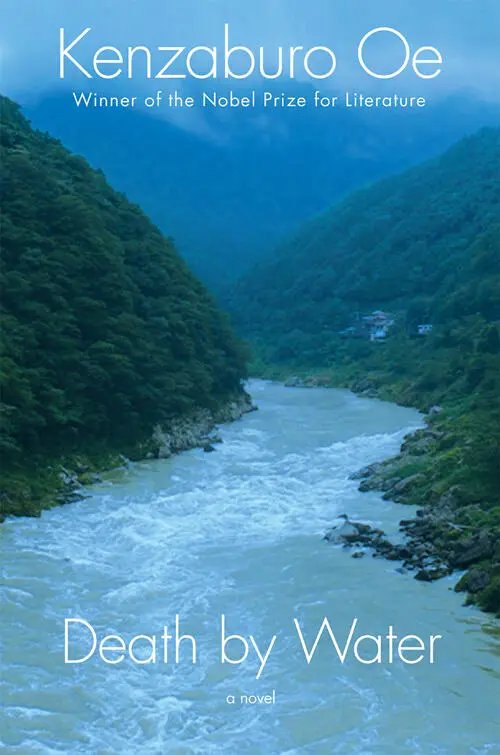
- Название:Death by Water
- Автор:
- Издательство:Grove/Atlantic, Inc.
- Жанр:
- Год:2015
- ISBN:9780802190871
- Рейтинг книги:3 / 5. Голосов: 1
-
Избранное:Добавить в избранное
- Отзывы:
-
Ваша оценка:
Death by Water: краткое содержание, описание и аннотация
Предлагаем к чтению аннотацию, описание, краткое содержание или предисловие (зависит от того, что написал сам автор книги «Death by Water»). Если вы не нашли необходимую информацию о книге — напишите в комментариях, мы постараемся отыскать её.
, his recurring protagonist and literary alter-ego returns to his hometown village in search of a red suitcase fabled to hold documents revealing the details of his father’s death during WWII: details that will serve as the foundation for his new, and final, novel.
Since his youth, renowned novelist Kogito Choko planned to fictionalize his father’s fatal drowning in order to fully process the loss. Stricken with guilt and regret over his failure to rescue his father, Choko has long been driven to discover why his father was boating on the river in a torrential storm. Though he remembers overhearing his father and a group of soldiers discussing an insurgent scheme to stage a suicide attack on Emperor Mikado, Choko cannot separate his memories from imagination and his family is hesitant to reveal the entire story. When the contents of the trunk turn out to offer little clarity, Choko abandons the novel in creative despair. Floundering as an artist, he’s haunted by fear that he may never write his tour de force. But when he collaborates with an avant-garde theater troupe dramatizing his early novels, Kogito is revitalized by revisiting his formative work and he finds the will to continue investigating his father’s demise.
Diving into the turbulent depths of legacy and mortality,
is an exquisite examination of resurfacing national and personal trauma, and the ways that storytelling can mend political, social, and familial rifts.
Death by Water — читать онлайн бесплатно полную книгу (весь текст) целиком
Ниже представлен текст книги, разбитый по страницам. Система сохранения места последней прочитанной страницы, позволяет с удобством читать онлайн бесплатно книгу «Death by Water», без необходимости каждый раз заново искать на чём Вы остановились. Поставьте закладку, и сможете в любой момент перейти на страницу, на которой закончили чтение.
Интервал:
Закладка:
“And then — maybe it was because she thought I was using some highfalutin-sounding words or something — your mother cut me down to size, snapping, ‘That isn’t fantasy; it’s just imagination.’ Then she went on to say, ‘My husband used to read the books of Kunio Yanagida, and he told me that according to Yanagida there is a clear difference between fantasy and imagination, because imagination has some basis in reality. So what Kogii’s doing is writing mostly about real things, which he augments by using his imagination. He has a very good memory for the tales his grandmother and I used to tell him, and because he used folklore as a sort of launching pad for his imaginings, when we read his early books there wasn’t a single thing to make us think, Gee, this right here is some really far-fetched fantasy.’
“That’s what your mother said to me. Her comments made me angry, and I countered by saying, ‘Yeah, but what about the really crazy book, The Day He Himself Shall Wipe My Tears Away, where Choko Sensei is portrayed as a grotesque caricature who has bladder cancer, and he gets loaded into a makeshift wooden chariot and goes off to rob a bank?’ And your mother came back with, ‘Oh, that wasn’t imagination, or fantasy. That was outright delusion!’ Ha ha ha!”
While Daio was delivering this animated monologue, we had been making steady progress up the grassy hill and were now standing at the heart of the Saya: the scabbard-shaped indentation in the meadow.
“Sorry,” Daio continued after he had finished laughing, “I got kind of carried away reminiscing about the fun I used to have talking with your mother. Now that we’ve come to a place where we don’t have to worry about being overheard, we should probably get back to the serious matters we were discussing earlier, don’t you think? Because I keep coming up against a vexing problem, and every time I try to work it out on my own, I seem to end up getting sidetracked or else giving up entirely. If I could only get this matter resolved, there might turn out to be some connection with the recurrent dream that’s been plaguing you for all these years.
“As I mentioned, Asa told me about the dream and I know you’ve even put it down on paper. From my perspective, I don’t believe it should be dismissed as ‘just a dream.’ Now, I’m no expert — this is something I happened to read in a book about dream interpretation, aimed at amateurs like me — but apparently when a child tries to tell its mother something and she refuses to listen, the things the child wanted to express can be turned inward and incorporated into dreams, which eventually merge seamlessly with memories. And then, according to the book, the child can grow up to be someone like you who’s haunted by recurrent dreams. I would never presume to psychoanalyze you, but based on what I’ve heard I can’t help feeling that your genuine memories (even if you don’t actively remember them when you’re awake) have somehow been filtered through those dreams.
“You told this story in one of your newspaper columns, but apparently a cultural anthropologist friend of yours was doing fieldwork somewhere in Indonesia — I believe it was on Flores Island — when he made an interesting discovery in a remote settlement up in the mountains. The people of the tribe had created a giant replica of an airplane from twigs and bits of wood and enshrined it in a clearing in the forest. In your essay you said that when you first heard about this, your heart skipped a beat, and when I read that line I thought, I’ll bet Kogito was remembering a dream he had when he was a child.”
“It’s certainly true I was captivated by a drawing of the primitive replica of a plane I saw in some field notes made by that anthropologist friend of mine — he was an accomplished artist as well, and his sketches would have put a professional to shame — and you’re right in thinking it reminded me uncannily of one of my childhood dreams,” I said. “And now I’m feeling shaken up all over again, because this place you’ve brought me to, the Saya, is the spot where the dream in question took place. In my dream it was above here to the north, beyond the big meteoric boulder, that I came across the tail of a wrecked aircraft. The plane’s body was nearby, facing downward. It wasn’t made of wood, though; it appeared to have been cobbled together from spare machine parts. But really, Daio, your powers of deductive reasoning are quite extraordinary!”
“Really? I don’t know — maybe your mother’s analytical approach to things somehow rubbed off on me! No, but seriously, like she said, imagination (as opposed to pure fantasy) usually has some basis in fact.
“In this case, during the days before your father’s death there was a series of meetings combined with a nonstop drinking party, and even though you were just a child you must have overheard quite a bit of the discussion. I’m not sure about this, but my guess is that you would have been feeling dismayed and confused by what you heard. On the day before your father took off alone, I remember seeing you lurking in the corridor behind the big tatami-matted room upstairs during one of those meetings with a worried look on your face. And I thought, All this conspiratorial talk must sound pretty scary to a kid, but it wasn’t my place to shoo you away. And then after your father died you must have locked those memories away somewhere deep in your unconscious and then convinced yourself that the things you overheard were just part of a dream. I think the time has come for me to blow the lid off some of those secrets, so I’m going to tell you what actually happened.
“The plan was to sneak onto the military airfield at Yoshidahama and steal a fully loaded kamikaze plane, then fly east from there. The pilots were supposed to land the stolen plane in the Saya, right here in the middle of the forest, and somehow hide it until it was needed. That risky maneuver was the main point of contention during those meetings you were eavesdropping on.”
“Yes, I wrote about it in The Day He Himself Shall Wipe My Tears Away, only I framed it as the fantastical imaginings of a young man who was in the process of losing his mind,” I said.
“Hey, I read that little book!” Daio exclaimed. “It was right after your mother summoned me and basically held my feet to the fire, demanding to know whether I’d ever told you about the meeting or whether you, as a ten-year-old child, had been listening through the walls. Again, I’m no psychiatrist, but it seems as if a disturbing memory that had been buried or suppressed for many years found its way to the surface through your dreams — probably helped along by the fact that a novelist’s mind moves in strange and mysterious ways. Anyhow, when your mother showed me the passage in The Day He Himself Shall Wipe My Tears Away, I told her in no uncertain terms: ‘I see what you’re getting at, but I don’t see any cause for concern. Your deepest fear seems to be that Kogito understood what was going on in his father’s meetings with the military officers, and that at some point he might write a much bigger novel than this one and you would all end up in complete disgrace, like the family of Kotoku Sensei after the High Treason Incident, but I’m sure it will never happen. Even for me, and I was quite a bit older, the things I heard at some of those meetings seemed like total gibberish. They made no sense to me, and I’m sure they would have been even more incomprehensible to a child.’
“As it turned out, I was right. You never did write the big exposé your mother was so afraid of. And since you’ve completely given up on the drowning novel, your practical-minded sister, Asa, can finally breathe a sigh of relief, and I think that’s a very good thing.
Читать дальшеИнтервал:
Закладка:
Похожие книги на «Death by Water»
Представляем Вашему вниманию похожие книги на «Death by Water» списком для выбора. Мы отобрали схожую по названию и смыслу литературу в надежде предоставить читателям больше вариантов отыскать новые, интересные, ещё непрочитанные произведения.




Обсуждение, отзывы о книге «Death by Water» и просто собственные мнения читателей. Оставьте ваши комментарии, напишите, что Вы думаете о произведении, его смысле или главных героях. Укажите что конкретно понравилось, а что нет, и почему Вы так считаете.