Kenzaburo Oe - Death by Water
Здесь есть возможность читать онлайн «Kenzaburo Oe - Death by Water» весь текст электронной книги совершенно бесплатно (целиком полную версию без сокращений). В некоторых случаях можно слушать аудио, скачать через торрент в формате fb2 и присутствует краткое содержание. Год выпуска: 2015, ISBN: 2015, Издательство: Grove/Atlantic, Inc., Жанр: Современная проза, на английском языке. Описание произведения, (предисловие) а так же отзывы посетителей доступны на портале библиотеки ЛибКат.
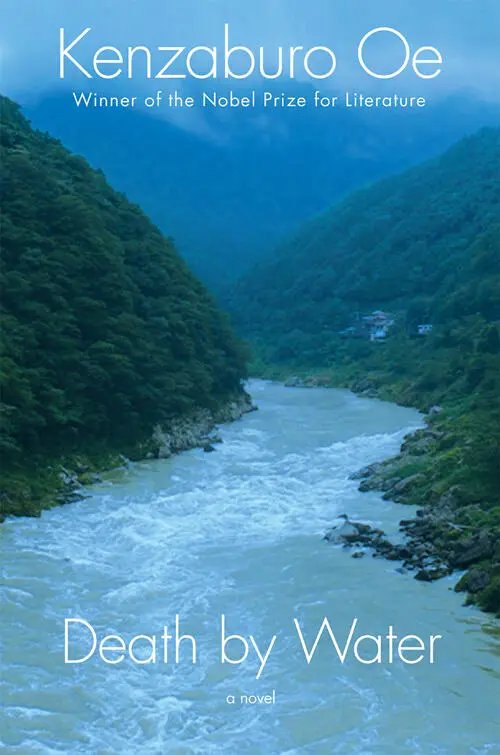
- Название:Death by Water
- Автор:
- Издательство:Grove/Atlantic, Inc.
- Жанр:
- Год:2015
- ISBN:9780802190871
- Рейтинг книги:3 / 5. Голосов: 1
-
Избранное:Добавить в избранное
- Отзывы:
-
Ваша оценка:
Death by Water: краткое содержание, описание и аннотация
Предлагаем к чтению аннотацию, описание, краткое содержание или предисловие (зависит от того, что написал сам автор книги «Death by Water»). Если вы не нашли необходимую информацию о книге — напишите в комментариях, мы постараемся отыскать её.
, his recurring protagonist and literary alter-ego returns to his hometown village in search of a red suitcase fabled to hold documents revealing the details of his father’s death during WWII: details that will serve as the foundation for his new, and final, novel.
Since his youth, renowned novelist Kogito Choko planned to fictionalize his father’s fatal drowning in order to fully process the loss. Stricken with guilt and regret over his failure to rescue his father, Choko has long been driven to discover why his father was boating on the river in a torrential storm. Though he remembers overhearing his father and a group of soldiers discussing an insurgent scheme to stage a suicide attack on Emperor Mikado, Choko cannot separate his memories from imagination and his family is hesitant to reveal the entire story. When the contents of the trunk turn out to offer little clarity, Choko abandons the novel in creative despair. Floundering as an artist, he’s haunted by fear that he may never write his tour de force. But when he collaborates with an avant-garde theater troupe dramatizing his early novels, Kogito is revitalized by revisiting his formative work and he finds the will to continue investigating his father’s demise.
Diving into the turbulent depths of legacy and mortality,
is an exquisite examination of resurfacing national and personal trauma, and the ways that storytelling can mend political, social, and familial rifts.
Death by Water — читать онлайн бесплатно полную книгу (весь текст) целиком
Ниже представлен текст книги, разбитый по страницам. Система сохранения места последней прочитанной страницы, позволяет с удобством читать онлайн бесплатно книгу «Death by Water», без необходимости каждый раз заново искать на чём Вы остановились. Поставьте закладку, и сможете в любой момент перейти на страницу, на которой закончили чтение.
Интервал:
Закладка:
“When I first started examining The Golden Bough, trying to see it through my father’s eyes, I noticed that in all three volumes someone had circled some of Frazer’s marginal notes, which are rather like summaries of the passages or subsections in question, in colored pencil. Look, here’s one right here. These confident markings appear to have been made by an experienced teacher, but what I didn’t notice at first was that there are also some more tentative notations, evidently added by a reader who hadn’t done much of this sort of thing before — underlining, question marks, exclamation points, and so on. As I continued reading, I realized that this second set of markings must have been made by my father. As Daio said, it’s obvious my father was captivated by the literary — or should I say poetic? — attributes of the book. But it’s equally clear that his mentor was trying to use The Golden Bough as a tool for teaching my father about politics. My father was obediently going along with the plan, but it appears to me as though he was trying to read it from a more artistic perspective as well. This has been a revelation for me; for the first time since I was born, I feel as if I’m seeing my father for who he really was. (At the time he was reading this book, of course, he was nearly twenty-five years younger than I am now.)
“The epigraph of the first volume is a quotation from a poem by Thomas Babington Macaulay. Here, take a look. I’ve laid out both the English and the Japanese translations, and as you can see the English style is quite archaic.”
From the still glassy lake that sleeps
Beneath Aricia’s trees—
Those trees in whose dim shadow
The ghastly priest doth reign,
The priest who slew the slayer,
And shall himself be slain….
“I think the translation is reasonably true to the original,” I continued after Ricchan had finished studying both versions of the poem. “I mean, this is one of those epic poems where everything is on the surface, so what you see is what you get. What’s interesting is that Frazer more or less echoes the same content — only in prose, of course — in various parts of his book. His style can be a bit flowery in places, but it’s mostly lucid and straightforward, and sometimes it’s absolutely gorgeous. I think my father managed to grasp that beauty, even through the laborious process of reading the text one word at a time with frequent recourse to The Concise (as we used to affectionately call the little English-Japanese dictionary). Seeing the evidence of his painstaking quest has almost made me feel pity, or at least sympathy, for my father: that fifty-year-old man who was on the cusp of a premature death by drowning.”
2
Next, I moved on to telling Ricchan about the sections that my father himself had circled, with particular emphasis on the concept of the “dying God.”
“The ‘King of the Wood,’ who’s mentioned in an early sentence, is so widely known that you could safely call him a major character in cultural history,” I explained. “In the Alban Hills of Italy, deep in the woods around Lake Nemi — which is basically a volcanic crater filled with water — there is a huge oak tree. A dark-visaged king, sword at his waist, is stationed nearby to protect the sacred tree. (Of course, you could also say that the king is protecting himself.) One after another, vigorous young men come to challenge the king to a sword fight. Once a challenger has vanquished the current monarch, that individual will become the new king. As the term ‘dying God’ suggests, in this mythology gods are not immortal; on the contrary, it is their destiny to die. When a king grows old and feeble, he and his realm will inevitably fall into ruin and be replaced. (Of course, the physical life force has long been associated with fertility cults and crop cycles in many cultures, including our own.)
“So how did the citizens cope with the impending crisis? Well, the people made a conscious effort to prevent the king from dying a natural death — that is, from illness or old age. While the old king still had some energy left, they would send a parade of candidates to attempt to kill him, until someone finally succeeded. And with the ascension of a new king the world, too, would experience a rebirth of sorts: a renewal of fertility. That’s the basic premise. Anyone can see that the myth of the Forest King of Nemi is one of the underlying themes of the entire Golden Bough, from beginning to end. The archetypal myth about the new king who kills his aged predecessor, thus engendering a renascence of fertility in the world, was already firmly established in the folkloric canon when Frazer arrived at the party, so to speak. However, Frazer expanded on the theme at great length, and I think the person who loaned my father these books made the marks to indicate that my father ought to jump ahead and read the pages about the way the old king was killed, and the earth regained its power and vitality as a result. It’s clear from the marginal annotations that my father was under the influence of a mentor who was exceedingly intense about the teaching of political science.”
While I was speaking to Ricchan, Daio ambled into the great room and I saw Akari (who was lying on the floor nearby) raise one hand in greeting. Daio had been out in the south-side garden, doing his usual landscaping chores, and he had apparently been listening to our conversation through a partially open sliding glass door.
“Holy cow, Kogito,” he said. “I think the last time I heard you talking so passionately about anything was while you were still in high school, the weekend you brought Goro to the training camp. Please continue your discussion — don’t mind me!”
“All right,” I replied. “I’m going to get back to Frazer’s book, but I’ll keep in mind that you’re listening too now, Daio. Anyway, I think I’ve figured out the overarching point that the Kochi Sensei was trying to make with all his little notes in the margins. As I told Ricchan, I’ve also realized that while my father was dutifully reading The Golden Bough in order to glean the lessons in political theory his own mentor was trying to impart, he was also reading it on another, more personal level and appreciating the beauty of the prose as a work of literary art. That’s something you’ve mentioned as well, Daio. However, his guru’s notes were clearly focused on posing the question: What should the old king’s followers be doing, in a political sense?
“If you’ll bear with me, I’d like to read this excerpt from the Frazer book aloud: But no amount of care and precaution will prevent the man-god from growing old and feeble and at last dying. His worshippers have to lay their account with this sad necessity and to meet it as best they can. The danger is a formidable one; for if the course of nature is dependent on the man-god’s life, what catastrophes may not be expected from the gradual enfeeblement of his powers and their final extinction in death? There is only one way of averting these dangers. The man-god must be killed as soon as he shows symptoms that his powers are beginning to fail, and his soul must be transferred to a vigorous successor before it has been seriously impaired by the threatened decay. The advantages of thus putting the man-god to death instead of allowing him to die of old age and disease are, to the savage, obvious enough.”
After I had finished reading, Akari walked silently past us on his way to the restroom. (He had been lying on the floor for a long time, and getting to his feet obviously caused some lower-back pain.) A moment later we heard a loud noise as the door banged shut behind him.
Читать дальшеИнтервал:
Закладка:
Похожие книги на «Death by Water»
Представляем Вашему вниманию похожие книги на «Death by Water» списком для выбора. Мы отобрали схожую по названию и смыслу литературу в надежде предоставить читателям больше вариантов отыскать новые, интересные, ещё непрочитанные произведения.




Обсуждение, отзывы о книге «Death by Water» и просто собственные мнения читателей. Оставьте ваши комментарии, напишите, что Вы думаете о произведении, его смысле или главных героях. Укажите что конкретно понравилось, а что нет, и почему Вы так считаете.