Kenzaburo Oe - Death by Water
Здесь есть возможность читать онлайн «Kenzaburo Oe - Death by Water» весь текст электронной книги совершенно бесплатно (целиком полную версию без сокращений). В некоторых случаях можно слушать аудио, скачать через торрент в формате fb2 и присутствует краткое содержание. Год выпуска: 2015, ISBN: 2015, Издательство: Grove/Atlantic, Inc., Жанр: Современная проза, на английском языке. Описание произведения, (предисловие) а так же отзывы посетителей доступны на портале библиотеки ЛибКат.
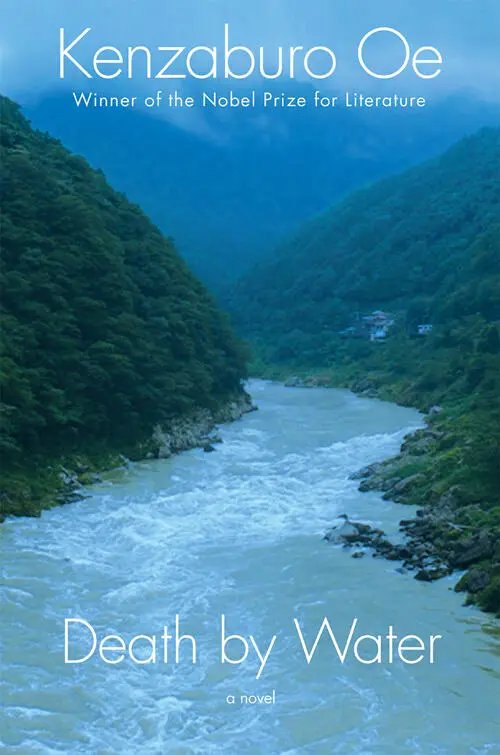
- Название:Death by Water
- Автор:
- Издательство:Grove/Atlantic, Inc.
- Жанр:
- Год:2015
- ISBN:9780802190871
- Рейтинг книги:3 / 5. Голосов: 1
-
Избранное:Добавить в избранное
- Отзывы:
-
Ваша оценка:
Death by Water: краткое содержание, описание и аннотация
Предлагаем к чтению аннотацию, описание, краткое содержание или предисловие (зависит от того, что написал сам автор книги «Death by Water»). Если вы не нашли необходимую информацию о книге — напишите в комментариях, мы постараемся отыскать её.
, his recurring protagonist and literary alter-ego returns to his hometown village in search of a red suitcase fabled to hold documents revealing the details of his father’s death during WWII: details that will serve as the foundation for his new, and final, novel.
Since his youth, renowned novelist Kogito Choko planned to fictionalize his father’s fatal drowning in order to fully process the loss. Stricken with guilt and regret over his failure to rescue his father, Choko has long been driven to discover why his father was boating on the river in a torrential storm. Though he remembers overhearing his father and a group of soldiers discussing an insurgent scheme to stage a suicide attack on Emperor Mikado, Choko cannot separate his memories from imagination and his family is hesitant to reveal the entire story. When the contents of the trunk turn out to offer little clarity, Choko abandons the novel in creative despair. Floundering as an artist, he’s haunted by fear that he may never write his tour de force. But when he collaborates with an avant-garde theater troupe dramatizing his early novels, Kogito is revitalized by revisiting his formative work and he finds the will to continue investigating his father’s demise.
Diving into the turbulent depths of legacy and mortality,
is an exquisite examination of resurfacing national and personal trauma, and the ways that storytelling can mend political, social, and familial rifts.
Death by Water — читать онлайн бесплатно полную книгу (весь текст) целиком
Ниже представлен текст книги, разбитый по страницам. Система сохранения места последней прочитанной страницы, позволяет с удобством читать онлайн бесплатно книгу «Death by Water», без необходимости каждый раз заново искать на чём Вы остановились. Поставьте закладку, и сможете в любой момент перейти на страницу, на которой закончили чтение.
Интервал:
Закладка:
“Good heavens, Kogito. All these years you’ve been reliving that night over and over in your dreams, torturing yourself with guilt, and while we’re talking you suddenly realize that you didn’t get sidetracked by some trivial issue with a wooden barrel and literally miss the boat? Now, this is pure conjecture, but it seems to me that if your father was ready to take off he wouldn’t have needed to send you back to shore to untie the mooring rope. He could have cut it with the short sword he used for trimming the paperbush bark and so on, which was always hanging from his belt. He set out on the boat trip with no plans to return home, right? So he wouldn’t have needed to use the rope again to tie up the boat, since he would have simply abandoned it when he got to his first destination, downriver. You know, Kogito, the more I think about it the more convinced I am that your father consciously intended to leave you behind, and sending you to cut the mooring rope could have been his way of saving your life!
“And then, of course, Choko Sensei ended up drowning in the river. It was only a few days earlier that you had precociously pointed out that your father was mistaking one complex kanji for a similar-looking one — you know, when he misread the water-related 淼 淼 for the woodsy 森 森? This may be a stretch, but given the way things turned out, doesn’t it strike you that your father’s misreading may actually have been oddly apt and even prescient on a deeper level? What I mean is that in his last moments of existence Sensei wasn’t really being borne along to the end of the river, where it becomes one with the vast and endless sea. I’m sure you can see where I’m going with this: I’m talking about the belief around these parts that when people die, their spirits go up into the forest and settle at the base of one particular, foreordained tree. In other words, while your father may have taken his last breath on the water, I think he was really on his way back to the forest!
“Of course, I wasn’t born here, so there’s probably no spirit tree in the forest with my name on it. Even so, when it comes time for me to die, I’d like to believe my soul could go to a place in some cosmic forest and find refuge and salvation there. By the way, Asa mentioned that the poem you collaborated on with your mother wasn’t exactly well received, but I really like it a lot. Of course, Akari was born and raised in Tokyo, but I think that if you’re very careful to make the proper preparations well in advance, when Akari’s time comes his spirit should be able to go up into the forest and find its way to its own designated tree.”
Although Daio wasn’t originally from Shikoku, he had remained in the area after closing the training camp, and he had clearly absorbed a great deal of local lore. He was highly intelligent and often surprisingly articulate, and I imagined that he had probably always had a genuine love of learning. Admittedly, I did question his choice of my father as a role model when there must have been more sensible options available, but that was ancient history. Daio and I had been barefoot while we were talking, to give our feet a break. Now we put our shoes back on, and as we strolled the length and breadth of that grassy meadow my companion shared his fascination with the Saya. There was a local legend (or perhaps it was more of a rumor) that if you dug deep enough it was still possible to unearth prehistoric stone axes made by our distant ancestors. Daio was intrigued by this possibility, and he had apparently spent a fair amount of time poking around in the soil in this general vicinity. On this day, after a brief impromptu dig with a twig he’d found, he proudly brought me a large chunk of dirt-encrusted rock that could conceivably have once been the head of a stone ax.
As we started to head downhill from the Saya we could see Akari and Ricchan finishing their calisthenics beside the river, where the willow trees bursting into fresh new foliage looked like a massive cloud of green smoke. Daio and I were midway down the steep slope when we noticed a couple of men striding toward Akari and Ricchan from the opposite direction.
By this time Akari was half sitting, half reclining on a portable air mattress (a position that showed how much his back pain had abated), with Ricchan next to him. As we watched from afar the two men squatted nearby and began speaking intently to Ricchan and Akari. Suddenly, Akari clapped his hands over his ears. I knew that gesture well; it was his way of expressing disapproval or revulsion when (for example) some giddy comedian on a TV talk show would launch into an off-color joke. Seeing this, I quickened my pace and scrambled down the slope as fast as I could go.
As I approached, the two men (who appeared to be in their forties) stopped talking and shifted their torsos so that they were facing my direction in a tense, watchful-looking stance that I interpreted as “ready to rumble.” When I arrived, panting, Ricchan stood up. Sliding her bare feet into a pair of canvas walking shoes, she explained what was going on.
“These men here were asking whether we knew the hidden meaning behind the Saya’s name,” she said, “but then without waiting for an answer they went ahead and told us the term they had in mind. Akari doesn’t like hearing that sort of thing, and that’s why he has his hands over his ears.”
As I explained earlier, the word saya, meaning a sheath for a sword, has long been the local nickname for the spot where a meteor landed in the midst of the forest and left a long, narrow indentation in the ground. However, saya also happens to be a crude colloquialism for the female sex organs — more precisely, the vagina. Daio was a few seconds behind me, and when the two men saw him charging in their direction they finally went on their way, laughing loudly and slapping each other on the back as if they had just shared some grand, uproarious adventure. From time to time they looked over their shoulders at us with faces that were red from an excess of sophomoric mirth.
“Well, those two ran away with their tails between their legs,” Daio said jocularly. “And no wonder, since Kogito was armed with a stone ax. Ha ha.”
“They were so persistent, I really didn’t know what to do,” Ricchan said.
At this, Akari finally removed his hands from his ears. “Don’t worry, Ricchan,” he said in a voice that was filled with emotion. And then he added, to my surprise, “If they come back, Papa will beat them up for us!”
I immediately recognized that phrasing as an echo of one of the more poignant quotes from My Own Words. It had been a very long time since I’d heard my son say anything so positive about me, and my heart swelled with a cautious infusion of hope.
Chapter 11. But Why The Golden Bough ?
1
Since the first stirrings of my rapprochement with Akari (which, while still a work in progress, seemed to have taken a definite step in the right direction), our daily life had undergone a transformation. The sound system from Unaiko and Ricchan’s room was moved into the dining room, and Akari would often stretch out diagonally on the floor and listen to music or work on his compositions. Ricchan never took a single day off from their rehab sessions at the Saya, and even though she was busy with the usual plethora of activities, she never dropped the ball where Akari’s well-being was concerned.
I had set up my own base camp on the sofa that had been banished to the southwest corner of the great room to create more space for rehearsals, with my assorted work supplies — books, papers, and index cards — in (and on) a small filing cabinet next to the couch. As I soon realized, our current living arrangement was not so different from the one we’d had at home in Tokyo, except that in this house Akari and I would both retreat to the second floor when a rehearsal began. Ricchan spent a fair amount of time staying on top of bookkeeping and other office tasks on the computer she shared with Unaiko, but after Akari started listening to music in the dining room she would often sit at the dining-room table with her head bent over the production notes from the filming of Meisuke’s Mother Marches Off to War.
Читать дальшеИнтервал:
Закладка:
Похожие книги на «Death by Water»
Представляем Вашему вниманию похожие книги на «Death by Water» списком для выбора. Мы отобрали схожую по названию и смыслу литературу в надежде предоставить читателям больше вариантов отыскать новые, интересные, ещё непрочитанные произведения.






Обсуждение, отзывы о книге «Death by Water» и просто собственные мнения читателей. Оставьте ваши комментарии, напишите, что Вы думаете о произведении, его смысле или главных героях. Укажите что конкретно понравилось, а что нет, и почему Вы так считаете.