Kenzaburo Oe - Death by Water
Здесь есть возможность читать онлайн «Kenzaburo Oe - Death by Water» весь текст электронной книги совершенно бесплатно (целиком полную версию без сокращений). В некоторых случаях можно слушать аудио, скачать через торрент в формате fb2 и присутствует краткое содержание. Год выпуска: 2015, ISBN: 2015, Издательство: Grove/Atlantic, Inc., Жанр: Современная проза, на английском языке. Описание произведения, (предисловие) а так же отзывы посетителей доступны на портале библиотеки ЛибКат.
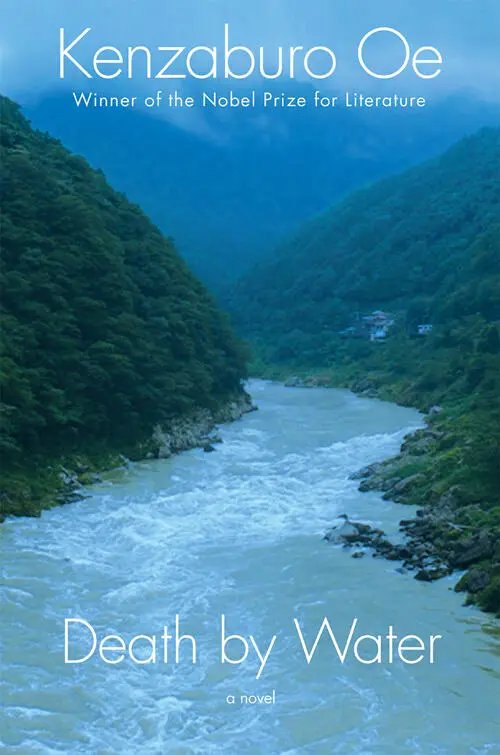
- Название:Death by Water
- Автор:
- Издательство:Grove/Atlantic, Inc.
- Жанр:
- Год:2015
- ISBN:9780802190871
- Рейтинг книги:3 / 5. Голосов: 1
-
Избранное:Добавить в избранное
- Отзывы:
-
Ваша оценка:
Death by Water: краткое содержание, описание и аннотация
Предлагаем к чтению аннотацию, описание, краткое содержание или предисловие (зависит от того, что написал сам автор книги «Death by Water»). Если вы не нашли необходимую информацию о книге — напишите в комментариях, мы постараемся отыскать её.
, his recurring protagonist and literary alter-ego returns to his hometown village in search of a red suitcase fabled to hold documents revealing the details of his father’s death during WWII: details that will serve as the foundation for his new, and final, novel.
Since his youth, renowned novelist Kogito Choko planned to fictionalize his father’s fatal drowning in order to fully process the loss. Stricken with guilt and regret over his failure to rescue his father, Choko has long been driven to discover why his father was boating on the river in a torrential storm. Though he remembers overhearing his father and a group of soldiers discussing an insurgent scheme to stage a suicide attack on Emperor Mikado, Choko cannot separate his memories from imagination and his family is hesitant to reveal the entire story. When the contents of the trunk turn out to offer little clarity, Choko abandons the novel in creative despair. Floundering as an artist, he’s haunted by fear that he may never write his tour de force. But when he collaborates with an avant-garde theater troupe dramatizing his early novels, Kogito is revitalized by revisiting his formative work and he finds the will to continue investigating his father’s demise.
Diving into the turbulent depths of legacy and mortality,
is an exquisite examination of resurfacing national and personal trauma, and the ways that storytelling can mend political, social, and familial rifts.
Death by Water — читать онлайн бесплатно полную книгу (весь текст) целиком
Ниже представлен текст книги, разбитый по страницам. Система сохранения места последней прочитанной страницы, позволяет с удобством читать онлайн бесплатно книгу «Death by Water», без необходимости каждый раз заново искать на чём Вы остановились. Поставьте закладку, и сможете в любой момент перейти на страницу, на которой закончили чтение.
Интервал:
Закладка:
Since Ricchan was helping us in many different ways I asked whether I could at least pay her something comparable to the hourly wages Daio had agreed to accept, but she refused even to discuss the matter, saying simply, “Let’s wait till Asa gets back.”
I felt uneasy about the existing arrangement because Ricchan didn’t merely keep up with household chores and prepare all our meals; she also looked after Akari on a daily basis. On top of that, while Unaiko was away doing her guest-artist stint at a big theater in Tokyo, Ricchan was attending to a variety of managerial duties, both for the Caveman Group and for Unaiko’s next big dramatic project. (Ricchan tended to be somewhat closemouthed, but I did manage to learn Unaiko had been cast as a last-minute replacement for a well-known actress, which had delayed her return to Shikoku.) No doubt about it: Ricchan was an exceptionally diligent worker and a woman of many talents. As for Daio, he cheerfully lent a hand around the house and also took care of any outdoor-maintenance tasks Ricchan suggested.
No matter how busy she was with her other obligations, Ricchan was always remarkably conscientious about Akari’s rehabilitation program, and every day — unless it happened to be raining — she would drive him to the Saya and assist him in his quest to strengthen the muscles surrounding the injured thoracic vertebra, while being careful not to inflict further damage. During these workout sessions Akari was free to play his chosen music, cranked up as loud as he pleased, and he must have found those freewheeling interludes a welcome release from the oppressive tension of sharing a house with me in our current state of estrangement.
Ricchan’s days were filled to overflowing, but she was so adept at multitasking that she somehow found time to go out in the field on a regular basis and collect oral histories from some of the people who lived along the riverside and on the slope below the Saya. Although Ricchan didn’t talk much about this, I gathered from Daio that this research was part of the groundwork for the next dog-tossing project: a major theatrical presentation that Unaiko, Asa, and Ricchan would be collaborating on in the near future.
Evidently Ricchan was trying to interview people who had been involved in the filming of Asa’s ill-starred movie about our local heroine, Meisuke’s mother. (No one ever used her given name, nor had I ever heard a single mention of Meisuke’s father.) Daio seemed certain that Unaiko and Ricchan’s next project was going to be an attempt to dramatize a famous guerrilla insurrection that took place after the Meiji Restoration, using Unaiko’s distinctive method of interactive theater. And, he added excitedly, they were hoping to use the screenplay I’d written for Asa’s film, Meisuke’s Mother Marches Off to War (which was based on actual history mixed in with some well-known local lore), as a source of guidance and inspiration — if they could ever get their hands on a copy of it.
When Ricchan learned that Daio had already spilled the beans about this nascent plan, she decided to tell me why it had been kept under wraps. There were two reasons for the cloak of secrecy, and she explained them fully, albeit with her usual verbal economy. Reason number one: Asa was all in favor of having her brother (i.e., me) take a helpful role in the new project, and she had promised to nudge me gently in that direction. However, given the distressing complexity of my current situation (quite aside from the lingering repercussions from the Big Vertigo, I was having to cope with my wife’s serious illness as well as with some monumental difficulties in my relationship with my son) Asa had suggested that it might be more considerate to wait awhile before depositing anything new on my plate, so to speak.
Ricchan went on to say that Unaiko had her heart set on putting together a play shaped by some mysterious theme derived from her personal history — a motif that apparently echoed the story of the insurrection on some level. Ricchan, by way of preliminary preparations, had been visiting the Honmachi library to look for archival materials pertaining to the uprising, while also gathering anecdotal evidence by talking to local women who had actually participated in the filming of the movie.
After that disclosure there was no further need to keep me in the dark, and Ricchan’s fieldwork became a frequent topic of conversation around the dining-room table at the Forest House. One evening Akari, who had clearly been pondering something throughout the meal, left the table and trudged up the stairs to his room with an air of determination. A few moments later, he came back down clutching what appeared to be a large, custom-bound portfolio covered in blue cloth. (Back in Tokyo, Maki had sorted through her brother’s effects and had mailed him a number of things, apparently including this portfolio.)
Still hugging the large blue folder, Akari announced: “Okay, this is it. The sheet music for the Beethoven piano sonata is in here, too.” It was obvious that while he didn’t want to hand the blue binder over to me directly, this was his oblique way of prodding me to explain the contents to Ricchan. “Mrs. Sakura Ogi Magarshack gave it to me,” he added.
“Oh, I know,” I said, as recollection kicked in. “It’s the copy of the final shooting script Sakura gave you to commemorate the completion of the film, when she returned the Beethoven sheet music you loaned her while they were recording the sound track.”
While I was speaking Akari had presented the blue portfolio to Ricchan, but when she opened the cloth cover the sheet music inside (just as Akari had said) fell to the floor. Akari bent over to pick up the pages with an easy alacrity, and it was evident that his muscle-building physical therapy was already yielding results in the form of flexibility and diminished discomfort. After shuffling the sheet music into the proper order, he handed it back to Ricchan.
“All the people I’ve interviewed who were working as extras in the scenes filmed up at the Saya have talked about the way the sound of this music rang out over the meadows,” Ricchan said. “I told you about the women who were talking about that, right? Hearing Sakura Ogi Magarshack perform her battle-cry recitative with this music playing in the background seems to have made a deeper impression on them than almost anything else about the filming.”
“Sakura had the idea of using this Beethoven sonata in the movie, even though it reminded her of some painful memories from her childhood,” I said. “She knew the title of the piece, but it was Akari who helped her to find a recording of the specific performance she had in mind. Sakura was very impressed, as I recall. Akari also figured out the precise length of all the passages that would need to be included in the sound track, and he made those notations on his own copy of the sheet music before he passed it along to the NHK orchestra.”
Ricchan looked thoughtfully at Akari, who was holding the score open to the relevant pages. Then she said, “Akari, do you by any chance have a CD of the performance you chose?”
“You bet I do!” Akari exclaimed enthusiastically. “You’re the one who brought it down from Tokyo for me, Ricchan!” With that, he ran upstairs again, his face alight with an animation I hadn’t seen in recent memory.
Meanwhile, Ricchan and I set about plugging in the sophisticated sound system set up in the great room for use in rehearsals. The speakers were on either side of the raised, brick-floored area that served as a makeshift stage, and in order to maximize the acoustics Ricchan opened the curtains at the south end of the room. During our sojourn at the Forest House, Akari and I had been getting by with just the light from the plate-glass window on the north end. When the young people needed to use the space for rehearsal, we would go upstairs to wait it out. They would open the curtains while the room was in use and then close them again before returning the living area to us.
Читать дальшеИнтервал:
Закладка:
Похожие книги на «Death by Water»
Представляем Вашему вниманию похожие книги на «Death by Water» списком для выбора. Мы отобрали схожую по названию и смыслу литературу в надежде предоставить читателям больше вариантов отыскать новые, интересные, ещё непрочитанные произведения.







Обсуждение, отзывы о книге «Death by Water» и просто собственные мнения читателей. Оставьте ваши комментарии, напишите, что Вы думаете о произведении, его смысле или главных героях. Укажите что конкретно понравилось, а что нет, и почему Вы так считаете.