Kenzaburo Oe - Death by Water
Здесь есть возможность читать онлайн «Kenzaburo Oe - Death by Water» весь текст электронной книги совершенно бесплатно (целиком полную версию без сокращений). В некоторых случаях можно слушать аудио, скачать через торрент в формате fb2 и присутствует краткое содержание. Год выпуска: 2015, ISBN: 2015, Издательство: Grove/Atlantic, Inc., Жанр: Современная проза, на английском языке. Описание произведения, (предисловие) а так же отзывы посетителей доступны на портале библиотеки ЛибКат.
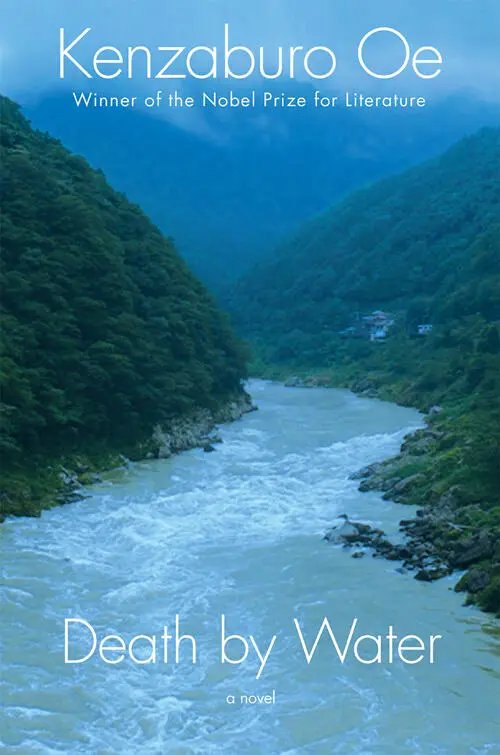
- Название:Death by Water
- Автор:
- Издательство:Grove/Atlantic, Inc.
- Жанр:
- Год:2015
- ISBN:9780802190871
- Рейтинг книги:3 / 5. Голосов: 1
-
Избранное:Добавить в избранное
- Отзывы:
-
Ваша оценка:
Death by Water: краткое содержание, описание и аннотация
Предлагаем к чтению аннотацию, описание, краткое содержание или предисловие (зависит от того, что написал сам автор книги «Death by Water»). Если вы не нашли необходимую информацию о книге — напишите в комментариях, мы постараемся отыскать её.
, his recurring protagonist and literary alter-ego returns to his hometown village in search of a red suitcase fabled to hold documents revealing the details of his father’s death during WWII: details that will serve as the foundation for his new, and final, novel.
Since his youth, renowned novelist Kogito Choko planned to fictionalize his father’s fatal drowning in order to fully process the loss. Stricken with guilt and regret over his failure to rescue his father, Choko has long been driven to discover why his father was boating on the river in a torrential storm. Though he remembers overhearing his father and a group of soldiers discussing an insurgent scheme to stage a suicide attack on Emperor Mikado, Choko cannot separate his memories from imagination and his family is hesitant to reveal the entire story. When the contents of the trunk turn out to offer little clarity, Choko abandons the novel in creative despair. Floundering as an artist, he’s haunted by fear that he may never write his tour de force. But when he collaborates with an avant-garde theater troupe dramatizing his early novels, Kogito is revitalized by revisiting his formative work and he finds the will to continue investigating his father’s demise.
Diving into the turbulent depths of legacy and mortality,
is an exquisite examination of resurfacing national and personal trauma, and the ways that storytelling can mend political, social, and familial rifts.
Death by Water — читать онлайн бесплатно полную книгу (весь текст) целиком
Ниже представлен текст книги, разбитый по страницам. Система сохранения места последней прочитанной страницы, позволяет с удобством читать онлайн бесплатно книгу «Death by Water», без необходимости каждый раз заново искать на чём Вы остановились. Поставьте закладку, и сможете в любой момент перейти на страницу, на которой закончили чтение.
Интервал:
Закладка:
“When I first met Masao and the rest of the group, they were focusing on books by contemporary novelists. They didn’t seem to think Mr. Choko fell into that category, although at the same time they saw something interesting in the slightly retro, nostalgic feeling that infuses so much of his work — what you might call a divergence from the now. Still, it wasn’t until several years later that Unaiko really immersed herself in Mr. Choko’s work. It happened when we were doing the adaptation of The Day He Himself Shall Wipe My Tears Away, and as we all know, she was exceedingly critical of that book. But now look at her; she’s turned into a full-on Choko freak, even more fanatical than Masao Anai! When I stop to think about it, I realize I’m always a few steps behind Unaiko in everything we do, but at any rate, I’ve finally started reading and appreciating Mr. Choko’s work, too.”
“It was pretty much the same for me, only I was trying to catch up with Masao,” Unaiko acknowledged. “I guess I’m what they call a late adopter.”
Kogii, I was surprised to hear that Unaiko and Ricchan had only recently become acquainted with your work. I told them about an article I’d seen in a theater magazine — you know, “meet the new drama groups” sort of thing — in which a certain critic wrote that while Masao Anai had begun adapting your works into theater pieces early in his career, the group only started having major success with those plays after Unaiko joined the creative team.
Ricchan nodded and said, “I think that’s true, but while Unaiko’s dramatic method may differ from Masao’s style as a director, it’s absolutely consistent within those differences, if that makes sense.”
“It makes perfect sense to me,” Unaiko said with a smile. “Ricchan’s on a roll tonight, so I’ll let her explain how I ended up getting converted.”
“Actually, as I understand it, the thing that transformed Unaiko into a card-carrying Choko devotee wasn’t reading his novels per se,” Ricchan said. “One day she happened to come across something Mr. Choko had written regarding Edward W. Said’s definition of ‘late style,’ and that catalyzed her conversion. She made a photocopy of the page and pinned it above her desk at work, and then she said to me, all excited, ‘This quote from Said is so amazing!’ Said’s basic premise seems to be that when a true artist starts getting on in years, the sort of philosophical mellowness that comes with age can also backfire, and may sometimes even end up having catastrophic consequences.”
“Yes,” Unaiko interrupted excitedly. “Professor Said was riffing on the statement by Adorno that in the history of art, ‘late works are the catastrophes,’ and Said added that work created late in life is not always as serene and transcendent as you might expect. It’s been a while since I looked at those quotes, but as I recall Said was talking about Beethoven.”
“To me,” Ricchan went on, “it seems as if it would be beneficial for an aging author to weather that kind of stormy situation alone, and if such adversity ended up being the crucible in which his later work was forged, well, wouldn’t it be a good thing? I mean, isn’t the freedom to charge blindly ahead into the uncharted realm of one’s own late work one of the perks of being old? Even so, I couldn’t help feeling it just wasn’t right, somehow, for a thirtysomething woman like Unaiko to be sitting sit around hoping that an older person would go galloping headlong into catastrophe! But since Mr. Choko has abandoned the drowning novel, and he and Akari are living at the Forest House, it’s making me very happy to see how easy it seems to be for Unaiko to hang out with both of them, and vice versa. And when Akari had his seizure and I saw how flustered Unaiko was, I couldn’t help thinking, Wow, she’s really changed a lot. That is to say, I feel as though she’s become more human and more compassionate than when we first met.”
“When you say something like that it really makes me realize how selfishly I must have behaved toward you, Ricchan,” Unaiko said solemnly, with a self-effacing modesty that was very different from her usual confident, assertive personality.
“No, no, not at all!” Ricchan protested. “I’ve always depended on you for everything, Unaiko, and I have every intention of continuing to do so going forward. I really can’t imagine living any other way.” She was unmistakably sincere but I sensed an undertone of affectionate teasing beneath her words.
Somehow, hearing Unaiko apologize for her past behavior confirmed my sense that joining forces with her, and with Ricchan, for my own late work (so to speak) had been the right decision, without a doubt. At the same time I got the heartening feeling that Unaiko was no longer just the ambitious, talented girl-genius dramatist, but was also — and this was more important to me and, clearly, to Ricchan as well — developing into a more complete and empathetic human being.
As our conversation continued, I posed this question: “Unaiko, this is something I was planning to ask Masao, but I’d like to hear your thoughts, too. Up until now, the Caveman Group has derived a large measure of its inspiration from my brother’s fiction, and while you were waiting for him to finish his own late work, the so-called drowning novel, you were planning to combine the saga of his work on the book with the story about how our father went out one night and drowned in the river. I know you even recorded some interviews with my brother, to use as a resource. What I was wondering is, how were you and Masao proposing to put the Caveman Group’s distinctive theatrical stamp on the novel if it had come to fruition? Or maybe I should ask how you were planning to fit the book into the dog-tossing mold that’s been so successful for you?”
“Well, we were looking at those initial recording sessions as preliminaries, like a dry run,” Unaiko replied. “We were just trying to get a handle on the general parameters of Mr. Choko’s drowning novel so we could start figuring out how to go about dramatizing it. Really, everything was pretty nebulous at that point.
“The idea was that Masao and I would sort of lurk around the Forest House and observe Mr. Choko while he was in the process of writing, and he seemed to be amenable to that. Of course, you of all people were already well aware of the arrangement, Asa. We were also hoping to be able to create a kind of synergy between Masao’s usual style and my own dog-tossing approach. (In both cases, we would have been counting on Mr. Choko’s active participation.) Then we would have tried to combine the two elements into a cohesive dramatic piece. The thing is, for me — and I think the same was true for Masao — the only concrete ideas I had were about the first and last scenes.
“The first scene was going to be something we’d heard about from Mr. Choko: a scenario from the recurrent dream he’s been having for the past sixty years or so. It’s night, and against the backdrop of a flood-swollen river we see your father, illuminated by the moon and looking away from us, sitting in a small rowboat. Meanwhile, a sort of Greek chorus of actors is onstage, chanting the story of a young boy who is struggling to reach the boat with the cold, muddy water lapping against his chest. Suspended high above the stage, the young boy’s supernatural alter ego, Kogii, is gazing down on the action.
“Not surprisingly, the idea for the other scene also came from something Mr. Choko told us. It was going to evoke the last image in the drowning novel, and the idea would have been to have the book’s final words read aloud, verbatim, by me and the other actors onstage. Those words would have suggested the thoughts that were going through the father’s mind just as he was about to drown. Then all the reciters would have been sucked into the whirlpool themselves, while the Kogii doll looked on from above.
Читать дальшеИнтервал:
Закладка:
Похожие книги на «Death by Water»
Представляем Вашему вниманию похожие книги на «Death by Water» списком для выбора. Мы отобрали схожую по названию и смыслу литературу в надежде предоставить читателям больше вариантов отыскать новые, интересные, ещё непрочитанные произведения.


Обсуждение, отзывы о книге «Death by Water» и просто собственные мнения читателей. Оставьте ваши комментарии, напишите, что Вы думаете о произведении, его смысле или главных героях. Укажите что конкретно понравилось, а что нет, и почему Вы так считаете.