Kenzaburo Oe - Death by Water
Здесь есть возможность читать онлайн «Kenzaburo Oe - Death by Water» весь текст электронной книги совершенно бесплатно (целиком полную версию без сокращений). В некоторых случаях можно слушать аудио, скачать через торрент в формате fb2 и присутствует краткое содержание. Год выпуска: 2015, ISBN: 2015, Издательство: Grove/Atlantic, Inc., Жанр: Современная проза, на английском языке. Описание произведения, (предисловие) а так же отзывы посетителей доступны на портале библиотеки ЛибКат.
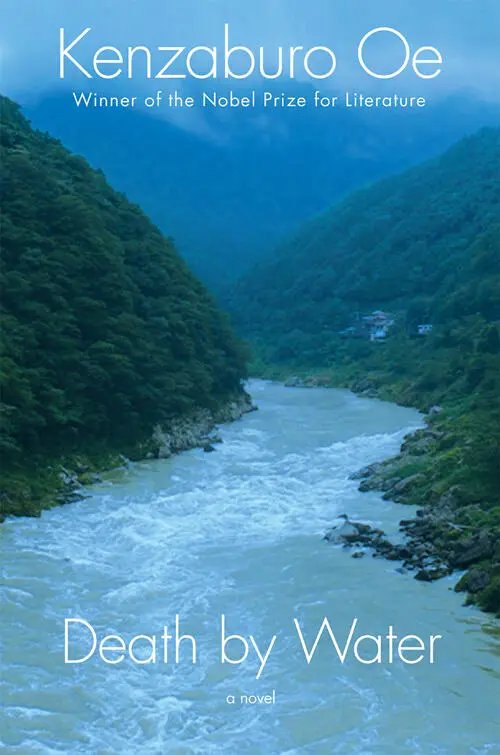
- Название:Death by Water
- Автор:
- Издательство:Grove/Atlantic, Inc.
- Жанр:
- Год:2015
- ISBN:9780802190871
- Рейтинг книги:3 / 5. Голосов: 1
-
Избранное:Добавить в избранное
- Отзывы:
-
Ваша оценка:
Death by Water: краткое содержание, описание и аннотация
Предлагаем к чтению аннотацию, описание, краткое содержание или предисловие (зависит от того, что написал сам автор книги «Death by Water»). Если вы не нашли необходимую информацию о книге — напишите в комментариях, мы постараемся отыскать её.
, his recurring protagonist and literary alter-ego returns to his hometown village in search of a red suitcase fabled to hold documents revealing the details of his father’s death during WWII: details that will serve as the foundation for his new, and final, novel.
Since his youth, renowned novelist Kogito Choko planned to fictionalize his father’s fatal drowning in order to fully process the loss. Stricken with guilt and regret over his failure to rescue his father, Choko has long been driven to discover why his father was boating on the river in a torrential storm. Though he remembers overhearing his father and a group of soldiers discussing an insurgent scheme to stage a suicide attack on Emperor Mikado, Choko cannot separate his memories from imagination and his family is hesitant to reveal the entire story. When the contents of the trunk turn out to offer little clarity, Choko abandons the novel in creative despair. Floundering as an artist, he’s haunted by fear that he may never write his tour de force. But when he collaborates with an avant-garde theater troupe dramatizing his early novels, Kogito is revitalized by revisiting his formative work and he finds the will to continue investigating his father’s demise.
Diving into the turbulent depths of legacy and mortality,
is an exquisite examination of resurfacing national and personal trauma, and the ways that storytelling can mend political, social, and familial rifts.
Death by Water — читать онлайн бесплатно полную книгу (весь текст) целиком
Ниже представлен текст книги, разбитый по страницам. Система сохранения места последней прочитанной страницы, позволяет с удобством читать онлайн бесплатно книгу «Death by Water», без необходимости каждый раз заново искать на чём Вы остановились. Поставьте закладку, и сможете в любой момент перейти на страницу, на которой закончили чтение.
Интервал:
Закладка:
“It’s been ten years since Goro died,” I said, “and some books are finally coming out now that aren’t completely tainted by the tabloid newspaper scandal everyone was obsessed with immediately after his death. The photo was probably taken by a young photographer friend of Goro’s, whom we’d heard about but never met. Chikashi said it was an unusually relaxed-looking photo of Goro, and she added that for someone who was in the film business, he was surprisingly self-conscious about being photographed.”
Ricchan nodded. “I mentioned to Chikashi that I couldn’t help noticing there weren’t any photos of Akari, or of you, Mr. Choko. I was really just making small talk, with no particular agenda, but she seemed to be thinking carefully about how to reply. Finally she said there was one photo of Akari she particularly liked — a black-and-white portrait that was on the cover of a magazine after sales of his second CD took off — but it was too large to bring to the hospital. She also mentioned that something she’s noticed about photographs of young people with brain damage (and she seemed a bit hesitant about saying this) is that most of the photos somehow seemed to emphasize those disabilities. She thinks it has as much to do with the photographers as with the subjects. But in the magazine photo, she said, Akari looks completely natural and relaxed. Then she went on to add, ‘As for a photograph of my husband, there’s one Goro took when they were both in high school, but it’s the polar opposite of a candid shot. It was posed within an inch of its life, but it’s still oddly unforgettable.’
“When I said I would very much like to see the photograph, Chikashi told me it was published in The Changeling, as an illustration amid the pages where you talk about what was going on at that time in your life. So while Maki and I were at your house, sorting through Akari’s CDs and choosing a few for me to bring here, I helped myself to a copy. I haven’t had time to read it yet, and I haven’t looked at the photo, either.”
2
While she was in Tokyo, Ricchan went to the university hospital to pick up some of Akari’s prescriptions, and she asked the pharmacists for advice about the major seizure Akari had experienced in the forest. They told her increasing the dosages of any of his meds wasn’t an option and cautioned that special care should be taken to ensure he was getting enough exercise. As soon as she got back to the Forest House, Ricchan instituted a more rigorous fitness program based on walking and calisthenics interspersed with rest periods. She added a water flask to Akari’s portable kit (this was a new addition), and on her first morning back they set out together.
Not long afterward, Daio dropped by. After touching on several innocuous household matters, the conversation soon progressed to a more volatile topic: Unaiko and Ricchan’s latest dog-tossing project.
“Since my training camp went bust I haven’t really gotten together with any of my former disciples, but a number of them have become quite influential, both in the local prefectural government and elsewhere,” Daio began. “One way or another, I hear things, and they’re apparently keeping tabs on me as well. The other day I happened to run into a man who’s in touch with some of those guys; he’s in the shipping and transport business, so I guess he gets around quite a bit.
“Anyhow, this person was expressing concern about Unaiko’s theatrical work and also about my own involvement with her group. He kept harping on the open-discussion format in the latter part of the plays — which, as you’ve surely heard, was the talk of the countryside around here (and not always in a good way!) after the performance at the junior high school. He was saying the faction that opposed whatever opinion she was espousing always seemed to be on the losing side of the dog-tossing battles, and he was complaining because he felt the other side (which was, in his opinion, making a fair point) inevitably ended up being ‘covered in dead dogs,’ as he put it. He believes Unaiko’s plays are biased, and he seemed to be blaming you, Kogito, at least in part. He said you didn’t come back here for the longest time, but as soon as you arrived, earlier this month, there was a sudden spike in what he called ‘subversive activity’ at the Forest House. (Apparently his spies are everywhere.) Suffice it to say he and his right-wing cronies have never been your biggest fans — and as you know better than anyone, that’s putting it mildly — and now they’ve gotten themselves all worked up with righteous indignation about Unaiko and her avant-garde approach to drama. This isn’t over, by a long shot.”
We talked for a few more minutes about local politics, and then I said, “On another topic, when I decided to abandon my drowning novel, Asa told me you were happy about my decision because of your deep loyalty to my mother. She also said that since the red leather trunk is out of the picture and won’t be causing any problems in the future, you were hoping to renew our acquaintance. I gather that’s why we’re having the pleasure of seeing you around again on a regular basis, after all these years.
“In any event, it so happens that you’re the person I want most to talk to right now. As you know, I’ve been thinking a lot about my father lately. You’ve suggested in passing that he had a stronger interest in the realms of literature and folklore than in politics as such, and what you’ve told me about the way his reading preferences also tended to skew in those directions strikes me as a very strong clue. After I went through the contents of the red leather trunk and found those three volumes of Frazer’s The Golden Bough —in the original English, no less! — I lugged those books back to Tokyo and started to read my way through them, a few pages at a time. However, because of some, uh, family issues, I put the project on hold.
“Since arriving here I’ve gotten back into the mood to read all three volumes in their entirety, but first I wanted to ask you a question. Do you have any idea why my father would have given those books — and those books alone — such preferential treatment, even going to the trouble of packing them in the trunk when he set out on his getaway run?”
Daio stared at me with such intensity that after a second I had to look away. I focused instead on the garden behind him, where the trees had just begun to put forth the fresh new foliage of spring: the reddish shoots of the pomegranate, the yellow-green leaflings of the Konara oak. I remembered that during my previous reunion with Daio, back when Goro and I were both attending high school in Matsuyama, Daio had sometimes had this same coruscating light in his eyes. Finally he spoke, and his manner threw those old memories into even sharper relief for me.
“You’re wondering about those books,” he said. “I don’t read English, but I do have some ideas about why your father might have been so interested in them. I’d like very much to talk to you about that but first I need to gather my thoughts, and I’m not quite there yet. Would you mind waiting a bit longer?”
3
With both Unaiko and Asa away in Tokyo, Ricchan was working even harder than usual. In the beginning I didn’t have a clear sense of how the members of the Caveman Group were managing to get by financially, although I was aware that the younger members always seemed to be juggling a variety of part-time jobs. When it came to the weekly expenses for Akari and me, Asa mentioned up front that I needed to contribute such-and-such a sum, so I was regularly depositing the prescribed amount, along with a bit extra, in an empty biscuit tin that was a permanent fixture on the dining-room table. However, when I lifted the lid at the beginning of every week to replenish the cash, I always found an assortment of receipts along with leftover funds in the form of coins and paper currency.
Читать дальшеИнтервал:
Закладка:
Похожие книги на «Death by Water»
Представляем Вашему вниманию похожие книги на «Death by Water» списком для выбора. Мы отобрали схожую по названию и смыслу литературу в надежде предоставить читателям больше вариантов отыскать новые, интересные, ещё непрочитанные произведения.





Обсуждение, отзывы о книге «Death by Water» и просто собственные мнения читателей. Оставьте ваши комментарии, напишите, что Вы думаете о произведении, его смысле или главных героях. Укажите что конкретно понравилось, а что нет, и почему Вы так считаете.