Kenzaburo Oe - Death by Water
Здесь есть возможность читать онлайн «Kenzaburo Oe - Death by Water» весь текст электронной книги совершенно бесплатно (целиком полную версию без сокращений). В некоторых случаях можно слушать аудио, скачать через торрент в формате fb2 и присутствует краткое содержание. Год выпуска: 2015, ISBN: 2015, Издательство: Grove/Atlantic, Inc., Жанр: Современная проза, на английском языке. Описание произведения, (предисловие) а так же отзывы посетителей доступны на портале библиотеки ЛибКат.
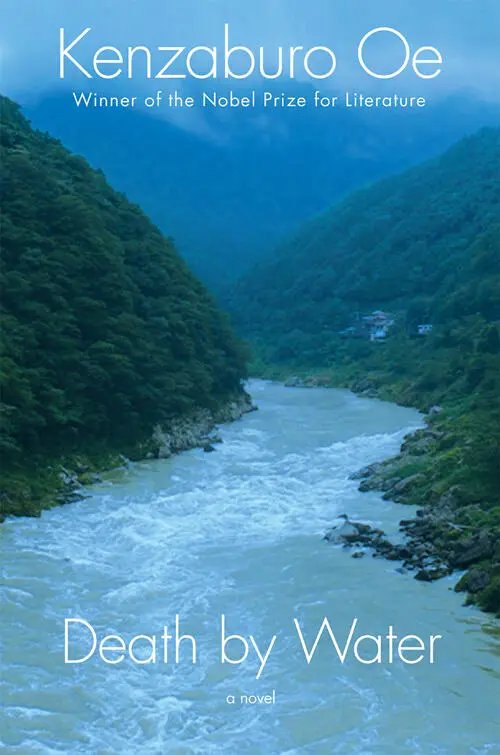
- Название:Death by Water
- Автор:
- Издательство:Grove/Atlantic, Inc.
- Жанр:
- Год:2015
- ISBN:9780802190871
- Рейтинг книги:3 / 5. Голосов: 1
-
Избранное:Добавить в избранное
- Отзывы:
-
Ваша оценка:
Death by Water: краткое содержание, описание и аннотация
Предлагаем к чтению аннотацию, описание, краткое содержание или предисловие (зависит от того, что написал сам автор книги «Death by Water»). Если вы не нашли необходимую информацию о книге — напишите в комментариях, мы постараемся отыскать её.
, his recurring protagonist and literary alter-ego returns to his hometown village in search of a red suitcase fabled to hold documents revealing the details of his father’s death during WWII: details that will serve as the foundation for his new, and final, novel.
Since his youth, renowned novelist Kogito Choko planned to fictionalize his father’s fatal drowning in order to fully process the loss. Stricken with guilt and regret over his failure to rescue his father, Choko has long been driven to discover why his father was boating on the river in a torrential storm. Though he remembers overhearing his father and a group of soldiers discussing an insurgent scheme to stage a suicide attack on Emperor Mikado, Choko cannot separate his memories from imagination and his family is hesitant to reveal the entire story. When the contents of the trunk turn out to offer little clarity, Choko abandons the novel in creative despair. Floundering as an artist, he’s haunted by fear that he may never write his tour de force. But when he collaborates with an avant-garde theater troupe dramatizing his early novels, Kogito is revitalized by revisiting his formative work and he finds the will to continue investigating his father’s demise.
Diving into the turbulent depths of legacy and mortality,
is an exquisite examination of resurfacing national and personal trauma, and the ways that storytelling can mend political, social, and familial rifts.
Death by Water — читать онлайн бесплатно полную книгу (весь текст) целиком
Ниже представлен текст книги, разбитый по страницам. Система сохранения места последней прочитанной страницы, позволяет с удобством читать онлайн бесплатно книгу «Death by Water», без необходимости каждый раз заново искать на чём Вы остановились. Поставьте закладку, и сможете в любой момент перейти на страницу, на которой закончили чтение.
Интервал:
Закладка:
I knew from previous visits that beyond the window, as springtime marched along, you could see the maples, with their wine-colored buds gradually shading into the palest green; the tall, lush-leafed white birches; two kinds of flowering persimmons — one with edible fruit, the other strictly ornamental; and, finally, the late-blooming dogwoods (both red and white). This spring, however, we had kept the curtains perpetually closed on the south-side garden, so we had missed the seasonal parade of loveliness. The realization struck me as a poignant reminder of the stifling, hermetic existence Akari and I had been mired in since arriving here.
Akari returned with the CD, and as the opulent sound of Beethoven filled every atom of the cavernous space, he was clearly transported into some private realm of sublimity. (Both the composition — the Piano Sonata no. 32 in C Minor, op. 111—and the performance, by Friedrich Gulda, were among his particular favorites.) When the recording reached the second movement, which was the section of the piece used in the film, Akari lifted his head from the score and gave Ricchan a meaningful glance as if to say, This is it.
Ricchan was sitting with the screenplay for Meisuke’s Mother Marches Off to War open on her knees, and she caught Akari’s eye and solemnly bobbed her head, to show she had gotten the message.
4
The next morning, before Akari had emerged from his bedroom and joined us at the breakfast table, Ricchan informed me that she had already called Asa and Unaiko to share the exciting news about the unexpected appearance of the screenplay.
“Asa responded cautiously, as usual. She was happy that I’ve finally gotten a chance to read your version of the story of Meisuke’s mother, but she reminded me that we’d agreed not to pressure you into getting involved with our project on any particular timetable. She also suggested that I ought to take your screenplay with several grains of salt because your interpretation of the saga ‘reeks of male chauvinism,’ as she put it. She said I should tread very carefully going forward.
“Unaiko was really happy to hear that a copy of the screenplay had turned up, and she seems to be eager to forge ahead and express her own concerns through the medium of our upcoming collaboration. As you know, I’ve been asking people from around here to talk about their experiences as extras in the film about Meisuke’s mother, and since I’m passing everything on to Unaiko bit by bit and then taking notes on her comments, I’ve been learning a lot about her method of putting together a dramatic piece. Of course, I hope our wavelengths will eventually become synchronized to the point where I’ll be able to intuit things without even having to ask.
“Regarding the recitative that features so prominently in your screenplay, I asked a number of locals to try to recite it from memory, and I was able to record quite a few different versions. (I gather you can still hear parts of the battle chant — you know, where Meisuke’s mother is rallying her troops before they march off to stage the uprising — at Bon Odori celebrations around these parts.) I’d almost like to say that every person’s rendition was different — both the words and the melody. When I saw the version in the screenplay I said to myself, ‘Ah, this must be written in the slightly old-fashioned style Mr. Choko’s mother and grandmother used when they were reciting this.’ I had to read this part over and over to Unaiko on the phone, but I’m afraid my rendition sounded kind of singsongy. Wait, I’ll show you.” Whereupon Ricchan began to recite, in her trained-musician’s voice:
Women warriors, let us go
Off to face our latest foe.
Into battle we will soar
Strong and brave forevermore.
All together, here we go
We shall vanquish every foe!
“In the screenplay,” Ricchan went on without waiting for me to react, “you used a form of the chant that had apparently been around for a long time, and the chorus section was also in an archaic literary style. I asked Asa whether that was the way you would have heard the recitative from your mother and grandmother when you were a little boy, and she said that, on the contrary, she thought the chant in the screenplay was the result of your applying your novelist’s skills to rewriting it over and over. During the time Unaiko and I have been recording the local women’s memories, in all their disparity, I’ve been entering those accounts into the computer, and it did occur to me that if I kept revising and polishing during the process, we would eventually arrive at a kind of literary style of our own. I was quite excited, but when I mentioned it to Unaiko, she said that since there’s a specific theme she wants to express through this play, she wants to see our play’s language evolve naturally.”
“She’s absolutely right that the theme should shape the literary style,” I said. “It really ought to work that way with any writing project, and I think a distinctive style can be the most compelling part of the whole.”
“When I told Unaiko that Akari had unexpectedly shared his copy of the screenplay, the first thing she wanted to know was how Meisuke’s mother’s remarks were presented,” Ricchan said. “She was wondering about one scene in particular. It takes place just after the second uprising, which was led by the teenage reincarnation of the original Meisuke. His mother (who was, of course, the mother of the first Meisuke as well) and her troops have broken camp in Okawara, and the mother and her eight-year-old son are on the way back to their village when they are surrounded by a group of young hooligans — unemployed former samurai who are filled with freefloating resentment and looking for trouble. These brutes trap young Meisuke II in a hole and stone him to death, and then a bunch of them gang-rape his mother.
“After the ruffians are gone Meisuke’s mother, who is injured and unable to walk, is carried home to the village by her supporters on a stretcher made from an old wooden shutter. The procession stops at a sake brewery, and while the proprietor is making a show of giving them some water to drink, it’s obvious he is consumed with prurient curiosity. So how does Meisuke’s mother respond to his oblique inquiries in the script? When I posed the question to some of the women who participated in the making of the movie, most of them remembered her saying something like ‘If you’re so curious about how it was, kind sir, maybe you should try being raped yourself sometime!’”
I didn’t respond, and Ricchan seemed to cast a mildly critical glance in my direction before she went on speaking. “So anyway, when Unaiko posed that question I had a major epiphany, and I understood for the first time why she was creating this new play and what its theme was going to be as well,” she said. “I made up my mind then that no matter what happened I would do everything I could, without compromise, to help Unaiko find the language to get her message across.”
Once again, I sat there in unresponsive silence, not sure what to make of this cryptic disclosure. After a beat or two I said, “I gather you’re planning to begin by performing this piece at the junior high’s theater in the round. In that case, many of the women you’ve been interviewing will most likely be in attendance, so it’s probably safe to assume they’ll be drawn into the interactive dialogue and the hurling of soft toys that are an integral part of the dog-tossing approach to theater.”
“Absolutely!” Ricchan chirped. “In fact, every time I go out to do these interviews I’ve been promising to invite them all to the premiere when the time comes. I tell everyone I meet that I really hope they’ll come with their arms full of handcrafted ‘dead dogs’ they’ve created themselves at home!”
Читать дальшеИнтервал:
Закладка:
Похожие книги на «Death by Water»
Представляем Вашему вниманию похожие книги на «Death by Water» списком для выбора. Мы отобрали схожую по названию и смыслу литературу в надежде предоставить читателям больше вариантов отыскать новые, интересные, ещё непрочитанные произведения.




Обсуждение, отзывы о книге «Death by Water» и просто собственные мнения читателей. Оставьте ваши комментарии, напишите, что Вы думаете о произведении, его смысле или главных героях. Укажите что конкретно понравилось, а что нет, и почему Вы так считаете.