Kenzaburo Oe - Death by Water
Здесь есть возможность читать онлайн «Kenzaburo Oe - Death by Water» весь текст электронной книги совершенно бесплатно (целиком полную версию без сокращений). В некоторых случаях можно слушать аудио, скачать через торрент в формате fb2 и присутствует краткое содержание. Год выпуска: 2015, ISBN: 2015, Издательство: Grove/Atlantic, Inc., Жанр: Современная проза, на английском языке. Описание произведения, (предисловие) а так же отзывы посетителей доступны на портале библиотеки ЛибКат.
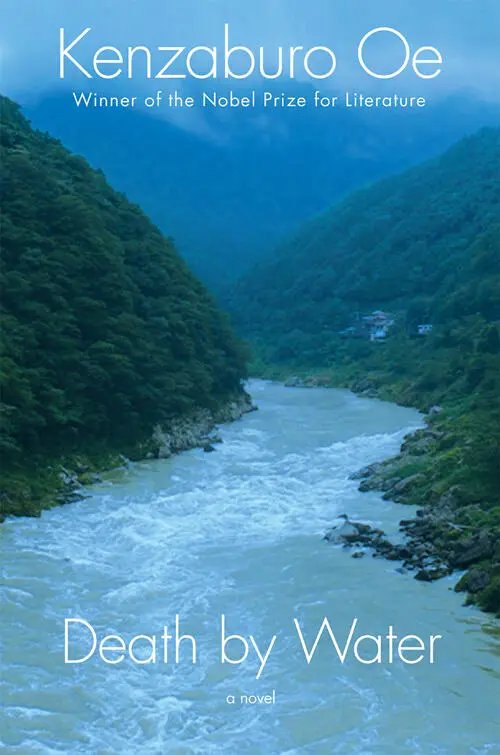
- Название:Death by Water
- Автор:
- Издательство:Grove/Atlantic, Inc.
- Жанр:
- Год:2015
- ISBN:9780802190871
- Рейтинг книги:3 / 5. Голосов: 1
-
Избранное:Добавить в избранное
- Отзывы:
-
Ваша оценка:
Death by Water: краткое содержание, описание и аннотация
Предлагаем к чтению аннотацию, описание, краткое содержание или предисловие (зависит от того, что написал сам автор книги «Death by Water»). Если вы не нашли необходимую информацию о книге — напишите в комментариях, мы постараемся отыскать её.
, his recurring protagonist and literary alter-ego returns to his hometown village in search of a red suitcase fabled to hold documents revealing the details of his father’s death during WWII: details that will serve as the foundation for his new, and final, novel.
Since his youth, renowned novelist Kogito Choko planned to fictionalize his father’s fatal drowning in order to fully process the loss. Stricken with guilt and regret over his failure to rescue his father, Choko has long been driven to discover why his father was boating on the river in a torrential storm. Though he remembers overhearing his father and a group of soldiers discussing an insurgent scheme to stage a suicide attack on Emperor Mikado, Choko cannot separate his memories from imagination and his family is hesitant to reveal the entire story. When the contents of the trunk turn out to offer little clarity, Choko abandons the novel in creative despair. Floundering as an artist, he’s haunted by fear that he may never write his tour de force. But when he collaborates with an avant-garde theater troupe dramatizing his early novels, Kogito is revitalized by revisiting his formative work and he finds the will to continue investigating his father’s demise.
Diving into the turbulent depths of legacy and mortality,
is an exquisite examination of resurfacing national and personal trauma, and the ways that storytelling can mend political, social, and familial rifts.
Death by Water — читать онлайн бесплатно полную книгу (весь текст) целиком
Ниже представлен текст книги, разбитый по страницам. Система сохранения места последней прочитанной страницы, позволяет с удобством читать онлайн бесплатно книгу «Death by Water», без необходимости каждый раз заново искать на чём Вы остановились. Поставьте закладку, и сможете в любой момент перейти на страницу, на которой закончили чтение.
Интервал:
Закладка:
Just then, at the precise moment I needed it, Unaiko handed me the relevant index card, which she had presciently unpinned from the bookshelf.
“This stanza is from ‘What the Thunder Said,’ which is the final section of the poem,” I went on. “It’s full of quotations from Dante, Nerval, and Thomas Kyd, among others. The line in question is this: These fragments I have shored against my ruins. Until very recently, I always assumed the narrator was referring to some kind of purely physical ruination. Carried along by the inexorable momentum of my misconception, I somehow imagined that he had been shipwrecked, but had weathered the storm and made it to shore. (There actually is a line about a boat toward the end.) I thought he was expressing his relief at finally being on dry land, safe and sound after having managed to dodge a potentially ruinous disaster. In other words, for the longest time I misperceived ‘shore’ as a metaphorical noun in the sense of landfall, rather than a verb, as in ‘shore up.’
“Recently, though, I’ve arrived at a new interpretation, based on my late-blooming realization that the author is using ‘shore’ in the sense of propping or supporting. I think the narrator is saying that the fragments in The Waste Land are going to help shore him up against the specter of spiritual and mental decay, as evoked in the poem. Of course, there are a lot of other theories floating around, but this one makes sense to me. Anyway, following that line of thought allowed me to resolve the disparities I’d noticed between Eliot’s original and Fukase’s somewhat ambiguous translation, which was good. On the other hand, I’ve realized that as I’m growing older my own mental and physical faculties are perceptibly disintegrating with every passing day — in other words, the type of decline described in Eliot’s poem is really happening to me, and I’m not sure how to go about shoring myself up.”
As I approached the end of this monologue Unaiko began to cry, and a veritable torrent of tears streamed down both sides of her high-bridged nose. Tentatively, I put an arm around her shoulders, then shot an expressive glance at Katsura (who was clearly discombobulated by this unexpected development) to indicate that he should probably take her home.
Unaiko was still weeping profusely, but she stood up docilely when Katsura held out his hand, and I watched anxiously from the top of the stairs as he tenderly led her down to the first floor and out the front door.
Chapter 13. The Macbeth Matter
1
Ricchan was the kind of person who didn’t feel the need to draw attention to her own exceptional abilities, but when her facility for giving music lessons (a gift of which I had been completely unaware) came to light, it turned out to be a source of great joy for Akari. After Maki heard the news that Akari had finally started enjoying CDs again (following a long interlude during which he only listened to music on a portable radio, with the volume on his headphones turned up to maximum volume), she sent him a box filled with compact discs. On the chance he might be ready to resume his composing and study of music theory, she threw in some music workbooks (designed for elementary school students and illustrated with cartoon characters and such) along with a number of unfinished compositions Akari had drafted on five-line paper. The latter, in particular, provided a useful starting point for Ricchan’s lessons.
The cardboard box had been sent by courier, and because it was too large for the contents, they had gotten jumbled in transit. While I was putting everything in order, Akari — just back from his daily rehab at the Saya — made a beeline for the table where I was working and began to hover nearby. Taking the hint, I left the dining room to Akari and Ricchan and repaired to my study. When I went downstairs an hour or so later for a drink of water, I found Akari engrossed in one of the music workbooks, wielding pencils in both hands.
Ricchan was peering over his shoulder, and as I entered the room she said, “Wait, what’s this? Akari dear, you’ve made a little mistake in calculating the note values. You did everything else perfectly, though.”
“I know,” Akari acknowledged. “I’m not so good at figuring out things like that.”
I approached the table, and when I asked Ricchan a question about her musical training she replied with complete candor, saying she had graduated from Tokyo University of the Arts (popularly known as Geidai) with a major in piano, but had dropped out of grad school and started working part time for the Caveman Group. (That was when she had become friends with Unaiko.) Now that she mentioned it, I remembered having seen Ricchan’s name listed on the group’s performance calendar as “music director.” In addition, one of Asa’s recent letters had referred to Ricchan as a music specialist, or something similar.
In that case, I asked, was there any chance she might be willing to take Akari on as a pupil? (His regular teacher was in Tokyo, of course, but he had let the lessons lapse long before we came to stay at the Forest House.) Ricchan readily agreed, and in short order she went to talk to a schoolteacher she’d gotten to know during the production of the Kokoro play and wangled permission to use the piano in the junior high’s music room for Akari’s lessons. (Ricchan, by nature, was the furthest thing from pushy or overaggressive, but she also knew how to make things happen quickly when she needed to.) As a felicitous bonus, it turned out that some of Akari’s CDs were already being used as part of the junior high’s music curriculum.
One day after Ricchan and I had been looking over one of Akari’s resuscitated compositions together, she said to me, “All Akari needs is some five-line paper, a pencil, and an eraser. This is something he dashed off in ten minutes before a lesson, and while there’s nothing objectively wrong with it, when I tried playing it something seemed to be a tiny bit off — it sounded awkward somehow — so I simply suggested that a slightly different approach might work better. Akari did a quick rewrite on the spot and when I played the revised version I thought, Wow, this time he totally nailed it! In a few days, Akari will be trying his hand at performing another composition he just finished — it’s one he started working on in Tokyo. Would you like to come to the school with us and hear it?”
I accepted Ricchan’s invitation with alacrity, and on the appointed day I tagged along with a spring in my step. Apparently this was another case where Akari had completed the composition in his own style, and then Ricchan had demonstrated some alternatives, which Akari incorporated into the next draft. Ricchan said she was worried about how Akari’s teacher in Tokyo might react to these modifications, so she carefully documented every step in the process. Akari, on the other hand, took a scorched-earth approach to rewriting. When he had occasion to make a change, he would completely erase the existing marks and then write in the revisions, leaving no trace of the original composition.
My grasp of music theory was rudimentary at best, but it was clear even to me that the revised versions were greatly improved, while still managing to retain the distinctive flavor that immediately made me think, Ah, this is one of Akari’s compositions, without a doubt. When I gave voice to that thought, Ricchan (who, unlike Unaiko, didn’t often show her emotions) looked extremely pleased.
I glanced at the sheet music propped up on the piano in the music room and noticed that the title, which was usually the first thing Akari jotted down when he got an idea for a new composition, was missing. I asked Ricchan whether there had been a title on the original, before Akari copied it over to incorporate the latest changes.
Читать дальшеИнтервал:
Закладка:
Похожие книги на «Death by Water»
Представляем Вашему вниманию похожие книги на «Death by Water» списком для выбора. Мы отобрали схожую по названию и смыслу литературу в надежде предоставить читателям больше вариантов отыскать новые, интересные, ещё непрочитанные произведения.





Обсуждение, отзывы о книге «Death by Water» и просто собственные мнения читателей. Оставьте ваши комментарии, напишите, что Вы думаете о произведении, его смысле или главных героях. Укажите что конкретно понравилось, а что нет, и почему Вы так считаете.