Kenzaburo Oe - Death by Water
Здесь есть возможность читать онлайн «Kenzaburo Oe - Death by Water» весь текст электронной книги совершенно бесплатно (целиком полную версию без сокращений). В некоторых случаях можно слушать аудио, скачать через торрент в формате fb2 и присутствует краткое содержание. Год выпуска: 2015, ISBN: 2015, Издательство: Grove/Atlantic, Inc., Жанр: Современная проза, на английском языке. Описание произведения, (предисловие) а так же отзывы посетителей доступны на портале библиотеки ЛибКат.
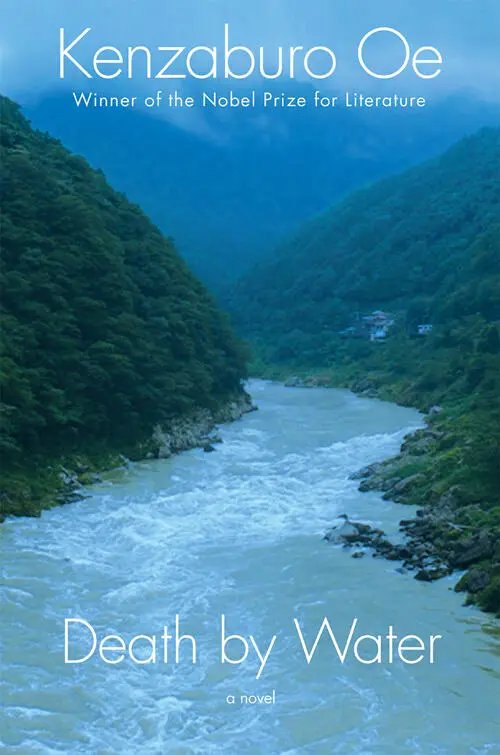
- Название:Death by Water
- Автор:
- Издательство:Grove/Atlantic, Inc.
- Жанр:
- Год:2015
- ISBN:9780802190871
- Рейтинг книги:3 / 5. Голосов: 1
-
Избранное:Добавить в избранное
- Отзывы:
-
Ваша оценка:
Death by Water: краткое содержание, описание и аннотация
Предлагаем к чтению аннотацию, описание, краткое содержание или предисловие (зависит от того, что написал сам автор книги «Death by Water»). Если вы не нашли необходимую информацию о книге — напишите в комментариях, мы постараемся отыскать её.
, his recurring protagonist and literary alter-ego returns to his hometown village in search of a red suitcase fabled to hold documents revealing the details of his father’s death during WWII: details that will serve as the foundation for his new, and final, novel.
Since his youth, renowned novelist Kogito Choko planned to fictionalize his father’s fatal drowning in order to fully process the loss. Stricken with guilt and regret over his failure to rescue his father, Choko has long been driven to discover why his father was boating on the river in a torrential storm. Though he remembers overhearing his father and a group of soldiers discussing an insurgent scheme to stage a suicide attack on Emperor Mikado, Choko cannot separate his memories from imagination and his family is hesitant to reveal the entire story. When the contents of the trunk turn out to offer little clarity, Choko abandons the novel in creative despair. Floundering as an artist, he’s haunted by fear that he may never write his tour de force. But when he collaborates with an avant-garde theater troupe dramatizing his early novels, Kogito is revitalized by revisiting his formative work and he finds the will to continue investigating his father’s demise.
Diving into the turbulent depths of legacy and mortality,
is an exquisite examination of resurfacing national and personal trauma, and the ways that storytelling can mend political, social, and familial rifts.
Death by Water — читать онлайн бесплатно полную книгу (весь текст) целиком
Ниже представлен текст книги, разбитый по страницам. Система сохранения места последней прочитанной страницы, позволяет с удобством читать онлайн бесплатно книгу «Death by Water», без необходимости каждый раз заново искать на чём Вы остановились. Поставьте закладку, и сможете в любой момент перейти на страницу, на которой закончили чтение.
Интервал:
Закладка:
“I wasn’t aware that Akari was in the habit of titling his work, so I didn’t notice one way or the other,” Ricchan replied.
I remembered how Akari and I used to banter back and forth in a stylized way, mimicking a long-ago TV commercial, so I decided to give that tactic a try.
“Akari, where did the title of your composition go?” I asked playfully.
Akari ignored my attempt at levity. “I erased it,” he said flatly.
“Well then, shall we give it a new one?”
“No, it’s called ‘Big Water,’” Akari replied.
“‘Big Water’ is what they call a flood around these parts,” I explained, turning to Ricchan. “Come to think of it, when Akari and I were having our, uh, differences, he stopped listening to music and gave up composing as well. That whole debacle happened not long after I’d given up on the drowning novel, but even after I returned to Tokyo I was still talking quite a bit about my father, who died in a ‘big water’ flood. While Akari was laying the groundwork for what would eventually become this composition, he must have somehow internalized the phrase ‘big water’ without fully understanding the meaning. However, he says he erased the original title he was using for this composition when he started work on it back in Tokyo, so …”
“The section that Akari wrote in Tokyo definitely has a dark sensibility,” Ricchan mused. “But apparently he decided that he wanted to do a rewrite and brighten it up a bit, so maybe ‘After the Flood’ would be a good title for the new composition. The way I picture the scene, it’s the day after a big storm; the sun is shining, the sky is clear and blue, and the water level is slowly returning to normal. That’s the kind of ambience the phrase ‘after the flood’ evokes, don’t you think? Oh, and isn’t there a famous Rimbaud poem with the same title?”
“The name of my composition is ‘Big Water,’” Akari said firmly.
2
“Instead of heading straight back to the house, how would it be if we took a scenic detour through the forest? There’s something I’d like to talk to you about,” Ricchan said as we drove away from the Saya. (Akari was in the back of the van, listening to music on headphones.) When I agreed, Ricchan made a perceptible shift from casual conversation to serious-discussion mode.
“Unaiko was saying all along that she really hoped we’d be able to persuade you to be a part of our new drama project,” she began. “As you know, I wrote about it in my journal. We’re very grateful to you for agreeing to work with us, but now that we’ve reached this stage, I feel the time has come for me to share some of my concerns.
“I know Masao thinks I’m just some kind of robot who runs around mindlessly doing Unaiko’s bidding. Admittedly, that’s been our basic dynamic during the past ten years or so, and it’s certainly true that now, as always, my energies are focused on trying to make Unaiko’s vision a reality. But this time there’s more to it. I should probably begin by saying that since our current project is a stage adaptation that more or less follows the plot of a movie, and since you wrote the screenplay for the film in question, your cooperation will be invaluable. I think Masao and the other members of the Caveman Group decided to participate in the project mainly because they heard you would be involved. The thing is, there’s another, hidden aspect to this undertaking — something that has a very personal significance for Unaiko — and I’m concerned because she hasn’t yet talked to you about it. When I asked her when she was going to get around to doing that, she said, ‘Well, the tragic aspect of the Meisuke’s mother story is implicitly present in Mr. Choko’s original screenplay, so what’s the problem?’ But the thing is, I know she’s going to put her own stamp on this, using her patented ‘Unaiko method’ with the dog-tossing and all. And I suspect that, just as she did with her previous productions, she’ll probably plow ahead in a completely oblivious, egocentric way. Because of the controversial nature of the subject matter, and the forthright way she’s planning to approach it, I’m afraid you might find yourself mixed up in something more complicated than you bargained for.
“So basically, I wanted to make sure you’d been properly warned that the upcoming performance has the potential to blow up in our faces. There’s also the question of how Akari will react. He isn’t only meticulous about the way he listens to his music; he also pays close attention to anything having to do with his father. I’m worried that something very distressing for him might happen as a direct result of your involvement in this project.
“To be honest, at this early stage I can’t predict what sort of outrageous thing Unaiko might toss out during the actual performance. (You know how she loves to improvise and shock the audience!) I wouldn’t dream of betraying her confidence, and in any case she’ll probably tell you about the matter in question herself before too long. This might sound like an exaggeration, but I suspect the thing she hasn’t yet told you about, which was an exceedingly traumatic experience, had a profound effect on Unaiko — not only on her art, but on her entire life.
“Sorry, I don’t mean to be cryptic, but as I said it isn’t my place to tell you the details. What I would like to talk about right now, in a completely objective way, is the current state of affairs surrounding this play. You’ve probably heard about this from Daio, but after the show at the junior high (you know, the dog-tossing version of Kokoro) a lot of people were angry about certain aspects of Unaiko’s way of thinking. Those people are mostly from the right-wing faction that has been very influential in this prefecture’s educational circles for many years. (We learned about this from Daio, so I’m assuming you’ve heard about it as well.) Anyway, some of their representatives are going to be present in the audience at our next performance as spies. Apparently those people have already bought tickets and reserved their seats. The question is, where will they be focusing their animosity? Right now I know they’re gathering information about the scene depicting the rape of Meisuke’s mother, the way you described it in your original draft of the screenplay. (As we all know, that hit very close to home for Sakura Ogi Magarshack because of what happened to her as a young girl.) Those people have also been in contact with the women I’ve been interviewing as part of my background research. It isn’t entirely clear what happened, but apparently the scene that was initially filmed ended up being completely scrubbed from the final print, either by order of the NHK network here in Japan (which was coproducing the film) or the distribution company in America.
“Recently those local right-wingers have started publicly flexing their muscles, saying things like ‘We’re the ones who got the scene taken out of the movie, you know,’ so they were predictably upset when they heard that Unaiko is trying to include the deleted scene in the play. The part where Meisuke’s mother — who is injured, exhausted, and probably in shock — is being carried on a stretcher made from an old wooden shutter is important, but Unaiko wants to restore the narrative’s original integrity by resurrecting the previous scene, in which Meisuke’s mother is raped and her reborn son, the supposed reincarnation of the original Meisuke, is stoned to death. Unaiko and I (and Masao, too) are certain there’s at least one spy from the other side skulking around the project, and we’re doing our best to smoke them out. We’ve also heard that they are up in arms about your supposed rewriting of modern history through the lens of your contempt for your native province. (Needless to say, those are their words, not mine.)
Читать дальшеИнтервал:
Закладка:
Похожие книги на «Death by Water»
Представляем Вашему вниманию похожие книги на «Death by Water» списком для выбора. Мы отобрали схожую по названию и смыслу литературу в надежде предоставить читателям больше вариантов отыскать новые, интересные, ещё непрочитанные произведения.


Обсуждение, отзывы о книге «Death by Water» и просто собственные мнения читателей. Оставьте ваши комментарии, напишите, что Вы думаете о произведении, его смысле или главных героях. Укажите что конкретно понравилось, а что нет, и почему Вы так считаете.