Kenzaburo Oe - Death by Water
Здесь есть возможность читать онлайн «Kenzaburo Oe - Death by Water» весь текст электронной книги совершенно бесплатно (целиком полную версию без сокращений). В некоторых случаях можно слушать аудио, скачать через торрент в формате fb2 и присутствует краткое содержание. Год выпуска: 2015, ISBN: 2015, Издательство: Grove/Atlantic, Inc., Жанр: Современная проза, на английском языке. Описание произведения, (предисловие) а так же отзывы посетителей доступны на портале библиотеки ЛибКат.
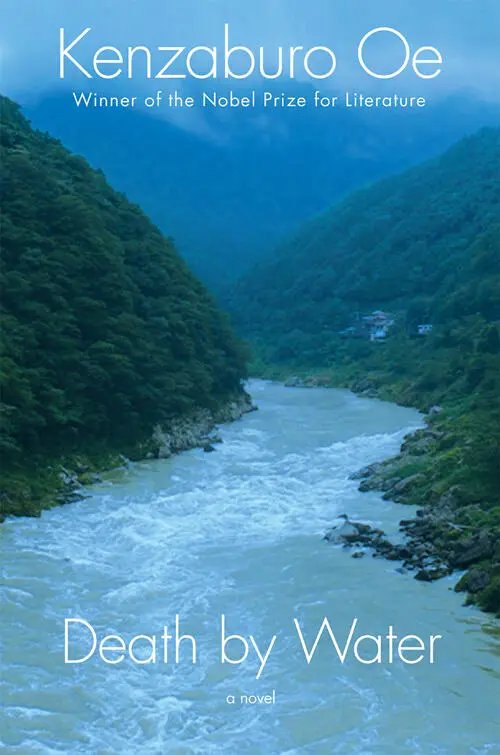
- Название:Death by Water
- Автор:
- Издательство:Grove/Atlantic, Inc.
- Жанр:
- Год:2015
- ISBN:9780802190871
- Рейтинг книги:3 / 5. Голосов: 1
-
Избранное:Добавить в избранное
- Отзывы:
-
Ваша оценка:
Death by Water: краткое содержание, описание и аннотация
Предлагаем к чтению аннотацию, описание, краткое содержание или предисловие (зависит от того, что написал сам автор книги «Death by Water»). Если вы не нашли необходимую информацию о книге — напишите в комментариях, мы постараемся отыскать её.
, his recurring protagonist and literary alter-ego returns to his hometown village in search of a red suitcase fabled to hold documents revealing the details of his father’s death during WWII: details that will serve as the foundation for his new, and final, novel.
Since his youth, renowned novelist Kogito Choko planned to fictionalize his father’s fatal drowning in order to fully process the loss. Stricken with guilt and regret over his failure to rescue his father, Choko has long been driven to discover why his father was boating on the river in a torrential storm. Though he remembers overhearing his father and a group of soldiers discussing an insurgent scheme to stage a suicide attack on Emperor Mikado, Choko cannot separate his memories from imagination and his family is hesitant to reveal the entire story. When the contents of the trunk turn out to offer little clarity, Choko abandons the novel in creative despair. Floundering as an artist, he’s haunted by fear that he may never write his tour de force. But when he collaborates with an avant-garde theater troupe dramatizing his early novels, Kogito is revitalized by revisiting his formative work and he finds the will to continue investigating his father’s demise.
Diving into the turbulent depths of legacy and mortality,
is an exquisite examination of resurfacing national and personal trauma, and the ways that storytelling can mend political, social, and familial rifts.
Death by Water — читать онлайн бесплатно полную книгу (весь текст) целиком
Ниже представлен текст книги, разбитый по страницам. Система сохранения места последней прочитанной страницы, позволяет с удобством читать онлайн бесплатно книгу «Death by Water», без необходимости каждый раз заново искать на чём Вы остановились. Поставьте закладку, и сможете в любой момент перейти на страницу, на которой закончили чтение.
Интервал:
Закладка:
“Kogii, I’m only mentioning this now to let you know how seriously Chikashi and Maki are thinking about this. I get the feeling they’re hoping you’ll take the initiative, sooner rather than later, and let them know your thoughts about what will become of Akari when you die. I simply wanted to put a bug in your ear, so to speak.”
Asa lapsed into silence. We had already driven through the residential outskirts of Honmachi, and as I gazed out the window a familiar landmark — the long sandbar on the other side of the embankment — came into view. A few moments later, Unaiko spoke up.
“What do you mean by ‘the Macbeth matter’?” she asked me.
“It’s a reference to the kind of situation implied by the lines where Lady Macbeth says, These deeds must not be thought / After these ways; so, it will make us mad. That’s all.”
My brief reply was meant to discourage further discussion, and I could sense from Unaiko’s body language that she had gotten the message. Asa gave me an exceptionally eloquent look, but she didn’t say a word. However, Unaiko wasn’t the type to slink quietly away from a conversation, and she managed to change the subject in a positive way.
“On another topic,” she said, “I’ve been watching Ricchan while she’s helping Akari with his music lessons, and it occurred to me that the work she’s doing with him has given her a whole new lease on life. Honestly, I’ve never seen Ricchan like this before. Until now I’ve always relied completely on her, and even though we haven’t always been living in the same place, when the going got tough it always cheered me up to know Ricchan would be coming back before too long — and she always did, eventually. To be perfectly frank, while I’ve admittedly been quite dependent on Ricchan in a practical sense, I always thought working with me was going to turn out to be the most important thing in her life, and I never imagined that anything else could be as exciting and fulfilling for her as our dramatic projects. But lately when I see Ricchan and Akari working on lessons and compositions together, and then when I hear their efforts transformed into music, it’s clear that those endeavors are much more important and rewarding for Ricchan than being my assistant. I’ve gotten a sense that the work she’s doing with Akari has been lifting her to an entirely new level, and I was reminded of that when I heard about what Maki had said.”
“If you don’t mind, Unaiko, I’m going to email Maki and tell her what you said just now,” Asa replied, but (true to her cautiously skeptical character) she managed to infuse her words with a figurative grain of salt. “I’m sure Maki will be happy to hear about this, but I don’t want to lead her to imagine Ricchan might wind up living with Akari sometime in the future — I mean, that kind of wishful thinking could create another ‘ Macbeth matter.’ I must admit, I do have a fantasy that after my brother passes away, Ricchan could find a way to continue as Unaiko’s creative partner while also managing to be Akari’s music teacher and Chikashi’s personal assistant, or private secretary. As I said, I realize that scenario may be an impossibly far-fetched pipe dream, but you never know …”
5
“Well, here we are in Okawara!” Asa announced as we rolled into town. “I can guess what’s going through your mind, Kogii: something like Hey, wait a minute, what happened to Okawara? The last person who responded by appreciatively sighing, ‘Ahh, Okawara!’ when I brought her here was Sakura Ogi Magarshack. She knew quite a bit about local history, and she was really moved. Of course, that was before the big real estate companies came in and started building speculative housing developments all over the place.”
“But … I mean, I know Sakura had a rich cinematic imagination, but what exactly did she find so moving about the sight of Okawara?” I asked. “I imagine it was already overrun with unsightly development by then.”
“Oh, Kogii, you’re probably remembering the time Sakura came down here to shoot Meisuke’s Mother Marches Off to War. Right? No, I’m talking about the day Sakura first laid eyes on Okawara, many years earlier. I’d been contacted by your movie-producer pal, Komori, and I took a paid day off from the Red Cross Hospital — something I’d never done before, even once — and played tour guide for Sakura. It was while you were involved in a hunger strike in Sugibayashi, up in Tokyo, as a show of solidarity with the Korean poet Kim Ji-ha. Komori dropped by the sit-in tent to visit you; Sakura was with him, and he introduced you to her. That should tell you what year it was.”
“Yes, it was 1975: the year Professor Musumi passed away,” I said.
“Anyhow, at the time Sakura was en route back to Washington from Seoul — she had gone there in person to apologize for the production stoppage on a film project that was a joint venture between the US and Korea, or some such. Apparently you mentioned the story of Meisuke’s mother and the uprising. It piqued Sakura’s interest, and she came to take a look around Okawara. As I said, I volunteered my tour-guide services, and that was when Sakura told me about what happened to her while she was in Matsuyama during the Occupation. Later I took her to our house in the village and Mother, who was still going strong at the time, even chanted the battle cry of Meisuke’s mother for the benefit of the glamorous visitor!
“Sakura never forgot that, and some thirty years later she returned with the idea of making the story into a movie, using her own funds for the start-up financing. But Okawara had changed (although not this much!), and her original idea of filming the uprising on location had to be revised. On the plus side, that’s how the first scene of the movie, where Meisuke’s mother’s ghostly spirit is at the Saya chanting her battle cry to incite her followers to march off to war, came into being. Fortunately, the landscape around the Saya hadn’t changed at all in the past hundred years or so.”
“My clearest memory of Okawara is of the time Father and I rode here on our bikes, single file, to see the kite-flying contest,” I said. “You know, the one where everyone has those enormous hand-painted kites? The war was starting to heat up, and Father had heard that the contest was about to be discontinued indefinitely. I haven’t been back to Okawara since then, so of course there would have been some changes in the interim, but even so …”
Asa and I spent the next several minutes lamenting the sad deterioration of the local scenery. (Those changes may have been “only natural,” given the passage of time, but they still came as a rude shock.) Unaiko drove on, listening in silence, and when she finally spoke her words were surprisingly upbeat.
“Actually, I think this is fine,” she said. “The folks who come to see our play will mostly be from around here, and they’ll be aware of the contrast between Okawara today and the way it looked in the old days, when Meisuke’s mother and Meisuke II set up camp. Who knows, those discrepancies may even spark people’s imaginations. We’ll leave it to the audience at the performance to make the connection between the gang of renegade samurai who deliberately trampled the grassy area deep in a grove of trees to clear a place where they could rape Meisuke’s mother, and the OL — you know, Office Lady — who was brutally raped, not long ago, on the concrete floor of one of Okawara’s humongous outdoor parking lots. That way, the viewers will understand what we’re showing them isn’t some long-ago period drama, like you see on TV, but rather the present-day reality faced by many contemporary women. If you look at the signage for the car park, you’ll notice the name of that part of town hasn’t changed since the time of the uprising.”
Читать дальшеИнтервал:
Закладка:
Похожие книги на «Death by Water»
Представляем Вашему вниманию похожие книги на «Death by Water» списком для выбора. Мы отобрали схожую по названию и смыслу литературу в надежде предоставить читателям больше вариантов отыскать новые, интересные, ещё непрочитанные произведения.






Обсуждение, отзывы о книге «Death by Water» и просто собственные мнения читателей. Оставьте ваши комментарии, напишите, что Вы думаете о произведении, его смысле или главных героях. Укажите что конкретно понравилось, а что нет, и почему Вы так считаете.