Kenzaburo Oe - Death by Water
Здесь есть возможность читать онлайн «Kenzaburo Oe - Death by Water» весь текст электронной книги совершенно бесплатно (целиком полную версию без сокращений). В некоторых случаях можно слушать аудио, скачать через торрент в формате fb2 и присутствует краткое содержание. Год выпуска: 2015, ISBN: 2015, Издательство: Grove/Atlantic, Inc., Жанр: Современная проза, на английском языке. Описание произведения, (предисловие) а так же отзывы посетителей доступны на портале библиотеки ЛибКат.
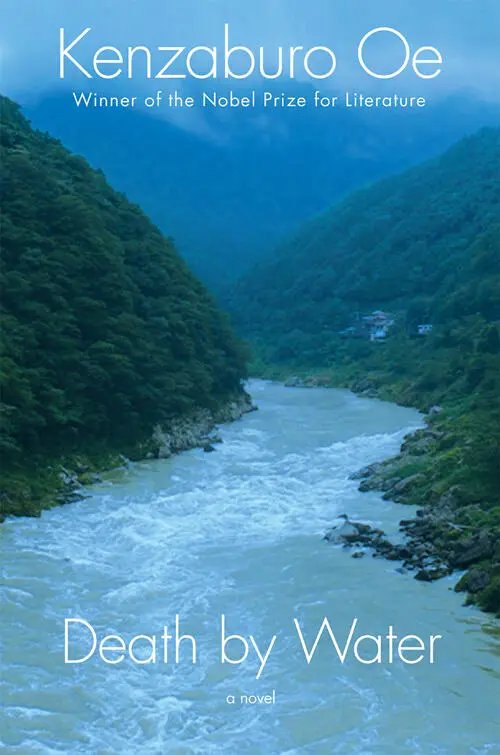
- Название:Death by Water
- Автор:
- Издательство:Grove/Atlantic, Inc.
- Жанр:
- Год:2015
- ISBN:9780802190871
- Рейтинг книги:3 / 5. Голосов: 1
-
Избранное:Добавить в избранное
- Отзывы:
-
Ваша оценка:
Death by Water: краткое содержание, описание и аннотация
Предлагаем к чтению аннотацию, описание, краткое содержание или предисловие (зависит от того, что написал сам автор книги «Death by Water»). Если вы не нашли необходимую информацию о книге — напишите в комментариях, мы постараемся отыскать её.
, his recurring protagonist and literary alter-ego returns to his hometown village in search of a red suitcase fabled to hold documents revealing the details of his father’s death during WWII: details that will serve as the foundation for his new, and final, novel.
Since his youth, renowned novelist Kogito Choko planned to fictionalize his father’s fatal drowning in order to fully process the loss. Stricken with guilt and regret over his failure to rescue his father, Choko has long been driven to discover why his father was boating on the river in a torrential storm. Though he remembers overhearing his father and a group of soldiers discussing an insurgent scheme to stage a suicide attack on Emperor Mikado, Choko cannot separate his memories from imagination and his family is hesitant to reveal the entire story. When the contents of the trunk turn out to offer little clarity, Choko abandons the novel in creative despair. Floundering as an artist, he’s haunted by fear that he may never write his tour de force. But when he collaborates with an avant-garde theater troupe dramatizing his early novels, Kogito is revitalized by revisiting his formative work and he finds the will to continue investigating his father’s demise.
Diving into the turbulent depths of legacy and mortality,
is an exquisite examination of resurfacing national and personal trauma, and the ways that storytelling can mend political, social, and familial rifts.
Death by Water — читать онлайн бесплатно полную книгу (весь текст) целиком
Ниже представлен текст книги, разбитый по страницам. Система сохранения места последней прочитанной страницы, позволяет с удобством читать онлайн бесплатно книгу «Death by Water», без необходимости каждый раз заново искать на чём Вы остановились. Поставьте закладку, и сможете в любой момент перейти на страницу, на которой закончили чтение.
Интервал:
Закладка:
“Wait, let me get this straight. You’re objecting to the idea that I—” Unaiko began, speaking slowly and deliberately, but the woman interrupted her.
“Actually, first of all, I should mention that we feel the word ‘rape’ itself is entirely too graphic, so I’m going to substitute ‘sexual assault’ from now on. As I said before, we’ve heard that you’re going to play the part of Meisuke’s mother in front of an audience that includes a lot of youngsters, which means you would be portraying the victim in the sexual assault scene. And we just wanted to ask you directly how you’re proposing to handle it.”
“So you’re saying an honest and forthright depiction of such an occurrence would be a bad thing?” Unaiko asked in a perfectly neutral tone.
“Well, admittedly, the legend does suggest that Meisuke’s mother was sexually assaulted, but putting aside the question of whether it actually happened, we aren’t saying we want you to sweep that aspect of the story under the rug by any means. But couldn’t you take a slightly less direct approach? Instead of acting out the scene, maybe you could have a narrator explain to your young audience that Meisuke’s mother experienced a great deal of tragedy and suffering, including a physical assault.”
“Let me get this straight,” Unaiko said again in the same uninflected tone. “First, you want to substitute the term ‘sexual assault’ because you feel ‘rape’ is too strong, or too graphic, or whatever. The thing is, ‘rape’ is the precise term for the experience we’re talking about, and its equivalent is used all over the world. (Well, here in Japan we use the English loanword — pronounced ‘reipu ’—as if it were some sort of genteel euphemism, but ironically enough that word is simply a Japanized version of the exact same term. I guess it seems less harsh to us because it’s relatively new and unencumbered by shameful historical associations.) So how does calling the crime ‘sexual assault’ change the reality, or the emotional impact on the victim? I mean, maybe using a euphemism would make the rapist feel better about the horrifying thing he did, but softening the terminology isn’t going to help the victim forget the violently invasive act and the subsequent pain and sorrow. There’s really no way to disguise the truth. A man who uses his strength to force a woman into any kind of nonconsensual sex is a rapist, plain and simple, and committing rape is a criminal act. So for openers, I’d like to get you and everyone else to face up to the stark realities of the term ‘rape.’
“Now, I’m not suggesting that the male students who will see our play are all potential rapists by any means. However, if their female counterparts — the girls who are now in school — are never taught about the harsher aspects of life, they’ll be far more vulnerable to the danger of being raped someday. You suggested that there must be a more delicate way to present the serial rape of Meisuke’s mother. But the thing is, that indirect approach wouldn’t merely diminish the impact of her tragedy and suffering. It would also blunt one of the points we want to make, which is that (figuratively speaking) Meisuke’s mother is still being raped today, and every day. We want to present the unvarnished truth to our young audience, to let them know that rape in any form should be a very real and immediate concern for them.”
“But why do you feel compelled to do that kind of brutal truth-telling in public, and at a school event?” asked the round-faced woman.
“Simply because for the past 140 years, ever since Meisuke’s mother was attacked, there has been no societal evolution to speak of in this country, and the situation for women hasn’t improved in any significant way. As I said, the truth is that Meisuke’s mother wasn’t raped only on one afternoon a century ago; she’s still being symbolically raped now, every single day, and that brutal reality is what we’re trying to address with this upcoming play.”
“Well, okay. But why on earth do you want to put on a play that’s so obsessed with the topic of rape? (By the way, I see your point about resorting to euphemisms, and I’ll try not to do it anymore.) And why stage it here of all places?” demanded the woman with the masculine-looking forehead, returning the discussion to its original focus. “Seriously, why do you have to go out of your way to put on such a controversial play out here in the boonies? People are saying this play of yours has some kind of hidden agenda.”
At this point Asa stepped forward and joined the conversation. “I don’t know where you’re getting your information, ladies,” she said tartly, “so I’m going to ask you outright: Did you really hear that, in those exact words? I mean, ‘hidden agenda’? Please! And even if everything you’re saying isn’t just wild conjecture spawned by some vague rumor you heard around town, you still have a lot of nerve coming here and trying to deprive Unaiko of her right to freedom of expression by asking her to censor the content of her play. When my late husband was the principal of the junior high school in Honmachi, I remember that you used to attend the free lectures my brother here would often give when he came home for a visit, and afterward you and your cohorts would always make a big fuss about the subject matter, which was apparently too left wing for your tastes.”
“This isn’t about freedom of speech, or freedom of expression, or anything like that,” the first woman shot back. “I may be a teacher but I also happen to be a mother, and I have a genuine concern about the effect it might have on the students (including our own children) if they were forced to witness a rape scene taking place onstage during a public performance. Today being Sunday and all, my friend and I were out and about gathering some edible wild plants, and we happened upon your group purely by chance. We’re sorry if we startled you by popping up out of the blue like this.”
“Oh, no, don’t mention it,” Asa said in a friendlier tone. “This place is supposedly on a route traveled by wild boars, so we wouldn’t have been startled by something as minor as being accosted by you. However,” she added slyly, “I can’t help wondering which edible wild plants you expected to find around here this time of year. I mean, nothing’s in season right now.”
Without a word, the two interlopers sheepishly withdrew into the shadows beside the shrine and vanished from sight. Asa made no move to follow them. Instead, she turned to Unaiko and me and said, “Those two probably spotted us getting out of the car when we left it at the parking lot down by the river. That much, at least, could have been happenstance. They probably had a hunch we’d be bringing Unaiko to see this site, so I’m guessing they followed us and then put on a lame charade of ‘popping up’ by accident. Well, Unaiko dear, shall we mosey on toward the site of the tavern where Meisuke’s party stopped while she was being borne home after her unspeakable ordeal, and she made her famous retort after the ill-mannered proprietor asked her a lewd question? The little factory where the sake was made isn’t operating anymore, but we can at least see what’s left of the building and the big house where the owner used to live.
“And on the bright side, at least we’re all ambulatory, so none of us will need to be carried there on a stretcher!”
Chapter 14. Everything That Happens Is Fodder for Drama
1
Our little group plodded along in companionable silence, occasionally stopping to marvel at the extraordinary fact that we were following in the footsteps of a long-ago procession of female warriors. After taking a shortcut through a row of antique houses, we headed downhill toward the newer rows of shops and dwellings that had sprung up around the riverside road. Although the old path I remembered from my childhood appeared at first glance to have been completely destroyed, I noticed as we walked that a few nostalgic segments of the ancient roadway had been incorporated into the new national highway. Just before the spot where the Kame River merged with another river, a pair of bridges had been consolidated into a two-level cloverleaf crossing. At its base a car park stood next to a recently built supermarket where the area’s abundant farm produce was for sale.
Читать дальшеИнтервал:
Закладка:
Похожие книги на «Death by Water»
Представляем Вашему вниманию похожие книги на «Death by Water» списком для выбора. Мы отобрали схожую по названию и смыслу литературу в надежде предоставить читателям больше вариантов отыскать новые, интересные, ещё непрочитанные произведения.


Обсуждение, отзывы о книге «Death by Water» и просто собственные мнения читателей. Оставьте ваши комментарии, напишите, что Вы думаете о произведении, его смысле или главных героях. Укажите что конкретно понравилось, а что нет, и почему Вы так считаете.