Kenzaburo Oe - Death by Water
Здесь есть возможность читать онлайн «Kenzaburo Oe - Death by Water» весь текст электронной книги совершенно бесплатно (целиком полную версию без сокращений). В некоторых случаях можно слушать аудио, скачать через торрент в формате fb2 и присутствует краткое содержание. Год выпуска: 2015, ISBN: 2015, Издательство: Grove/Atlantic, Inc., Жанр: Современная проза, на английском языке. Описание произведения, (предисловие) а так же отзывы посетителей доступны на портале библиотеки ЛибКат.
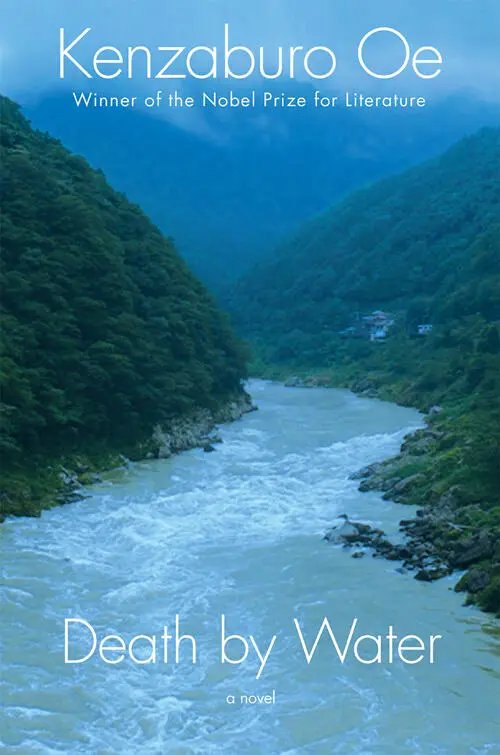
- Название:Death by Water
- Автор:
- Издательство:Grove/Atlantic, Inc.
- Жанр:
- Год:2015
- ISBN:9780802190871
- Рейтинг книги:3 / 5. Голосов: 1
-
Избранное:Добавить в избранное
- Отзывы:
-
Ваша оценка:
Death by Water: краткое содержание, описание и аннотация
Предлагаем к чтению аннотацию, описание, краткое содержание или предисловие (зависит от того, что написал сам автор книги «Death by Water»). Если вы не нашли необходимую информацию о книге — напишите в комментариях, мы постараемся отыскать её.
, his recurring protagonist and literary alter-ego returns to his hometown village in search of a red suitcase fabled to hold documents revealing the details of his father’s death during WWII: details that will serve as the foundation for his new, and final, novel.
Since his youth, renowned novelist Kogito Choko planned to fictionalize his father’s fatal drowning in order to fully process the loss. Stricken with guilt and regret over his failure to rescue his father, Choko has long been driven to discover why his father was boating on the river in a torrential storm. Though he remembers overhearing his father and a group of soldiers discussing an insurgent scheme to stage a suicide attack on Emperor Mikado, Choko cannot separate his memories from imagination and his family is hesitant to reveal the entire story. When the contents of the trunk turn out to offer little clarity, Choko abandons the novel in creative despair. Floundering as an artist, he’s haunted by fear that he may never write his tour de force. But when he collaborates with an avant-garde theater troupe dramatizing his early novels, Kogito is revitalized by revisiting his formative work and he finds the will to continue investigating his father’s demise.
Diving into the turbulent depths of legacy and mortality,
is an exquisite examination of resurfacing national and personal trauma, and the ways that storytelling can mend political, social, and familial rifts.
Death by Water — читать онлайн бесплатно полную книгу (весь текст) целиком
Ниже представлен текст книги, разбитый по страницам. Система сохранения места последней прочитанной страницы, позволяет с удобством читать онлайн бесплатно книгу «Death by Water», без необходимости каждый раз заново искать на чём Вы остановились. Поставьте закладку, и сможете в любой момент перейти на страницу, на которой закончили чтение.
Интервал:
Закладка:
“When Honmachi was converted into a provincial city that included this entire basin, one side became a pocket of suburbia, while the other side continued to lose its population as young people fled to more urban areas. This spot right here is the junction of the two,” Asa explained to Unaiko. “In our own little mountain valley, when young people want to move someplace a bit less rustic, they often head out here. Why don’t we grab some coffee from the convenience store while we’re waiting for Tamakichi to come and get us with the car? Or, if everyone’s game, we could continue on foot. It would take the better part of an hour, but …”
“Since the route would take us along Meisuke’s mother’s personal ‘trail of tears,’ I’d really like to try hiking it,” Unaiko said.
There was a steady stream of long-haul trucks on the highway, so Unaiko and I had to traipse along in single file, with Asa bringing up the rear.
“The road has been widened and some of the more meandering segments have been straightened out, but there’s no question about it — this pedestrian walkway follows the same path Meisuke’s mother was carried along on a wooden stretcher made from an old rain shutter,” I observed. “The trees on the opposite shore of the river are mostly a mixture of cedars and cypresses, while on this side the forests are all broad-leafed deciduous trees. Do you see the dense woods on that cliff? They probably haven’t changed much since the day when Meisuke’s mother was gazing up at them from her stretcher.”
“You seem to be saying that this road has been here forever, but I get the feeling it wasn’t a naturally occurring path. Rather, I think people chose this route and traveled it repeatedly, and it gradually evolved into a road,” Unaiko said, swiveling her head to take in the various vistas: the old-growth vegetation lining the road, the river to one side, the wooded banks beyond.
“My late brother-in-law Goro Hanawa was always a very modern type of guy, but in high school I remember he often used to say, ‘Our ancestors were really awesome!’ It was practically his catchphrase,” I reminisced.
Unaiko listened politely to my anecdote, nodding thoughtfully, but there was obviously something else on her mind.
“You know those two teachers who accosted us at the shrine?” she asked when I had finished rambling. “They took me completely by surprise so I wasn’t really thinking straight, and I’m only realizing now that I should have said something else before they skulked away. I wish I had told them that rape — both the act and the concept — was the motivating factor behind my decision to create the play we’re currently collaborating on. Of course, those teachers didn’t ask me about this specifically, but for me the theme of rape inevitably leads to the fundamental question of abortion. The pivotal force behind my play is the idea that women are raped and then coerced into getting abortions. The truth is, I myself was raped and then forced to get an abortion when I was seventeen.”
I was listening in stunned silence, but Unaiko eliminated the need for any response on my part by launching into an impassioned monologue.
“I’ve already talked about the time I threw up at Yasukuni Shrine,” she said, “but a few minutes later my aunt started bombarding me with questions, and I confessed that I thought I was probably pregnant. Right away she demanded to know who the man was. I was in kind of a daze, and I didn’t understand what she was getting at. She repeated ‘Who’s the man? What’s his name?’ again, only in a louder, more annoyed voice. I realized then that she was asking me to name the father, so I blurted out, ‘It’s my uncle.’
“My aunt’s response was to mutter, ‘That’s what I was afraid of,’ and only then did it really hit me for the first time: I’m pregnant by my own uncle. My aunt and I had been walking toward the station while we were having this conversation, and at this point we were standing on the platform of the Yokosuka Line. The Shonan-bound train was about to depart, so we jumped aboard and my aunt went on grilling me relentlessly about my situation all the way to Fujisawa. She insisted on sitting smack in the middle of the train car, surrounded by empty seats, because she said it would be disastrous to have our conversation overheard by some stranger who might be lurking in the shadows at either end of the car, around the doors. Bit by bit, she extracted the details of my relationship with my uncle (who was also, of course, her husband).
“At the time, my uncle was a high-ranking official in the Ministry of Education — this was before the name was changed to the Ministry of Education, Culture, Sports, Science, and Technology; you know, MEXT for short — and he was busy trying to complete some important work before moving up the bureaucratic ladder. My aunt made a point of telling me that this was the most crucial time in his career, and she was emphatic about the fact that I shouldn’t talk about my current situation with anyone, ever. She said that I, in my teenage naïveté, probably wouldn’t understand, but something like this could be turned into a national scandal if the wrong people got wind of it. I must have looked completely bewildered, because my aunt went on in a scolding tone: ‘I mean, just imagine what would happen if this story ever found its way into the mass media. A highly respected man who has made major contributions to Japan’s educational system behaves in an indecent manner toward his teenage niece, eventually going so far as to rape her and make her pregnant? It would be huge news all over the country.’ That was the first time I had ever heard the word ‘rape’ used in connection with myself.
“We got off the train at Fujisawa Station, and my aunt immediately ducked into a phone booth and called my uncle at work to let him know what she was doing. Then she bundled me into a cab and we went to their house in Kamakura for a quick pit stop, and the same cab took us back to Fujisawa. My aunt checked me into a hospital there, and I was forced to undergo an abortion. I spent the next three days at my aunt and uncle’s house recovering, and then she unceremoniously kicked me out. (During those three days, I never once saw or spoke with my uncle.) Having nowhere else to go, I made my way to my parents’ house in Osaka, feeling like a total wreck in every way: physically, mentally, and emotionally.
“I probably should have mentioned earlier that my uncle in Kamakura was my father’s older brother, so we were related by blood, not just by marriage. Like you, they grew up on Shikoku. There were three siblings, but my uncle was the only one who went to college. After graduation he went on to Tokyo University Law School, and he became a distinguished government bureaucrat. My father only had a high school education, and he knocked around in the printing business for years until his small shop was chosen as the designated printer for the reams of official documents constantly churned out by the Ministry of Education. My father frequently spoke of the commission as a stroke of luck, but everyone knew his change in fortunes was entirely due to nepotism, so my parents were in no position to make a fuss over the things my uncle had done to me. I heard that they even signed a formal legal document promising never to speak to anyone about what happened to me in Kamakura.
“As I said, I didn’t see my uncle on the day my aunt dragged me off to get an abortion, or the subsequent days, before I left their house. Since then I haven’t seen either of them even once; I figure that was probably one of the conditions of the paper my parents signed. I lived at home in Osaka for the next two years, and the rape and the abortion were never far from my mind; in fact, I rarely thought about anything else. Since I hadn’t been to college my employment options were limited, and I changed jobs twice during that period. Then I moved up to Tokyo, and it was shortly after my twenty-second birthday when, by the purest happenstance, I found myself at a performance by the Caveman Group. I was hooked on its artistic vision from the start, and after I’d become a regular at the group’s events, Masao Anai invited me to join it. I had also made friends with Ricchan, who was in a similar situation: working part-time jobs while performing various music-related duties for the Caveman Group. In the thirteen years since Ricchan and I became full-time members of the troupe, she has always been my true partner, creatively speaking, although of course Masao Anai has also given me a tremendous amount of support.
Читать дальшеИнтервал:
Закладка:
Похожие книги на «Death by Water»
Представляем Вашему вниманию похожие книги на «Death by Water» списком для выбора. Мы отобрали схожую по названию и смыслу литературу в надежде предоставить читателям больше вариантов отыскать новые, интересные, ещё непрочитанные произведения.



Обсуждение, отзывы о книге «Death by Water» и просто собственные мнения читателей. Оставьте ваши комментарии, напишите, что Вы думаете о произведении, его смысле или главных героях. Укажите что конкретно понравилось, а что нет, и почему Вы так считаете.