Kenzaburo Oe - Death by Water
Здесь есть возможность читать онлайн «Kenzaburo Oe - Death by Water» весь текст электронной книги совершенно бесплатно (целиком полную версию без сокращений). В некоторых случаях можно слушать аудио, скачать через торрент в формате fb2 и присутствует краткое содержание. Год выпуска: 2015, ISBN: 2015, Издательство: Grove/Atlantic, Inc., Жанр: Современная проза, на английском языке. Описание произведения, (предисловие) а так же отзывы посетителей доступны на портале библиотеки ЛибКат.
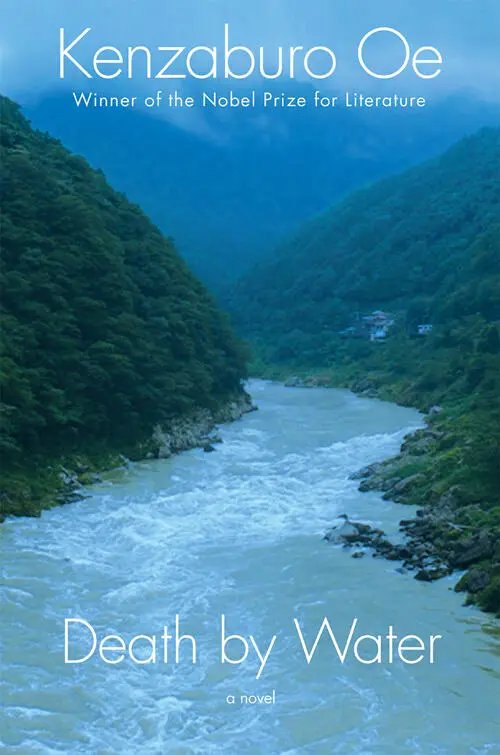
- Название:Death by Water
- Автор:
- Издательство:Grove/Atlantic, Inc.
- Жанр:
- Год:2015
- ISBN:9780802190871
- Рейтинг книги:3 / 5. Голосов: 1
-
Избранное:Добавить в избранное
- Отзывы:
-
Ваша оценка:
Death by Water: краткое содержание, описание и аннотация
Предлагаем к чтению аннотацию, описание, краткое содержание или предисловие (зависит от того, что написал сам автор книги «Death by Water»). Если вы не нашли необходимую информацию о книге — напишите в комментариях, мы постараемся отыскать её.
, his recurring protagonist and literary alter-ego returns to his hometown village in search of a red suitcase fabled to hold documents revealing the details of his father’s death during WWII: details that will serve as the foundation for his new, and final, novel.
Since his youth, renowned novelist Kogito Choko planned to fictionalize his father’s fatal drowning in order to fully process the loss. Stricken with guilt and regret over his failure to rescue his father, Choko has long been driven to discover why his father was boating on the river in a torrential storm. Though he remembers overhearing his father and a group of soldiers discussing an insurgent scheme to stage a suicide attack on Emperor Mikado, Choko cannot separate his memories from imagination and his family is hesitant to reveal the entire story. When the contents of the trunk turn out to offer little clarity, Choko abandons the novel in creative despair. Floundering as an artist, he’s haunted by fear that he may never write his tour de force. But when he collaborates with an avant-garde theater troupe dramatizing his early novels, Kogito is revitalized by revisiting his formative work and he finds the will to continue investigating his father’s demise.
Diving into the turbulent depths of legacy and mortality,
is an exquisite examination of resurfacing national and personal trauma, and the ways that storytelling can mend political, social, and familial rifts.
Death by Water — читать онлайн бесплатно полную книгу (весь текст) целиком
Ниже представлен текст книги, разбитый по страницам. Система сохранения места последней прочитанной страницы, позволяет с удобством читать онлайн бесплатно книгу «Death by Water», без необходимости каждый раз заново искать на чём Вы остановились. Поставьте закладку, и сможете в любой момент перейти на страницу, на которой закончили чтение.
Интервал:
Закладка:
“I remember!” Asa exclaimed. “It was supposedly the Destroyer’s favorite spot for an afternoon nap!”
“That’s right,” I said. “And according to the story, that was where the spirit of the late Meisuke supposedly appeared and lay down side by side with Meisuke II, his posthumously born little brother. Then the original Meisuke proceeded to instruct his reincarnated self in the art of war, including some strategies for the second insurrection. I’ve always felt as if the story about the meeting between the two Meisukes — one alive, one dead — might really be true.”
“Well, I was quite the tomboy,” Asa said, “so I could freely go places that would have seemed daunting to some of the girlier girls, and I remember visiting the spot with my big brother. (Although, truth be told, I was hanging on to him for dear life.) Actually I suspect the reason my brother took a companion was because he wanted to explore the forest, but he had heard so many stories and legends about the Destroyer that it seemed too scary to venture in alone, even for him.”
“At any rate, I was thinking we could begin our grand tour at that spot today,” I said stiffly.
“Slight change of plans,” Asa said. “I had the same idea of starting out at the Destroyer’s napping spot, but when I talked it over with my son he told me the area has become overgrown and inaccessible in recent years. So instead we’ll start by going down to the road along the Kame River and then following the walking course that winds uphill from Okawara, toward the mountains. The path will take us past the place where Meisuke’s mother was attacked, and we’ll also get to see the site where Meisuke II was stoned to death. We can leave the car down in Okawara. Tamakichi will ride his bike over to fetch it later, and then he’ll pick us up when we start to get tired of walking. So, that’s the plan.”
Unaiko was staring straight ahead, entirely focused on her driving. Her hair, which had been dyed bright gold while she was in Tokyo playing the role of a psychic medium, had reverted to its natural jet-black color, and she wore it pulled back in a loose bun at the nape of her neck. Her body language seemed to radiate seriousness and solemnity.
“It looks as if you’re already getting into character for your role as Meisuke’s mother, Unaiko,” I said. “What’s the story?”
“Yes, I’ve been consciously trying to put on some weight,” Unaiko said, nodding emphatically in a way that emphasized the new fullness of her profile. “I want to be able to project a sense of power when I recite the battle-cry chant. By the way,” she added, “Ricchan was very interested in seeing the actual route Meisuke’s mother followed on the way to the uprising, but she was afraid Akari might be coming down with a cold so she decided to stay behind at the Forest House and keep him company.”
“Ricchan really does take incredibly good care of Akari,” Asa said. “Maki speaks to him on the phone every day, and apparently he talks about Ricchan all the time. When I left for Tokyo I knew you hadn’t even begun to mend your fences with Akari, and I realized after I left that I should have arranged for someone to take care of keeping his face shaved while you were staying down here. During your past visits I’ve always done it myself, whenever the two of you weren’t on the best of terms. But I forgot to put it on my to-do list, and it wasn’t until I’d been tending to Chikashi at the hospital for a week that I started to worry. I asked Maki to check, and she told me that Akari replied, ‘Papa isn’t shaving my whiskers.’ She said she was alarmed to hear it, but even as she was picturing her brother’s face completely covered in stubble (or even a full beard) Akari went on, with his trademark slyness, ‘Ricchan’s shaving me now, and it doesn’t hurt like when Papa does it.’”
“Whenever there’s something new going on, Akari never seems to be able to come right out and talk about it, even if he wants to. So if someone can extract the information from him, indirectly, I think he always feels relieved,” I said.
“Anyhow, Ricchan stepped into a tricky situation and kindly offered her tonsorial services,” Asa said. “I mean, at that point she and Akari had barely spoken two words to each other, and it’s only natural she would have been worried about inadvertently nicking him with the razor. Ricchan’s a very brave soul, though, and it seems to have worked out fine.”
Having spoken her piece on this subject, Asa shifted into explanatory mode. “Let me fill you in on the plan for today,” she said, turning her attention to Unaiko. “First, we’ll drive to Honmachi. Then we’ll get on the highway along the Kame River, crossing the newly widened bypass — you know, the one that forced the removal of the big rock with the poem etched into it, which is now in the back garden of the Forest House. (Of course, the poetry stone wasn’t the only thing displaced as a result of the construction.) Anyhow, that will take us right into Okawara. It’s about a twenty-minute drive from here, so I’d like to use the time to talk to my brother about something having to do with his domestic situation, and I’d be grateful if you would listen, too, Unaiko.
“When Chikashi was discharged from the hospital, before I left Tokyo, we had a little party to celebrate. It was just the three of us: Chikashi, Maki, and me. The timing wasn’t ideal because Maki was dealing with the time of month that’s always the most difficult for her, emotionally — I mean, once she gets past the monthly complications she’s the sweetest person on earth, but that night she was on the warpath against you, Kogii.
“The first thing she said was, ‘When Mama went into the hospital, she was clearly prepared for the possibility that she wouldn’t make a full recovery, and she took the time to talk to me about some important matters. But what about Papa? Is he giving any thought to our future as a family? It was smart of Mama to send Akari and Papa to Shikoku together, because it was definitely a step in the right direction. But even so, now that they’re there, it doesn’t seem as though Papa has made any progress toward considering the problems at hand. Ever since she was diagnosed with cancer, Mama seems to have been giving a lot of thought to her own mortality, but Papa isn’t really thinking seriously about the end of his own life. At least that’s how it looks to me.’”
Asa paused for a moment to let these words sink in, then resumed her monologue. “Anyhow, Maki went on to say, ‘At the beginning of this year, remember when Papa said, “Whoa, I just realized I’m on the cusp of being older than Professor Musumi was when he died!”? And then he seemed to be getting a kick out of saying things like: “Maybe Maki’s depression is something I passed down to her, because I myself was on the cusp of middle age when I first began to suffer from melancholia. When I talked to Musumi Sensei about that, he said, ‘I’ve realized that I didn’t completely understand the work of certain authors — Rabelais, for one — until I read the same books again after I’d reached the same age those authors were when they passed away. So, if you can muster up a sufficient degree of interest, I’d like to ask you to read (or reread) all my books when you get to be the age I was when I died.’ And now, here I am, rereading Sensei’s books, one by one.” When I heard what Papa said, it really struck me that he didn’t seem to be giving any thought to how his death would affect Akari, or how Akari would go on living when he was gone.’ Anyhow, that’s what Maki said.
“Chikashi was the first to respond,” Asa continued. “Obviously she would never hug her daughter in front of me, even though I’m family, but she was clearly trying to comfort Maki when she said, ‘No, dear, Papa has actually given quite a bit of thought to the things you mention, and he has even invented a term for the situation with Akari. He calls it ‘the Macbeth matter,’ and the fact that he has given it a name seems to suggest he isn’t trying to avoid the issue entirely.’
Читать дальшеИнтервал:
Закладка:
Похожие книги на «Death by Water»
Представляем Вашему вниманию похожие книги на «Death by Water» списком для выбора. Мы отобрали схожую по названию и смыслу литературу в надежде предоставить читателям больше вариантов отыскать новые, интересные, ещё непрочитанные произведения.





Обсуждение, отзывы о книге «Death by Water» и просто собственные мнения читателей. Оставьте ваши комментарии, напишите, что Вы думаете о произведении, его смысле или главных героях. Укажите что конкретно понравилось, а что нет, и почему Вы так считаете.