Boualem Sansal - The German Mujahid
Здесь есть возможность читать онлайн «Boualem Sansal - The German Mujahid» весь текст электронной книги совершенно бесплатно (целиком полную версию без сокращений). В некоторых случаях можно слушать аудио, скачать через торрент в формате fb2 и присутствует краткое содержание. Год выпуска: 2009, Издательство: Europa Editions, Жанр: Современная проза, на английском языке. Описание произведения, (предисловие) а так же отзывы посетителей доступны на портале библиотеки ЛибКат.
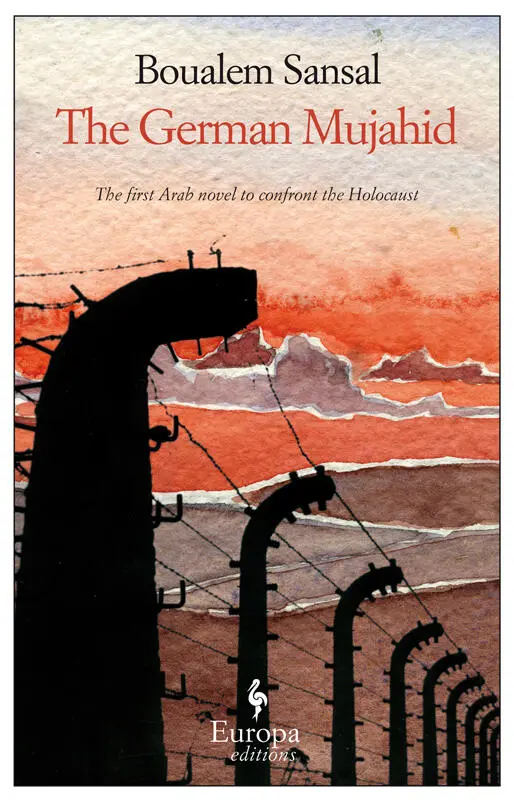
- Название:The German Mujahid
- Автор:
- Издательство:Europa Editions
- Жанр:
- Год:2009
- ISBN:нет данных
- Рейтинг книги:4 / 5. Голосов: 1
-
Избранное:Добавить в избранное
- Отзывы:
-
Ваша оценка:
The German Mujahid: краткое содержание, описание и аннотация
Предлагаем к чтению аннотацию, описание, краткое содержание или предисловие (зависит от того, что написал сам автор книги «The German Mujahid»). Если вы не нашли необходимую информацию о книге — напишите в комментариях, мы постараемся отыскать её.
is a heartfelt reflection on guilt and the harsh imperatives of history.
The two brothers Schiller, Rachel and Malrich, couldn't be more dissimilar. They were born in a small village in Algeria to a German father and an Algerian mother, and raised by an elderly uncle in one of the toughest ghettos in France. But there the similarities end. Rachel is a model immigrant — hard working, upstanding, law-abiding. Malrich has drifted. Increasingly alienated and angry, his future seems certain: incarceration at best. Then Islamic fundamentalists murder the young men's parents in Algeria and the event transforms the destinies of both brothers in unexpected ways. Rachel discovers the shocking truth about his family and buckles under the weight of the sins of his father, a former SS officer. Now Malrich, the outcast, will have to face that same awful truth alone.
Banned in the author's native Algeria for of the frankness with which it confronts several explosive themes, The German Mujahid is a truly groundbreaking novel. For the first time, an Arab author directly addresses the moral implications of the Shoah. But this richly plotted novel also leaves its author room enough to address other equally controversial issues; Islamic fundamentalism and Algeria's "dirty war" of the early 1990s, for example or the emergence of grim Muslim ghettos in France's low-income housing projects. In this gripping novel, Boualem Sansal confronts these and other explosive questions with unprecedented sincerity and courage.
The German Mujahid — читать онлайн бесплатно полную книгу (весь текст) целиком
Ниже представлен текст книги, разбитый по страницам. Система сохранения места последней прочитанной страницы, позволяет с удобством читать онлайн бесплатно книгу «The German Mujahid», без необходимости каждый раз заново искать на чём Вы остановились. Поставьте закладку, и сможете в любой момент перейти на страницу, на которой закончили чтение.
Интервал:
Закладка:
I would like to take this opportunity to ask what progress has been made in the search to find and arrest the perpetrators of this heinous crime and bring them to justice. Fifteen months have now elapsed, and, to date, no information on the progress of the investigation has been offered to the public or to the relatives of the victims. If need be, I am prepared to take legal action to compel your answer and to prove that you are involved in an attempt to suppress the truth.
Yours most sincerely.
It’s too late. I’ve already posted the letter, but when I reread it now, I feel ashamed — it’s conciliatory. Because I was writing to a minister, I stupidly adopted the attitude of the petitioner — unassuming, patient, a good citizen aware that the Bonzen have so many demands on their time, so many requests, so many official commitments. I find it humiliating that victims are always forced to ask, to plead, to wait. It’s intolerable.
When the time comes to send a reminder, I’ll express myself as a victim should: demand, insist, refuse to tolerate evasion, preempt equivocation. These people are there to serve us, not the reverse.
MALRICH’S DIARY, 15 DECEMBER 1996
It’s a miracle I made it to Aïn Deb. My God this has been some adventure. As soon as we came down the steps of the plane at Houari Boumédienne International Airport, Algiers, all the passengers — men, women and children — were rounded up herded into the middle of the runway where we waited for more than an hour as driving rain and freezing wind whipped at us. The men were coughing, some of the older, weaker ones collapsed, the babies were crying, their mothers pleading with them to be quiet, desperately trying to comfort them. There was a lot of whispering. We were soaked to the skin. It’s one thing to read about it, to hear about it, you have to picture two hundred people with all their luggage, utterly terrified, standing on the tarmac in weather like this watched over by a mob of guards invisible in their oilskins. An hour later, a black car pulled up carrying four cops in dark green raincoats and dark glasses.
Doors slamming, bang, bang, bang, bang, they all got out. Special agents. Something was obviously about to happen, these guys were completely terrifying. The leader put up his collar, pushed his sunglasses back off his forehead and began to circle us silently, slowly, very slowly, staring intently at each of us in turn, though we had no idea why. He’d say to someone, “You, stand over there. . and you. . and you. . You, step forward. . and you. . you go over and stand with them. . You there, stop trying to hide, get out here.” He glowered at the women too, to one he said, “Take off your glasses!” to another woman, “Pull up your hood!” to an old man who’d fallen down, he barked, “Get up!” Just his voice had me shitting bricks; it was flat, unemotional, colder than you could possibly imagine. Obviously no one had ever dared to disobey this guy — he could be at home in bed or sitting behind a desk and all over the country people would meekly obey him. When I think that Com’Dad has to argue his case, then take it before a judge, I realise that there’s something not right with the system in Algeria. Or maybe the system in France. I was the sixteenth to be pulled out of the line. He looked at me, never blinking and said dismissively: “You, over there with the rest of them.” After me, he picked out five more. Mostly young guys. The rest of the passengers were led to a stunted little building with a huge sign on the front saying in three languages: Hall d’Arrivée. Bienvenue en Algérie. Arrivals Hall. Welcome to Algeria . And something in Arabic, which I can’t read or write. Our fellow travellers had already forgotten our shared nightmare — not one of them turned to say goodbye or to pity us, they were smiling, pushing and jostling to get away as quickly as possible. They were lucky. Some time later, when the water was up to our ankles, a covered military truck screeched to a halt in front of us. The head guy gave some order and the special agents told us to hand over our passports, our tickets, our hand luggage and get into the truck. I couldn’t believe it, I was shaking I was so scared, it looked like we were going to be deported. Back in France I’d never been scared of the cops, actually I got a buzz out of winding them up, watching them try to work out how to play things. Now, I was paralysed, I couldn’t think, it felt like I would never move again even if they suddenly said it was a joke and we were all on candid camera. Then the truck started up and zoomed towards this place that looked like it was an old cargo hold. Huge rusting hangars separated by paths a hundred metres wide, stuff lying around everywhere, loose concrete slabs, an armoured car parked under a water tower and everywhere you looked sandbagged army posts, each manned by two soldiers hugging a machine gun. Not another living soul. Nobody seemed to breathe, all you could hear was the howl of the wind, the hammering of the rain, a shriek of rusted metal that set your teeth on edge. Just the feel of the place had me squirming. The driver turned the truck into one of the hangars and slammed on the brakes, which squealed like scalded cats. He kept his foot to the floor, revving the engine hard for a long time, then cut the ignition. The hangar almost exploded with the sudden terrible silence that dropped on it like a bomb. A silence like that can turn your bowels to water. I’d never have believed that silence sound could be so deafening. It’s insane, it’s like saying someone is alive and dead at the same time. And that’s what we were, more dead than alive. Some of them were hacking like they were about to cough up their lungs, others were grey and pasty, my eyes were watery with acid tears. I wondered for a minute if the driver was trying to exterminate us with the exhaust fumes, but since he was in the hangar with us, I figured he probably wasn’t, he was just getting the oil out of his engine. I mean, no one would be stupid enough to gas themselves, flammable gasses stink so badly you can smell them a mile off, it’s not like roses. A Sonderkommando who forgets to get out of the gas chamber in time doesn’t last too long. The hangar was so big and so ramshackle that it would have taken thirty trucks a whole week to eliminate us, as Rachel would put it. By then we’d have died of starvation. Or madness. I thought about poor Rachel, this was how he died, his lungs dried up, his heart bruised, his body broken. Alone in his garage. More alone than anyone in the world. After that, everything happened quickly. We were ordered to get out, the truck drove off and the door of the hangar slammed shut with the boom of an atomic bomb. They left us in the dark without a word, without a look. At first everyone panicked, but we could hear nothing except the wind shaking the hangar and the rain gushing in waterfalls from the roof, but then we calmed down and huddled together in a corner to keep warm. A couple of people started smoking furiously like this was their first cigarette of the day, or their last. An hour later we were half dead from cold, from hunger, from thirst. And this was just the beginning.
I got talking to Slim, the guy huddled next to me in this hell, he was a university student home to spend Christmas holidays in the bled with his family. I asked if he knew what was going on, but he had no idea. He said he flew Paris to Algiers all the time, but this was the first time they’d pulled him out of the line up. “Maybe I’m starting to look like a terrorist,” he laughed. He was an optimist. We talked about this and that. He was studying computer science at Jussieu and lived in some posh house in the sixteenth arrondissement with his uncle who’s a professor at Pitié-Salpêtrière hospital. Poor little rich kid. But Slim said it wasn’t like that at all, he said he had to live off some measly grant, he said all he got from his uncle was room and board, his travel card and a bit of pocket money. Oh, and on weekends his uncle would lend him his Mercedes 300 convertible with a full tank of petrol and enough money to cover his expenses. Slim bitched that he’d even had to work as a management trainee in a merchant bank run by some friend of his uncle to pay for his skiing holiday in Switzerland. Then he bitched about France, the cold, the discrimination, the crime rate, the cost of living, the filthy streets, the pig-headed police, the civil servants and on and on, the préfecture refusing to give him a ten-year resident permit for no good reason. Slim was a pain in the arse. He told me as soon as he finished his degree he was going to move to London and set up a department of international studies with his cousins so they could make some money out of Africa. I listened, I nodded, I understood, but I can’t help it, I’ve never been able to stomach spoiled brats. I said to him aunt Sakina was always saying to me: “Don’t be so ungrateful.” But Slim said it’s not him, it’s France that’s ungrateful. Slim is a royal pain in the arse. “There goes someone who thinks his shit doesn’t stink,” as Monsieur Vincent used to say whenever some guy showed up with a Ferrari, tossed the keys at him, stared at the ceiling and said, “Check her over for me!” With guys like that, small-time crooks bigging it up like gangsters, we’d push the car into a corner of the workshop and take our own sweet time racking up a bill fit for a king. Slim and I talked about this and that, talked about meeting up again in Algiers and in Paris. Neither of us figured we were going to be shut up in this hangar forever. When you don’t know what’s going on, it’s best to be optimistic.
Читать дальшеИнтервал:
Закладка:
Похожие книги на «The German Mujahid»
Представляем Вашему вниманию похожие книги на «The German Mujahid» списком для выбора. Мы отобрали схожую по названию и смыслу литературу в надежде предоставить читателям больше вариантов отыскать новые, интересные, ещё непрочитанные произведения.





Обсуждение, отзывы о книге «The German Mujahid» и просто собственные мнения читателей. Оставьте ваши комментарии, напишите, что Вы думаете о произведении, его смысле или главных героях. Укажите что конкретно понравилось, а что нет, и почему Вы так считаете.