Boualem Sansal - The German Mujahid
Здесь есть возможность читать онлайн «Boualem Sansal - The German Mujahid» весь текст электронной книги совершенно бесплатно (целиком полную версию без сокращений). В некоторых случаях можно слушать аудио, скачать через торрент в формате fb2 и присутствует краткое содержание. Год выпуска: 2009, Издательство: Europa Editions, Жанр: Современная проза, на английском языке. Описание произведения, (предисловие) а так же отзывы посетителей доступны на портале библиотеки ЛибКат.
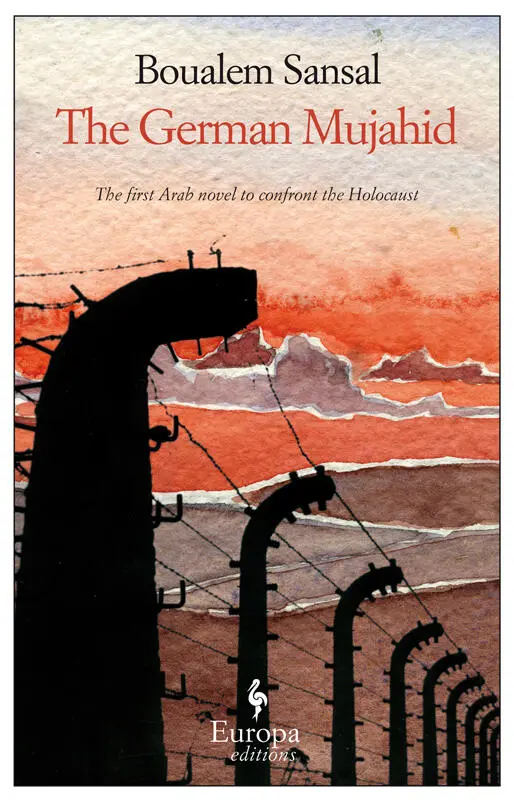
- Название:The German Mujahid
- Автор:
- Издательство:Europa Editions
- Жанр:
- Год:2009
- ISBN:нет данных
- Рейтинг книги:4 / 5. Голосов: 1
-
Избранное:Добавить в избранное
- Отзывы:
-
Ваша оценка:
The German Mujahid: краткое содержание, описание и аннотация
Предлагаем к чтению аннотацию, описание, краткое содержание или предисловие (зависит от того, что написал сам автор книги «The German Mujahid»). Если вы не нашли необходимую информацию о книге — напишите в комментариях, мы постараемся отыскать её.
is a heartfelt reflection on guilt and the harsh imperatives of history.
The two brothers Schiller, Rachel and Malrich, couldn't be more dissimilar. They were born in a small village in Algeria to a German father and an Algerian mother, and raised by an elderly uncle in one of the toughest ghettos in France. But there the similarities end. Rachel is a model immigrant — hard working, upstanding, law-abiding. Malrich has drifted. Increasingly alienated and angry, his future seems certain: incarceration at best. Then Islamic fundamentalists murder the young men's parents in Algeria and the event transforms the destinies of both brothers in unexpected ways. Rachel discovers the shocking truth about his family and buckles under the weight of the sins of his father, a former SS officer. Now Malrich, the outcast, will have to face that same awful truth alone.
Banned in the author's native Algeria for of the frankness with which it confronts several explosive themes, The German Mujahid is a truly groundbreaking novel. For the first time, an Arab author directly addresses the moral implications of the Shoah. But this richly plotted novel also leaves its author room enough to address other equally controversial issues; Islamic fundamentalism and Algeria's "dirty war" of the early 1990s, for example or the emergence of grim Muslim ghettos in France's low-income housing projects. In this gripping novel, Boualem Sansal confronts these and other explosive questions with unprecedented sincerity and courage.
The German Mujahid — читать онлайн бесплатно полную книгу (весь текст) целиком
Ниже представлен текст книги, разбитый по страницам. Система сохранения места последней прочитанной страницы, позволяет с удобством читать онлайн бесплатно книгу «The German Mujahid», без необходимости каждый раз заново искать на чём Вы остановились. Поставьте закладку, и сможете в любой момент перейти на страницу, на которой закончили чтение.
Интервал:
Закладка:
I struggled to my feet, raied my arms and shouted: “My name is Malrich, I am the son of the SS officer Hans Schiller, a man guilty of genocide. I am carrying the weight of the greatest tragedy the world has ever known, I am its repository, and I’m ashamed, I’m afraid and I want to die! I’m begging for your help, because no one told me anything, all of this has been visited on me and I don’t know why. My brother killed himself, my parents and their neighbours were murdered and I don’t know why or by whom, I’m alone, more alone than anyone in the world.”
It was then that I felt rage, black rage, grip my insides, I had no right to feel sorry for myself, the only truth is Nakam— revenge. I hated the Islamists, those Nazi bastards, I wanted to kill every last one of them, to kill their wives, their children, their grandchildren, their parents, to bulldoze their houses, their mosques, their bunkers, break up their sleeper cells, hound them into the next world and crush them before God Himself, the same God they claim to represent. I wanted fireworks like on Bastille Day, to celebrate their deaths our rebirth. Why are they like this, God? Why have You made them like this? Who can save them? Who will save their wives, their children? Who will save us from them?
I was trembling, I collapsed on the ground and rolled in the mud. I wanted to die. “I want to die,” I howled as loud as I could.
Mohamed came over, put his arm around my shoulder and led me back to the village like you’d lead a blind man. He didn’t speak French, so he thought I had been lashing out at Allah. Over and over he said in a reproachful tone, “It is mektoub , Malek, it is fate, we must accept it.” At that moment I wanted to kill him too. I pushed him away and said, “ Mektoub, mektoub . . So Allah made you this way, so spineless and weak that when people come to slit your throats like sheep you do nothing?” Even as I’d said it, I felt ashamed. That whole day in the airport, special agents had treated us like dogs, like camp prisoners, we’d been terrified, starving, numb with cold, soaked to the skin, they’d taken our suitcases, our papers, our identities, gassed us with exhaust fumes and left us in the dark, in the filthy hangar, without a word, without a look, and not one of us had done a thing, we hadn’t asked questions, hadn’t demanded that our rights be read to us before we let them take us away. We were all thinking, This is how things are, there’s nothing we can do. And we all watched, silent, relieved, when the others were loaded back onto the truck and driven off into the unknown. “It’s not mektoub , Mimed,” I said, gasping for breath. “It’s us, we’re the problem.”
I needed to be alone. Alone forever.
I went back to my parents’ house. My house now — I am the last of the Schillers. It smelled of mould and neglect. I aired the rooms and lit a fire in the fireplace. Then I changed my clothes, put on my white burnous , sat in maman’s chair and wrote down the first thing that came into my head.
I needed to be happy, to be hopeful for an hour or two to recharge my batteries or I’d go mad. I wrote stuff down as it came to me, little things, everyday things. I wrote that aunt Sakina and uncle Ali would be happier here in Aïn Deb. The air is fresh, the silence is peaceful. Living on the tenth floor of a tower block on the estate, they never go out, except when aunt Sakina goes shopping with Maïmouna, the old woman who lives down the hall. They always go together, they always buy the same things, pasta, rice, tinned tomatoes and a nice white baguette. In Aïn Deb they’d have the whole countryside, neighbours to look out for them, they wouldn’t have to deal with all the noise, the hassle of living in a city. They could get a couple of chickens, a few goats and the rest would come naturally. The years would go by, they’d get used to things, adapt to the seasons and one day they’d die and it would not be a tragedy but they would not go unmourned. And the cemetery is just down the road, they would be buried with their family, with their people, and go into the next life with them.
I remembered my mates and I thought, now that it was my turn I’d tell them everything. I’d tell them all the things I’d been hiding. They’ve lived in silence and ignorance long enough. Maybe it’s too late, maybe they’ll be hurt when they find out, but maybe it will give them hope, the sort of hope that gives you wings and the urge to fly. This was what I needed, hope, to live and to be happy to wait for tomorrow.
I thought about the estate, and I knew now that we could change it. It would be easy — all we had to do was talk to each other and tell the children everything. The rest would come naturally. Despair would scuttle away having nothing left to cling to. The authorities would have to listen to us, they would see in our eyes what we knew, what we wanted: truth and respect. The jihadists wouldn’t dare come near us, they’d run away — heads down, tails between their legs, beards at half-mast. The devil would take them home and devour them. And that would be that. We’d turn the page and throw the party to end all parties.
I thought about Rachel and I promised myself I’d visit his grave and tell him everything. Tell him that I knew everything, and that, thanks to our diaries, the whole world will know who we are, what we suffered, that we will no longer need to to hide, to be ashamed, to lie.
That night, I didn’t sleep, I spent the whole night talking to my parents like I used to do years ago, talking to Rachel, the way we never did, talking to my mates, the way we soon would. It was like I was happy already.
Note: The way the following chapters are laid out and the excerpts from Rachel’s diary were suggested to me by Madame Dominique G.H.
Rachel visited Istanbul and Cairo in March 1996, after the long trek that started in Frankfurt in June 1995 and took him through Germany, Austria and Poland, ending in Auschwitz in February 1996. With one exception, Rachel followed a logical, necessary route, he retraced papa’s career as it appears in his military record: it begins in Frankfurt, goes on to various camps in Germany and Austria and ends in Poland, not Auschwitz, but at Lublin-Majdanek. There are other postings mentioned in his military record — in France and in Belgium — but Rachel assumed they had nothing to do with the Holocaust. They were brief, probably scientific, stints in Paris, Rocroi, Ghent and elsewhere, places where the Reich didn’t have concentration camps. Papa was a chemical engineer so he might easily have been sent to a factory, or a training centre or one of the laboratories run by the Reich. The one thing I don’t understand is why Rachel made Auschwitz the last stop on his journey, when papa had been there mid-way through his career. Was it because to most people Auschwitz is synonymous with the extermination of the Jews? I don’t think so. Rachel had done his research, he knew the horrors in Auschwitz were no different to any other camps, and besides — as he says in his diary — prisoners were regularly shunted from one camp to another, what they didn’t suffer in one, they suffered in another. Whatever his reasons, it’s obvious that his trip to Auschwitz, more than any of a the others, utterly devastated him. I think it was there, at a very specific moment, that he decided to kill himself — to gas himself — as soon as he got back to Paris. Maybe he’d thought about it before, maybe he’d thought about it from the very beginning back in Aïn Deb, maybe it happened in Uelzen or in Frankfurt, or later in Buchenwald, in Dachau, or during the weeks and months he spent alone in his house after he lost his job, after Ophélie left. Maybe Auschwitz was only a catalyst, a trigger. But maybe, in a very specific way, the scene at Auschwitz he describes at length was what finally decided him.
Читать дальшеИнтервал:
Закладка:
Похожие книги на «The German Mujahid»
Представляем Вашему вниманию похожие книги на «The German Mujahid» списком для выбора. Мы отобрали схожую по названию и смыслу литературу в надежде предоставить читателям больше вариантов отыскать новые, интересные, ещё непрочитанные произведения.





Обсуждение, отзывы о книге «The German Mujahid» и просто собственные мнения читателей. Оставьте ваши комментарии, напишите, что Вы думаете о произведении, его смысле или главных героях. Укажите что конкретно понравилось, а что нет, и почему Вы так считаете.