Boualem Sansal - The German Mujahid
Здесь есть возможность читать онлайн «Boualem Sansal - The German Mujahid» весь текст электронной книги совершенно бесплатно (целиком полную версию без сокращений). В некоторых случаях можно слушать аудио, скачать через торрент в формате fb2 и присутствует краткое содержание. Год выпуска: 2009, Издательство: Europa Editions, Жанр: Современная проза, на английском языке. Описание произведения, (предисловие) а так же отзывы посетителей доступны на портале библиотеки ЛибКат.
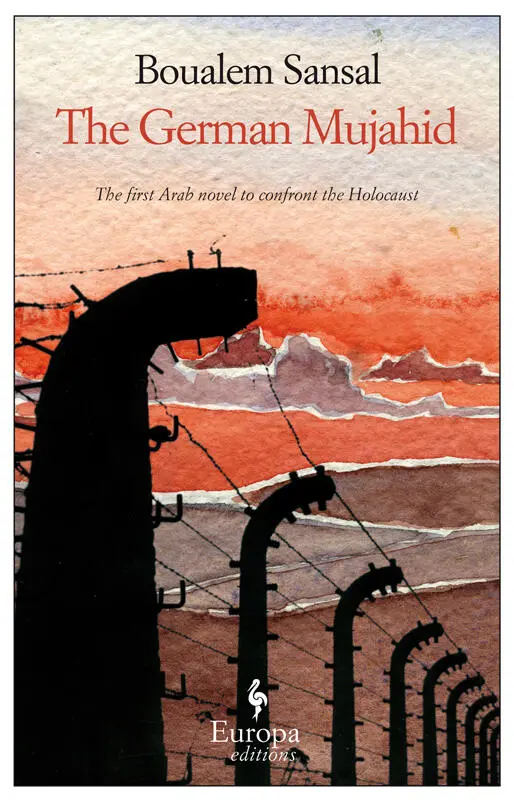
- Название:The German Mujahid
- Автор:
- Издательство:Europa Editions
- Жанр:
- Год:2009
- ISBN:нет данных
- Рейтинг книги:4 / 5. Голосов: 1
-
Избранное:Добавить в избранное
- Отзывы:
-
Ваша оценка:
The German Mujahid: краткое содержание, описание и аннотация
Предлагаем к чтению аннотацию, описание, краткое содержание или предисловие (зависит от того, что написал сам автор книги «The German Mujahid»). Если вы не нашли необходимую информацию о книге — напишите в комментариях, мы постараемся отыскать её.
is a heartfelt reflection on guilt and the harsh imperatives of history.
The two brothers Schiller, Rachel and Malrich, couldn't be more dissimilar. They were born in a small village in Algeria to a German father and an Algerian mother, and raised by an elderly uncle in one of the toughest ghettos in France. But there the similarities end. Rachel is a model immigrant — hard working, upstanding, law-abiding. Malrich has drifted. Increasingly alienated and angry, his future seems certain: incarceration at best. Then Islamic fundamentalists murder the young men's parents in Algeria and the event transforms the destinies of both brothers in unexpected ways. Rachel discovers the shocking truth about his family and buckles under the weight of the sins of his father, a former SS officer. Now Malrich, the outcast, will have to face that same awful truth alone.
Banned in the author's native Algeria for of the frankness with which it confronts several explosive themes, The German Mujahid is a truly groundbreaking novel. For the first time, an Arab author directly addresses the moral implications of the Shoah. But this richly plotted novel also leaves its author room enough to address other equally controversial issues; Islamic fundamentalism and Algeria's "dirty war" of the early 1990s, for example or the emergence of grim Muslim ghettos in France's low-income housing projects. In this gripping novel, Boualem Sansal confronts these and other explosive questions with unprecedented sincerity and courage.
The German Mujahid — читать онлайн бесплатно полную книгу (весь текст) целиком
Ниже представлен текст книги, разбитый по страницам. Система сохранения места последней прочитанной страницы, позволяет с удобством читать онлайн бесплатно книгу «The German Mujahid», без необходимости каждый раз заново искать на чём Вы остановились. Поставьте закладку, и сможете в любой момент перейти на страницу, на которой закончили чтение.
Интервал:
Закладка:
According to papa’s military record, he was at Lublin-Majdanek when the Nazis were defeated. Soviet troops had marched into Poland and were advancing towards Berlin like a steamroller. After that, there’s no mention of him. Did he and his friends go back to Germany to make a last stand? Did they hide out in Austria, go to ground in Poland? Rachel doesn’t know. Nazi troops were deserting in such numbers and the chaos was so great that one guess is as good as another. The only thing we know for sure is that at some point — in Poland or in Germany — papa made contact with Unit 92 and, with their help, made it to Turkey and from there to Egypt.
I’ve taken some liberties in the way I’ve organised the rest of the chapters, and in the pieces I’ve chosen to include from Rachel’s diary. I’ve moved the section about Istanbul and Cairo to the next chapter, and out of all the stuff he wrote about his long journey through the camps of Germany and Poland, I’ve only kept the piece on Auschwitz, which is in a later chapter. If I’d included everything Rachel wrote, our diaries would have been too long, too terrible to read. Some day, I’ll put everything in one book, but I doubt there are many people who could bear to read it to the end.
In his journey to the heart of darkness, Rachel wrote hundreds of pages filled with incredibly technical details about the camps and the appalling, unimaginable stories he heard along the way — some from the guides who showed him round the camps, some from former prisoners who had come to make pilgrimage. Meeting survivors was incredibly painful for him. He wrote pages and pages about it, harrowing and heartbreaking. Sometimes he’d pretend to be a researcher, or a relative of someone who’d been in the camps. He’d persuade them to talk, press them for the most precise, the most intimate details of what they had suffered. He collated the names too, although he already knew everything, he had researched every detail, he had index cards about everything, though I have to say most of them are illegible. The notes he made from the books he read are filled with formulas and symbols, diagrams and sketches and quotes about how the camp prisoners were fed, how the laundry worked, what medical services existed, about the sectors where the clothes were sorted, the laboratories where the experiments were done, about the workings of the famous selection Kommissionen , about the black market that operated in the camps, about the appalling behaviour of the SS officers, constantly on the lookout for someone with a stash of jewellery, for a pretty girl like Nadia, for a bottle of booze or a nice fur coat or a bare-knuckle fight they could cheer on: he wrote about the military ceremonies, the civil and religious commemorations, the inspections when the Bonzen came round, the brothels for the Kapos , the brothels reserved for the officers. He knew all the books by heart, but he needed to hear it from the mouths of those who had lived in the camps, who forgot that there existed a world outside, a world where people lived and danced and read books, where they learned and loved and bought flowers, raised children and thanked God for His blessings. It was uncomfortable, Rachel says, but he was tactful, asked questions only if he felt someone needed to talk, said nothing and stared straight ahead when a man began to choke on his sobs. He’d ask, in an offhand way, whether they remembered their guards — names, ranks, whether some had any particular vices, whether they were more cruel than the rules dictated, whether some behaved humanely. But he always came back to the gas chambers, to the Sonderkommando , the Einsatzgruppen , the soldiers who took the prisoners whose turn it was to “take a shower,” to that self-effacing man — the chemical engineer who prepared the Zyklon B — and asked if they remembered his name. He felt unspeakably guilty, constantly thinking, this man knew my father, he has never forgotten him, he will never forget him, I have to tell him, this is his truth as much as it is mine: Sir, I need to tell you, I am Hans Schiller’s son. I don’t think he ever told anyone — or if he did he doesn’t mention it in his diary. It would have been a terrible thing to do, it would simply have been adding to their suffering.
After he left Dachau, Rachel promised himself that some day he’d go to Jerusalem to visit the Holocaust memorial of Yad Vashem. He wrote: “The victims are in the camps, their dust, their ashes mingled with German soil and Polish soil for all eternity — it is here that I need to ask for forgiveness, here in front of the gas chambers, in front of the Krema , where my father took their lives. But at Yad Vashem I can put a name to every victim. It is important to say aloud the names of those who, to my father, were nothing more than a yellow star and a number branded on their flesh.”
He never went to Jerusalem, to Yad Vashem. If I have the money some day, I’ll make the journey for him. And for me. I’ll read the names aloud, and, after every one, I’ll ask their forgiveness in my father’s name.
I thought about my parents, whose names had been stripped from them, who were buried under names that were politically convenient. Did it matter? I don’t know. Rachel seemed to think it was important, to me it seems secondary. The name on maman’s grave is her maiden name, Aïcha Majdali, as if she died unmarried, childless, an unclean woman nobody wanted. My father’s grave reads, “Hassan Hans known as Si Mourad,” no surname, only his first name and the name he used in the maquis , like he was a bastard who never knew his father. I don’t know what to think, that’s how the story was written. To everyone in Aïn Deb, “Hassan Hans, known as Si Mourad,” is the name of the cheïkh, the mujahid, the man with the big heart, the chahid , and to them, Aïcha is the daughter of her father, the honored Cheïkh Majdali. I think they would have felt intimidated, awkward before a grave marked Hans Schiller , the way people are when they’re faced with something they don’t understand. Questions still go round and round in my head: did the Algerian authorities know about papa’s past? They had to know back when he was in the maquis , and even after independence, but that was a long time ago. I’m sure the young Bonzen these days don’t know shit, they were brought up in a culture of lies, taught the discipline of forgetting. In a system like this there are only certainties, and if you don’t have any, then vague outdated regulations will do just as well. To them, Aïn Deb is the German’s village, and the German is Hassan Hans known as Si Mourad. What about the people of Aïn Deb? Did they know about papa’s past? Did they hide it? Papa lived with them for more than thirty years, did he never tell them anything, did they never ask questions, did they have some sort of unspoken agreement never to mention it? These are good people to whom hospitality is a sacred duty. When a man knocks at your door, you ask for nothing but put yourself at his service, and if he wants to settle there, you marry him off to the most eligible girl and treat him as one of your own. Have people in Aïn Deb even heard of the Nazi extermination of the Jews? Or are they completely ignorant, like I was, knowing only whatever the imam sees fit to tell them? And what about him, that parrot up there in his minaret, how much does he know? I’m guessing that the Algerian government doesn’t teach this stuff in schools, the kids might get upset, they might feel sorry for the Jews, they might start to realise some other truths. I’m guessing they teach kids to hate the Jews, to keep their minds closed. I remember back when I was in the FLN Youth — the FLNJugends Rachel calls them — they talked about the Jews all the time, the instructors could hardly open their mouths without saying Lihoudi —dirty Jew — then spit on the ground and recite the ritual for cleansing the mouth: “May Allah curse him and wipe him from the face of the earth.” But I suppose things have changed, these days it’s all sugar coated. Algeria is a member of the UN, so they probably have to abide by certain rules even if they don’t agree with them — something Bonzen are pretty good at. They keep the country locked up like a vault, and it’s always the same reason: the poorer, the angrier and the more racist you keep the people, the easier they are to manage. Rachel wrote: “You can’t commit atrocities with enlightened people, you need hatred, blindness and a knee-jerk xenophobia. In the beginning, all states are shaped by madmen and murderers. They kill the good people, drive out the heroes, lock up the people and proclaim themselves liberators.” In the end, I think maybe no one knows. Some day, when peace comes, I’ll come back to Aïn Deb with aunt Sakina and I’ll tell the true story of Hans Schiller to Mohamed, the shoemaker’s son, and get him to tell everyone else in the village. He can explain it better than I could. If I told them, they’d go mad, they wouldn’t believe me, they’d argue, they’d curse me, but truth is truth, it has to be told. At least in the minds of the children it will take root.
Читать дальшеИнтервал:
Закладка:
Похожие книги на «The German Mujahid»
Представляем Вашему вниманию похожие книги на «The German Mujahid» списком для выбора. Мы отобрали схожую по названию и смыслу литературу в надежде предоставить читателям больше вариантов отыскать новые, интересные, ещё непрочитанные произведения.




Обсуждение, отзывы о книге «The German Mujahid» и просто собственные мнения читателей. Оставьте ваши комментарии, напишите, что Вы думаете о произведении, его смысле или главных героях. Укажите что конкретно понравилось, а что нет, и почему Вы так считаете.