Boualem Sansal - The German Mujahid
Здесь есть возможность читать онлайн «Boualem Sansal - The German Mujahid» весь текст электронной книги совершенно бесплатно (целиком полную версию без сокращений). В некоторых случаях можно слушать аудио, скачать через торрент в формате fb2 и присутствует краткое содержание. Год выпуска: 2009, Издательство: Europa Editions, Жанр: Современная проза, на английском языке. Описание произведения, (предисловие) а так же отзывы посетителей доступны на портале библиотеки ЛибКат.
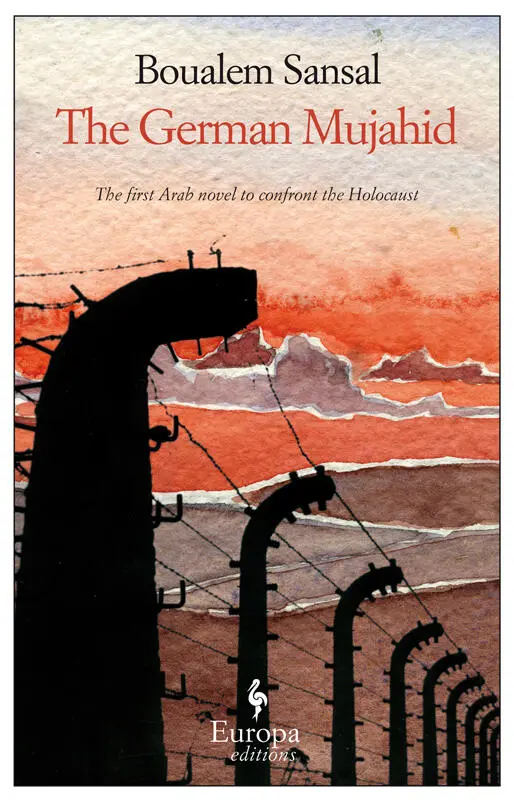
- Название:The German Mujahid
- Автор:
- Издательство:Europa Editions
- Жанр:
- Год:2009
- ISBN:нет данных
- Рейтинг книги:4 / 5. Голосов: 1
-
Избранное:Добавить в избранное
- Отзывы:
-
Ваша оценка:
The German Mujahid: краткое содержание, описание и аннотация
Предлагаем к чтению аннотацию, описание, краткое содержание или предисловие (зависит от того, что написал сам автор книги «The German Mujahid»). Если вы не нашли необходимую информацию о книге — напишите в комментариях, мы постараемся отыскать её.
is a heartfelt reflection on guilt and the harsh imperatives of history.
The two brothers Schiller, Rachel and Malrich, couldn't be more dissimilar. They were born in a small village in Algeria to a German father and an Algerian mother, and raised by an elderly uncle in one of the toughest ghettos in France. But there the similarities end. Rachel is a model immigrant — hard working, upstanding, law-abiding. Malrich has drifted. Increasingly alienated and angry, his future seems certain: incarceration at best. Then Islamic fundamentalists murder the young men's parents in Algeria and the event transforms the destinies of both brothers in unexpected ways. Rachel discovers the shocking truth about his family and buckles under the weight of the sins of his father, a former SS officer. Now Malrich, the outcast, will have to face that same awful truth alone.
Banned in the author's native Algeria for of the frankness with which it confronts several explosive themes, The German Mujahid is a truly groundbreaking novel. For the first time, an Arab author directly addresses the moral implications of the Shoah. But this richly plotted novel also leaves its author room enough to address other equally controversial issues; Islamic fundamentalism and Algeria's "dirty war" of the early 1990s, for example or the emergence of grim Muslim ghettos in France's low-income housing projects. In this gripping novel, Boualem Sansal confronts these and other explosive questions with unprecedented sincerity and courage.
The German Mujahid — читать онлайн бесплатно полную книгу (весь текст) целиком
Ниже представлен текст книги, разбитый по страницам. Система сохранения места последней прочитанной страницы, позволяет с удобством читать онлайн бесплатно книгу «The German Mujahid», без необходимости каждый раз заново искать на чём Вы остановились. Поставьте закладку, и сможете в любой момент перейти на страницу, на которой закончили чтение.
Интервал:
Закладка:
Having made our pilgrimage, and with a little ebony scarab or a terracotta sarcophagus for Ophélie packed into my suitcase, we would go our separate ways to different countries, petrified at the prospect of having to face the ruthless realities of the modern world.
But these are memories of a past life, a carefree life. Now I am mired in the past, plunged into a hideous war, crushed by horror, tormented by my own father. Egypt will never again be a dreamlike country, a picture postcard. This was where my father came, his crimes packed up in his suitcase and, from what I can tell, he had a wonderful life, he became a new man here and found a position in the Egyptian secret service. What I need to understand is how, arriving from a hell of your own making, from the bleak horror of life in the camps, does this man adjust to a shimmering world of sweltering sun, gentle humility, affably shambolic poverty, where a hookah and a glass of mint tea are always to hand, a belly dancer’s navel is always at eye level, where your bed is always open to the stars? What does he think, this man? What regrets haunt him? What pleasures can help him forget the pain he so lavishly meted out in the cruel, sinister world of his former life, an absurd, insane, incessant mechanical ballet where every day was reduced to nothingness, to listening to agonised howls bleed through the walls, to watching the columns of black smoke rising into the heavens? I know this man is unscrupulous enough to forgive himself everything, but surely no pity, no compassion, no mercy can absolve such vile, unspeakable things? Or maybe this man is not a man, nor even the shadow of a man, perhaps he is the devil incarnate. My God, who will tell me who my father is?
You quickly realise that the old Egypt, the cheerful, cosmopolitan, raucous, romantic Egypt of Naguib Mahfouz, does not exist anymore. Modern Egypt— Misr —is dominated by twin giants as formidable as the great pyramids: religion and the police — leaving not one square inch where a free man may set foot. If he’s not taken to task by the police — the chorti —he will be by the fanatic, the Irhabi. In Egypt, the police force of the Raïs and the religion of Allah conspire to make life a living hell for every single person. Death and dishonour are the twin tracks of this miserable fate. It is hard to believe that in a country subjugated by faith and fear, things would change so quickly. The last time I was in Cairo, two years ago, when we delivered our most powerful pump, the H56—H for horizontal, 56 the diameter of the outflow in inches — from what I saw then (constantly chaperoned by official guides and escorted by patrols of helpful chortis) intimidation was so gentle, so graceful you might almost have been tempted to convert to Islam and proclaim your joy. We knew at the time that the guides had been taught to misinform us, but even so the noose has clearly been tightened since then. The people who roam the streets now are not men, they are victims seeking some refuge from the police station and the mosque. Egypt has become intolerable, it is no longer a country for men, or even saints, and all the picture postcards in the world cannot change that. I pity any Egyptian who is not a policeman or a fanatic.
I felt anxious as I walked around the city. I was constantly watching my step. Not a gesture, not a look, not a thought was out of place. I wandered past the Ministry of Interior Affairs, the headquarters of the Mukhabarat where my father in his time had been a frequent visitor; this was where they had made his fake papers for him, this was where they had required certain favours in exchange for the hospitality afforded him by King Farouk and later by Nasser. What could they have asked him to do but infiltrate European circles in Cairo, decode secret Nazi documents bought on the black market, develop some sort of chemical weapon and later train Algerian revolutionaries in some anonymous building in the city? I quickly realised I had been spotted — the chaouchs were making a pincer movement, indestructible old bangers would suddenly break down nearby, choufs would diligently pretend to read their newspapers as they watched. I slipped away just in time. Many things have changed here since 1945—the curtains that hang in the windows, the official cars, the suits worn by the civil servants, the complaints of the orderlies, the sound of the sirens — what has not changed is the atmosphere. Hans Schiller, SS officer, would have felt at home here. Then I remembered that the war never really ended in Egypt — if the Egyptians weren’t starting a war, someone else was — wars against the Mamelukes, the Turks, the king, against the British and the French, the war against American imperialism, the wars with Israel, the wars against Islamic terrorists, against the Copts, against the kaffirs, the war against the Great Satan and, worst of all, the war they waged against their own people. Having waged all these wars, there was only one thing for the country to do — make peace with itself, return to the happiness of yesteryear, to the Great Egypt, serene, eternal.
I doubled back, went and joined the tourists. They don’t know anything, don’t suspect anything, they don’t care about history, about anything, they’re here for the sun and the Kodak moments. Being with them is relaxing, even if they look impossibly pretentious posing for photographs next to the Great Pyramid as though it were an old friend. The pyramid is ageless. How many years have they lived, how many years do they have left before they’re six feet under? Why, when they leave their own country, do tourists suddenly forget they are human, mortal? Thinking about Kodak moments, I remembered the photo in my pocket, the photograph of papa next to the Pyramid of Cheops that I’d found it in his suitcase in our house in Aïn Deb that vast and lonely night. Suddenly I was seized by that same frenzy, searching for the roots of evil, staring at the photo of papa dressed like a gentleman from the Belle Époque posing with two English ladies next to the pyramid. In those days, you needed to be rich and somewhat reckless to be a tourist, travel was the hobby of the idle rich accustomed to cruises, to vacations. I don’t know when the photo was taken, probably while Farouk was still on the throne — between 1945, when papa arrived in Egypt, and 1952, when Farouk was toppled in favour of General Mohamed Naguib. Probably the summer of 1946 or ’47. A year later, tensions in the Middle East were running so high after the Palestinian war that it put an end to tourism in Egypt for years. The ladies in the picture, their extravagant outfits, seem suited to the period of the monarchy. I can’t imagine papa dressing up in a white suit and pith helmet in the time of the colonels. Nasser considered revolutionary austerity a great virtue and imposed it on everyone. I can picture life during the monarchy, the sumptuous embassy banquets, the palatial boats, the great mansions of the pashas and the vizirs, the horse rides through the vast demesnes of the Effendi , the cultural visits to the great museum in Cairo, the elegant cruises down the Nile stopping at archaeological sites from Karnak to Aswan, the solitary trips gentlemen made to the hammams, the secret harems, the opium dens. No one evokes this atmosphere, placid and refined, cynical and strained, as powerfully as Agatha Christie, the queen of civilised crime. Papa would have effortlessly fitted into this life, he was educated, spoke several languages and, unlike many German officers, he was extremely cultured, he was handsome, well-dressed and, above all, he had extensive experience with death, something which gives the cynical machinations required of polite society a tragic, pitiless, fascinating depth. He would have effortlessly dazzled the ladies and their powerful patrons — something of an advantage for a spy in the service of the king — or any other power. I’m thinking of the Soviet spies who undoubtedly discovered papa’s Nazi background and made him an offer he couldn’t refuse. Israel, after all, was nearby, it would be easy to ship him a trunk full of Jewish ashes and daub a yellow star on the door of Hans Schiller, SS officer.
Читать дальшеИнтервал:
Закладка:
Похожие книги на «The German Mujahid»
Представляем Вашему вниманию похожие книги на «The German Mujahid» списком для выбора. Мы отобрали схожую по названию и смыслу литературу в надежде предоставить читателям больше вариантов отыскать новые, интересные, ещё непрочитанные произведения.






Обсуждение, отзывы о книге «The German Mujahid» и просто собственные мнения читателей. Оставьте ваши комментарии, напишите, что Вы думаете о произведении, его смысле или главных героях. Укажите что конкретно понравилось, а что нет, и почему Вы так считаете.