Boualem Sansal - The German Mujahid
Здесь есть возможность читать онлайн «Boualem Sansal - The German Mujahid» весь текст электронной книги совершенно бесплатно (целиком полную версию без сокращений). В некоторых случаях можно слушать аудио, скачать через торрент в формате fb2 и присутствует краткое содержание. Год выпуска: 2009, Издательство: Europa Editions, Жанр: Современная проза, на английском языке. Описание произведения, (предисловие) а так же отзывы посетителей доступны на портале библиотеки ЛибКат.
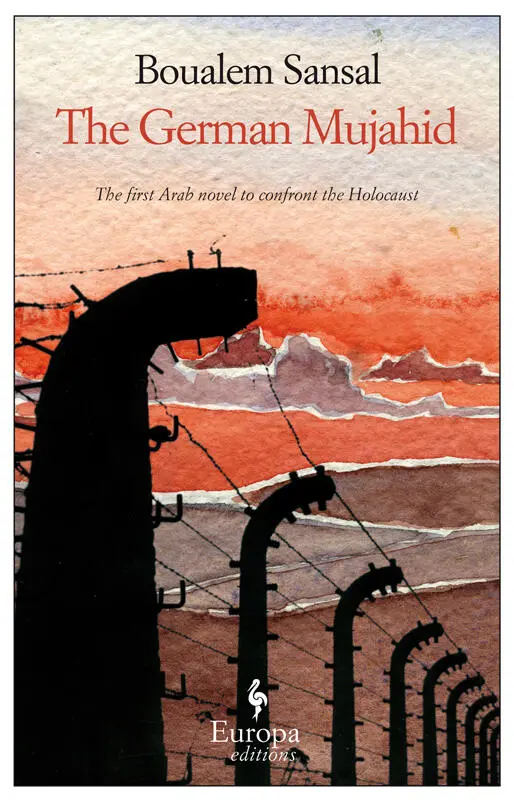
- Название:The German Mujahid
- Автор:
- Издательство:Europa Editions
- Жанр:
- Год:2009
- ISBN:нет данных
- Рейтинг книги:4 / 5. Голосов: 1
-
Избранное:Добавить в избранное
- Отзывы:
-
Ваша оценка:
The German Mujahid: краткое содержание, описание и аннотация
Предлагаем к чтению аннотацию, описание, краткое содержание или предисловие (зависит от того, что написал сам автор книги «The German Mujahid»). Если вы не нашли необходимую информацию о книге — напишите в комментариях, мы постараемся отыскать её.
is a heartfelt reflection on guilt and the harsh imperatives of history.
The two brothers Schiller, Rachel and Malrich, couldn't be more dissimilar. They were born in a small village in Algeria to a German father and an Algerian mother, and raised by an elderly uncle in one of the toughest ghettos in France. But there the similarities end. Rachel is a model immigrant — hard working, upstanding, law-abiding. Malrich has drifted. Increasingly alienated and angry, his future seems certain: incarceration at best. Then Islamic fundamentalists murder the young men's parents in Algeria and the event transforms the destinies of both brothers in unexpected ways. Rachel discovers the shocking truth about his family and buckles under the weight of the sins of his father, a former SS officer. Now Malrich, the outcast, will have to face that same awful truth alone.
Banned in the author's native Algeria for of the frankness with which it confronts several explosive themes, The German Mujahid is a truly groundbreaking novel. For the first time, an Arab author directly addresses the moral implications of the Shoah. But this richly plotted novel also leaves its author room enough to address other equally controversial issues; Islamic fundamentalism and Algeria's "dirty war" of the early 1990s, for example or the emergence of grim Muslim ghettos in France's low-income housing projects. In this gripping novel, Boualem Sansal confronts these and other explosive questions with unprecedented sincerity and courage.
The German Mujahid — читать онлайн бесплатно полную книгу (весь текст) целиком
Ниже представлен текст книги, разбитый по страницам. Система сохранения места последней прочитанной страницы, позволяет с удобством читать онлайн бесплатно книгу «The German Mujahid», без необходимости каждый раз заново искать на чём Вы остановились. Поставьте закладку, и сможете в любой момент перейти на страницу, на которой закончили чтение.
Интервал:
Закладка:
Since I have decided to slip into papa’s thoughts, retrace his footsteps, I think it’s only right that I should live it up here too. We’ll see what happens. I don’t have much money, but Egypt is dirt poor and, in the souk, the few dollars I do have will buy me a lot of the insipid pleasures tourists crave. I went back to the tour group and — whipped into a whirl of excitement and enthusiasm by our guide — we sped through Cairo by day and Cairo by night, raced through the museum, ignored local customs, raided the souks , pissed in the Nile, strolled the great boulevards, sat chattering noisily at a table outside one of the mythic cafés that once made Cairo famous, back in the days of Egyptian cinema, of great divas and fabulous international archaeological expeditions. The lustre had faded somewhat, but we made the best of it, we embraced poverty though we were only slumming it, drank syrupy mint tea rather than champagne, took ramshackle buses rather than barouches and limousines, walked in the sweltering sun rather than in the shade of parasols, and prattled endlessly about the Cyclopean mysteries of the pharaohs. Then we headed for Giza where, like every other tourist, I decided I’d like to have my photo taken next to the Great Pyramid. But the photograph I wanted had to be special, I wanted to be surrounded by a bevy of elderly English ladies. I looked around and found a group of plump, rosy-cheeked English women, their arms bare, and among them — miracle of miracles — one who was lean and angular as flint, wrapped in a prickly shawl, a dead ringer for the formidable Victoria. Now all I needed to was to secure their cooperation. The old dears were only too happy to oblige. I borrowed a pith helmet from a Dutch tourist, hired one of the professional photographers, positioned the ladies as in the original picture, gave them a sidelong smile and shouted, “ Maestro! Do your worst!” Five minutes later I had a print, a perfect copy of the original — if you ignore the fact that I looked gaunt as a camp prisoner. On the back of the photograph, I wrote: “Helmut Schiller, son of Hans Schiller, Giza, 11 April 1996.” Half a century separates the two photographs; that and six million dead gone up in smoke.
In the end, I felt pleased with myself. I had stopped at nothing in my search for the truth. There’s nothing now for me to do in Cairo. Or anywhere else. I’m going back to Paris, I have an appointment to keep. From here, it can only lead to the end. My parents died on 14 April 1994, that was the day Hans Schiller finally eluded the justice of men. But for the man that I am to go on believing in the little time he has left, it is essential that there be some particle of good in us. I am not thinking about the God Particle, that doesn’t interest me. If God has failed here on earth, how can he expect to succeed in heaven? I will see to it that justice is done, I am better placed than He.
MALRICH’S DIARY, JANUARY 1997
Needless to say, getting out of Algeria was a fucking nightmare. Boarding the plane seemed to take forever, the paperwork, the Ausweis, the security checks, the waiting, the petty bureaucracy, it’s like the Bonzen in Algeria like nothing better than torturing people. They’re like the Gestapo. I was a bundle of nerves, I was terrified that I’d be dragged off somewhere. At one point, just as we were going through the last security check, an officer in a blue jacket came over to us and said: “You, you and you. . come with me.” I thought I’d had it, but it was nothing — he just needed four young guys to help him shift a crate from a truck and carry it down to the basement. I still can hardly believe he said thanks and gave us each a cigarette. Only after the plane had taken off and we had reached the point of no return did I breathe again. I fell asleep straight away. I needed to build up my strength so I could face the estate. I had a sick feeling. I expected the place to be completely different and, on our way back from Orly airport — where they gave me a hero’s welcome — my mates told me more than enough to convince me that the place would be unrecognizable. Between what you expect and what you find there’s a lot of relativity. The estate looked exactly the same as it ever had, what had changed was the atmosphere; I had felt as though I’d been away for ages, but when I looked up at the tower blocks, it was like I’d never been away. Time, to those waiting on the platform, passes at a different rate relative to those on the train. I felt weird. I had no experience of long journeys, of the dislocation caused by relativity. A week can be a long time and a short time. In Algeria, every second seemed so heavy with meaning that it felt like I’d spent a year there. Back in France, staring up at the tower blocks, it feels as though I’ve only been gone a couple of hours. My mates feel like they’ve lived through a whole century, but to me they seem exactly the same as when I left.
By the time I’d taken a quick tour of the estate, popped up to say hello to aunt Sakina and uncle Ali and headed down to meet my mates at the station cafeteria, everything was fine, we were back in sync, I was choked like them by the stifling atmosphere of the estate, in tune the mood of all-conquering Islam. I needed to think, to look at things objectively, if that was possible. As it turned out, nothing much had changed, it was same old same old. People were a little more panicky since the new emir Flicha and Cyclops the imam showed up. There was a lot more violence but the estate hadn’t degenerated into civil war; there were casualties but nothing fatal and, although there had been a shitload of death threats, nothing had actually happened. For the shopkeepers, the jihad tax had taken a big hike but the protection rackets were gone. The non-Muslims were completely fazed, they said they couldn’t afford to pay, they were threatening to move out, march on the Office of Taxation, stage a sit-in at the police station. A lot of boys had dropped out of school and started going to the mosque, a lot of the girls had started wearing the hijab , some of them had stopped going out and some of the older men, tired of constantly being lectured, had started wearing a scarf or a keffiyeh and sermonising themselves. The few regulars who still hung out in the local bars had started carrying prayer beads. The drug dealers in the south tower blocks have disappeared, but there’s no reason to think they’re dead, they’ve moved on or gone into hiding, they’ll be back. All in all, the social order has changed without breaking down. Thirty families moved out in the first week, but this was compensated by thirty new families arriving, a bunch from North Africa, one from Mali, a Pakistani family, one from Somalia, a family from Cape Verde and another from Romania. The population has remained pretty stable, but the ethnic and religious mix is narrower. A crew of new Kapos —real hard bastards — has taken over from the old ones who were demobbed for being too lenient, for fraternising with the enemy. “What about Com’Dad?” I asked. No one can understand what he’s up to, he’s keeping up a Level 4 surveillance and waiting to see what happens. He still does his daily rounds, but twice as fast as he used to. “What about the people on the estate?” “What about them? They’re waiting to see what happens.”
It didn’t seem like much, but it knocked me for six. How were we ever going to stop this thing? Back in Aïn Deb, it had all seemed so simple: I’d imagined the estate extricating itself from this nightmare in no time, I thought all we needed was for people to talk to each other, tell their kids everything. Fuckwit that I am, I’d imagined climbing up on the roof of a car and talking about brotherhood, about truth, about the future. But it was the new imam, Cyclops, who did the talking. The One-Eyed fucker had heard from his spies that my parents had been murdered by jihadists and that I’d gone back to the bled to visit their graves. His messenger said the imam sent me his blessings and wanted to meet with me to explain what had really happened. It was a no brainer, I said I’d meet him and hear him out. If he was going to offer me the chance to kill him in place of his Algerian mates, I wasn’t going to pass up the opportunity. Given there was nothing else I could do, revenge was a good plan B. Fuck, it was my duty!
Читать дальшеИнтервал:
Закладка:
Похожие книги на «The German Mujahid»
Представляем Вашему вниманию похожие книги на «The German Mujahid» списком для выбора. Мы отобрали схожую по названию и смыслу литературу в надежде предоставить читателям больше вариантов отыскать новые, интересные, ещё непрочитанные произведения.





Обсуждение, отзывы о книге «The German Mujahid» и просто собственные мнения читателей. Оставьте ваши комментарии, напишите, что Вы думаете о произведении, его смысле или главных героях. Укажите что конкретно понравилось, а что нет, и почему Вы так считаете.