Boualem Sansal - The German Mujahid
Здесь есть возможность читать онлайн «Boualem Sansal - The German Mujahid» весь текст электронной книги совершенно бесплатно (целиком полную версию без сокращений). В некоторых случаях можно слушать аудио, скачать через торрент в формате fb2 и присутствует краткое содержание. Год выпуска: 2009, Издательство: Europa Editions, Жанр: Современная проза, на английском языке. Описание произведения, (предисловие) а так же отзывы посетителей доступны на портале библиотеки ЛибКат.
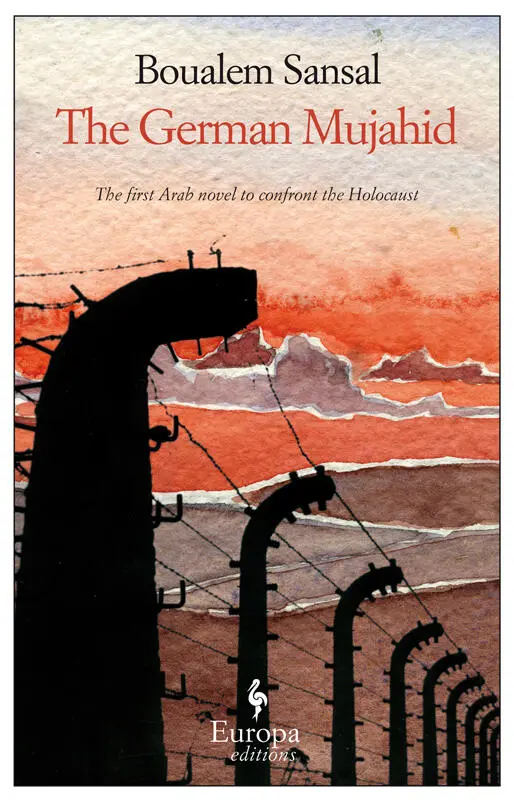
- Название:The German Mujahid
- Автор:
- Издательство:Europa Editions
- Жанр:
- Год:2009
- ISBN:нет данных
- Рейтинг книги:4 / 5. Голосов: 1
-
Избранное:Добавить в избранное
- Отзывы:
-
Ваша оценка:
The German Mujahid: краткое содержание, описание и аннотация
Предлагаем к чтению аннотацию, описание, краткое содержание или предисловие (зависит от того, что написал сам автор книги «The German Mujahid»). Если вы не нашли необходимую информацию о книге — напишите в комментариях, мы постараемся отыскать её.
is a heartfelt reflection on guilt and the harsh imperatives of history.
The two brothers Schiller, Rachel and Malrich, couldn't be more dissimilar. They were born in a small village in Algeria to a German father and an Algerian mother, and raised by an elderly uncle in one of the toughest ghettos in France. But there the similarities end. Rachel is a model immigrant — hard working, upstanding, law-abiding. Malrich has drifted. Increasingly alienated and angry, his future seems certain: incarceration at best. Then Islamic fundamentalists murder the young men's parents in Algeria and the event transforms the destinies of both brothers in unexpected ways. Rachel discovers the shocking truth about his family and buckles under the weight of the sins of his father, a former SS officer. Now Malrich, the outcast, will have to face that same awful truth alone.
Banned in the author's native Algeria for of the frankness with which it confronts several explosive themes, The German Mujahid is a truly groundbreaking novel. For the first time, an Arab author directly addresses the moral implications of the Shoah. But this richly plotted novel also leaves its author room enough to address other equally controversial issues; Islamic fundamentalism and Algeria's "dirty war" of the early 1990s, for example or the emergence of grim Muslim ghettos in France's low-income housing projects. In this gripping novel, Boualem Sansal confronts these and other explosive questions with unprecedented sincerity and courage.
The German Mujahid — читать онлайн бесплатно полную книгу (весь текст) целиком
Ниже представлен текст книги, разбитый по страницам. Система сохранения места последней прочитанной страницы, позволяет с удобством читать онлайн бесплатно книгу «The German Mujahid», без необходимости каждый раз заново искать на чём Вы остановились. Поставьте закладку, и сможете в любой момент перейти на страницу, на которой закончили чтение.
Интервал:
Закладка:
Then, at dawn one morning, someone comes to tell me the coast is clear. I have to hurry. I must be careful not to speak German. They dress me as a Turk, give me false papers, perhaps a message from my distant benefactor, the famous Jean 92, and send me off in a relic dating from the First World War. Are there other SS officers in the truck? Why not? After all, there are thousands of us trying to save our skins. Despite screams and threats, I refuse to hand over the knapsack that contains what no officer of the Reich should ever be without: my military record and my medals. After all, the war is not over — there are other ways to fight: resistance, sabotage. In planning for victory, one must necessarily plan for defeat, too — perhaps the German High Command has plans to set up for this eventuality. After all France — hardly the greatest military strategist in the world — after its defeat regrouped in London, in Algiers, and went on fighting. The trek across Turkey is long and difficult, there are constant alerts, then one day someone whispers that the border is just across the horizon and a Syrian guard is waiting for me there. Egypt is still a long way off, but I have already made it to the East, to the sun, the deserts, the caravans, the chaos, the motley colours. No one will go looking for a needle in a haystack here. When everyone wears a djelleba and a keffiyeh , everyone is anonymous. Egypt, of course, is still occupied by the British, but there is so much turmoil, so much confusion, that hope is possible, anything is possible — a man could easily disappear and reappear again. King Farouk has clearly had his day and no one knows what will come after him — rumours and speculation are rife but they corroborate and conflict until no one knows what the truth is. Spies from all over the world are already in Egypt posing as smiling diplomats, harried archaeologists, greedy businessmen, devotees of Islam, sheep-like tourists, with one eye on the derricks and the Suez Canal and one on the other spies. This is the Middle East where, since the dawn of time, nothing has ever been straightforward. Having studied the possible routes to Egypt, I assume my father travelled over land. The sea route was shorter, but infinitely more dangerous. American and British marines everywhere were on constant alert, the war was over but the embers were still smouldering. Warships patrolled the Mediterranean, inspecting, checking, seizing cargo, the shipping lanes were teeming with smugglers trafficking opium, American cigarettes, alcohol, weapons, secret documents, forged papers, works of art, this was the hub of piracy and of a slave trade that affected even the faithful from Europe and North Africa making pilgrimage to Mecca, to Nadjaf, Qom, Karbala, Jerusalem. The British, furious with the Jews, were determined to stop them emigrating to Palestine where they wanted to establish a state encompassing Galilee and the desert of Negev — the State of Israel, something which would have incensed the Arabs already waging war on anything that moved, threatening, dreaming of independence, toying with communism, socialism, Pan-Arabism, fundamentalism, even going so far as to flirt with that ridiculous Judaeo-Christian concept, democracy. They would never agree on anything, being too divided, too rich for their dreams, too poor to make them reality, it was this which would push them into the arms of Moscow. As is often the case, the longest road is the least dangerous. I decided that my father and his guides had probably travelled via Adana, Dörtyol and Hassa in eastern Turkey, crossed the Syrian border at Afrin and from there travelled via Alep and Damascus to Mafraq in Jordan, and from there through Amman and Ramm in the south of the kingdom. All that remained, then, was to cross the Akaba Gulf to Sinai and travel by camel to Suez and on to their final destination, Cairo. A journey of thousands of miles beneath an ancient, implacable sun.
Exhausted, I surfaced from this endless, monotonous journey through the deserts of the Middle East. I took a shower, collapsed on the bed and fell asleep.
RACHEL’S TRIP TO CAIRO, 10–13 APRIL 1996
I used to come to Cairo all the time when I was working for the multinational. I loved it, I was always impatient to be back in the sun, in this dreamlike city, eager to melt into the vibrant crowds, to let myself be swept up in the intoxicating atmosphere you only find in the south, in a world turned upside down like Egypt, a mass of contradictions, clinging to the past but far removed from its three-thousand-year-old history, open to all the world but only through the narrow chink of tourism, peaceful only in its monuments to the dead. This is why we come, we are drawn to the exotic, we leave conformity at home. Egypt is a miracle whose existence depends entirely on the Nile delta, the meagre market gardens, the fellahs who look as though they have stepped from a bas-relief. But agriculture requires irrigation and I was working for a company selling pumps and sluices, turnkey solutions, cash up front, US dollars only. This was the way we looked at things — it was the only way to look at things — a market needs suppliers. We were suppliers, and we knew everything there was to know about their needs, their weaknesses, their endless tales of woe. We called it market analysis , an essential part of a global marketing strategy. The minute we got a green light from head office, we descended on the country like locusts in some biblical plague. By the time they had a chance to look up and say “Allahu Akbar,” we had the whole country kitted out with pumps and sluices and deep in debt for the rest of its days. No longer would the waters of this legendary Nile flow serenely to the sea as they had done for thousands of years to the haunting cries of helmsmen in their dhows , the absurd croaking of the gulls and — at auspicious moments — the happy gurgling of a chubby baby kicking in his basket of bulrushes carried by the sacred waters. We had dammed the Nile, diverted it, churned it, filtered it, canalized it, pumped it, fertilised it, cycled and recycled the water and only then, pumped it back — filthy and reeking — so that the ancient, troubled Nile might flow onwards to the sea. No longer would people wait for the Nile to flood as a sign from the gods, something to be celebrated like New Year. All this we did for thirty pieces of silver and a five percent baksheesh : we changed the course of a history as old as the world. They need to update their hieroglyphics.
When business was done, we’d dive into the crowds and commune with our human brethren in the medina. The moment we stepped out of our air-conditioned offices, we were off in search of neighbourhoods so poor they could only exist in the imagination of the destitute south, places that endure only by some miracle, breathe only by the grace of God. We would seek out the most tortuous streets, the narrowest alleys, the riotous confusion, the flood of colours, sounds and smells, the bewildered smiles of the destitute— Al-Masakeen— the relentless patter of the merchants in the souk, whose age-old spiel can still dupe an international conman, the lyrical flights of the beggars, the teeming packs of children, the Bounayes , the walads, the affected indignation of the thieves, the sirakinn , the bleating of fat chaouchs pleading poverty, like ticks feeding on the misery of others, the cursing of the carters, the pleas of the beggars, the toulabs, so piteous that no one ever hears them, the dreamlike pronouncement of the scribes, their ears so full of secrets they would make a saint blush, but more than this, watchful as hawks, we were seeking a glimpse of an Egyptian woman wearing a close-fitting tunic, a headscarf framed by coloured pompoms. If their husbands were nearby, keeping an eye on them, it was all for nothing, they have no control over their wives for all their furious glares, the whistle of their canes, their wives have lots of tricks to give these latent murderers the slip. Then, finally, we’d find a woman who looked as though she has stepped from some furtive dream, a devil in the flesh, hips swaying, arms outspread, full breasts, a mischievous smile, a pair of bewitching eyes. This was what we have been looking for: the living gaze of the Sphinx that sees beyond the Beyond. It is as mysterious, as enchanting as everyday immortality, her eyes flash like lightning, more terrifying than the curse of a pharaoh, were he Tutankhamen himself. What we saw in these women was the reincarnation of Cleopatra, a Malikah worthy of the Caliphs, a houri beloved of Allah, a princess from the Thousand and One Nights , a siren conjured from the troubling world of the djinn . We were all widely travelled, we had all seen the world, but we all agreed that there was nothing on earth more thrilling than the dazzling, kohl-rimmed eyes of an Egyptian woman, glittering with the most ancient mystery in all the world.
Читать дальшеИнтервал:
Закладка:
Похожие книги на «The German Mujahid»
Представляем Вашему вниманию похожие книги на «The German Mujahid» списком для выбора. Мы отобрали схожую по названию и смыслу литературу в надежде предоставить читателям больше вариантов отыскать новые, интересные, ещё непрочитанные произведения.




Обсуждение, отзывы о книге «The German Mujahid» и просто собственные мнения читателей. Оставьте ваши комментарии, напишите, что Вы думаете о произведении, его смысле или главных героях. Укажите что конкретно понравилось, а что нет, и почему Вы так считаете.