Boualem Sansal - The German Mujahid
Здесь есть возможность читать онлайн «Boualem Sansal - The German Mujahid» весь текст электронной книги совершенно бесплатно (целиком полную версию без сокращений). В некоторых случаях можно слушать аудио, скачать через торрент в формате fb2 и присутствует краткое содержание. Год выпуска: 2009, Издательство: Europa Editions, Жанр: Современная проза, на английском языке. Описание произведения, (предисловие) а так же отзывы посетителей доступны на портале библиотеки ЛибКат.
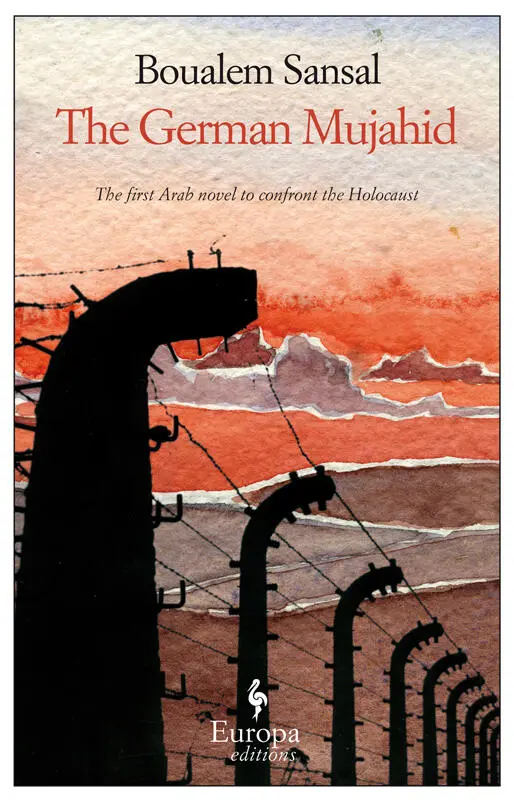
- Название:The German Mujahid
- Автор:
- Издательство:Europa Editions
- Жанр:
- Год:2009
- ISBN:нет данных
- Рейтинг книги:4 / 5. Голосов: 1
-
Избранное:Добавить в избранное
- Отзывы:
-
Ваша оценка:
The German Mujahid: краткое содержание, описание и аннотация
Предлагаем к чтению аннотацию, описание, краткое содержание или предисловие (зависит от того, что написал сам автор книги «The German Mujahid»). Если вы не нашли необходимую информацию о книге — напишите в комментариях, мы постараемся отыскать её.
is a heartfelt reflection on guilt and the harsh imperatives of history.
The two brothers Schiller, Rachel and Malrich, couldn't be more dissimilar. They were born in a small village in Algeria to a German father and an Algerian mother, and raised by an elderly uncle in one of the toughest ghettos in France. But there the similarities end. Rachel is a model immigrant — hard working, upstanding, law-abiding. Malrich has drifted. Increasingly alienated and angry, his future seems certain: incarceration at best. Then Islamic fundamentalists murder the young men's parents in Algeria and the event transforms the destinies of both brothers in unexpected ways. Rachel discovers the shocking truth about his family and buckles under the weight of the sins of his father, a former SS officer. Now Malrich, the outcast, will have to face that same awful truth alone.
Banned in the author's native Algeria for of the frankness with which it confronts several explosive themes, The German Mujahid is a truly groundbreaking novel. For the first time, an Arab author directly addresses the moral implications of the Shoah. But this richly plotted novel also leaves its author room enough to address other equally controversial issues; Islamic fundamentalism and Algeria's "dirty war" of the early 1990s, for example or the emergence of grim Muslim ghettos in France's low-income housing projects. In this gripping novel, Boualem Sansal confronts these and other explosive questions with unprecedented sincerity and courage.
The German Mujahid — читать онлайн бесплатно полную книгу (весь текст) целиком
Ниже представлен текст книги, разбитый по страницам. Система сохранения места последней прочитанной страницы, позволяет с удобством читать онлайн бесплатно книгу «The German Mujahid», без необходимости каждый раз заново искать на чём Вы остановились. Поставьте закладку, и сможете в любой момент перейти на страницу, на которой закончили чтение.
Интервал:
Закладка:
It was later discovered that this theory was mistaken and held true only in small-scale, controlled laboratory conditions. In practice, things worked differently. Leakage presented a significant problem. Hermetically sealing a tiny cubicle containing two or three weak experimental subjects was a very different matter to sealing a vast hangar filled with two thousand people hardened by incarceration. Productivity, it turned out, was disastrous in periods of warm weather and cold conditions proved to be ideal. This anomaly perturbed a number of scientists, but this mystery was quickly solved just as others emerged — since nothing is ever as it seems on paper. The canisters of Zyklon B, it turned out, did not contain two hundred litres, as stated on the invoices and on the labels printed on each canister; in fact the volume varied so widely that one out of three gassings was compromised. The obvious explanation was leakage, but much of the blame lay with the exaggerated claims which friends of the Reich — IG Farben in particular — made in order to massage the statistics sent to their supervisors. There was a lot of money involved, a lot of back slapping and bribes. The anomaly concerning temperature — a variable which created considerable problems — deserves further explanation. In warm weather, gas expands and rises, the greatest concentration being found at the ceiling of the chamber. That, after all, is one of the intrinsic properties of a gas. The victims quickly realised this and, at the first sign of sickness, they threw themselves to the ground, closed their eyes and slowed their breathing. Thirty minutes later, when the doors to the chamber were opened, the kapos were stunned to find the subjects lying on the ground, weakened, but for the most part still alive. It seemed likely that those who died did so as a result of panic, overcrowding and suffocation rather than the effects of the gas. In cold weather, on the other hand, the gas remained concentrated at floor level and productivity was excellent. There were still survivors, mostly infants whose parents had held them on their shoulders for as long as they were able, but such exceptions merely confirmed the rule and the poor mites were usually in such a bad way that they usually died on the way to the Krema— the furnace — so it was unnecessary to gas them a second time — a horrifying prospect for those operating the chambers. The shape and size of the chambers also proved to be critical. Although a long, narrow, low-ceilinged chamber produces excellent results, it is difficult to persuade subjects to go inside, they panic when they see what looks like a tomb. Were they to refuse it might result in chaos, something which had been declared a cardinal sin in Germany. This happened in a number of camps, and the authorities were obliged to enlarge the chambers. A large, high-ceilinged chamber reassured the subjects. Who knows why — human nature is unfathomable — since the end result, as even the prisoner knows, is the same. The Sonderkommando preferred large chambers. Less work, more bodies, but this was frustrating for those operating the Kremas , since the furnaces did not have the capacity to deal with the deliveries. Corpses began to pile up, they rotted, attracting rats and flies and all sorts of vermin, which again resulted in chaos.
Overseeing an operation of this nature is not as easy as it might seem. It is a complex industrial process with all the flaws inherent in such systems: a poorly educated workforce prone to absenteeism, then there were the power failures, stock shortages, disparities between supply and demand at the Kremas , which disrupt schedules and break the working rhythm, creating bottlenecks and resulting in workers unable to work. Then there is the necessary micromanagement — as we call it these days because it sounds more complex than management — with all that it entails: unfeasible performance targets imposed like religious tenets, inter-departmental rivalry, the cliques, the clashes of interests, the scrabbling for seniority, the blunders. The extermination camps competed fiercely for everything: the best equipment, the biggest budgets, the top-flight experts; they vied with each other in their savoir faire, their passion, their inventiveness, each trying to please the Führer, each trembling at the thought of disappointing Himmler. But it’s impossible to keep track of everything, and when one thing breaks down, there are repercussions all down the production line. In such conditions, it’s impossible to allocate blame and, by the time the problem is fixed, half a dozen more have appeared elsewhere. It might be a catastrophic event — a fire, an explosion, a virulent pandemic, an escape, an act of sabotage — with all the attendant disruption: reports to be written up, stress levels to be calmed, disciplinary action to be taken, another purging of the ranks, all of which negatively impacts on the great god of productivity. Experts had to be on site to do real-time problem solving. There was no place in the Machine for incompetence and amateurism — two things which, in the Third Reich, were considered to be greater than the seven deadly sins. It only takes five minutes to round up a firing squad, and a lot less to sign a transfer to the Russian front. An experienced chemical engineer needed to be on hand for the gas chambers, and a combustion expert was needed for the furnaces. Then there were the doctors, the lab assistants, the accountants and quartermasters: the operation involved much more than the gas chambers and the Kremas . There was everything else to consider: the various workshops and farms responsible for keeping the Reich supplied with everything it might need. A good-sized camp, after all, comprised three or four hundred thousand prisoners, turnover was high, you needed enough guards to supervise everyone, a dozen service sectors and a systems management team keeping everyone working to full capacity. Ask any CEO, he’ll tell you, running a town or a company of that size is no easy task. Murder on this scale is not something that can be achieved by a random serial killer. And coordinating twenty-five extermination camps spread over several countries is a colossal undertaking, one that would cripple many a government today. The logistics of the railway system alone give some idea of the countless tasks which have to be timed to the split second. A railway system is not a toy. Before they could be gassed, these millions of people had to be tracked down, identified, inventoried, captured, grouped, transported and shipped out according to various, sometimes contradictory, criteria, then re-registered, fed, clothed, examined, made to work according to the standards of the Reich, guarded, disciplined and finally destroyed, and all of this had to be done according to a strict timetable and in complete secrecy. Let us not forget: secrecy was the sine qua non of the final solution, the one thing without which it could not function. Secrecy was to the final solution what invisibility is to God — take away the one, make visible the other and the whole system collapses. I read somewhere that at its height, Auschwitz alone cremated more than fifteen thousand people a day. They must have been working flat out. Papa worked in Auschwitz for a while, it must have been tough work, but he’d already spent time at most of the camps in Germany and Poland so his experience would have stood him in good stead.
It was thinking about him, about his incredibly stressful, unrewarding work that prompted me to collate all this information on the gas chambers and the Kremas . I wanted to be able to picture his daily routine in the death trade. I also felt that to judge my father I needed to understand his crimes, to set down each stage, to reconstruct everything as accurately as possible. There would still be a chapter to be written about extenuating circumstances but, having given this some thought, I decided that a man engulfed by evil who does not commit suicide, does not resist, does not give himself up and demand justice in the name of his victims but runs away, hides, conspires so his family are oblivious, has no right to compassion, no claim to extenuating circumstances. Children always judge their fathers harshly, but they do so because they love and respect them more than anyone in the world. I also thought — thought first and foremost — of the victims in this vast hell, and it occurred to me that all the meaning in the world had gone up in smoke with them. We live in a new era, an era in which the impossible is the only thing that is possible. With computing, automation and modern methods of manipulating the masses, the Great Miracle is now within our grasp — just look at the horrors visited on so many honourable peoples in the service homilies as pathetic as Mein Kampf , and with only the meagre resources of third-world countries: Mao’s Little Red Book , Qaddafi’s Green Book , the writings of Kim Il-sung and Khomeini, and those of the “Türkmenbas¸y”—Saparmurat Niyazov — and the millions of people destroyed by sects devoid of ideas and of means.
Читать дальшеИнтервал:
Закладка:
Похожие книги на «The German Mujahid»
Представляем Вашему вниманию похожие книги на «The German Mujahid» списком для выбора. Мы отобрали схожую по названию и смыслу литературу в надежде предоставить читателям больше вариантов отыскать новые, интересные, ещё непрочитанные произведения.





Обсуждение, отзывы о книге «The German Mujahid» и просто собственные мнения читателей. Оставьте ваши комментарии, напишите, что Вы думаете о произведении, его смысле или главных героях. Укажите что конкретно понравилось, а что нет, и почему Вы так считаете.