Boualem Sansal - The German Mujahid
Здесь есть возможность читать онлайн «Boualem Sansal - The German Mujahid» весь текст электронной книги совершенно бесплатно (целиком полную версию без сокращений). В некоторых случаях можно слушать аудио, скачать через торрент в формате fb2 и присутствует краткое содержание. Год выпуска: 2009, Издательство: Europa Editions, Жанр: Современная проза, на английском языке. Описание произведения, (предисловие) а так же отзывы посетителей доступны на портале библиотеки ЛибКат.
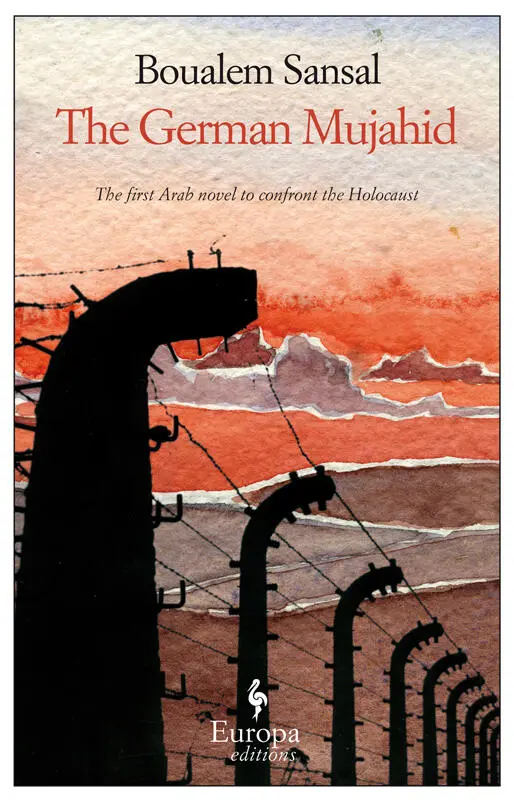
- Название:The German Mujahid
- Автор:
- Издательство:Europa Editions
- Жанр:
- Год:2009
- ISBN:нет данных
- Рейтинг книги:4 / 5. Голосов: 1
-
Избранное:Добавить в избранное
- Отзывы:
-
Ваша оценка:
The German Mujahid: краткое содержание, описание и аннотация
Предлагаем к чтению аннотацию, описание, краткое содержание или предисловие (зависит от того, что написал сам автор книги «The German Mujahid»). Если вы не нашли необходимую информацию о книге — напишите в комментариях, мы постараемся отыскать её.
is a heartfelt reflection on guilt and the harsh imperatives of history.
The two brothers Schiller, Rachel and Malrich, couldn't be more dissimilar. They were born in a small village in Algeria to a German father and an Algerian mother, and raised by an elderly uncle in one of the toughest ghettos in France. But there the similarities end. Rachel is a model immigrant — hard working, upstanding, law-abiding. Malrich has drifted. Increasingly alienated and angry, his future seems certain: incarceration at best. Then Islamic fundamentalists murder the young men's parents in Algeria and the event transforms the destinies of both brothers in unexpected ways. Rachel discovers the shocking truth about his family and buckles under the weight of the sins of his father, a former SS officer. Now Malrich, the outcast, will have to face that same awful truth alone.
Banned in the author's native Algeria for of the frankness with which it confronts several explosive themes, The German Mujahid is a truly groundbreaking novel. For the first time, an Arab author directly addresses the moral implications of the Shoah. But this richly plotted novel also leaves its author room enough to address other equally controversial issues; Islamic fundamentalism and Algeria's "dirty war" of the early 1990s, for example or the emergence of grim Muslim ghettos in France's low-income housing projects. In this gripping novel, Boualem Sansal confronts these and other explosive questions with unprecedented sincerity and courage.
The German Mujahid — читать онлайн бесплатно полную книгу (весь текст) целиком
Ниже представлен текст книги, разбитый по страницам. Система сохранения места последней прочитанной страницы, позволяет с удобством читать онлайн бесплатно книгу «The German Mujahid», без необходимости каждый раз заново искать на чём Вы остановились. Поставьте закладку, и сможете в любой момент перейти на страницу, на которой закончили чтение.
Интервал:
Закладка:
Until now, I had been able to allow my future father some extenuating circumstances, to see in him the conscientious schoolboy, the fun-loving student, the decent, happy-go-lucky soldier. He is young, he doesn’t know, the Final Solution is a state secret, a confidential matter known only to the Führer perched in his Eagle’s Nest, in the impregnable Berghof , and the starving prisoner in some far-flung part of Eastern Europe, in a death camp cut off by snowstorms from the rest of the world. People suspected, they spoke in euphemisms, they had noticed that there were fewer and fewer Jews and other Minderwertige Leute on the streets, that many shops were closed and derelict, that the Judenhaus and the synagogues had been repurposed, but a war is a war, it must first be fought, only afterwards can you calculate the dead and the disappeared, only then do state secrets, like corpses, float to the surface.
I wandered around the university campus. Students spend their lives in cafés and bars, that’s where they talk, where they set the world to rights, where they drown their sorrows, it was where I spent most of my four years in Nantes. In Frankfurt I visited every café, every bar, but nowhere did I feel the oppressive, arrogant, feverish atmosphere of Nazi Germany. In the model, European, impossibly liberal Germany of today, everything is immaculate, pristine, warm and young, although the populace seems older than ever. I wanted to be a conjuror, to wave a magic wand, turn back time and shroud everything in black and grey and fog, restore to the streets their cobblestoned past, to the buildings their pre-war decrepitude, to the ladies that bourgeois charm perched somewhere between decorousness and depravity, to the girls that air of Olympian athletes, to the civil servants the starched formality of dangerous automata, to the working-class the demeanour of bankrupt country squires ripe for exploitation and manipulation, to the politicians, the shrill rhetoric of the madman. I couldn’t picture the young Hans Schiller, too many other images cluttered my mind, the irreproachable SS officer in his black uniform, the Cheïkh of Aïn Deb I remembered from childhood in his spotless white burnous , the image of the German businessman trussed up in his dark suit, the picture of these promising students who seemed prematurely solemn. This youthful Hans I cannot picture deserves my compassion, he is young, he does not know. He fell in with the muscular Hitler Youth, the Hitlerjugends , and there lost what little adolescent wisdom had survived from childhood. I did much the same thing in the FLN youth, the FLNjugends , it was not as extreme, just the crackpot rantings of rank amateurs, but I know the symptoms, the dull roar in your head, the spit-flecked slogans in your mouth, the murderous twitch in your hands. His years at university did nothing to improve Hans, his character by now was mapped out, and the spirit of the times was of relentless propaganda, iron vigilance and, shortly afterwards, of Blitzkrieg. It’s easy to understand how difficult it must have been to think for yourself. From here to his induction into the research team working on Zyklon B is a matter of simple probability. He was in the right place at the right time, they needed men in white coats to hold the test tubes, monitor the distillate, take notes. Hans, the newly qualified chemical engineer, surely thinking he had been recognized, chosen, honoured, patted himself on the back. He probably genuinely believed that the gas they were working on would be used, as he had been told, to eradicate lice in the camps. What camps? he might have asked. The Arbeitslager —the labour camps of the glorious Reich! someone would have snapped, as though talking about a campaign to end poverty and degradation. The real question, What the hell is going on? would have come one day, at dusk, at dawn, between two pale pools of light, in some remote Frankfurt suburb in an atmosphere you could cut with a knife, as he witnessed his first live experiment — the gassing of a Jewish family too bewildered to protest or of a group of tramps too drunk to realise what was happening; and with that first question a flood of others would naturally have come: What am I doing here? Is this really happening? Why? I’d like to think he objected, but caught up as he was in some vast secret Reich, he realised there was no way out. The first step is the only one that matters, and he had already taken several. The rest follows, you brood over your own pain, you lick your wounds, you keep going, you keep your opinions to yourself, you forget them, and every day forgetting becomes a little easier, you parrot the common view and every day you believe it a little more fervently; you see cowards, braggarts, killing willingly, zealously, and this persuades you that you are on the right path, the only path. Papa quickly penetrated the inner sanctum of his horror, something which must have required some special trait. An incurable innocence? A healthy dose of cowardice? A little fervour? Perhaps a lot. Maybe a heartfelt rage at the Jews and other Minderwertige Leute .
My God, who will tell me who my father is?
I left Frankfurt am Main just as I had arrived, no different from when I came back from Uelzen and from the godforsaken hole near Strasbourg where my friend, my partner Adolph— his father’s son— lived. I had to keep going. To follow this path to its conclusion. To the end.
RACHEL’S DIARY, 16 AUGUST 1995
If anything is truly futile, it is this: I wrote to the Algerian minister for Foreign Affairs. I know he will never actually get the letter, it will be intercepted and shredded long before it reaches him, or forwarded to the secret police who will use it as they see fit, just as the accompanying note “for whatever purpose it may serve” suggests. But I thought it needed to be done so I did it. When the time comes, I’ll consult a lawyer about how to pursue the matter. And in that too, I’ll go to the end.
Minister,
On 24 April 1994, at about 11 P.M., my parents, together with thirty-six neighbours, men, women and children, were savagely murdered in the village of Aïn Deb, in the province of Sétif by an unidentified armed group. According to the French news reports, citing those from Algerian television, this unidentified group is unquestionably a group of Islamist terrorists known to the Algerian police force. I expect that you are familiar with the tragedy in question — the matter has certainly been raised with you. Foreign observers and human rights organisation have undoubtedly discussed the incident with you, they may even have called for explanations.
On the list of victims drawn up by the Ministry of the Interior, and sent by your offices to the Algerian embassy in Paris, my father and mother are listed under names that do not correspond to those in the official records. My mother is listed by her maiden name, Aïcha Majdali, my father by a pseudonym, Hassan Hans, known as Si Mourad. I enclose herewith, copies of the official Identity Cards on which, as you will see, my father’s name is given as Hans Schiller and my mother as Aïcha Schiller, née Majdali, both Algerian citizens. It would seem to me to be entirely usual that the citizens of a country should be born and die under their official names, and that it is by these names that all official information pertaining to them should be published. In this, I do not think that Algerian law differs markedly from the laws in force elsewhere in the world.
Therefore, I would be indebted to you if you would instruct the appropriate department to amend the list of victims to reflect my parents’ actual names, and forward an official copy to me. Failing which, I will be forced to consider my parents as missing and take all necessary measures to locate them, specifically to lodge a legal action with all relevant Algerian, French and German authorities, and with the International Court of Justice. You will understand that I am within my rights to wonder whether the Algerian government is involved in their murder, and that the official list is proof of that involvement, or at least evidence that it has something to hide concerning my parents. Should you decide that correcting the list is impossible, I would be grateful if you could inform me of your reasons. I can understand that force of circumstance may prevail.
Читать дальшеИнтервал:
Закладка:
Похожие книги на «The German Mujahid»
Представляем Вашему вниманию похожие книги на «The German Mujahid» списком для выбора. Мы отобрали схожую по названию и смыслу литературу в надежде предоставить читателям больше вариантов отыскать новые, интересные, ещё непрочитанные произведения.




Обсуждение, отзывы о книге «The German Mujahid» и просто собственные мнения читателей. Оставьте ваши комментарии, напишите, что Вы думаете о произведении, его смысле или главных героях. Укажите что конкретно понравилось, а что нет, и почему Вы так считаете.