Boualem Sansal - The German Mujahid
Здесь есть возможность читать онлайн «Boualem Sansal - The German Mujahid» весь текст электронной книги совершенно бесплатно (целиком полную версию без сокращений). В некоторых случаях можно слушать аудио, скачать через торрент в формате fb2 и присутствует краткое содержание. Год выпуска: 2009, Издательство: Europa Editions, Жанр: Современная проза, на английском языке. Описание произведения, (предисловие) а так же отзывы посетителей доступны на портале библиотеки ЛибКат.
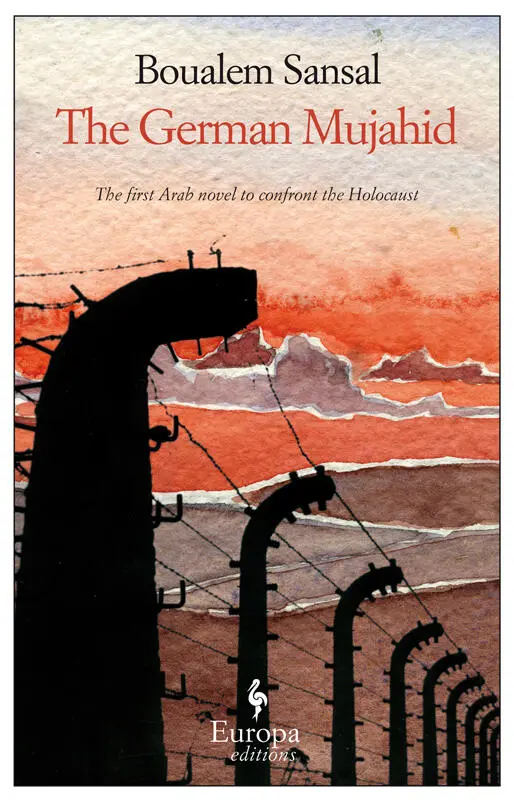
- Название:The German Mujahid
- Автор:
- Издательство:Europa Editions
- Жанр:
- Год:2009
- ISBN:нет данных
- Рейтинг книги:4 / 5. Голосов: 1
-
Избранное:Добавить в избранное
- Отзывы:
-
Ваша оценка:
The German Mujahid: краткое содержание, описание и аннотация
Предлагаем к чтению аннотацию, описание, краткое содержание или предисловие (зависит от того, что написал сам автор книги «The German Mujahid»). Если вы не нашли необходимую информацию о книге — напишите в комментариях, мы постараемся отыскать её.
is a heartfelt reflection on guilt and the harsh imperatives of history.
The two brothers Schiller, Rachel and Malrich, couldn't be more dissimilar. They were born in a small village in Algeria to a German father and an Algerian mother, and raised by an elderly uncle in one of the toughest ghettos in France. But there the similarities end. Rachel is a model immigrant — hard working, upstanding, law-abiding. Malrich has drifted. Increasingly alienated and angry, his future seems certain: incarceration at best. Then Islamic fundamentalists murder the young men's parents in Algeria and the event transforms the destinies of both brothers in unexpected ways. Rachel discovers the shocking truth about his family and buckles under the weight of the sins of his father, a former SS officer. Now Malrich, the outcast, will have to face that same awful truth alone.
Banned in the author's native Algeria for of the frankness with which it confronts several explosive themes, The German Mujahid is a truly groundbreaking novel. For the first time, an Arab author directly addresses the moral implications of the Shoah. But this richly plotted novel also leaves its author room enough to address other equally controversial issues; Islamic fundamentalism and Algeria's "dirty war" of the early 1990s, for example or the emergence of grim Muslim ghettos in France's low-income housing projects. In this gripping novel, Boualem Sansal confronts these and other explosive questions with unprecedented sincerity and courage.
The German Mujahid — читать онлайн бесплатно полную книгу (весь текст) целиком
Ниже представлен текст книги, разбитый по страницам. Система сохранения места последней прочитанной страницы, позволяет с удобством читать онлайн бесплатно книгу «The German Mujahid», без необходимости каждый раз заново искать на чём Вы остановились. Поставьте закладку, и сможете в любой момент перейти на страницу, на которой закончили чтение.
Интервал:
Закладка:
I studied so many other things. One question was never adequately answered — by which I mean in general terms, which might be applied to all the camps: what is the optimum physical condition for camp prisoners — that which best corresponds to the demands for productivity and imperatives of security? When prisoners are sick and weak, they don’t work, they are a drain on the assets of the Reich, but when they are healthy, they are dangerous: they think, they rebel, they foment unrest, organise escapes, sabotage equipment, lie to the Kapos who are too stupid to fear what they cannot see, they sap the morale of younger soldiers not yet inured to evil. This problem, which is easy to formulate but difficult to solve, was the subject of countless studies and numerous experiments. There are a number of considerations: first, the sick are not always genuinely sick. Research demonstrated that those who claimed to be at death’s door often watched countless coreligionists die before they finally succumbed; and many of those who claimed to be in perfect health were actually suicidal and attempting to kill themselves through work. These are the most dangerous prisoners, desperation makes them cunning, bitter, depraved, they are capable of anything, capable of grabbing a machine gun and firing wildly until they have emptied the last round, of setting fire to the barracks, of rushing a guard and slitting his throat or slamming him against the electric fence until their burning bodies fuse in death. The best advice, often repeated, is to flush them out and eliminate them as a warning to others or — if possible, since they represent the workforce — give them hope. There are many ways of going about this, sometimes a friendly gesture is enough to calm their self-destructive fury, often strong-arm tactics are the only solution.
In modern jargon we call this Operations Research Modelling, a particularly complex paradigm involving quantifiable behaviour models that can be studied by doctors, and other factors which cannot, like the impact of long winters on behaviour, the stench that saps the soul and tears it apart, the boundless agonising loneliness, the squabbles between prisoners, the impact of rumours, the arrival of new prisoners which may spark new tensions or bring fresh despair, the prevailing winds, what do I know, morale is like a wisp of smoke, it takes little to send it one way or the other and eventually it fades, dissipates into madness. Only the intuition and experience of old hands in the camps made it possible to overcome these problems. All of the solutions were discovered through trial and error, never in the labs in Berlin where researchers indulged in wild speculation and secret experiments. As with most problems, solutions proved more likely to present themselves in the field than in sterile, artificial reconstructions designed to impress the Bonzen , to curry favour, to earn their stripes. Small-scale models are meaningless, they have no bearing on reality, revulsion is not some minor experimental variable, it is at the very heart of the Machine. In the camps, the personnel are constantly dealing with blood and shit, they risk their souls, they struggle, everything depends on keeping up staff morale, on fostering rivalry: you organise parties, competitions, fights, you disseminate false information, tell the guards the camp is about to be liberated, that there are massive new deliveries of potatoes, of bread, of pots and pans, that the camp is to be expanded, the work detail reorganised, that real showers are being installed, that libraries will be opened, that the prisoners will be able to send letters. Why not? In a vacuum you can say anything, there is always someone who will believe it. Then again, you can do the reverse, you can crush the spirits of the guards, deprive them of everything, thrash them, spread fear, work them day and night, beat them hollow. When they have a glimmer of hope, they become animated, they work hard, they become daring, it only takes a single spark. By lying to them, blowing hot and cold at precisely the right moment, it is possible to regulate working conditions, stamp out subversion, break up factions and, in doing so, gain time and maintain — or perhaps even improve — productivity. It is the age-old method used in drilling army conscripts: you march them around for no reason until they are exhausted, force them to muster every five minutes for no reason until they are dazed, work them from dawn till dusk for no reason until they forget even the notion of freedom, organise alerts for no reason until they are constantly unsettled, punish them for no reason until they realise their lives hang by a thread, then one morning you march them out of their barracks for no reason and send them off to die somewhere else. The only difference is that, in the camps, work is death, punishment is death, cruelty is death, kindness is death, time off is death, recreation is death, rations are death, alerts are death and redundancy is summary execution. A man who dies at a yes or a no. The safest strategy, obviously, is to weed out old hands before they become inured, before they infect the new recruits. The problem with this approach is that it is the old hands, the veterans, who maintain productivity — new recruits are too terrified to work efficiently. Fear spreads, and in a twinkling fear turns to panic. This too, presents a difficult operational problem, a balance needs to be struck so that the system runs efficiently, constantly, without excessive risk. Let us not forget that the purpose of the camps is extermination, and although everyone knows this, no one says it or even thinks it — neither the prisoners, who need to cling to hope, nor their executioners, who think only of productivity — everyone behaves as though death were simply one particularly harsh punishment in the disciplinary arsenal, it is this which makes their working relationships exceptionally complex.
The running of such camps is anything but easy. When I put myself in papa’s shoes, when I consider the incredible difficulties he faced and compare them to the problems of a multinational like ours, even in an adverse economic climate, faced with criticism from newspapers, takeover bids form speculators, disloyalty from clients, edicts from civil servants and union terrorist ploys, I have to laugh. The achievements of the formidable Nazi military-industrial machine are unparalleled, they are without equal.
Was the journey necessary? Technically, no. I already knew what there was to know. What I wanted was to be in this place where my father had been, to talk to him across the years. Who else could tell me what I needed to know, what his career path had been, what his state of mind had been when he meted out death on such a scale? Had he resisted? Did he glory in his power? Why this loathing of the Jew, this all-consuming hatred? What did he think might come of it? When the Third Reich was crumbling, was papa thinking that it was the end of the world or simply the end of a world? What did he feel when the extermination camps were discovered and humanity gave a howl of terror that surely echoed to the ends of the universe? Did he suddenly come to his senses? Did he become affronted? Did he say to himself that humanity had clearly understood nothing, that at the ends of the universe the end of a world is a triviality, it is in the order of things? Chaos is born of chaos and returns to chaos, it is mathematical, it is written in the heavens. Untold civilisations, vast empires, great peoples have vanished, this is not news, the old must die to make way for the new. These questions drive me insane because I know the answer: Papa did not kill himself, did not give himself up, he ran away, he lied, he forgot. He told me nothing.
I got a room in a tiny boutique hotel as bright as a small spring sun. From my window, I could see the university in its lush, magical setting. Manicured lawns, hundred-year-old trees, hedges clipped and sculpted with lasers, fountains with, I imagine, fat fish fed by an invisible hand with the best of intentions, or at least with impeccable attention to punctuality, scale and quantity. In the middle of the campus, on a grassy hill, the majestic Johann Wolfgang Goethe-Universität sits enthroned. It is a magnificent building, stately, opulent, in delectable warm shades of stone. I thought back to my university, the École Centrale in Nantes, a poor relation by comparison. This, clearly, is a temple to science. The hordes of regimented students walking in groups or single file already had the austere, preoccupied look of veteran scientists while also being tousled, smiling, pleasantly scruffy like all students their age. The professors, old-fashioned, shambling, essentially innocuous, carrying baskets or old canvas bags, looked as though they had just arrived from the country and gone to the wrong place. Germany, I remembered, was in the throes of an environmental crisis, something that dovetailed neatly with is formidable industrial infrastructure. Leather and faux-leather satchels were clearly the fashion in Frankfurt this year. When I was a student in Nantes, it was nylon rucksacks, and I remember Monsieur Candela, self-obsessed soxiante-huitard that he was, telling me that in his day, you turned up for lectures empty-handed and left with a girl on your arm. Things change.
Читать дальшеИнтервал:
Закладка:
Похожие книги на «The German Mujahid»
Представляем Вашему вниманию похожие книги на «The German Mujahid» списком для выбора. Мы отобрали схожую по названию и смыслу литературу в надежде предоставить читателям больше вариантов отыскать новые, интересные, ещё непрочитанные произведения.







Обсуждение, отзывы о книге «The German Mujahid» и просто собственные мнения читателей. Оставьте ваши комментарии, напишите, что Вы думаете о произведении, его смысле или главных героях. Укажите что конкретно понравилось, а что нет, и почему Вы так считаете.