Andrea Barrett - The Air We Breathe
Здесь есть возможность читать онлайн «Andrea Barrett - The Air We Breathe» весь текст электронной книги совершенно бесплатно (целиком полную версию без сокращений). В некоторых случаях можно слушать аудио, скачать через торрент в формате fb2 и присутствует краткое содержание. Год выпуска: 2007, Издательство: W. W. Norton & Company, Жанр: Современная проза, на английском языке. Описание произведения, (предисловие) а так же отзывы посетителей доступны на портале библиотеки ЛибКат.
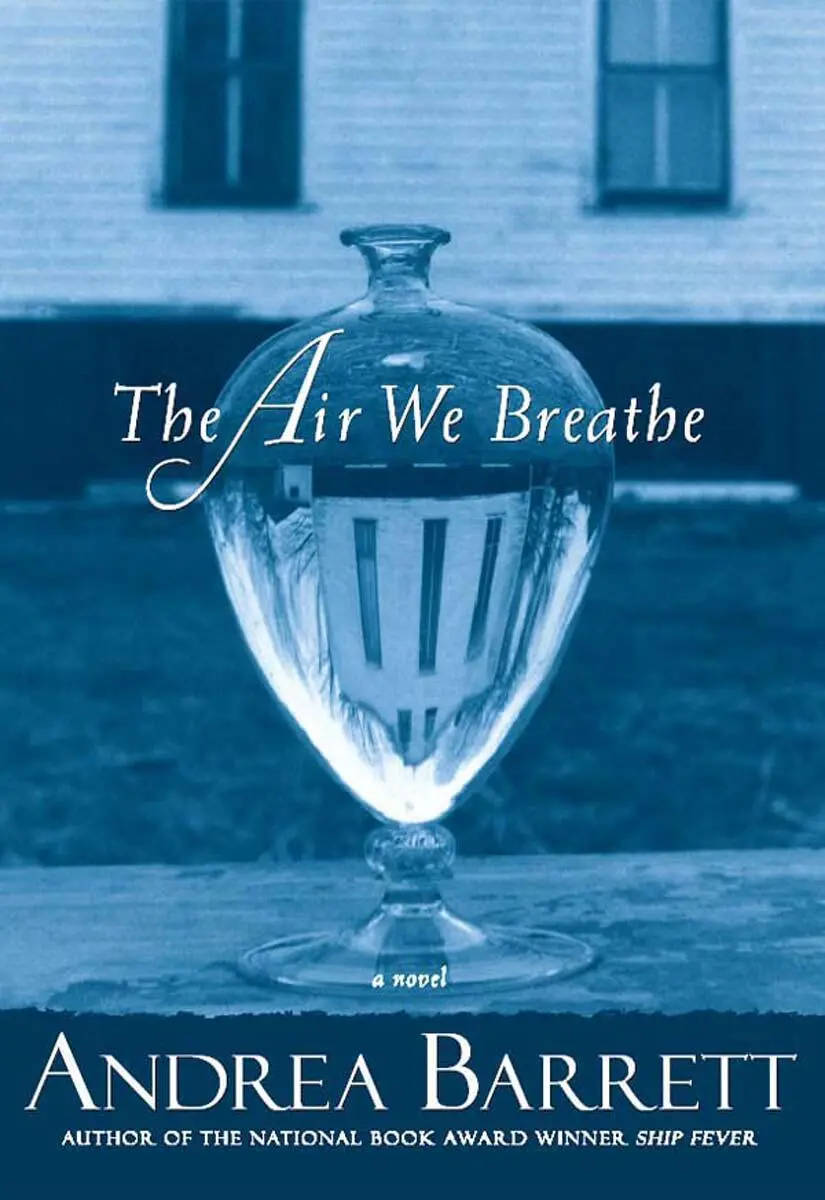
- Название:The Air We Breathe
- Автор:
- Издательство:W. W. Norton & Company
- Жанр:
- Год:2007
- ISBN:нет данных
- Рейтинг книги:3 / 5. Голосов: 1
-
Избранное:Добавить в избранное
- Отзывы:
-
Ваша оценка:
The Air We Breathe: краткое содержание, описание и аннотация
Предлагаем к чтению аннотацию, описание, краткое содержание или предисловие (зависит от того, что написал сам автор книги «The Air We Breathe»). Если вы не нашли необходимую информацию о книге — напишите в комментариях, мы постараемся отыскать её.
) by the National Book Award-winning author of
. In the fall of 1916, America prepares for war — but in the community of Tamarack Lake, the focus is on the sick. Wealthy tubercular patients live in private cure cottages; charity patients, mainly immigrants, fill the large public sanatorium. Prisoners of routine, they take solace in gossip, rumor, and — sometimes — secret attachments. But when the well-meaning efforts of one enterprising patient lead to a tragic accident and a terrible betrayal, the war comes home, bringing with it a surge of anti-immigrant prejudice and vigilante sentiment.
The Air We Breathe — читать онлайн бесплатно полную книгу (весь текст) целиком
Ниже представлен текст книги, разбитый по страницам. Система сохранения места последней прочитанной страницы, позволяет с удобством читать онлайн бесплатно книгу «The Air We Breathe», без необходимости каждый раз заново искать на чём Вы остановились. Поставьте закладку, и сможете в любой момент перейти на страницу, на которой закончили чтение.
Интервал:
Закладка:
“Edward hates the Germans too,” Miles continued. “As much as you do.” Then, while Dr. Petrie shifted uneasily from foot to foot, Miles told him about the torpedoed ship and the sunken dinosaur bones, and he displayed first Edward Hazelius’s letter and then Lawrence’s painful note.
“I hated hearing about the gas, and what you saw,” Miles said, returning the papers to his bedside table. “But it’s a relief to know that you aren’t neutral about this war either.”
“Neutral’s an odd word,” Dr. Petrie said noncommittally. His time in France had made him furious, but not only with the Germans; everyone was to blame, he thought, the generals especially. Before Miles could assign to him more opinions he didn’t truly hold, he turned away. “You need to rest,” he said. “Is there anything else I can do for you, before I go?”
With a sigh Miles eased himself back into the soft mound of pillows. “May I come visit you before our next session? I’d enjoy some time to talk alone.”
“It would be my pleasure,” Dr. Petrie said, noting that his feet were, meanwhile, backing him efficiently from the room. He didn’t share Miles’s feelings about the Germans, and the way Miles had behaved in the car had further put him off. Carrying on about how dizzy and weak he felt; leaning into Naomi Martin’s shoulder while she tried to drive and begging for sympathy: he’d hated to see that.
All through the following day he hid in the X-ray laboratory, trying to review our films but still upset at what he’d done and disturbed by Miles’s embarrassing display in the automobile. That evening he entered our dining hall at ten minutes past six, when he knew we’d all be seated. In his clean tweed suit, with his high-collared shirt and his tidy, old-fashioned boots, he stood in front of the serving tables, so small despite his excellent posture that many couldn’t see him.
“What happened yesterday afternoon,” he said, “I — there’s no excuse, I’m sorry. I haven’t been sleeping well. So much bad news, lately, about the war; it wears me down. When I read certain things in the newspapers, they set off memories that upset me. That’s no excuse, though. There’s never an excuse for such behavior and I simply want to say again: I’m sorry.”
Our weekly sessions were far from secret — anyone might join at any time, and the solarium in which we gathered was visible from the corridor — but still, those who’d never attended had little idea of what we did and were baffled by Dr. Petrie’s remarks. Some thought, as the rest of us would learn later, that he was apologizing for mistreating a patient, and that that was why his hands were shaking.
For the next few days, as he made his rounds, he was unusually attentive, lingering longer by our chairs and fussing with the blankets wrapped around our legs, but by the following Wednesday he’d put the episode behind him. Waiting impatiently in his office on the second floor of Central, one floor above the dining hall and two above the X-ray facility, he’d forgotten the look on Miles’s face when he awoke from his faint, and he was wishing he hadn’t promised to talk with him. Already it was several minutes past three, and the thought of wasting this precious hour, when taking two hours away from his work for our session was already such an extravagance, made him wild.
He’d stopped work precisely at three, wanting to be ready for Miles mentally as well as physically; his pen was capped and lay along the edge of the report he was writing for the next staff meeting. If he picked it up and began again, Miles would certainly appear in mid-sentence. If he sat here waiting Miles would never come, and he would have wasted a whole hour. If he got up and went to the window, scanning the grounds for Naomi’s Model T, either he’d see it and be annoyed at their slow progress toward his office, or he wouldn’t see it and would grow more anxious. If…
Clicking his teeth with exasperation, he sat down — eight minutes past three — uncapped his pen, and returned to the most recent set of autopsy reports. Charlie Goldstein, Frank Mistretta, Alicia Jurik; all had been in the infirmary for extended stays and each had ended by traveling late at night to the undertaker’s in the village. Behind them had followed young Dr. Dorschel, who, as Tamarack State lacked a morgue, carried a suitcase with his instruments tucked into their soft padded slots and returned after dawn with his reports. Perhaps, Dr. Petrie thought, he might recommend a raise for his young colleague.
As he read he made notes for his own report on a separate sheet of paper. Tomorrow or Friday he’d sit down with Irene, retrieving all the X-rays for each of the subjects and correlating what they’d previously read from those films with what the autopsies showed to have actually happened. Settling into the report on Charlie, feeling his mind sink into its familiar groove, he was unpleasantly surprised a few minutes later to hear, not Miles’s expected if tardy greeting but a conversation taking place just outside his door.
A female voice, which sounded annoyed, a male voice that seemed to be pleading; he couldn’t make out the words but the sound was distracting. An entire sanatorium with all its public and private rooms, the scores of sheltered corners both inside and out in which, as everyone knew and pretended not to, acts far more private than arguments took place — and this couple had to argue a foot from his office? Once more he capped his pen and lifted his shoes from the wooden footrest that a grateful patient, long since dead and autopsied, had built especially for him.
IN THE HALL, near two of the wooden chairs lined beneath the row of portraits on the wall, Miles — that was Miles out there — leaned closer toward Naomi.
A row of faces watched them: solemn men, in formal clothes, staring directly into the camera. Miles knew some of them — the governor, state representatives, members of the Board of Health and the Association for the Prevention of Tuberculosis — but at that moment he couldn’t have recognized his own mother. His whole frame was trembling. There before him stood Naomi, whom he’d almost let escape. During the drive up the hill, he’d meant to say what he’d been rehearsing in his mind all week, but he hadn’t been able to open his mouth and the ride passed silently. Then after they’d parked the automobile and walked toward Dr. Petrie’s office, Naomi had announced that instead of waiting for him in the corridor, she was going to see Eudora. Only as she’d turned to leave and as he, choking on all he’d meant to say, had reached toward Dr. Petrie’s door, had the words suddenly rushed from his mouth. “I’d like us to spend more time together,” he’d said. “In a different way, a more serious way—”
“My mother keeps me very busy,” she’d replied, looking toward the portraits.
Shy, he understood. And also caught off guard. He said, “Last week, when you held my hand in the car: that’s when I realized you understood about Lawrence. You’re the only one who does and when I’m around you I feel — you know what I’m feeling. Don’t you?”
“I have to go,” she insisted. She raised her hands and held them at her waist, palms toward him. “I promised Eudora…”
“You do know,” he said enthusiastically. “I’m so glad — I couldn’t wait anymore to tell you. It’s not that I lack willpower, but since last week I have had such a sense of our fragility — do you know what I mean? Our fragility . Time is so short, I assume that I’m getting better each day but I could just as well be getting worse. And if I am, I don’t want to die without having tried to get what I want. You must have felt this way yourself — why should we wait? Why should we put off saying what we really mean?”
Читать дальшеИнтервал:
Закладка:
Похожие книги на «The Air We Breathe»
Представляем Вашему вниманию похожие книги на «The Air We Breathe» списком для выбора. Мы отобрали схожую по названию и смыслу литературу в надежде предоставить читателям больше вариантов отыскать новые, интересные, ещё непрочитанные произведения.









Обсуждение, отзывы о книге «The Air We Breathe» и просто собственные мнения читателей. Оставьте ваши комментарии, напишите, что Вы думаете о произведении, его смысле или главных героях. Укажите что конкретно понравилось, а что нет, и почему Вы так считаете.