Andrea Barrett - The Air We Breathe
Здесь есть возможность читать онлайн «Andrea Barrett - The Air We Breathe» весь текст электронной книги совершенно бесплатно (целиком полную версию без сокращений). В некоторых случаях можно слушать аудио, скачать через торрент в формате fb2 и присутствует краткое содержание. Год выпуска: 2007, Издательство: W. W. Norton & Company, Жанр: Современная проза, на английском языке. Описание произведения, (предисловие) а так же отзывы посетителей доступны на портале библиотеки ЛибКат.
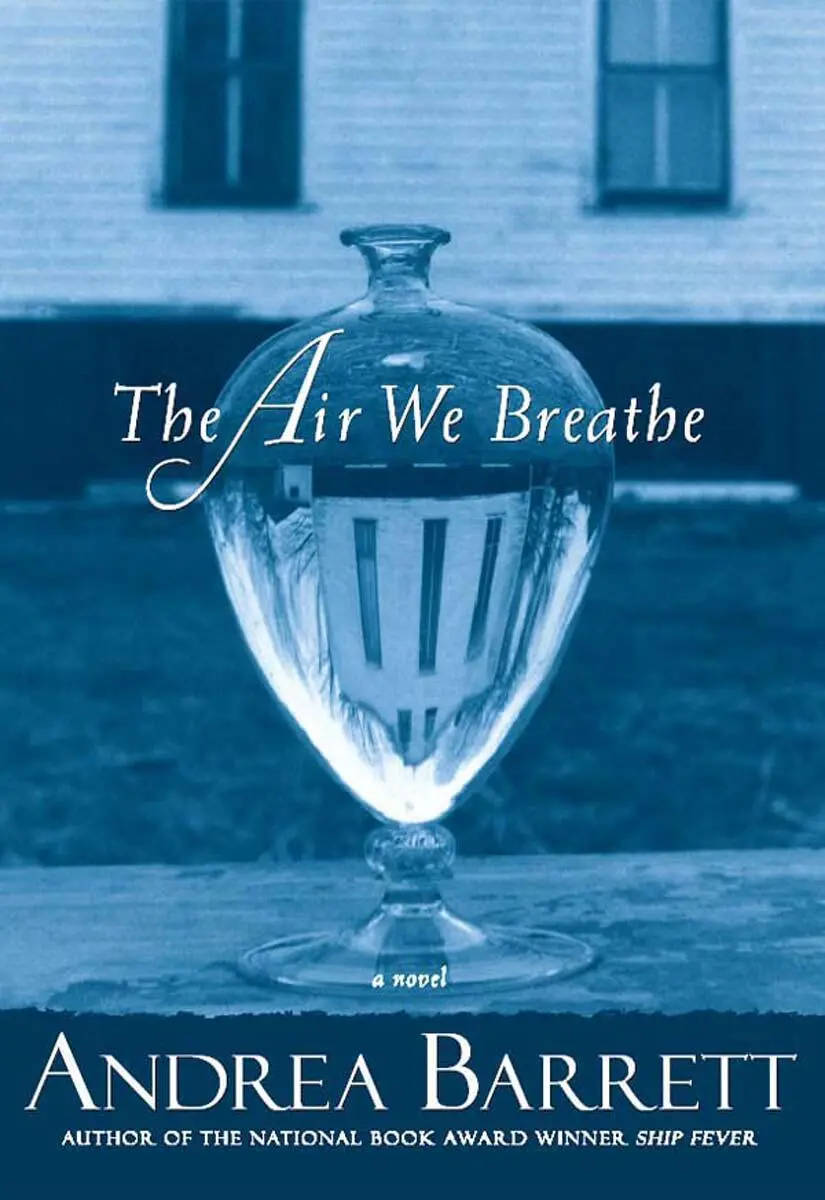
- Название:The Air We Breathe
- Автор:
- Издательство:W. W. Norton & Company
- Жанр:
- Год:2007
- ISBN:нет данных
- Рейтинг книги:3 / 5. Голосов: 1
-
Избранное:Добавить в избранное
- Отзывы:
-
Ваша оценка:
The Air We Breathe: краткое содержание, описание и аннотация
Предлагаем к чтению аннотацию, описание, краткое содержание или предисловие (зависит от того, что написал сам автор книги «The Air We Breathe»). Если вы не нашли необходимую информацию о книге — напишите в комментариях, мы постараемся отыскать её.
) by the National Book Award-winning author of
. In the fall of 1916, America prepares for war — but in the community of Tamarack Lake, the focus is on the sick. Wealthy tubercular patients live in private cure cottages; charity patients, mainly immigrants, fill the large public sanatorium. Prisoners of routine, they take solace in gossip, rumor, and — sometimes — secret attachments. But when the well-meaning efforts of one enterprising patient lead to a tragic accident and a terrible betrayal, the war comes home, bringing with it a surge of anti-immigrant prejudice and vigilante sentiment.
The Air We Breathe — читать онлайн бесплатно полную книгу (весь текст) целиком
Ниже представлен текст книги, разбитый по страницам. Система сохранения места последней прочитанной страницы, позволяет с удобством читать онлайн бесплатно книгу «The Air We Breathe», без необходимости каждый раз заново искать на чём Вы остановились. Поставьте закладку, и сможете в любой момент перейти на страницу, на которой закончили чтение.
Интервал:
Закладка:
Ephraim, unusually, had a visitor that afternoon as well. At his insistence Rosa seldom came to see him; their daughters home in Ovid needed her, as did her parents, and he counted on her to keep the family going until he was cured. His own parents had once traveled up from New York, and a few young men from Ovid, who had other business nearby, had also kindly come by at different times, but Felix hadn’t been among them and so Ephraim was surprised to see him now.
Nearly a decade younger than Ephraim, Felix was the younger brother of Rosa’s brother-in-law: high-spirited, hot-tempered, impatient with apple-picking and pruning. The Work Committee had moved him to the cannery but he hadn’t liked that either, although he’d shown a great aptitude for fixing the machines. Finally one of the foremen, tired of disciplining him but wanting to make the most of his talents, had sent him off to Syracuse, where the brothers who’d established the cannery also owned a foundry. Just before Felix arrived there, the works had been converted into a shell assembly plant. He’d been assigned to the cleaning shed, where along with sixty other men he brushed off shell casings and cleaned out the protective grease with rags dipped in gasoline.
Ephraim had never known him well, but it was pleasant to sit with Felix on one of the benches in the garden outside the solarium. With his back sheltered by the high wall and the sun beating down, he was warm enough to open his jacket while Felix tossed crumbs to the sparrows clustered around the fountain. Most of his earnings, Felix was explaining, he sent back to Ovid— home, Ephraim thought, imagining the soft brown mole on Rosa’s thigh — and soon he’d be eligible to move into the foundry itself, where he might gain some useful training.
He crumbled another stale biscuit and dotted a trail from the ground across the tip of one work boot and back to the ground again. “Will the birds follow that?” he asked.
“Watch,” Ephraim said. “They’re as tame as we are; they know we can’t do anything to them. Sometimes they take food right out of our hands.”
As a sparrow charged his boot and snatched the crumbs, Felix continued describing his plans — exactly, Ephraim thought, as if planning ever did anyone any good. Until recently, Felix said, his job had been fine, but the plant had contracts from Russia and England for millions of shells and the owners were pushing the workers to their limits. A fence had gone up around the plant; some union organizers had been arrested. Now guards searched them all for what they called “incendiary literature” before they went in, and also for actual matches: Felix’s shed, packed with workbenches on which the men kept pans full of gasoline and mounds of soaked rags, was uncomfortably near buildings filled with detonators, shrapnel, and powder. Each week the quotas increased, and also the grumbling, the late night meetings, the complaints filed with the gang foremen.
“I’m worried,” Felix said, tapping his toe until the sparrow darted away. “That something’s going to happen.”
“What would happen?” Ephraim asked.
Instead of answering him directly, Felix reached into the canvas sack he’d brought — a clean shirt and food for the train trip, Ephraim had assumed — and drew out a tin box the size of a loaf of bread.
“What’s this?”
“My friend Joe had it in his locker, and when he got suspended for gathering some of the workers together and talking about a possible strike, he slipped it to me before the guards came down to search his belongings. He said we’d all be fired if anyone saw it, and asked if I could find a safe place to hide it until some big meeting he’s going to this summer. I took it out with my dirty overalls that night, but then I couldn’t figure out what to do with it. Nothing’s private in the place where I stay.”
He opened the box and showed Ephraim the articles clipped from the Socialist papers, the IWW pamphlets, a copy of a Russian-language anarchist monthly, two compact coils of copper wire, a piece of unglazed white ceramic tile about the size of a playing card, and three pencils that did not, upon closer inspection, exactly look like pencils. Ephraim ran his hands over the wire and then turned one of the pencils around. “And this is…?”
“I wasn’t sure, at first,” Felix said. “But I read the papers like you do, I see what you see: spies have set fires with things like that. The wire, though, and the tile…maybe it’s just stuff Joe confiscated from some of the workers.”
“Why give it to you, then?”
Felix spread both hands in the air. “I don’t know. But when I asked him to take the box back, he said he couldn’t, and he made me promise to keep it safe until the summer meeting. You know what’s going on with unions all over. Things are going to be bad at our plant for a while.”
He looked at Ephraim, and then looked away. “The thing is — I told Joe I’d bring the box up here and leave it with you. You’re so far away, no one would look here for something like this. You don’t have anything like a labor movement, no strikes or demonstrations. Just sick people, and a lot of woods.”
He flushed as Ephraim frowned at him. “I know I should have asked you first.”
“I don’t see why you’d pull me into this,” Ephraim said. Framed by the garden walls, the woods meant to insulate him from both germs and worry slipped slightly out of focus, signaling more snow.
“Because,” Felix said, looking over Ephraim’s shoulder, “I’m a little bit more involved with the union organizers than I should be. And who else could I ask? You’re family.”
It was obviously wrong, Ephraim thought, and clearly risky to keep the box. Yet it was equally impossible to refuse Felix’s request. He was family, as well as a member of the Ovid community, and Felix wouldn’t ask this of him unless it was important. At the same time he wouldn’t want to be beholden. Casually, as if nothing had just happened, Ephraim turned away from the trees and said, “You’ll come back for it?”
“More likely Joe will,” Felix said. “Or another friend of his. Someone will come for it, though.”
Without transition they talked, then, about Felix’s parents and Rosa’s sisters, about Ephraim’s daughters and Rosa herself, and finally about Ephraim’s progress and when—“Only a few more months,” Ephraim said. “I feel sure of it”—he might be released and allowed to come home.
LEO LEARNED ABOUT the visit only after supper, when he and Ephraim returned to the room together. As soon as they were out on their cure chairs, Ephraim handed over the innocent-looking box and told Leo to look inside. Just as Ephraim had done, Leo stirred the papers — most no worse that what appeared in our own library after each visiting day — looked over the coils of wire and the piece of tile, and then picked up the peculiar pencils, listening as he did to Ephraim’s account of the visit.
“How involved do you think Felix is?” Leo asked.
“I don’t know,” Ephraim said. “He always exaggerates, but still — I wish I knew what he was up to. And I wish he hadn’t brought this here. He’s a good boy, though. Not such an odd duck as me, at any rate.”
“Well, but it’s not him, necessarily,” Leo said. “Just — everything’s getting so peculiar. Now some stranger is supposed to come here someday and ask for this — I wouldn’t have let Felix do that.” He frowned, thinking of all the shabby items — old guns, worn knives, homemade explosives, smeared pamphlets — he had glimpsed during his last year in Odessa. People had been arrested for nothing more than being near such things.
“You would if he was family,” Ephraim said, reminding Leo yet again of what he lacked.
Читать дальшеИнтервал:
Закладка:
Похожие книги на «The Air We Breathe»
Представляем Вашему вниманию похожие книги на «The Air We Breathe» списком для выбора. Мы отобрали схожую по названию и смыслу литературу в надежде предоставить читателям больше вариантов отыскать новые, интересные, ещё непрочитанные произведения.










Обсуждение, отзывы о книге «The Air We Breathe» и просто собственные мнения читателей. Оставьте ваши комментарии, напишите, что Вы думаете о произведении, его смысле или главных героях. Укажите что конкретно понравилось, а что нет, и почему Вы так считаете.