Andrea Barrett - The Air We Breathe
Здесь есть возможность читать онлайн «Andrea Barrett - The Air We Breathe» весь текст электронной книги совершенно бесплатно (целиком полную версию без сокращений). В некоторых случаях можно слушать аудио, скачать через торрент в формате fb2 и присутствует краткое содержание. Год выпуска: 2007, Издательство: W. W. Norton & Company, Жанр: Современная проза, на английском языке. Описание произведения, (предисловие) а так же отзывы посетителей доступны на портале библиотеки ЛибКат.
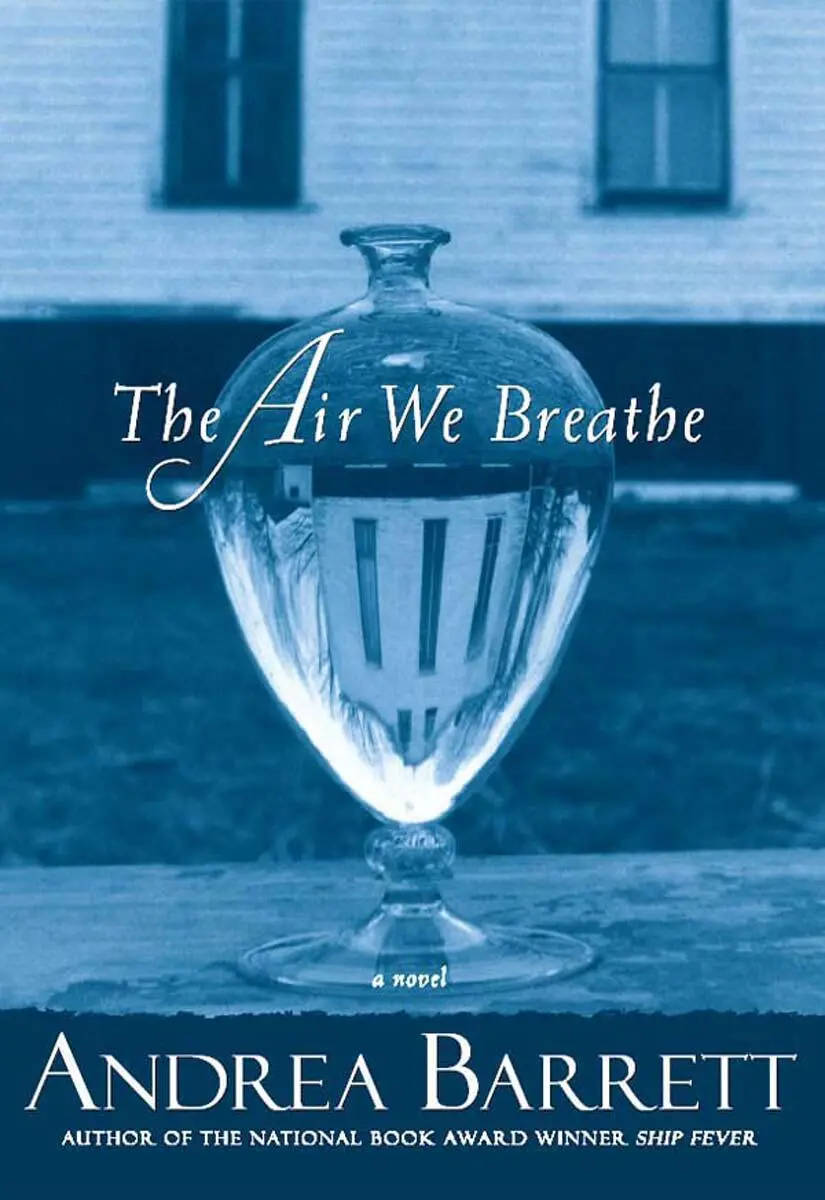
- Название:The Air We Breathe
- Автор:
- Издательство:W. W. Norton & Company
- Жанр:
- Год:2007
- ISBN:нет данных
- Рейтинг книги:3 / 5. Голосов: 1
-
Избранное:Добавить в избранное
- Отзывы:
-
Ваша оценка:
The Air We Breathe: краткое содержание, описание и аннотация
Предлагаем к чтению аннотацию, описание, краткое содержание или предисловие (зависит от того, что написал сам автор книги «The Air We Breathe»). Если вы не нашли необходимую информацию о книге — напишите в комментариях, мы постараемся отыскать её.
) by the National Book Award-winning author of
. In the fall of 1916, America prepares for war — but in the community of Tamarack Lake, the focus is on the sick. Wealthy tubercular patients live in private cure cottages; charity patients, mainly immigrants, fill the large public sanatorium. Prisoners of routine, they take solace in gossip, rumor, and — sometimes — secret attachments. But when the well-meaning efforts of one enterprising patient lead to a tragic accident and a terrible betrayal, the war comes home, bringing with it a surge of anti-immigrant prejudice and vigilante sentiment.
The Air We Breathe — читать онлайн бесплатно полную книгу (весь текст) целиком
Ниже представлен текст книги, разбитый по страницам. Система сохранения места последней прочитанной страницы, позволяет с удобством читать онлайн бесплатно книгу «The Air We Breathe», без необходимости каждый раз заново искать на чём Вы остановились. Поставьте закладку, и сможете в любой момент перейти на страницу, на которой закончили чтение.
Интервал:
Закладка:
MILES TOO WAS disturbed that week. Two letters made their way to him by different routes, the first enclosed in a small, heavy package. From Doylestown, his friend Edward Hazelius wrote:
Bad news, my friend. Not Lawrence, thank God: though it is weeks now since I’ve heard from him. Still this is the ruination of so much that mattered to us. Virtually all of the excellent duck-billed dinosaur bones that we shipped east with the rest of the expedition’s finds, and which were destined for the museum in London, are lost. The steamer bearing them from Halifax was torpedoed by a U-boat and now lies at the bottom of the sea. Some but not all of her crew were saved by a passing merchant ship. All the fossils are gone. When I think of our efforts, all our chipping and brushing and plaster bandaging and the work to get these into the wagons and onto the flatboat, not to mention the efforts of those who for two years have been restoring the bones and preparing them for shipment — I can’t believe it’s all been lost in an instant’s vandalism.
I wish we would just fight —don’t you? It is inevitable that we enter this war, every day we put it off only makes our position more false. It makes me ashamed to be an American and if I were younger I would do what Lawrence has done, I would run up to Canada and enlist right now and hope to take my revenge on those who sent our beautiful duckbills down. I am sorry to be the bearer of this bad news but I knew you would want to know. Lawrence fights for something; there is that.
I am sending along — it’s an early Christmas present, I have an excuse — an odd thing that might comfort you. You will remember my great-aunt Grace, who showed us our first fossils. Last month, cleaning out the attic, Mrs. Smithson found some crates of books that Grace had stored there years ago. All are copies of a tract written by Samuel Bernhard, who was my great-great-grandfather. Do you remember flipping through this same book when we were boys? I didn’t understand the family connection then.
As wrongheaded as the book seems now, I cherish it as one of the things that got us interested in the field, and I thought you might like a copy of your own. May it cheer you during your long evenings in bed. I’ll be thinking of you reading it as I travel through Arizona (which is where I am going for the Christmas holidays; a tiny excursion, much diminished by your absence).
You will have heard from Mr. Maskers that there have been some small incidents at your plant as well as mine. Nothing to worry about, it is just the usual unrest. The troublemakers have been fired.
Inside the package was a brown book, smelling of leather and mold. Miles felt nothing when he looked at it. No wave of nostalgia, no stab of recognition. Why would he want this old tract, more theology, really, than paleontology? Edward’s great-aunt he could hardly remember; her face had vanished, and when he thought of her now he remembered only her narrow, wrinkled hands, cupping fossils or writing with her darting, vertical strokes. He wanted not reminders of his past but Arizona, the bone quarries, mountains, crisp air. Travel, freedom, work. In the absence of those he wanted, at least until he got the second letter two days later, news from Lawrence.
I haven’t written to my father. What would I say? I’m alive. I can’t tell you what this has been like. What I have seen. What I have done. Nor can I tell you where I am now. Dirt above me, mud below, live men sleeping next to me and dead men crumbled all around, as thoroughly mixed with the soil as if they were designed all along to be fertilizer.
A white mist hides us completely this afternoon. I can hear but not see the men around me. I can see this paper only when I hold it close to my face. The air is still, the mist doesn’t move. Mist, gas, fog, smoke — I can’t tell the difference anymore until it’s too late but before it came I was watching a dead plane, caught in the tree next to me. The man inside, charred quite black with his arms and legs burned off, looked like a cigar. I miss you and think often of our time together in Alberta.
8
SHORTLY AFTER MILES got those letters, and with no understanding of how they might affect us, we gathered for our usual Wednesday session. We were looking forward to it more eagerly than usual; it was Dr. Petrie’s turn to speak, and we thought we might learn something new about him. He knew parts of us that we didn’t know ourselves: not just the calcifications in our lungs, the tubercular lesions on our bones, the sores and infections we concealed from each other beneath our clothes, but also what we looked like when he gave us bad news. What happened to our faces when he said, gravely, that we must resign ourselves to another six months or a year inside these walls. For all he knew about us, though, we knew almost nothing then about his personal life.
Back then, he wouldn’t have told us, for example, why he was so short. It wouldn’t have seemed right to him that we should know about his own case of tuberculosis, which had infected his spine when he was a boy, permanently stopping his growth before he reached five feet tall and deforming his vertebrae. Although the pain sometimes made him absentminded and curt, he concealed the cause, just as he dressed to disguise the curve below his neck and the lump where his shoulder was misaligned. That day, in fact, he entered the room rubbing his shoulder but stopped as soon as he saw Ephraim noticing.
Christmas was only a few weeks away, and the staff had hung huge garlands from the rafters and decorated an enormous tree. The resemblance between the cloth wrapped around its base, and the green tartan scarf of the same pattern pushing out Dr. Petrie’s pointed beard, distracted some of us. He smiled above the scarf, released his shoulder, and started our eighth session by saying he wanted to discuss what he’d seen in France during the spring of 1915. The French government, he explained, had asked him to visit their military hospitals and evaluate their plans for the treatment of tubercular soldiers.
“Miles has been telling me about his young friend Lawrence, who’s off fighting with the Canadian forces,” he added, “and that made me think again about my own time there. I’ve been meaning to write this down.” He looked at something in his lap. “I know these talks are meant to be informal. But I never could speak without notes, so I hope you won’t mind if I read from these.”
Usually he stood over us as we lay passively in bed; he asked and we answered; he wrote down, with sharp and vigorous strokes, what our bodies revealed. On his rounds his manner was so strong and reassuring that we often forgot how tiny he was beneath his stethoscope and starched white coat. But here, as he joined our circle as an equal, his hands shook as he fingered his index cards, his voice trembled, and he couldn’t hide the fact that he had to point his toes to reach the floor. He was nervous, the rest of us realized. Perhaps because of that, his description of the spread of tuberculosis in France was a little dull.
In a light, dry voice he spoke about the rapid mobilization of the French army and the failure to thoroughly examine all the troops. Many, he explained, suffered from latent or incipient tuberculosis, which in the cold, wet conditions of the trenches had quickly developed into active disease and, in the overcrowded billets, had spread rapidly among the men. Lydia made a face at Nan, who raised her eyebrows in response — was this something we wanted to hear? — but Dr. Petrie didn’t notice, instead taking encouragement from the expression of interest on Eudora’s face. The sickest had been sent back home, he continued, where there were no trained tuberculosis nurses, very few sanatorium beds, and no special wards in the hospitals. Paris, where the soldiers mingled with the refugees who’d fled the German invasion, was the worst, and few of the French doctors were as experienced as any sanatorium doctor here. He’d visited hospitals and refugee centers and military encampments and prisons, making recommendations and gathering data for his reports. Some of the data he had here, summarized on these cards…
Читать дальшеИнтервал:
Закладка:
Похожие книги на «The Air We Breathe»
Представляем Вашему вниманию похожие книги на «The Air We Breathe» списком для выбора. Мы отобрали схожую по названию и смыслу литературу в надежде предоставить читателям больше вариантов отыскать новые, интересные, ещё непрочитанные произведения.






Обсуждение, отзывы о книге «The Air We Breathe» и просто собственные мнения читателей. Оставьте ваши комментарии, напишите, что Вы думаете о произведении, его смысле или главных героях. Укажите что конкретно понравилось, а что нет, и почему Вы так считаете.