Andrea Barrett - The Air We Breathe
Здесь есть возможность читать онлайн «Andrea Barrett - The Air We Breathe» весь текст электронной книги совершенно бесплатно (целиком полную версию без сокращений). В некоторых случаях можно слушать аудио, скачать через торрент в формате fb2 и присутствует краткое содержание. Год выпуска: 2007, Издательство: W. W. Norton & Company, Жанр: Современная проза, на английском языке. Описание произведения, (предисловие) а так же отзывы посетителей доступны на портале библиотеки ЛибКат.
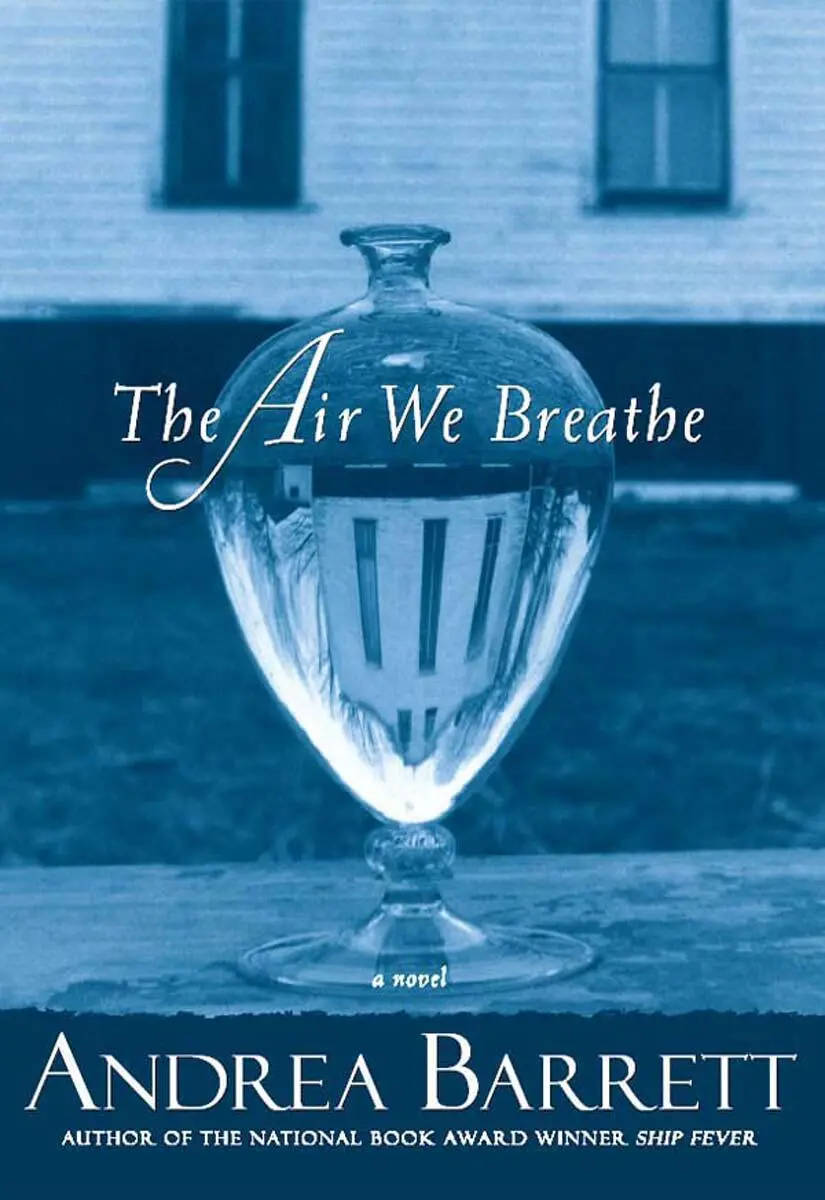
- Название:The Air We Breathe
- Автор:
- Издательство:W. W. Norton & Company
- Жанр:
- Год:2007
- ISBN:нет данных
- Рейтинг книги:3 / 5. Голосов: 1
-
Избранное:Добавить в избранное
- Отзывы:
-
Ваша оценка:
The Air We Breathe: краткое содержание, описание и аннотация
Предлагаем к чтению аннотацию, описание, краткое содержание или предисловие (зависит от того, что написал сам автор книги «The Air We Breathe»). Если вы не нашли необходимую информацию о книге — напишите в комментариях, мы постараемся отыскать её.
) by the National Book Award-winning author of
. In the fall of 1916, America prepares for war — but in the community of Tamarack Lake, the focus is on the sick. Wealthy tubercular patients live in private cure cottages; charity patients, mainly immigrants, fill the large public sanatorium. Prisoners of routine, they take solace in gossip, rumor, and — sometimes — secret attachments. But when the well-meaning efforts of one enterprising patient lead to a tragic accident and a terrible betrayal, the war comes home, bringing with it a surge of anti-immigrant prejudice and vigilante sentiment.
The Air We Breathe — читать онлайн бесплатно полную книгу (весь текст) целиком
Ниже представлен текст книги, разбитый по страницам. Система сохранения места последней прочитанной страницы, позволяет с удобством читать онлайн бесплатно книгу «The Air We Breathe», без необходимости каждый раз заново искать на чём Вы остановились. Поставьте закладку, и сможете в любой момент перейти на страницу, на которой закончили чтение.
Интервал:
Закладка:
We avoided each other’s eyes. For the last couple of months we’d been able to read current news about the war, thanks to a doctor in New York who, when Dr. Petrie complained to him about our wretched library, had started gathering up the daily papers and sending them in batches on the train. Now that we had those, what we most wanted was an insider’s view of the war, but this wasn’t it. There were charts involved, some tables and figures. Our eyes glazed over even as Miles leaned forward avidly.
When Dr. Petrie finished we murmured politely; Pietr complimented him on his scarf and Olga praised the neatness of his tables. We managed not to say to each other what we thought, or how much better we would have liked learning something about his personal life, but the following week only half of us showed up. Once more we prepared ourselves for a dry set of facts. During that second talk, though, Dr. Petrie surprised us, shedding his nervousness along with the foolish scarf. After a few sentences about the care of tubercular soldiers, he was suddenly describing the early days of that May, when along with every other available physician and scientist in the country he’d been rushed to an enormous makeshift hospital to help treat the victims of the first German gas attacks.
He spoke about his hurried journey, the sidewalk cafés crowded with little tables and the men walking with bareheaded girls, soldiers and sailors from Siam and Senegal mingled with poilus and Tommies. “Plane trees,” he said, looking at the wall across the room as if they were painted there, “and the gardens, the thatched roofs, the pears espaliered on the walls — you should see what they do with fruit trees over there.”
He described the fields, which like those back here were filled with clover and alfalfa and rye but dotted unfamiliarly with brilliant poppies. As he made those leap before our eyes we began to see what he’d seen — it was beautiful, he said, the undamaged parts of France were so beautiful — and so we also saw the desolation as he neared the front, the shattered trees and the churned-up ground, the twisted wrecks of automobiles and, once he reached Boulogne, the far worse wrecks of men.
Near Ypres, he said, the Germans had released a poisonous gas, which had killed thousands of French troops and wounded thousands more; a few days later more had been released, this time against a Canadian battalion (here Miles drew a sharp breath); other attacks had followed swiftly and no one knew how to care for the casualties. Those who hadn’t died in the trenches or dropped as they tried to run away had collapsed in the primitive treatment posts just behind the front.
“When I saw those men,” Dr. Petrie said, “I — nothing could have prepared me for the shock.”
His feet fluttered against the lower rung of his chair. Gas warfare, he said indignantly, was the exact reverse of everything he’d spent his life learning to fight. He knew more acutely than most what those victims were suffering and he thought that we, so alert to the difficulties of living with imperfect lungs, might also sense what those men had been through. We did, we were fascinated by what he said but shaken too, and most of us would have been glad if he’d stopped then. But something about what he’d seen made him keep talking and us keep listening. We took no break, instead sitting horrified in our circle as he continued.
“There was a cloud,” he said. “A green cloud half a mile deep and four miles long moving slowly toward the trenches, with the wind.”
During the first minutes, the survivors told Dr. Petrie, the cloud caused simply a cough and a dry mouth. Before long, though, the gas — a corrosive poison, Dr. Petrie noted — stripped the lining from the bronchial tubes and the lungs and caused an instant inflammation. Men coughed up cupfuls of foamy yellow fluid; some coughed so hard they ruptured their lungs; men frothed and drowned in their own fluid before his eyes. A few who’d had some high school chemistry recognized the smell as chlorine and remembered that the ammonia in urine would neutralize its effects. Those few had told everyone they could to piss on their socks and handkerchiefs and stuff them in their mouths. Through the clouds rolling over them, they’d seen German troops bending over cylinders while peering through the single gleaming lenses of their hoods.
But truthfully, Dr. Petrie said, most of the soldiers he saw in the hospital had told him nothing; they’d choked and gasped and coughed and heaved and died. With the other visiting doctors and scientists he’d run around, uselessly trying to ease the men’s sufferings. By the time he saw them they were drowning, lying motionless and slowly drowning, their faces first blue and then finally black. He had thought then, he said — by now he’d crushed the index cards in his hand — that a nation that could in cold blood implement such a foul method of warfare should not be permitted to exist, should itself be strangled and made to suffer.
Across the circle from him, Miles, who had grown very pale, gripped his knees. “They should, ” he whispered.
Anyone might have said something here; a number of us had relatives, or had once had relatives, either in that sprawling chunk of Europe now called the Central Powers or nearby, in places overrun by them. We hadn’t done this, not us, not people we knew — but then, who? Leo and Ephraim, startled by Miles’s muffled comment, exchanged glances. Dr. Petrie took a long, raspy breath and then continued.
“Since I couldn’t help directly,” he said, more quietly than before, “I tried to learn what I could from the deaths of those men, in the hope of helping to develop suitable protection. At the autopsies I attended I saw the lungs push forward the instant the chest was opened, running with frothy yellow fluid, the sight as bad, perhaps worse, than the most grossly tubercular lung, and this made me wonder if—”
Miles’s hands slipped from his knees. His lips, turning as pale as the rest of his face, opened, and he fell to the floor in a faint.
AFTERWARDS DR. PETRIE could not believe what he had done. Our circle of wan, unhealthy faces gazing at him so earnestly — what had he been thinking, talking to us about ruptured lungs? Now, when we’re all thrown so much more closely together and have so little privacy, he will sometimes admit that back then he’d been lonely and that, although he’d worried about joining our circle on terms of such equality, at the same time he’d been unable to resist the lure of our weekly gatherings. Also he admits that, once he started, he’d simply forgotten his audience. Only when Miles slumped to the floor had he understood what he’d done.
The meeting ended in chaos, most of us stumbling out, frightened and worried, as Dr. Petrie resuscitated Miles with Eudora’s help. A few minutes later, he eased Miles into Naomi’s car and then offered to drive down with her, in case Miles felt faint again.
“He’ll be fine,” she said, at the same time squeezing Miles’s hand reassuringly. “It’s just — your story made him think about his friend Lawrence, I think. Come if you want.”
What an idiot he’d been. After stumbling out a string of apologies he sat silently in the back seat, appalled by what he’d done, and then at Mrs. Martin’s house hastily explained what had happened before escorting Miles up to his beautifully furnished room.
“I have no children,” Dr. Petrie told Miles, easing him into the clean, fresh sheets and pulling up the blankets. “No family at all. I sometimes think that makes me insensitive to the attachments of others.”
Miles reached for a light brown shawl and said, “Lawrence’s father gave me this.”
What was it made of? Dr. Petrie wondered as he draped it over Miles’s shoulders. Cashmere, musk ox, something rare and costly; it was amazingly soft: alpaca, perhaps? Everything in this room, he could not help noting, from the silver brushes to the monogrammed pajamas and fleece-lined slippers, was expensive and elegant, whereas his own rooms at the sanatorium were dreadfully bare and his few luxuries — a heavy robe, that green tartan scarf — had been left to him by grateful patients whom he’d lost.
Читать дальшеИнтервал:
Закладка:
Похожие книги на «The Air We Breathe»
Представляем Вашему вниманию похожие книги на «The Air We Breathe» списком для выбора. Мы отобрали схожую по названию и смыслу литературу в надежде предоставить читателям больше вариантов отыскать новые, интересные, ещё непрочитанные произведения.









Обсуждение, отзывы о книге «The Air We Breathe» и просто собственные мнения читателей. Оставьте ваши комментарии, напишите, что Вы думаете о произведении, его смысле или главных героях. Укажите что конкретно понравилось, а что нет, и почему Вы так считаете.