Andrea Barrett - The Air We Breathe
Здесь есть возможность читать онлайн «Andrea Barrett - The Air We Breathe» весь текст электронной книги совершенно бесплатно (целиком полную версию без сокращений). В некоторых случаях можно слушать аудио, скачать через торрент в формате fb2 и присутствует краткое содержание. Год выпуска: 2007, Издательство: W. W. Norton & Company, Жанр: Современная проза, на английском языке. Описание произведения, (предисловие) а так же отзывы посетителей доступны на портале библиотеки ЛибКат.
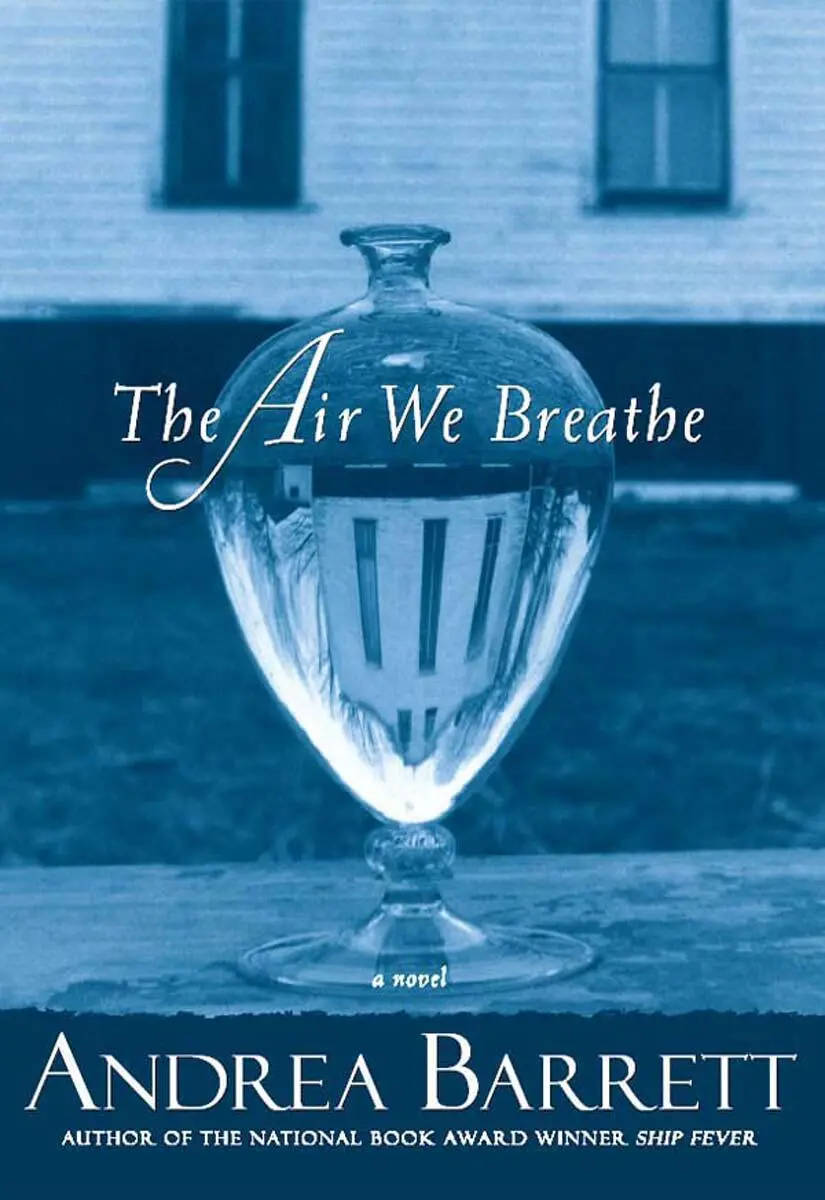
- Название:The Air We Breathe
- Автор:
- Издательство:W. W. Norton & Company
- Жанр:
- Год:2007
- ISBN:нет данных
- Рейтинг книги:3 / 5. Голосов: 1
-
Избранное:Добавить в избранное
- Отзывы:
-
Ваша оценка:
The Air We Breathe: краткое содержание, описание и аннотация
Предлагаем к чтению аннотацию, описание, краткое содержание или предисловие (зависит от того, что написал сам автор книги «The Air We Breathe»). Если вы не нашли необходимую информацию о книге — напишите в комментариях, мы постараемся отыскать её.
) by the National Book Award-winning author of
. In the fall of 1916, America prepares for war — but in the community of Tamarack Lake, the focus is on the sick. Wealthy tubercular patients live in private cure cottages; charity patients, mainly immigrants, fill the large public sanatorium. Prisoners of routine, they take solace in gossip, rumor, and — sometimes — secret attachments. But when the well-meaning efforts of one enterprising patient lead to a tragic accident and a terrible betrayal, the war comes home, bringing with it a surge of anti-immigrant prejudice and vigilante sentiment.
The Air We Breathe — читать онлайн бесплатно полную книгу (весь текст) целиком
Ниже представлен текст книги, разбитый по страницам. Система сохранения места последней прочитанной страницы, позволяет с удобством читать онлайн бесплатно книгу «The Air We Breathe», без необходимости каждый раз заново искать на чём Вы остановились. Поставьте закладку, и сможете в любой момент перейти на страницу, на которой закончили чтение.
Интервал:
Закладка:
He reached for one of her hands but stopped the instant she pulled back. Of course it was far too soon to touch her; she was young and it must be confusing, even embarrassing, to be talking about their feelings so directly. But the dark cloud that had filled his eyes during Dr. Petrie’s talk, the sense of the cold floor drawing him magnetically and the terror of waking without knowing where he was, longing for his mother and Edward and Lawrence but finding no one who loved him, only strangers, pushed him on.
“I don’t mean to rush,” he said more quietly, “but I want you to know how I feel, and I don’t want to waste too much time. It’s fortunate that we’re in the same household and that we have so many opportunities to see each other. Perhaps, though, we could also have a meal together outside your mother’s house, or take a ride together to Lake Placid?”
“I have to go, ” she said, and darted down the hall. For a minute Miles, his body still vibrating, stood staring after her. Her shoulders, so slim and straight in her white blouse. Her waist, so small inside the belt that cinched the folds of her skirt, and below that — it wasn’t his fault, surely, that he noticed this; skirts were startlingly short now — her stockings visible above the tops of her narrow boots. So finely put together, so healthy and yet so diminutive that even he might hope to pick her up. Still imagining what it might feel like to circle her waist and lift her off the ground, he tapped on Dr. Petrie’s door, already twenty minutes late, and let himself inside.
There Dr. Petrie sat as Miles threw himself, without an apology, into the armchair across from the desk. There he sat, as, except for his time in France, he’d sat for nearly twenty years, listening not only to us but to our benefactors, our overseers, our families, and our enemies, listening as Miles recounted his conversation with Naomi. Once he interrupted to say, “You’re not dying, ” but otherwise he was quiet. Dr. Richards had introduced him to other rich men, who like Miles ran important companies or managed huge plants; usually their reserve was impenetrable. Perhaps Miles was sicker than he’d guessed.
Longing to take his guest’s temperature and to have Irene look inside his lungs, he said, “Did you really tell her all of that?”
“It all came out of me at once,” Miles said, causing Dr. Petrie to imagine, unpleasantly, a spill of dark fluid. “But where’s the harm? She needs to know that the differences between us mean nothing at all.”
“Oh, dear,” Dr. Petrie murmured. Worse than he’d thought. “What is she, nineteen?”
“Eighteen,” Miles said. “It doesn’t matter. You see the way she is at our sessions, she listens with such attention, soaking in every scrap of information. She wants to learn, I know she does. And she has no money of her own. I could give her that, as soon as I’m better I could give her whatever she wanted. I know I could make her happy.”
“You want to marry her?”
“Twice before this has happened to me, I was very attached to two other women but both times my health interfered. I didn’t think it was fair to ask either of them to wait, or to burden them with my condition. But it’s different with Naomi. She’s grown up among people like me. She’s helped her mother all her life, she understands. And I am”—here Miles puffed out his concave chest, smoothing his thin lusterless hair with a hand on which, Dr. Petrie saw, the skin had the texture of crumpled paper—“You’re the only one I can say this to. I’m in love with her. If she’d let me court her seriously, I think there’s a real chance she could come to have feelings for me.”
“I don’t know what your own physician tells you,” Dr. Petrie said, looking down at his legs. His suit was getting shabby, he saw. Miles’s trousers were very much nicer, a soft matte herringbone. “But if you were a patient here, you would have heard me say this a hundred times: it’s not your job to fall in love, or out of love, or grow anxious or over-emotional or have arguments. Your job is to lie still, to breathe the fresh air. And to get better. Really,” he said, pushing together his autopsy reports, “really I will hear no more of this. Now if you would like to talk about something sensible, I would be delighted.”
Miles looked down at his knees. “Forgive me,” he said. “I should keep my feelings to myself.”
“Better to keep them firmly in check,” Dr. Petrie said. “Best not to have them at all.” He looked at his watch. “We only have a few minutes before our session. Why don’t you tell me about one of your other trips, before you went to Canada. Where else have you been?”
Obediently, his heart racing, his mind moving kaleidoscopically among images of Naomi enjoying his house in Doylestown, picking snapdragons in the garden, walking beside him to Edward’s house with her narrow feet in fresh new pumps that were strapped at the instep and trimmed with bows, Miles smoothed the excitement from his face and, gazing just past Dr. Petrie’s chin, talked about Nebraska.
9
WE MISSED THOSE discussions; what we saw was the two men entering the solarium together, Dr. Petrie with his lips in the thin crinkled shape they sometimes formed when he was angry with one of us but trying to conceal it, and Miles flushed and feverish-looking, his hair stuck moistly to his head. They showed up at exactly four o’clock — usually Miles was a few minutes early — and were followed five minutes later by Eudora and Naomi, one pale and worried and the other pink. Four faces, none looking quite normal, arriving at odd times and in odd pairs — usually a sight like that would have fueled gossip not only during our break but for several weeks to come. We were so lethargic, though, that we hardly noticed what was going on.
This was our last session before Christmas, and we knew that several weeks would pass before we had another. Our December movie night had been a disappointment — the drama we saw had made us all uneasy, especially when the courtroom cheered on the cheating young wife as she cast blame for her theft on a Burmese businessman — but even so, we grew bleak thinking about the time until the next distraction, especially since the weather had grown so harsh. The snow, which had fallen generously around Thanksgiving, had melted and then withdrawn itself so that now, although the temperature had not been above twenty degrees for a week, the ground was flinty and dark. The evergreens looked black against the sky, even the ice on the pond looked dark; the birds were silent and the wind droned day and night. We were a day from the winter solstice, Otto had said earlier that afternoon. A day from the shortest, darkest day of the year. That we felt so low, so empty and dull, was the combined result of our disease and of the sun’s refusal to climb higher in the sky.
Apathetically we drifted, at the beginning of this tenth session, into the empty circle of chairs we’d left the previous week. Several of our regulars were absent, too droopy even to rise from their beds, but this was less noticeable because we’d also gained a person: Irene Piasecka, who after listening to both Eudora and Dr. Petrie had decided to investigate our sessions for herself. Miles was sitting on one side of Dr. Petrie but the chair to his left was open, and she settled herself and then leaned over to whisper in his ear.
“You don’t mind?” she asked. “I’ve been wanting to see what this is like.”
“Of course not,” he replied. Late at night, in her laboratory, he’d talked for too long about the mistakes he’d made during his presentation and also afterwards, in Miles’s room; she’d listened patiently and tried to persuade him not to apologize publicly. Bad advice, he’d thought then, although usually he trusted her. Now, wondering if his abject little speech in the dining hall had somehow made possible Miles’s confession, he thought she’d been right but he was still taken aback by her presence. Was she here to keep an eye on him? Surely it was Miles, beaming across the circle at Naomi, who needed watching.
Читать дальшеИнтервал:
Закладка:
Похожие книги на «The Air We Breathe»
Представляем Вашему вниманию похожие книги на «The Air We Breathe» списком для выбора. Мы отобрали схожую по названию и смыслу литературу в надежде предоставить читателям больше вариантов отыскать новые, интересные, ещё непрочитанные произведения.









Обсуждение, отзывы о книге «The Air We Breathe» и просто собственные мнения читателей. Оставьте ваши комментарии, напишите, что Вы думаете о произведении, его смысле или главных героях. Укажите что конкретно понравилось, а что нет, и почему Вы так считаете.