Andrea Barrett - The Air We Breathe
Здесь есть возможность читать онлайн «Andrea Barrett - The Air We Breathe» весь текст электронной книги совершенно бесплатно (целиком полную версию без сокращений). В некоторых случаях можно слушать аудио, скачать через торрент в формате fb2 и присутствует краткое содержание. Год выпуска: 2007, Издательство: W. W. Norton & Company, Жанр: Современная проза, на английском языке. Описание произведения, (предисловие) а так же отзывы посетителей доступны на портале библиотеки ЛибКат.
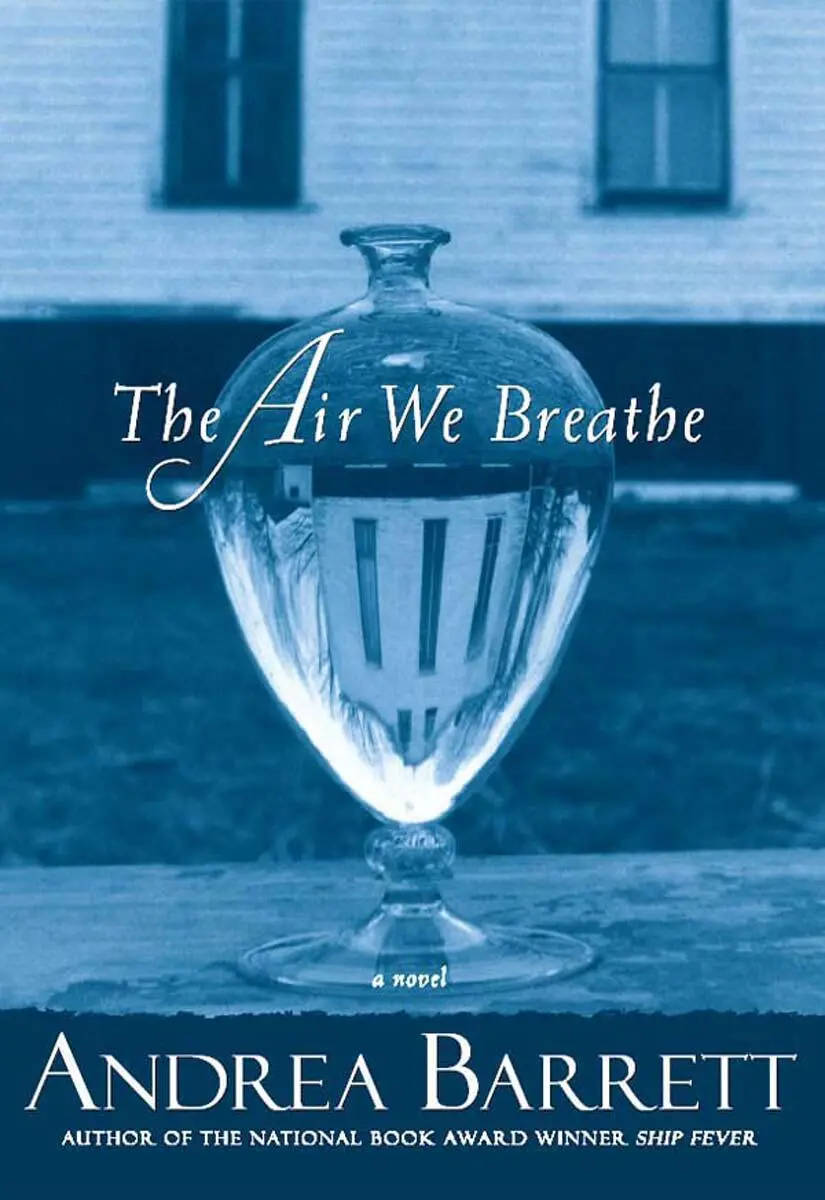
- Название:The Air We Breathe
- Автор:
- Издательство:W. W. Norton & Company
- Жанр:
- Год:2007
- ISBN:нет данных
- Рейтинг книги:3 / 5. Голосов: 1
-
Избранное:Добавить в избранное
- Отзывы:
-
Ваша оценка:
The Air We Breathe: краткое содержание, описание и аннотация
Предлагаем к чтению аннотацию, описание, краткое содержание или предисловие (зависит от того, что написал сам автор книги «The Air We Breathe»). Если вы не нашли необходимую информацию о книге — напишите в комментариях, мы постараемся отыскать её.
) by the National Book Award-winning author of
. In the fall of 1916, America prepares for war — but in the community of Tamarack Lake, the focus is on the sick. Wealthy tubercular patients live in private cure cottages; charity patients, mainly immigrants, fill the large public sanatorium. Prisoners of routine, they take solace in gossip, rumor, and — sometimes — secret attachments. But when the well-meaning efforts of one enterprising patient lead to a tragic accident and a terrible betrayal, the war comes home, bringing with it a surge of anti-immigrant prejudice and vigilante sentiment.
The Air We Breathe — читать онлайн бесплатно полную книгу (весь текст) целиком
Ниже представлен текст книги, разбитый по страницам. Система сохранения места последней прочитанной страницы, позволяет с удобством читать онлайн бесплатно книгу «The Air We Breathe», без необходимости каждый раз заново искать на чём Вы остановились. Поставьте закладку, и сможете в любой момент перейти на страницу, на которой закончили чтение.
Интервал:
Закладка:
Naomi finished shading Leo’s cheekbones as Miles, who so far had said nothing, chimed in, “But ours won’t.” Keeping his eyes on Dr. Petrie, Miles added, “Although we are a small group, I think of this room as a kind of laboratory, and what we do here as something that might change all of us.”
“Change,” Dr. Petrie said, “is…”
“Change,” Irene said at the same moment, “follows…”
Both sentences got lost in the discussion, during which many of us spoke at once while Arkady, clearly pleased with what he’d started, did his best to orchestrate. Only Eudora and Naomi contributed nothing. Watching Naomi sketch an elaborate border, Eudora thought about the drawings Naomi had given her over the years, some of which had lost their meaning. In that way they resembled the tiny, crumpled leather boot her great-uncle Ned had pressed on her long ago. Hands shaking, eyes milky, he’d mumbled a story: he’d loved the woman to whom it had once belonged, or he’d had a friend who had loved the woman? She hadn’t paid attention, although she’d been fond of him. But because she’d been absorbed in something else, she now had the boot but not its meaning, the relic but not the story. If someday she had a daughter of her own and wanted to pass on this bit of family history, the lost context would be her fault. Naomi’s drawing, she thought, would lose its meaning in just the same way.
She was wrong about this, of course. Later we’d all know what the drawing meant, and we’d wonder what would have happened if Leo had seen it that day. But as Naomi was drawing and we were arguing and Eudora was remembering her great-uncle Ned, Leo was focused almost entirely on Eudora. If she’d mentioned him to Irene, then she must be aware of him. If she remembered that Irene might help him, then she knew who he was? He was so delighted he could hardly keep from reaching over to her.
Some of us had already noticed how, no matter who was speaking, Leo studied Eudora; how he managed to post himself next to her during our coffee breaks and to sit across from her, so she was always in his gaze. Still it was Irene, new to our circle and alert to Leo after their brief exchange, who noticed his expression most clearly. At the end of the session, as we were trickling from the room, she and Eudora paused by the door. When Leo passed by them, she nodded and said, “I do hope you’ll come visit.”
“I will, ” he said. “Very soon.” He waited, but when neither woman moved, he said a few words to Miles and then reluctantly joined Ephraim and Arkady in the hall.
“You didn’t tell me he was so interested in you,” Irene said to Eudora.
“Leo?” Eudora said.
“He never takes his eyes off of you.”
“Not me,” Eudora said, anxious to correct her misunderstanding. “It’s Naomi he must be looking at.” She looked back over her shoulder, toward where Miles and Naomi, standing near the fireplace, seemed to be arguing.
“It’s not,” Irene said, shaking her head. “But that’s your business, not mine. Would you like to join me tonight? We could spend a few hours reviewing films while we gather material for Dr. Petrie’s Monday meeting.”
By then she’d seen in Eudora a quality that many of us had missed: whatever absorbed her, absorbed her completely. In the laboratory, Irene had seen pictures memorized, captions inhaled, whole passages from the books on her shelves swallowed and integrated. If she hadn’t learned in much the same way, first from her brother-in-law and then elsewhere, she wouldn’t have thought it possible that a person could grasp so much so fast. “I can have two supper trays sent down,” she added.
Ignoring whatever was going on with Miles and Naomi, and also Irene’s remark about Leo, Eudora followed Irene out the door.
10
FOUR DAYS AFTER Arkady’s talk it was five below zero, and we were wearing mittens as we trotted through the halls. The library was freezing, also the dining hall, the solarium, and every place but the basement, near the furnaces. Out on the porches, where we had our elaborate layers of newspapers and blankets and hats and sometimes a glimmer of sun as well, we often felt warmer than when we were inside.
Cold awake, cold asleep; we lived in a building designed to freeze our bacilli, which also meant freezing us. Torpid as bears, we waited for the Christmas season to pass, knowing every minute that, at our distant homes and also in the village, celebrations we couldn’t share were taking place. We were allowed to exchange only cards, a practice meant to make our lack of funds less painful, but elsewhere both the sick and the well were passing gifts at festive parties. Miles, still proud of himself for telling Naomi how he felt, overwhelmed everyone at Mrs. Martin’s house with his generosity. The new novels, the woolen shawls, the handsome lap desks were too much, agreed the other guests, who’d given each other chocolates or playing cards or socks. Mrs. Martin was delighted with her elegant serving platter, but Naomi, who’d driven Miles on his shopping errands and thought she’d seen everything, was mortified to find, next to her plate, a necklace set with shining aquamarines.
“To match your eyes,” Miles announced.
Silently she pled with her mother, hoping to be told that it was inappropriate and she should give it back. “Very handsome,” Mrs. Martin said instead, with what Naomi knew was envy in her voice.
“I know a good jeweler in Boston,” Miles said, looking pleased.
If she’d been able to turn to Eudora, perhaps she wouldn’t have felt so terrible — but on the day after Christmas Eudora was back at work, cheerfully scrubbing floors and mopping tiles and helping us tack our homemade cards to the moldings. As soon as her shift was over she sprinted to the basement, where Irene was letting her experiment with some outdated X-ray equipment. Although this had been pushed to the back of the laboratory as soon as the more powerful replacement arrived, for Eudora it was as good as new. With the manual, a handful of textbooks, and two diagrams, she set to work cleaning the knobs and filaments and investigating the properties of the rays.
For subjects she used a group of ancient, moth-eaten specimens she’d smuggled from her father’s workshop: two ducks, a chipmunk missing a leg, a tattered osprey, and a little opossum. Stitches showed, seams gaped. Her father had made these as a boy, when he was learning his craft from his Uncle Ned, and by now the osprey had only one eye while the toes of the opossum were as limp and shabby as old gloves and all of them were infested with bugs. She posed them between the tube and the film holder and then varied the distance, the voltage, and the length of her exposures. The bugs disappeared. The images she developed were good, bad, better, worse; sometimes, as she noted in her ledger, the leg wires and the wing bones were perfectly crisp but the neck vertebrae, in a slightly different plane, were out of focus. Sometimes she could see every detail of the skull but sometimes not. She found a pair of scissor-handled stuffers wound by accident into the excelsior filling the opossum and learned that the toes sagged because whoever skinned the creature had discarded the littlest bones. What were those called? One of Irene’s anatomical atlases revealed the answer: distal phalanges. On New Year’s Eve she stayed very late, eating the apples that Irene kept in a box and forgetting entirely about the date until, halfway down the hill on her bicycle, she looked up at the crescent moon and the sparkling planet near its lower tip, and realized that the earth had completed another revolution around the sun.
Often she and Naomi had made New Year’s resolutions together — they would read these books, travel to these places — but not this year. On her bicycle, flying past winter trees so bare they resembled ribs, Eudora had only one wish: I want more time in the lab. She remembered Naomi, of course. But the image of her was, at that moment, no more vivid than that of one of her Aunt Elizabeth’s former boarders, whose face she remembered warmly but whose last name she’d forgotten.
Читать дальшеИнтервал:
Закладка:
Похожие книги на «The Air We Breathe»
Представляем Вашему вниманию похожие книги на «The Air We Breathe» списком для выбора. Мы отобрали схожую по названию и смыслу литературу в надежде предоставить читателям больше вариантов отыскать новые, интересные, ещё непрочитанные произведения.






Обсуждение, отзывы о книге «The Air We Breathe» и просто собственные мнения читателей. Оставьте ваши комментарии, напишите, что Вы думаете о произведении, его смысле или главных героях. Укажите что конкретно понравилось, а что нет, и почему Вы так считаете.