Andrea Barrett - The Air We Breathe
Здесь есть возможность читать онлайн «Andrea Barrett - The Air We Breathe» весь текст электронной книги совершенно бесплатно (целиком полную версию без сокращений). В некоторых случаях можно слушать аудио, скачать через торрент в формате fb2 и присутствует краткое содержание. Год выпуска: 2007, Издательство: W. W. Norton & Company, Жанр: Современная проза, на английском языке. Описание произведения, (предисловие) а так же отзывы посетителей доступны на портале библиотеки ЛибКат.
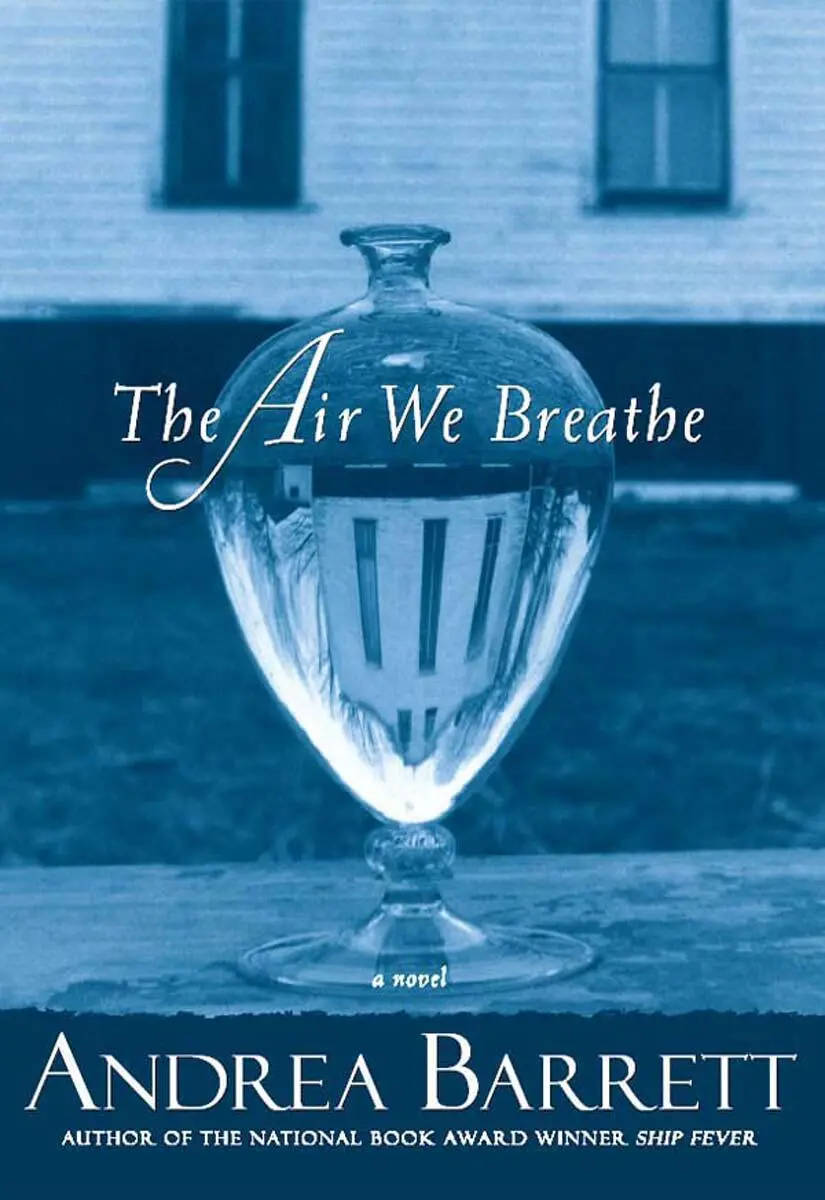
- Название:The Air We Breathe
- Автор:
- Издательство:W. W. Norton & Company
- Жанр:
- Год:2007
- ISBN:нет данных
- Рейтинг книги:3 / 5. Голосов: 1
-
Избранное:Добавить в избранное
- Отзывы:
-
Ваша оценка:
The Air We Breathe: краткое содержание, описание и аннотация
Предлагаем к чтению аннотацию, описание, краткое содержание или предисловие (зависит от того, что написал сам автор книги «The Air We Breathe»). Если вы не нашли необходимую информацию о книге — напишите в комментариях, мы постараемся отыскать её.
) by the National Book Award-winning author of
. In the fall of 1916, America prepares for war — but in the community of Tamarack Lake, the focus is on the sick. Wealthy tubercular patients live in private cure cottages; charity patients, mainly immigrants, fill the large public sanatorium. Prisoners of routine, they take solace in gossip, rumor, and — sometimes — secret attachments. But when the well-meaning efforts of one enterprising patient lead to a tragic accident and a terrible betrayal, the war comes home, bringing with it a surge of anti-immigrant prejudice and vigilante sentiment.
The Air We Breathe — читать онлайн бесплатно полную книгу (весь текст) целиком
Ниже представлен текст книги, разбитый по страницам. Система сохранения места последней прочитанной страницы, позволяет с удобством читать онлайн бесплатно книгу «The Air We Breathe», без необходимости каждый раз заново искать на чём Вы остановились. Поставьте закладку, и сможете в любой момент перейти на страницу, на которой закончили чтение.
Интервал:
Закладка:
“My old copy,” she said, watching him. “I almost never use the set anymore, it’s a little out of date.”
He turned the volumes over before setting one down and opening the cover of the other. Surely this wasn’t the text from which he’d learned chemistry in Odessa? And yet it was, or a version of it — an English translation of the sixth Russian edition of Mendeleeff’s Principles of Chemistry . His copy, in one fat blue volume, had been stolen at the docks, along with most of his belongings, on the day six years ago when he’d arrived in New York. But here, as if a piece of his old life had been returned, was the same photograph, Mendeleeff with his open mouth and badly cut hair looking more like a madman than the genius he surely was. Here were the precious words and tables, along with the scores of small engravings showing everything from Lavoisier’s apparatus for determining the composition of air to the tall furnaces used in the dry distillation of bones.
Irene was looking at him, he knew, but he couldn’t keep himself from reading the beginning of the translator’s preface. In the scientific work to which Professor Mendeleeff’s life has been devoted, his continual endeavour has been to bring the scattered facts of chemistry within the domain of law, and accordingly in his teaching he endeavours to impress upon the student the principles of the science, the generalizations, so far as they have been discovered, under which the facts naturally group themselves. That was right, exactly right, thought Leo: the principles of the science. Chemistry, he read, offers an insight into the unchangeable substratum underlying the varying forms of matter. He saw the lantern-jawed, goggle-eyed face of his kind young teacher and at the back of his throat he suddenly tasted ammonia.
“I thought,” he heard Irene say carefully, in the tone of someone who’d repeated a sentence more than once, “that this might be a good refresher textbook.”
“Better than you know,” he made himself say. Although the basement was delightfully warm, he was shivering. “This book — this particular edition, I mean, the Russian version — I used to know every page of it. If I could just borrow it for a while…”
“Keep it,” she said gently. “Since you cherish it so. After you’ve had time to study, we’ll talk about some ways you might help me out here, if you’re interested.”
When he seized her hand in thanks, she winced and cried out. Eudora, carrying the frozen hawk by its feet, entered the laboratory just then and said, “Oh, don’t squeeze, you’re hurting her!”
Baffled, Leo dropped Irene’s hand and stepped back. Irene shook her fingers, as if trying to restore some feeling; Eudora set down the dead bird and stroked her shoulder.
“Not your fault,” Irene said. “Not at all, my hands are unusually”—she looked at the hawk, then up at Eudora—“sensitive, that’s all. Eudora, I was showing Leo around and explaining some of what I do here. He might come and help out now and then. He was just leaving.”
“I’m glad you could visit,” Eudora murmured. Nodding, she picked up her latest specimen and headed for the old machine.
“Another time?” Irene said to Leo.
He nodded, embarrassed. “Thank you, again,” he said. “And I’m sorry.”
THE TEMPERATURE OUTSIDE continued to hover near zero and the sky was its peculiar Adirondack gray. In the library Ian played laconically with the pieces of the Erector set, which had lost their charm but, because of their link to his brother, remained more interesting than nothing. Diagonally across the hall, Dr. Petrie worked on a report for the upcoming trustees’ meeting, while below him Clarice and Deborah cooked our supper. Two of the maintenance men, Bronsen and Andrew, their coveralls bulging over scarves and sweaters, swept drifted snow from the walkways, the whisk, whisk of straw across the flagstones audible throughout the wings. Inside, irritated by the steady, gentle noise and the memory of days when we too had been able to tidy a piece of our world so casually, we were turning the pages of magazines and rereading old letters, trading gossip and marveling at the news of Rasputin’s death, which had happened just before Christmas. We were playing cards or checkers or chess, regretting something that had happened at the New Year’s celebration, anticipating the next movie night, wondering what our families were doing at home. Some of us, like Ephraim, were lying on our beds, concentrating only on getting better.
We were trudging off toward the dining hall, lining up and then sitting down, regarding our plates and each other; we were flirting across the invisible barrier separating women and men. Doing what we did each evening, what it seemed that we might always do. While we began our meal, someone asked Leo where he’d been and he mentioned that he’d gone to the X-ray laboratory. He didn’t say why, though, nor what he’d been given. When Gordon asked if he’d learned anything about why Irene wore that violet glove, her cry of pain flashed through his mind but still he was able to say, with perfect honesty, “No.” Secretive, we thought. As we’d thought before.
Back out onto the porches, into the cold, under the covers, over the cushions: next to each other, freezing. Ephraim and Leo lay quietly after supper, Ephraim dreaming of home and Rosa and his girls, the deep snow blanketing the fields, the deer browsing through the bushes while his daughters, wrapped in layers of flannel, built a snowhouse with the help of their uncles, even as Leo — often this happened to us, this thinking or dreaming in parallel with the companions to whom we were closest — dreamed also of snow and his family. Not the second family, his stepmother’s children, but his mother and her parents in Grodno where, during a winter like this, the snow piled up over the windows and the smoke from the train could be seen for miles away. He could see himself, dark hair hidden beneath a knitted cap, moving quietly between the white walls. Crows called harshly to each other from the trees. A hawk flew, casting a shadow, and the world seemed vast; so many things to do and see and he knew he would live forever. The rabbit he’d kept in a hutch out back: what had his name been?
That world had disappeared when his father took him off to Odessa. Then another had opened, only to vanish as well, but now — he turned to his green volumes, which were light enough to balance on his chest, easy to read even when he was wearing mittens. Each page begged to be lingered over. In this edition, he remembered his teacher enthusing, not only had Mendeleeff finally understood all the implications of the periodicity he’d discovered, but he’d also given himself free rein with his footnotes, which were speculative, fascinating, a parallel text taking up nearly half the book. Young and eager to learn the essentials as fast as he could, he’d skimmed over them when he’d read the text in Russian. But now — now he had nothing but time; he’d read every line, he’d take notes. He tilted the pages toward the lamp and slowly read the first footnote, inserted before Mendeleeff got halfway through his opening sentence:
1The investigation of a substance or a natural phenomenon consists ( a ) in determining the relation of the object under examination to that which is already known, either from previous researches, or from experiment, or from the knowledge of the common surroundings of life — that is, in determining and expressing the quality of the unknown by the aid of that which is known; ( b ) in measuring all that which can be subjected to measurement, and thereby denoting the quantitative relation of that under investigation to that already known and its relation to the categories of time, space, temperature, mass, &c.; ( c ) in determining the position held by the object under investigation in the system of known objects guided by both qualitative and quantitative data; ( d ) in determining, from the quantities which have been measured, the empirical (visible) dependence (function, or “law,” as it is sometimes termed) of variable factors — for instance, the dependence of the composition of the substance on its properties, of temperature on time, of time on locality, &c.; ( e ) in framing hypotheses or propositions as to the actual cause and true nature of the relation between that studied (measured or observed) and that which is known of the categories of time, space, &c.; ( f ) in verifying the logical consequences of the hypotheses by experiment; and ( g ) in advancing a theory which shall account for the nature of the properties of that studied in its relations with things already known and with those conditions or categories among which it exists.
Читать дальшеИнтервал:
Закладка:
Похожие книги на «The Air We Breathe»
Представляем Вашему вниманию похожие книги на «The Air We Breathe» списком для выбора. Мы отобрали схожую по названию и смыслу литературу в надежде предоставить читателям больше вариантов отыскать новые, интересные, ещё непрочитанные произведения.









Обсуждение, отзывы о книге «The Air We Breathe» и просто собственные мнения читателей. Оставьте ваши комментарии, напишите, что Вы думаете о произведении, его смысле или главных героях. Укажите что конкретно понравилось, а что нет, и почему Вы так считаете.