Andrea Barrett - The Air We Breathe
Здесь есть возможность читать онлайн «Andrea Barrett - The Air We Breathe» весь текст электронной книги совершенно бесплатно (целиком полную версию без сокращений). В некоторых случаях можно слушать аудио, скачать через торрент в формате fb2 и присутствует краткое содержание. Год выпуска: 2007, Издательство: W. W. Norton & Company, Жанр: Современная проза, на английском языке. Описание произведения, (предисловие) а так же отзывы посетителей доступны на портале библиотеки ЛибКат.
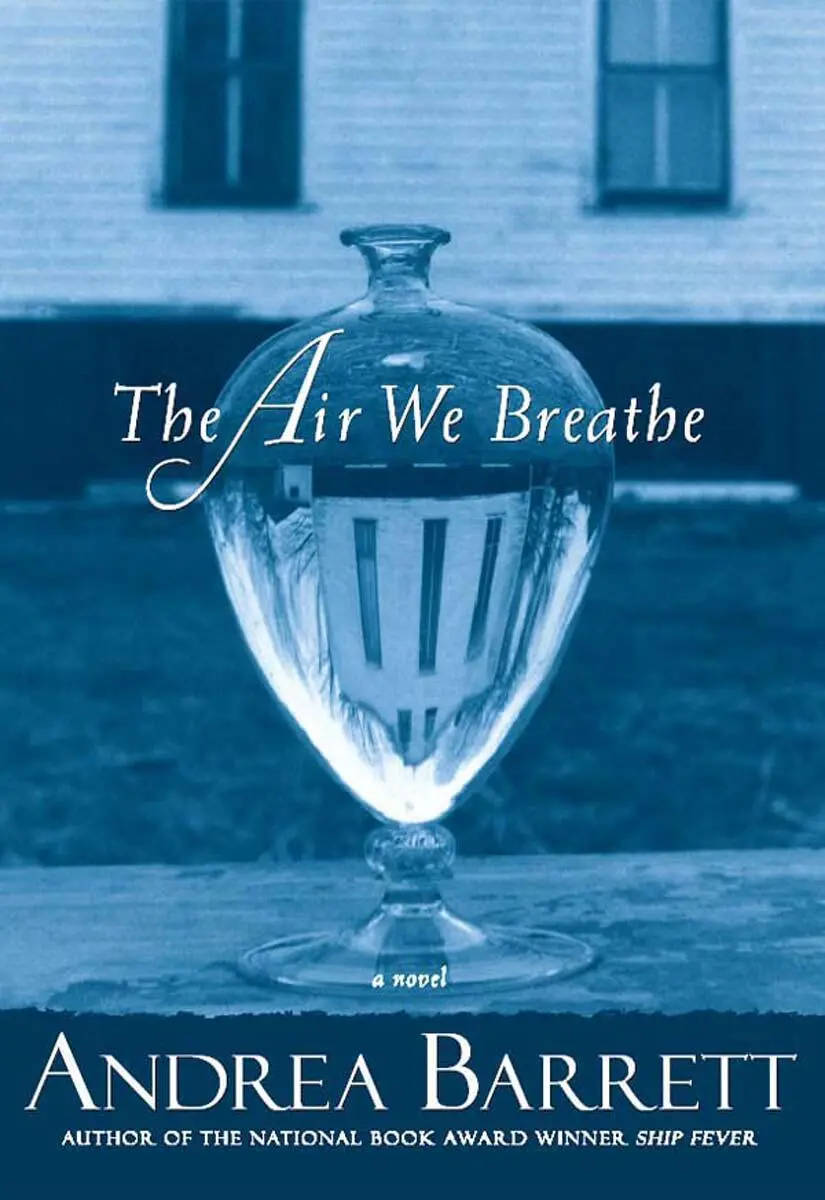
- Название:The Air We Breathe
- Автор:
- Издательство:W. W. Norton & Company
- Жанр:
- Год:2007
- ISBN:нет данных
- Рейтинг книги:3 / 5. Голосов: 1
-
Избранное:Добавить в избранное
- Отзывы:
-
Ваша оценка:
The Air We Breathe: краткое содержание, описание и аннотация
Предлагаем к чтению аннотацию, описание, краткое содержание или предисловие (зависит от того, что написал сам автор книги «The Air We Breathe»). Если вы не нашли необходимую информацию о книге — напишите в комментариях, мы постараемся отыскать её.
) by the National Book Award-winning author of
. In the fall of 1916, America prepares for war — but in the community of Tamarack Lake, the focus is on the sick. Wealthy tubercular patients live in private cure cottages; charity patients, mainly immigrants, fill the large public sanatorium. Prisoners of routine, they take solace in gossip, rumor, and — sometimes — secret attachments. But when the well-meaning efforts of one enterprising patient lead to a tragic accident and a terrible betrayal, the war comes home, bringing with it a surge of anti-immigrant prejudice and vigilante sentiment.
The Air We Breathe — читать онлайн бесплатно полную книгу (весь текст) целиком
Ниже представлен текст книги, разбитый по страницам. Система сохранения места последней прочитанной страницы, позволяет с удобством читать онлайн бесплатно книгу «The Air We Breathe», без необходимости каждый раз заново искать на чём Вы остановились. Поставьте закладку, и сможете в любой момент перейти на страницу, на которой закончили чтение.
Интервал:
Закладка:
The rest of us missed both his moist glance and Naomi’s refusal to notice it. Irene tilted her head toward Dr. Petrie again and said, “If the talk isn’t interesting, I’ll leave at the break.”
“As you wish,” Dr. Petrie said.
But to her surprise, to everyone’s surprise, Arkady turned out to be an inspired speaker. Within minutes we were sitting upright, leaning toward him, our heads making the shape of an unfolding flower as he said he’d thought long and hard about what to discuss and had finally decided to explore something that had been on his mind since Ephraim’s talk.
Quite calmly and clearly — how had we failed, before, to realize Arkady’s strengths as a teacher? — he reminded us that Ephraim’s community at Ovid was only one in our country’s long history of communitarian and cooperative colonies. “Let me give you some context,” he said. And then, much as a teacher at his workmen’s circle might have done, he gave swift descriptions of the Shaker communities at Mount Lebanon and Niskayuna, the Owenite settlement at New Harmony in Indiana, Brook Farm in Massachusetts, and the Fourierist phalanxes in upstate New York, not so far from Ovid. He mentioned Oneida, also upstate, and the experimental colony of Topolobampo, in Mexico, about which he’d been told by a friend.
Irene sighed with pleasure, delighted to hear something, anything, clearly explained; even without having heard Ephraim’s talk she could see the connection between his community of transplanted urban Jews and the long tradition that Arkady described. Crisply he detailed still other attempts, considering the differences between the religious and the secular, the communities founded in settled areas and those on the edge of what had then been frontier. “All of them,” he said as she nodded appreciatively, “all failed despite the best intentions of their founders and participants.”
Except for the rattled quartet, the rest of us, along with Irene, listened intently until it was time to break. Over our milk and hot chocolate, Leo turned to Ephraim and asked if his community had known about all these others.
Ephraim, setting down his slice of buttered bread, said, “We didn’t think about it. We were shtetl Jews, then city Jews, before Rosa’s brothers got us involved in this — what did we know about Shakers and Harmonists? If we were thinking about anything, it was about the movements in Russia. One of Rosa’s cousins—”
But here, before Ephraim could finish his sentence, someone touched Leo’s arm. Once or twice, while Arkady was speaking, Leo had looked over at the woman with her frizzy gray hair pinned loosely above her narrow eyes: was she the person who, months ago, had taken his radiograph?
“You’re Leo Marburg, aren’t you?” she asked. She held out her right hand a few inches higher than was common, all but her index finger curved slightly toward her palm. He grasped that finger with the tips of his own, as she seemed to want, and shook it gently as she said, “I’m Irene Piasecka.”
It was her, then; the person Eudora had mentioned. Standing, she was nearly his own height. “A pleasure,” he said.
“Eudora’s told me about you,” she continued. Her left hand, he saw, was encased in a violet glove. “Your early education, your search for work in this country—”
Eudora talked about him? She’d arrived too late for him to say hello, and now she was standing with Naomi near the door. Worried that he wouldn’t get to talk with her, he shifted his weight and prepared to excuse himself. Then froze as Irene continued, “What she said made me wonder if you’d like to visit the X-ray laboratory and see some of what I’m doing.”
Him? She was inviting him? Astonishingly, she added: “You might be able to assist me, when your health permits, and if you’re interested.”
“I am, ” he managed to say.
“Good,” she said. She smiled, touched his arm once more, and in response to Arkady’s gesture, headed back to our circle of chairs.
Later, Leo thought, he would find Eudora and thank her. For thinking of him, for arranging this introduction. His head hummed as he returned to the chairs, where the rest of us were also settling. How soon could he visit Irene’s lab?
Once more we bent our heads toward the center of our circle. Arkady, picking up where he’d stopped, explained that to him the most interesting thing was not the failure but the ardent idealism that, in the face of so much failure, attempted again and again to form utopian communities. Was this brave, or was it foolish? He talked about some of the people involved in those experiments, what they’d given up and what they’d hoped to gain. As his examples piled up, Leo caught one, lost the next, caught another, and half wished that Arkady would finish so that he might talk to Eudora about his prospects with Irene. Annoyingly, she was sitting three chairs away, where he could neither reach her nor see her face clearly.
She wasn’t paying attention either, although for a different reason. Arkady was talking about the same things that the book she’d taken from the village library described less elegantly, but despite her interest, she was too worried about Naomi to concentrate. Throughout the first half of the session Naomi had been drawing furiously, and now, her cheeks still pink, she was once more focused entirely on her pencil, moving it across her drawing pad. Beneath the point a building was taking shape, four wings of equal height surrounding an empty courtyard. A barracks, a prison? A version, probably, of the Fourierist compound Arkady had described — except that a figure, completely out of scale and crowned with Leo’s face and hair, filled the courtyard. Why him? But after what had happened earlier, she couldn’t blame Naomi for drawing whatever caught her eye. Anyone who wasn’t Miles must have offered some relief.
She glanced across the circle but Miles, chewing on his lips, for once wasn’t looking at Naomi. His vest was buttoned up, his shirt collar flawlessly crisp, and the color faded from his cheeks. No one could have looked more respectable — and yet he had, Naomi claimed, suddenly, horribly, declared his feelings to her as they stood outside Dr. Petrie’s office. Eudora had happened to look out a window shortly afterwards, and so she’d seen her friend striding through the frozen garden, so upset that at first, when Eudora rushed down to join her, she could only sputter.
“That stick!” she’d said indignantly, after explaining what had happened. “I held his hand after he fainted because I felt sorry for him. He’s almost old enough to be my father.”
For twenty minutes Eudora had paced with her, nodding patiently as Naomi fumed, never reminding her that she might, in first approaching Miles, have played any role in the feelings he’d developed. They’d come in for Arkady’s talk, but at the break, when Naomi continued complaining, Eudora had suggested, “Stop driving him.”
“Give up the only money I earn, because he’s a fool?” Naomi had made an unhappy face before adding, “It would be easier if you were still riding with us, and still practicing your driving.”
“I know,” Eudora said, “but I’m here so many nights now…” Weeks ago she’d stopped the driving lessons with a casual sentence, so eager to spend more time in the laboratory that everything else was distraction. A car, compared with an X-ray apparatus, was no more mysterious than a fork; she could learn to drive anytime.
“So you say.” Naomi’s hand added shadows to Leo’s eyes. “It’s fine, though. I can manage him.”
Across the circle, Arkady said something about a boatload of naturalists moving down a river toward Harmony. Robert Owen, Arkady continued — it would be months before he understood why he was telling a story about New Harmony; months before he woke from a restless sleep thinking Nadezhda, Nadezhda and realized that he’d reproduced for the rest of us almost exactly what his teacher, Nadezhda, had recounted to his workmen’s circle five years ago: before he was sick, before she was dead, before he’d realized she knew only slightly more than her students — Owen had promised that a new society would rise from the fertile land along the Wabash. But meanwhile, he said, while Eudora continued to examine her friend and to think just for a moment that despite Leo’s unusual looks, Naomi’s hand was capturing the least interesting part of him, the settlers at New Harmony had no food, no shelter, no tools, and no materials with which to build. Owen proposed that by reasoned choice we could remake our institutions and the ways we live; that our characters were formed not by but for us, and so could be re-formed by changing the conditions of our lives. By the wide and sluggish river, though, actual people grew hungry and cold, and ultimately, Arkady said, Owen’s experiment had failed.
Читать дальшеИнтервал:
Закладка:
Похожие книги на «The Air We Breathe»
Представляем Вашему вниманию похожие книги на «The Air We Breathe» списком для выбора. Мы отобрали схожую по названию и смыслу литературу в надежде предоставить читателям больше вариантов отыскать новые, интересные, ещё непрочитанные произведения.









Обсуждение, отзывы о книге «The Air We Breathe» и просто собственные мнения читателей. Оставьте ваши комментарии, напишите, что Вы думаете о произведении, его смысле или главных героях. Укажите что конкретно понравилось, а что нет, и почему Вы так считаете.