Andrea Barrett - The Air We Breathe
Здесь есть возможность читать онлайн «Andrea Barrett - The Air We Breathe» весь текст электронной книги совершенно бесплатно (целиком полную версию без сокращений). В некоторых случаях можно слушать аудио, скачать через торрент в формате fb2 и присутствует краткое содержание. Год выпуска: 2007, Издательство: W. W. Norton & Company, Жанр: Современная проза, на английском языке. Описание произведения, (предисловие) а так же отзывы посетителей доступны на портале библиотеки ЛибКат.
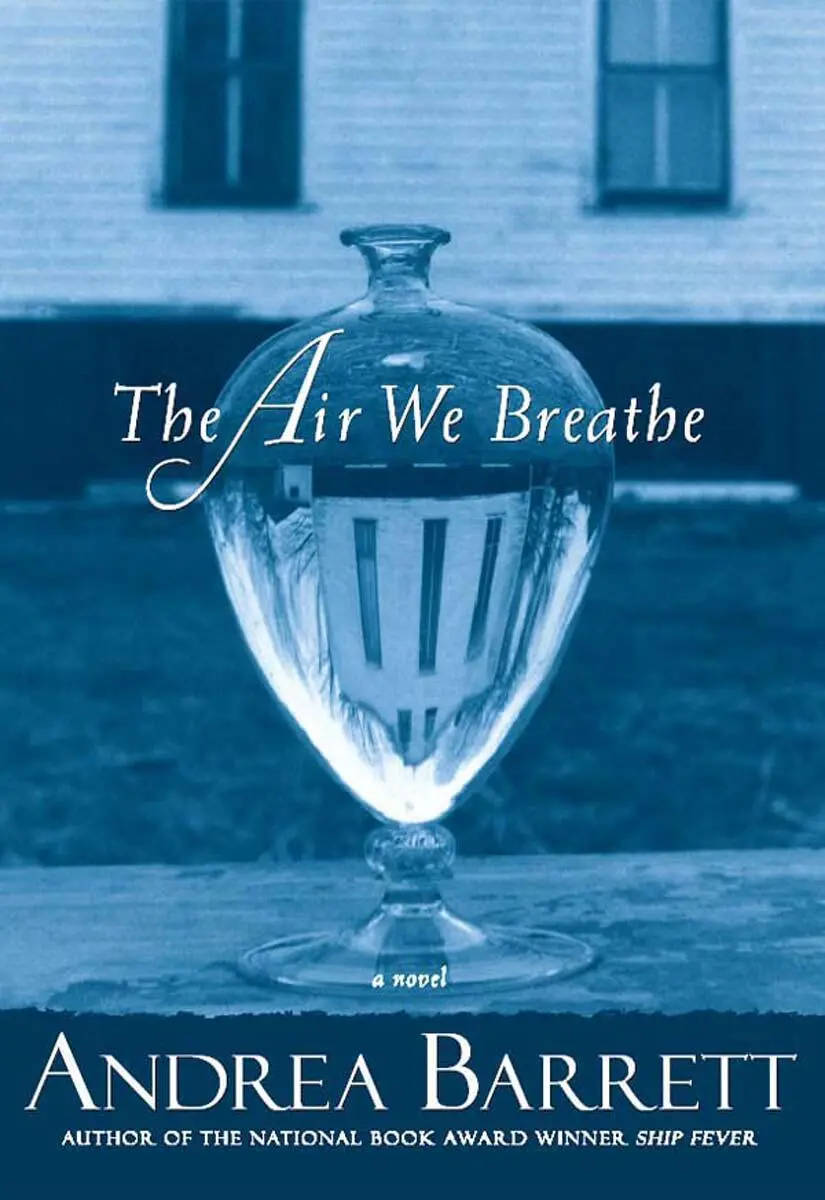
- Название:The Air We Breathe
- Автор:
- Издательство:W. W. Norton & Company
- Жанр:
- Год:2007
- ISBN:нет данных
- Рейтинг книги:3 / 5. Голосов: 1
-
Избранное:Добавить в избранное
- Отзывы:
-
Ваша оценка:
The Air We Breathe: краткое содержание, описание и аннотация
Предлагаем к чтению аннотацию, описание, краткое содержание или предисловие (зависит от того, что написал сам автор книги «The Air We Breathe»). Если вы не нашли необходимую информацию о книге — напишите в комментариях, мы постараемся отыскать её.
) by the National Book Award-winning author of
. In the fall of 1916, America prepares for war — but in the community of Tamarack Lake, the focus is on the sick. Wealthy tubercular patients live in private cure cottages; charity patients, mainly immigrants, fill the large public sanatorium. Prisoners of routine, they take solace in gossip, rumor, and — sometimes — secret attachments. But when the well-meaning efforts of one enterprising patient lead to a tragic accident and a terrible betrayal, the war comes home, bringing with it a surge of anti-immigrant prejudice and vigilante sentiment.
The Air We Breathe — читать онлайн бесплатно полную книгу (весь текст) целиком
Ниже представлен текст книги, разбитый по страницам. Система сохранения места последней прочитанной страницы, позволяет с удобством читать онлайн бесплатно книгу «The Air We Breathe», без необходимости каждый раз заново искать на чём Вы остановились. Поставьте закладку, и сможете в любой момент перейти на страницу, на которой закончили чтение.
Интервал:
Закладка:
“What is it?” Eudora repeated.
“Nothing,” Naomi replied. Everything, she thought.
7
DURING THAT LONG Thanksgiving weekend, the rearrangement of our chairs, which Ephraim had undertaken so casually during his talk, seemed to shake something loose in us. As we considered Miles’s assumption that each of us might know something interesting, we also began to imagine what we might polish up to share on a Wednesday afternoon. Old hobbies, new curiosities, hard-won skills. Books we’d loved in our earlier lives. Some found a new appetite for reading or conversation, some started journals, some began to think about their futures as well as their pasts: you might call this hope; it is always disturbing. Briefly the air around our porches seemed to flicker, as if the railings were electrified. On the ship from Hamburg to New York, Leo remembered, the sky had also felt like that.
His old friend Vincenzo, who worked in the char house at the sugar refinery, where Leo had started, sent him a letter that week. Three workers with Hungarian names had been dismissed after a warehouse fire, Vincenzo wrote angrily. On no more evidence than their friendship with a former crew member from one of the German merchant ships being held in the harbor. Dark thumbprints edged the sheet of paper, which was filled with large black words slanting toward the lower right corner. That’s how it is now — you’re better off out of it. Anyone born overseas falls under suspicion whenever anything happens. Sometimes I wish I was up there with you. Do they feed you well?
Leo touched the grubby sheet thoughtfully, a reminder of the days he’d spent packing bone black into the enormous filters used to purify the sugar solution. He and Vincenzo had worked side by side, so filthy they could be distinguished only by their teeth and eyes. Without Vincenzo to guide him — without Vincenzo, who’d shared his lunches of bread and cheese, shown him the cheapest place to have shoes resoled, taught him the best times at the public baths, and introduced him to the head chemist — he wouldn’t have survived.
He’d taken the job when he was starving, after weeks of searching for a position in a hospital or a university, anyplace with a laboratory. In Russian, or German, or sometimes in Yiddish, depending on the look of his prospective employer — he’d known only a little English when he’d landed — he explained the particulars of his education and his training. After a while he learned not to be surprised that no one understood. Not to be surprised that they thought he was stupid. By the time he got to the refinery, he’d learned to be grateful for anyone who’d offer a hand. New York was nothing like what he’d imagined but, crowded into the shared room at Tobias and Rachel’s flat, swilling the same cheap food and beer as his companions while working the same hard jobs, for long stretches he’d convinced himself that he was getting somewhere. He lived like the Irishmen and Sicilians and Ruthenians and Poles he met, the Finns and Jews and Germans, absorbed into the crowd — until, in the middle of a sentence or a task, he’d start thinking about something he’d read or studied, some experiment that had once captivated him completely. Then he’d stop listening to whoever was around him and withdraw his attention, feeling for those minutes utterly alone. Once more he was a boy, stirring sugar and potassium chlorate in a white porcelain bowl and trickling sulfuric acid over the mixture, stepping back as the smoke spewed and a cone of carbon rose in the dish.
Someone would bark at him, disgruntled to find him daydreaming, and then the boy who’d done that experiment disappeared. In place of his clean hands, his ambitions, and the alert, chattering, clever friends who’d studied physiology or the nature of the chemical bond, he had comrades who joined the preparedness parades in the streets. Along with them came employers who contributed to the cost of the gigantic electrified sign — ABSOLUTE AND UNQUALIFIED LOYALTY TO OUR COUNTRY — hanging over Fifth Avenue, and strangers who narrowed their eyes at the sound of his name. In Brooklyn, Vincenzo reminded him, people were changing their names. The explosion of Black Tom Island, which had occurred while he was in the infirmary and had been blamed on German spies and the German-Americans who sheltered them, had made the situation even worse.
Yet still, Leo thought, he wouldn’t have left the city on his own. How had Ephraim’s Rosa and her brothers found the courage? For them, as for him, New York had been home since getting off the boat. Only after the city ejected him had he understood that he hadn’t really believed in the rest of this enormous country. West of the Adirondacks, Ephraim claimed, New York State continued for hundreds of miles, green rolling land, rivers and valleys, town after town, and beyond the border Pennsylvania, Ohio, Nebraska…who could imagine Nebraska?
Leo read the letter again and then, reluctantly, went to bed, where he slept poorly. A few days later, he received a second, even more unexpected, letter. Opening his copy of our sanatorium newsletter, The Kill-Gloom Gazette, he watched, bemused, as a small white envelope with no address and no stamp slid from the stenciled pages and landed in his lap. Inside was a note in blue ink:
I love your dark hair, I lose myself in your eyes, your hands are beautiful. I dream of touching them. The rest of you, too. I dream about you. I dream about touching you.
No signature; no salutation. Perhaps it had been meant for someone else? After trying to ignore it for a day, he showed the contents first to Ephraim and then to the rest of the dinner table. One of the patients who helped produce the weekly paper must be responsible, someone said.
“A female patient, I hope,” Ephraim said, which caused a few smiles. Ian suggested the fat woman who collated the visitors’ list, while Frank said it might be the girl who’d written the poem about the dying chrysanthemums. Or perhaps the sad woman — Abigail? Adelaide? — in her early thirties who delivered the newsletters without meeting anyone’s eye.
Leo put the note aside but still couldn’t make himself throw it out. Something about it stirred him, not the content but the cryptic delivery, which lured him into spending more time in our excuse for a library. The women had separate borrowing hours, so it wasn’t as if he’d meet anyone there. Still, he sat where he was visible from the hall, reading old copies of Scientific American magazine while wondering if the note writer, passing by, might see him and make a sign. Who would be drawn to him? His pale face, thin legs, shrunken shoulders; the weight and strength he’d lost: he’d been proud of his body when he was younger, but now he was sure that if someone were ever interested in him again, it wouldn’t be because of the way he looked. Still, his last romance — they’d all been brief — had ended more than a year ago, and since then there’d been only work and sickness. It was just possible, he thought, that the person who wrote him was someone he might like. He sat in the library, reading an article about the geometry of snowflakes and inspecting the photomicrographs, while waiting for the note writer to show herself. Because of this, he missed the visit of Ephraim’s friend.
VISITING HOURS: late afternoon, twice each month, the same slot of time during which we met for our sessions but fortunately not the same day. The first Tuesday in December brought a scant crowd, which we’d expected; many would wait for the third Tuesday, when we’d be closer to Christmas. Benny’s sister came, bringing a potted plant. Ian’s mother came up from Albany. Polly was visited by her former fiancé, who’d broken off their engagement when she became ill but now, having heard from a mutual friend that she was cousining with a welder from Yonkers, was interested again. Two young men from the private sanatorium across the village called on Lydia — she’d sneaked over there one night for an illicit dance — and Otto’s nephew arrived with a box of homemade gifts from his family in Utica.
Читать дальшеИнтервал:
Закладка:
Похожие книги на «The Air We Breathe»
Представляем Вашему вниманию похожие книги на «The Air We Breathe» списком для выбора. Мы отобрали схожую по названию и смыслу литературу в надежде предоставить читателям больше вариантов отыскать новые, интересные, ещё непрочитанные произведения.






Обсуждение, отзывы о книге «The Air We Breathe» и просто собственные мнения читателей. Оставьте ваши комментарии, напишите, что Вы думаете о произведении, его смысле или главных героях. Укажите что конкретно понравилось, а что нет, и почему Вы так считаете.