Andrea Barrett - The Air We Breathe
Здесь есть возможность читать онлайн «Andrea Barrett - The Air We Breathe» весь текст электронной книги совершенно бесплатно (целиком полную версию без сокращений). В некоторых случаях можно слушать аудио, скачать через торрент в формате fb2 и присутствует краткое содержание. Год выпуска: 2007, Издательство: W. W. Norton & Company, Жанр: Современная проза, на английском языке. Описание произведения, (предисловие) а так же отзывы посетителей доступны на портале библиотеки ЛибКат.
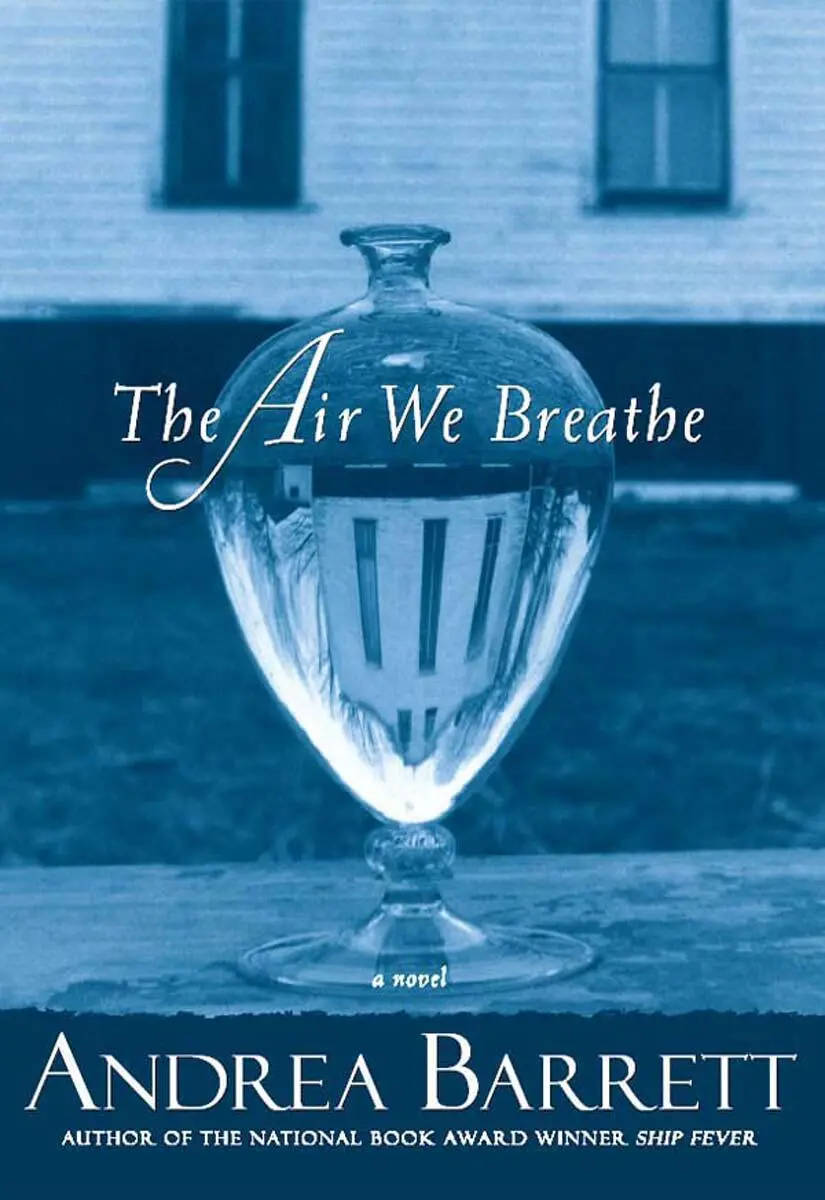
- Название:The Air We Breathe
- Автор:
- Издательство:W. W. Norton & Company
- Жанр:
- Год:2007
- ISBN:нет данных
- Рейтинг книги:3 / 5. Голосов: 1
-
Избранное:Добавить в избранное
- Отзывы:
-
Ваша оценка:
The Air We Breathe: краткое содержание, описание и аннотация
Предлагаем к чтению аннотацию, описание, краткое содержание или предисловие (зависит от того, что написал сам автор книги «The Air We Breathe»). Если вы не нашли необходимую информацию о книге — напишите в комментариях, мы постараемся отыскать её.
) by the National Book Award-winning author of
. In the fall of 1916, America prepares for war — but in the community of Tamarack Lake, the focus is on the sick. Wealthy tubercular patients live in private cure cottages; charity patients, mainly immigrants, fill the large public sanatorium. Prisoners of routine, they take solace in gossip, rumor, and — sometimes — secret attachments. But when the well-meaning efforts of one enterprising patient lead to a tragic accident and a terrible betrayal, the war comes home, bringing with it a surge of anti-immigrant prejudice and vigilante sentiment.
The Air We Breathe — читать онлайн бесплатно полную книгу (весь текст) целиком
Ниже представлен текст книги, разбитый по страницам. Система сохранения места последней прочитанной страницы, позволяет с удобством читать онлайн бесплатно книгу «The Air We Breathe», без необходимости каждый раз заново искать на чём Вы остановились. Поставьте закладку, и сможете в любой момент перейти на страницу, на которой закончили чтение.
Интервал:
Закладка:
“My aunt tells me to look closely at everything around me,” she told Naomi. At the far end of the lake, the wooden park benches were spattered with rain and so they kept walking. “Get to know the boarders and their habits, so I can anticipate what they need. Get to know the house and its needs. She says a house like hers is alive, it’s like a giant organism.”
“Not our house,” Naomi said. She laughed and startled a handful of frogs in the reeds, who woke and plopped indignantly into the water. “Ours is just a business. Everything my mother does, including the way she uses me, is about efficiency .”
Naomi, Eudora soon learned, shared her own curiosity about the outside world and was equally stubborn, and equally independent. Tiny, vigorous Miss Olafson, who was fluent in five languages and who taught first Eudora and then Naomi, pressed armfuls of extra-credit reading on them and encouraged their habit — broken only last year — of reading together. Tromping in the woods or bicycling together for miles, they’d talked without stopping. George Eliot’s work had propelled them up and down mountains, while Tolstoy had pushed their bicycles to Lake Placid and Samuel Butler had helped them skate in circles. From the characters revealed in books they moved on to themselves; what they were good at and what they hated, what they might do someday. Naomi was fascinated by the swirl of voices and conflicting desires that Eudora, within her large family, calmly negotiated, while Eudora was amazed by the way her new friend drew.
“The pictures just come,” Naomi said. “My hand decides. I can be thinking about one thing and my hand will pick up a pencil and draw something entirely different.”
My hand: she said this as someone else might say, My dog . Eudora would have found this ridiculous except for the likenesses of people and objects she’d seen pour fluently from Naomi’s pencil while they talked about something else. As a child she too had loved to draw, but her gift had abandoned her abruptly and it astonished her to see someone do without thinking what she could now do only with difficulty. Equally startling was the way that Naomi referred to the other selves jostling rebelliously inside her. The person whom Eudora knew was not, Naomi claimed, the Naomi who slaved for her mother at the house, the Naomi who’d once lived near Philadelphia, or the Naomi who stood by a frozen creek on a bitter winter’s night, baring her throat and chest to the rays of the moon.
Those were the moments when Eudora had most fiercely wanted to understand what it felt like to be Naomi. She herself had two hands that did what she asked and were strong and competent, one self that sometimes wanted different things but was always, clearly, her self . How dull, compared with Naomi’s dramas! And how little, she thought — she’d reached the top of the ridge, where the wind cooled her face and a delicious downhill ride awaited — she knew of those dramas now. She could just barely admit to herself that, since starting work at Tamarack State, and particularly since getting to know Irene, she saw Naomi much less.
NOT UNTIL AFTER supper the following day did Naomi escape from her mother’s house. Exasperating to be trapped for so long; more exasperating to learn only at lunch that Eudora had come by to see her yesterday. Why, Naomi thought furiously, did her mother think it was reasonable to withhold a message overnight? Through a cold mist she walked down the hill and through the village, moving between the streetlamps’ cones of light and the dark wedges by which they were separated. At the far end she turned up the flagstone walk leading to Eudora’s parents’ house.
“Come join us,” Mrs. MacEachern said, opening the door and welcoming her in. “We’re just finishing supper — I know Eudora will be glad to see you.”
Naomi moved through the cluttered hall and into the crowded, pleasantly untidy dining room, so different from her mother’s crisp arrangements. A piece of oilcloth over the table, in place of starched white linen; gingham napkins and a pair of shaded lamps; mismatched silverware and big crockery bowls. She sat in the chair Eugene pulled out for her, accepted the plate Mrs. MacEachern passed her way, and, although she’d already eaten one meal, savored the turkey hash and sautéed greens and cornbread with fresh butter. Eudora’s mother was every bit as good a cook as her own, with less fuss and, as far as she knew, no recipe books at all.
Around the table were Eudora and her parents, Eugene and two of his friends from the garage, Sally and her children but not her husband, who’d gone out to visit someone else, and Ernest, whom Naomi almost never saw. When she and Eudora were still girls, he’d bolted from the workshop out back and, without discussing his plans with anyone, gone to New York City. Six months later, back for a visit, he announced that he’d found a place as an apprentice in the taxidermy studio at the Museum of Natural History and had no intention of returning home to live. Since then he’d done well enough that he now had several people working for him.
If she had an older brother, she thought — older, not younger; she never thought of Thomas — whom she could ask for help and who could show her the world, everything would be different. Leaning over, she asked Ernest what he was working on now.
“An elephant,” he said, and laughing as her eyes widened. “For a diorama, a complete African scene to go in one of the first-floor halls — it’s great fun, really. Fascinating.”
She listened as he described the huge, heavy pieces of hide, barktanned for half a year before being hoisted, dripping wet, over a form coated with wet clay that would capture the shape of all the wrinkles. Seven years ago, when he’d left, he’d been a quiet, clumsy, somewhat lumpish boy whom everyone ignored. Now, as he leaned back in his chair, his legs spread and his arms relaxed, he exuded an easy confidence that made her wish she knew him better.
Before she could ask him anything else, though, Sally and her children rose and said it was time for them to go. In the confusion of farewells, Eudora made an excuse to her parents and handed Naomi her coat. Suddenly they too were outside, and alone.
“See why I came over to your house yesterday?” Eudora said as they headed for the lake. Her hair turned gold each time she entered the cone of a streetlight. “Our house, at the holidays…”
“My mother didn’t even tell me you’d come by until lunchtime today,” Naomi said. “I wish I’d heard you knock.”
“She didn’t tell you until today ?”
The mist lightened as they reached the lake and a few stars appeared through the clouds, followed by the nearly full moon. Talking as swiftly as they walked, they caught each other up on the day’s events until, at the cove opposite the Northview Inn, Naomi paused and reached into her pocket.
“My mother’s contribution to the household this morning,” she said. “I had to take it down before Darlene and Daisy could see it.”
Eudora tilted the heavy piece of paper, trying to catch the moonlight. “I can’t read it,” she said. “The usual?”
“Close enough,” Naomi said, taking it back. Largely from memory, she recited what she’d found posted above the sink:
THIS WEEK’S HOUSEKEEPING NOTES
Spiderwebs —I have noticed unusual numbers of these in the corners of the ceilings, especially in the stairwells and in the hall where the kitchen meets the pantry.
Tray service —With four of our guests on trays at present, we need to be particularly careful that the last person served receives food as hot and attractively arranged as the first (Darlene, this applies especially to you).
Читать дальшеИнтервал:
Закладка:
Похожие книги на «The Air We Breathe»
Представляем Вашему вниманию похожие книги на «The Air We Breathe» списком для выбора. Мы отобрали схожую по названию и смыслу литературу в надежде предоставить читателям больше вариантов отыскать новые, интересные, ещё непрочитанные произведения.






Обсуждение, отзывы о книге «The Air We Breathe» и просто собственные мнения читателей. Оставьте ваши комментарии, напишите, что Вы думаете о произведении, его смысле или главных героях. Укажите что конкретно понравилось, а что нет, и почему Вы так считаете.