Andrea Barrett - The Air We Breathe
Здесь есть возможность читать онлайн «Andrea Barrett - The Air We Breathe» весь текст электронной книги совершенно бесплатно (целиком полную версию без сокращений). В некоторых случаях можно слушать аудио, скачать через торрент в формате fb2 и присутствует краткое содержание. Год выпуска: 2007, Издательство: W. W. Norton & Company, Жанр: Современная проза, на английском языке. Описание произведения, (предисловие) а так же отзывы посетителей доступны на портале библиотеки ЛибКат.
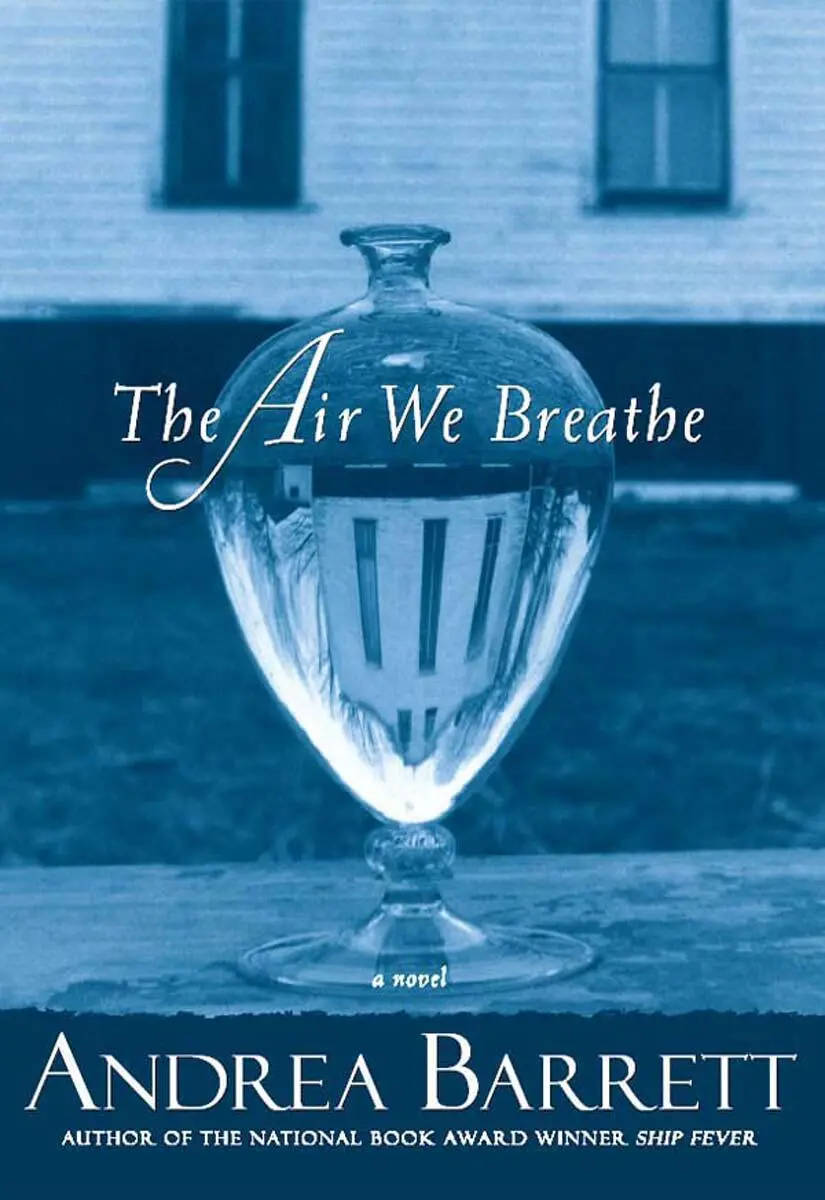
- Название:The Air We Breathe
- Автор:
- Издательство:W. W. Norton & Company
- Жанр:
- Год:2007
- ISBN:нет данных
- Рейтинг книги:3 / 5. Голосов: 1
-
Избранное:Добавить в избранное
- Отзывы:
-
Ваша оценка:
The Air We Breathe: краткое содержание, описание и аннотация
Предлагаем к чтению аннотацию, описание, краткое содержание или предисловие (зависит от того, что написал сам автор книги «The Air We Breathe»). Если вы не нашли необходимую информацию о книге — напишите в комментариях, мы постараемся отыскать её.
) by the National Book Award-winning author of
. In the fall of 1916, America prepares for war — but in the community of Tamarack Lake, the focus is on the sick. Wealthy tubercular patients live in private cure cottages; charity patients, mainly immigrants, fill the large public sanatorium. Prisoners of routine, they take solace in gossip, rumor, and — sometimes — secret attachments. But when the well-meaning efforts of one enterprising patient lead to a tragic accident and a terrible betrayal, the war comes home, bringing with it a surge of anti-immigrant prejudice and vigilante sentiment.
The Air We Breathe — читать онлайн бесплатно полную книгу (весь текст) целиком
Ниже представлен текст книги, разбитый по страницам. Система сохранения места последней прочитанной страницы, позволяет с удобством читать онлайн бесплатно книгу «The Air We Breathe», без необходимости каждый раз заново искать на чём Вы остановились. Поставьте закладку, и сможете в любой момент перейти на страницу, на которой закончили чтение.
Интервал:
Закладка:
“We were poor,” Ephraim said, “but we made a good life.”
“But when,” Miles interrupted, “did your crops finally turn a profit? When did your colony become self-sustaining?”
“That was the fly in the ointment,” Ephraim said with a wry face.
They’d had houses, he explained, and a school and some scraps of culture, but they hadn’t made money. For a while they’d struggled on, until finally — we should have thought of this ourselves, he said — two Jewish industrialists from Syracuse, not so far away, had come to visit the colony and, after seeing the problems, decided to build a canning factory that would employ some of the colonists and provide a market for their produce.
“We canned apples,” Ephraim said. “We made applesauce and apple butter. All of us made the same wage and the owners marketed the goods; we turned a profit the first year the factory was running, which was a kind of miracle.” A few people left but most stayed, and as the cannery grew, some of the Ovid natives came to work there, while others attended the night school for adults.
“We ended up being part of the town,” Ephraim concluded, “and actually I know quite a lot about growing apples now. I never could have imagined this, but I’ve turned into a farmer.”
“Not quite,” Leo said, and everyone laughed.
“He’s funny,” Naomi whispered to Eudora. “I like that about him.”
Eudora nodded but, having seen Naomi’s drawing pad as we rearranged our chairs, turned away before her friend could say more. She’d noticed Naomi flirting with Miles during their shared rides down the hill after the Wednesday sessions. A finger brushing the back of his hand, a gaze held a second too long — none of it, Eudora suspected, meant in the least. She’d done that herself when she was younger, testing her new powers as her father might test the edge of a knife. The instant Miles had responded and shown signs of finding her attractive, Naomi had drawn back, amused and, or so Eudora thought, a little repelled. Now her attention seemed, annoyingly, to have bounced to Leo. Following her friend’s covert glances, Eudora had also followed the moving pencil as it touched the pad; the page Naomi had hidden was covered with drawings of him. Leo in profile, Leo in three-quarters view, a study of Leo’s left ear.
The rest of us, who hadn’t seen those drawings, ignored the two young women and enjoyed our new seating arrangement. Miles had fallen silent after his question about money and seemed to be studying us; we ignored him too. Bea pushed her heavy red hair off her face and said, “Imagine what we could make of this place if it was just us, if all the doctors and administrators were gone and we had the land to raise food on, the laundry and the dining facilities to use; if somehow we could take care of each other…”
For a minute, that idea hung before all of us. Then everyone was talking at once as Ephraim leaned forward in his chair, orchestrating the discussion and answering what questions he could; this was wonderful. We forgot to take our break, we forgot what time it was. When the dinner bell rang, Dr. Petrie, who’d stayed for the entire discussion, shook Ephraim’s hand and said how much he’d enjoyed himself. Ephraim beamed, and then brought him over to Miles.
“I had my doubts about this,” Dr. Petrie said to Miles as the rest of us began heading to supper, “but I think what you’re doing here is a very good idea, as long as everyone’s health is up to it. I can see why Dr. Richards supported you, and I hope you’ll continue.”
“It did go well,” Miles said. “Not quite what I expected, but…”
His gaze was so openly assessing that Dr. Petrie ran his hands over his shirtfront to see if he’d lost a button. “Why don’t you join us again?” Miles asked. “Perhaps there’s something you’d like to talk to us about.”
“I can’t talk about medicine, or treatments, or hospital policy,” Dr. Petrie said. “That would be quite against regulations.”
“I can see that,” Miles said. “But perhaps there’s something else you’re interested in, that you’d like to share. Some travels? Something you’ve been studying?”
Dr. Petrie considered the question. “I was in France last year. Touring battlefield hospitals, helping out where I could.”
“I have a dear friend in France,” Miles said. “A kind of nephew. I’m always eager to learn what I can about conditions there. If you’d share your experiences, I’m sure the others would also like to be instructed.”
Dr. Petrie said he’d think about it and moved away. Leo, who’d been eavesdropping, turned to Ephraim and said, “I hope he keeps coming. Our little learning circle expands…”
“Did you think it went all right today?”
“It went fine,” Leo said, patting his friend’s arm. “We all enjoyed it.”
And in fact we had. We had a sense, then, of what our circle might be. What we might be. Suppose Bea talked about her union work and Kathleen about teaching music, Albert about the intricacies of forming incandescent lightbulbs and Pietr about his method for blanching celery? How much we might all learn! It was embarrassing that we’d needed Miles to get us started, but still here we were, and we were headed — well, someplace, though no one knew where. But after Ephraim spoke, we all felt pleased with the way we’d decided to spend our Wednesday afternoons.
6
YEARS AGO, A man came to Tamarack Lake from New York in the hopes of improving his health, married the undertaker’s daughter, worked in a bank, and then built the village’s telephone exchange. Resigning his position when he had a relapse, he began in 1912 to write a history of his adopted home. From deeds, contracts, old letters, newspapers, the reminiscences of guides and visitors, he reconstructed who started the bank, built the churches, organized the schools and the hospital. He wrote about when the last guest came to the Northview Inn, when the boathouse fell into the lake, what happened to Dr. Kopeckny and the first sanatoria. Who donated money to those institutions, and which doctors worked where. Comfortable in his retirement — he sold the exchange at a fine profit — and cared for by his wife, he worked at his project for years but never mentioned us.
Sometimes we thumb through those pages, looking for traces of our lives and places where our histories overlap. Fires, accidents, holidays; holidays always bring complications, both down in the village and up here. Someone ends up in the infirmary, after having grown too melancholy to eat; someone wanders into the pond and nearly drowns; friends quarrel savagely. That Thanksgiving, which wasn’t any different, also had the disadvantage of interrupting our Wednesday sessions just as we were getting used to taking charge of the talks for ourselves.
It didn’t help that the sanatorium staff, resentful at having to work that day, made it clear that they felt burdened. In the village, those caring for patients also felt that they were having the opposite of a holiday. More cooking, more shopping, more cleaning at the cure cottages and boardinghouses and hotels. The butcher worked overtime, extra porters unloaded extra trains, drivers took extra shifts. At Mrs. Martin’s house, Miles would spend the afternoon eating turkey with chestnut stuffing and giblet sauce, sweetbreads, tongue in aspic, duchess potatoes, and Mrs. Martin’s Nesselrode pudding served with boiled custard, quite unaware that in the kitchen, Daisy and Darlene were telling Naomi they were ready to quit. At the same time Eudora, across the village, would be wishing that she had someone to grumble to. She’d been looking forward to her days off. Irene had loaned her two textbooks, which she’d hoped to spend some quiet hours reading. Instead, as had been the case since she was old enough to wield a knife, and especially since her older sisters had married, her mother called on her to help with their elaborate meal.
Читать дальшеИнтервал:
Закладка:
Похожие книги на «The Air We Breathe»
Представляем Вашему вниманию похожие книги на «The Air We Breathe» списком для выбора. Мы отобрали схожую по названию и смыслу литературу в надежде предоставить читателям больше вариантов отыскать новые, интересные, ещё непрочитанные произведения.





Обсуждение, отзывы о книге «The Air We Breathe» и просто собственные мнения читателей. Оставьте ваши комментарии, напишите, что Вы думаете о произведении, его смысле или главных героях. Укажите что конкретно понравилось, а что нет, и почему Вы так считаете.