Andrea Barrett - The Air We Breathe
Здесь есть возможность читать онлайн «Andrea Barrett - The Air We Breathe» весь текст электронной книги совершенно бесплатно (целиком полную версию без сокращений). В некоторых случаях можно слушать аудио, скачать через торрент в формате fb2 и присутствует краткое содержание. Год выпуска: 2007, Издательство: W. W. Norton & Company, Жанр: Современная проза, на английском языке. Описание произведения, (предисловие) а так же отзывы посетителей доступны на портале библиотеки ЛибКат.
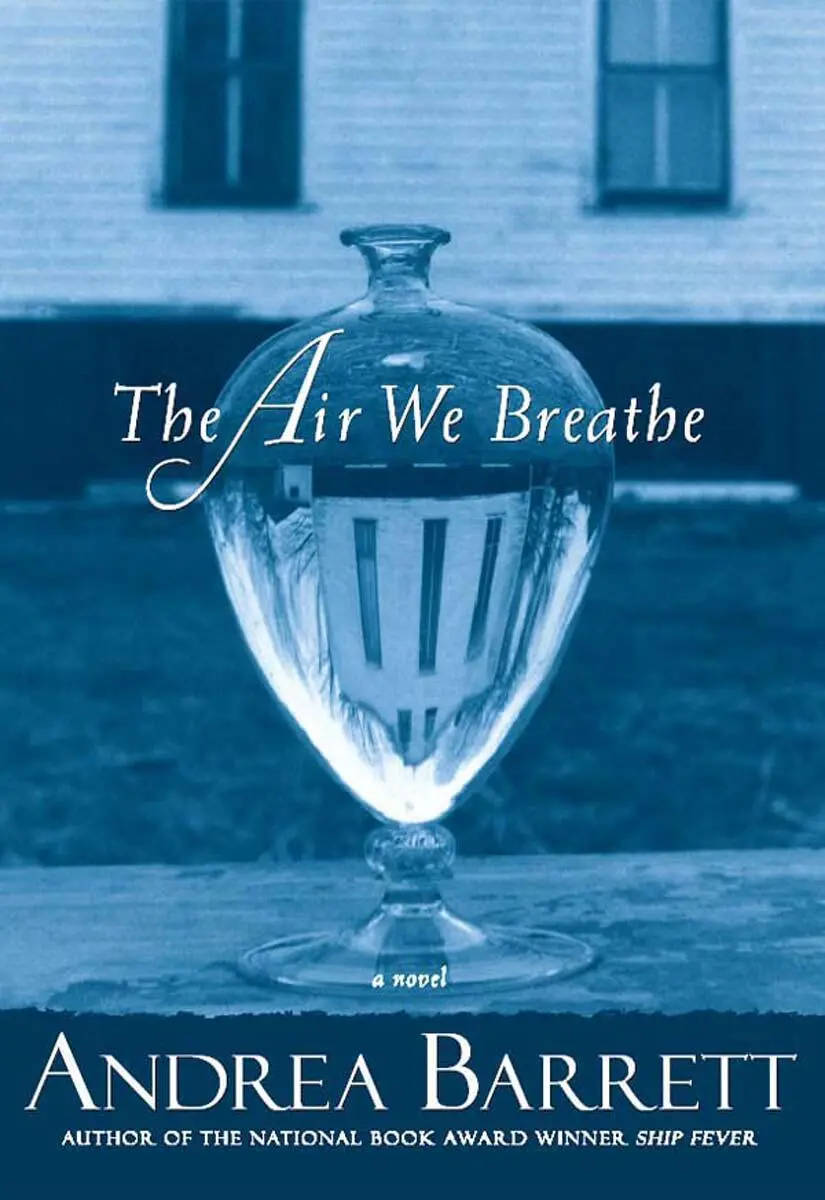
- Название:The Air We Breathe
- Автор:
- Издательство:W. W. Norton & Company
- Жанр:
- Год:2007
- ISBN:нет данных
- Рейтинг книги:3 / 5. Голосов: 1
-
Избранное:Добавить в избранное
- Отзывы:
-
Ваша оценка:
The Air We Breathe: краткое содержание, описание и аннотация
Предлагаем к чтению аннотацию, описание, краткое содержание или предисловие (зависит от того, что написал сам автор книги «The Air We Breathe»). Если вы не нашли необходимую информацию о книге — напишите в комментариях, мы постараемся отыскать её.
) by the National Book Award-winning author of
. In the fall of 1916, America prepares for war — but in the community of Tamarack Lake, the focus is on the sick. Wealthy tubercular patients live in private cure cottages; charity patients, mainly immigrants, fill the large public sanatorium. Prisoners of routine, they take solace in gossip, rumor, and — sometimes — secret attachments. But when the well-meaning efforts of one enterprising patient lead to a tragic accident and a terrible betrayal, the war comes home, bringing with it a surge of anti-immigrant prejudice and vigilante sentiment.
The Air We Breathe — читать онлайн бесплатно полную книгу (весь текст) целиком
Ниже представлен текст книги, разбитый по страницам. Система сохранения места последней прочитанной страницы, позволяет с удобством читать онлайн бесплатно книгу «The Air We Breathe», без необходимости каждый раз заново искать на чём Вы остановились. Поставьте закладку, и сможете в любой момент перейти на страницу, на которой закончили чтение.
Интервал:
Закладка:
New York was his home, Ephraim continued while Eudora mused, and he’d been too ignorant to imagine a different kind of life. His whole self had been formed there, among the pushcarts and tenements and tiny stores that many of us knew well. He’d only managed to leave because of Rosa. “We met in a café,” he said, his whole face lighting up.
A sigh passed through the room as we remembered cafés, sitting in freely chosen places with our chosen friends and lovers. Or perhaps the sigh came from the obvious feeling with which Ephraim had spoken Rosa’s name. Of the husbands and wives and lovers we’d left at home, some waited patiently but others had abandoned us; is it surprising we turned to each other? Some of the women now among us had joined the sessions not for the talks but because this was a place where we could mingle. More men had returned in their wake and among our group were now several couples — cousins, as we call them here; Polly and Frank, Nan and David — delighted to have a new meeting place.
Ephraim, who’d never chosen a cousin, went on to describe Rosa’s brothers and their friends, socialists who, in the old country, had marched in protests, distributed leaflets in factories, seen comrades exiled to Siberia — a place so enormous, they claimed, that this whole country could fit inside it with room left over. In Siberia, Leo remembered, the chemist Dmitri Mendeleeff had been born and raised and taught by his mother, who ran a glass factory and later managed to get her son across the thousands of miles to Moscow so he could go to school. Later, long before Leo was born, Mendeleeff had taught science for a few years at a school in Odessa.
“Rosa’s brothers told me that the climate of Siberia is horrible,” Ephraim continued, “but at least a man has room to breathe there. I don’t know if that’s true, but they convinced me that what we all needed was space .”
Why, he’d finally asked himself, had his parents settled in exactly the same place as everyone else who’d left the Pale? We knew the answer: family, familiar foods, the streets filled with languages we understood. Rosa’s brothers, Ephraim learned when he asked her to marry him, had answered the advertisements of a Jewish relief society that helped resettle families on farmlands far from the city. Free land, the brothers said. Land we will work together, crops we will sell in common. Fresh air, open space, no landlords or bosses; Siberia with a better climate. Ephraim had joined the group made up of Rosa’s extended family, three other families, and a few young men, and with them headed across the state, to the land near the Finger Lakes the society had set aside.
“I was twenty-one when we moved,” he said. “In the city, when someone said ‘farm’ to me, all I could imagine was the countryside around Minsk, which was filthy. But Ovid was beautiful. So beautiful — I felt like a fool when I saw it. I hadn’t known before there were places like that.”
Outside the sky had darkened while he spoke and we saw coming up the hill the headlamps of the night attendants, shining in the distance and then, as they reached the big curve in our road, winking out of sight. Leo, who’d chosen a seat at the end of the second row so that without being noticed he could watch Eudora at the opposite end of the front row, barely noticed the spectacle. The room smelled of scalded milk, warm chocolate, the felt in our slippers, and the disinfectant used on the floors, a trace of which clung to Eudora’s hands. The down on her cheek was visible as she turned to Naomi, who was whispering in her ear.
He’d managed, in the library, ten minutes of sensible conversation with her, after that first awkward discussion of his benzene skeleton. Enough to learn a few scant facts: she lived in the village, her aunt ran a cure cottage, she was the youngest of five. School — she’d liked school, and missed it. Didn’t he? Answering her, he’d responded to what he felt beneath the ordinary words: long, calm waves, which to him seemed to carry her real nature like music through the air.
He might, he imagined, tell her about his mother. About the forest he still dreamed of, or about the school where, briefly, he’d thrilled at the sight of Mendeleeff’s periodic table and the possibility of unknown elements that might fill the gaps in the array. Three had been found with exactly the atomic weights and properties predicted: germanium, scandium, gallium. Eudora bent her head, the clean line of her nose tilted toward Naomi’s tablet of paper, and reached for Naomi’s pencil. They were writing notes, Leo saw, half charmed and half annoyed.
Ephraim said that the deep narrow lakes had surprised him, as had the gentle, fertile land, the old farms, and the villages with their cobblestone buildings. In those surroundings they’d tried to shape a different kind of life — a commune, or so he supposed he’d have to name it. None of them had known anything about farming. In Russia they’d kept shops or traded goods; in New York they’d cut sleeves and collars and cuffs and pulled bales of fabric through the streets; in Ovid, they were supposed to grow apples. What did we know, Ephraim asked, about apples? But they’d made do, some going to work as laborers for the farmers in the area while others cleared the woods, began to build, planted vegetables and the first small trees in the orchards.
After the first crops failed, the relief society sent teachers and charities sent food; the colonists worked part-time for their neighbors and learned more as they did. Within a few years all the married couples had houses of their own and only the young men still lived communally, in the big dormitory that had been the colony’s first building. Even then, though, they’d continued the tradition established in their first days. At night, after the day’s work was done, they met in the common room of the dormitory for lectures and debates. Concerts, sometimes; several of the men had brought fiddles, others had concertinas or flutes. They’d read books out loud — together they’d assembled an excellent library — and argued over them; they’d taught English to the older people who hadn’t learned well, and Yiddish to the children who knew only English.
“Learning circles,” Ephraim said, “workmen’s circles — some of you will know what I mean, do you remember these?”
Again we nodded in recognition, laughing when Ephraim, inspired by his own words, had us rise from our wooden chairs and rearrange into a loose circle the two stiff rows in which we’d sat for weeks. Naomi fussed with her tablet as she stood up, tugging free the top sheet and slipping it under the others. Dr. Petrie joined instantly but Miles seemed ready to protest, clamping his hands to the seat of his chair until, seeing the rest of us move, he shrugged and moved as well. When we sat again Ephraim was among us instead of before us, describing how such circles had been part of daily life in Ovid, and how much he missed them. We might not have raised apples, but we knew what he meant.
Some of us remembered going to the Educational Alliance as children, learning English and American history and using the shower baths and the gymnasium, while others remembered adult classes there and elsewhere: a George Eliot circle, a mechanics circle. Those clubs and classes had changed our lives, but until Ephraim spoke, we’d forgotten how much we missed them. Everything here existed in lines. Our chairs lined up on the porches, our tables lined up in the dining room, the beds lined up in the infirmary, and the pictures of our lungs lined up in the files downstairs — isn’t it natural we’d forget what it was like to gather as equals and teach ourselves? For weeks we’d been like students peering up at a teacher, but now we entered as a group into the experience of one of us. For the first time we felt ourselves both inside and outside, here and there.
Читать дальшеИнтервал:
Закладка:
Похожие книги на «The Air We Breathe»
Представляем Вашему вниманию похожие книги на «The Air We Breathe» списком для выбора. Мы отобрали схожую по названию и смыслу литературу в надежде предоставить читателям больше вариантов отыскать новые, интересные, ещё непрочитанные произведения.




Обсуждение, отзывы о книге «The Air We Breathe» и просто собственные мнения читателей. Оставьте ваши комментарии, напишите, что Вы думаете о произведении, его смысле или главных героях. Укажите что конкретно понравилось, а что нет, и почему Вы так считаете.