Andrea Barrett - The Air We Breathe
Здесь есть возможность читать онлайн «Andrea Barrett - The Air We Breathe» весь текст электронной книги совершенно бесплатно (целиком полную версию без сокращений). В некоторых случаях можно слушать аудио, скачать через торрент в формате fb2 и присутствует краткое содержание. Год выпуска: 2007, Издательство: W. W. Norton & Company, Жанр: Современная проза, на английском языке. Описание произведения, (предисловие) а так же отзывы посетителей доступны на портале библиотеки ЛибКат.
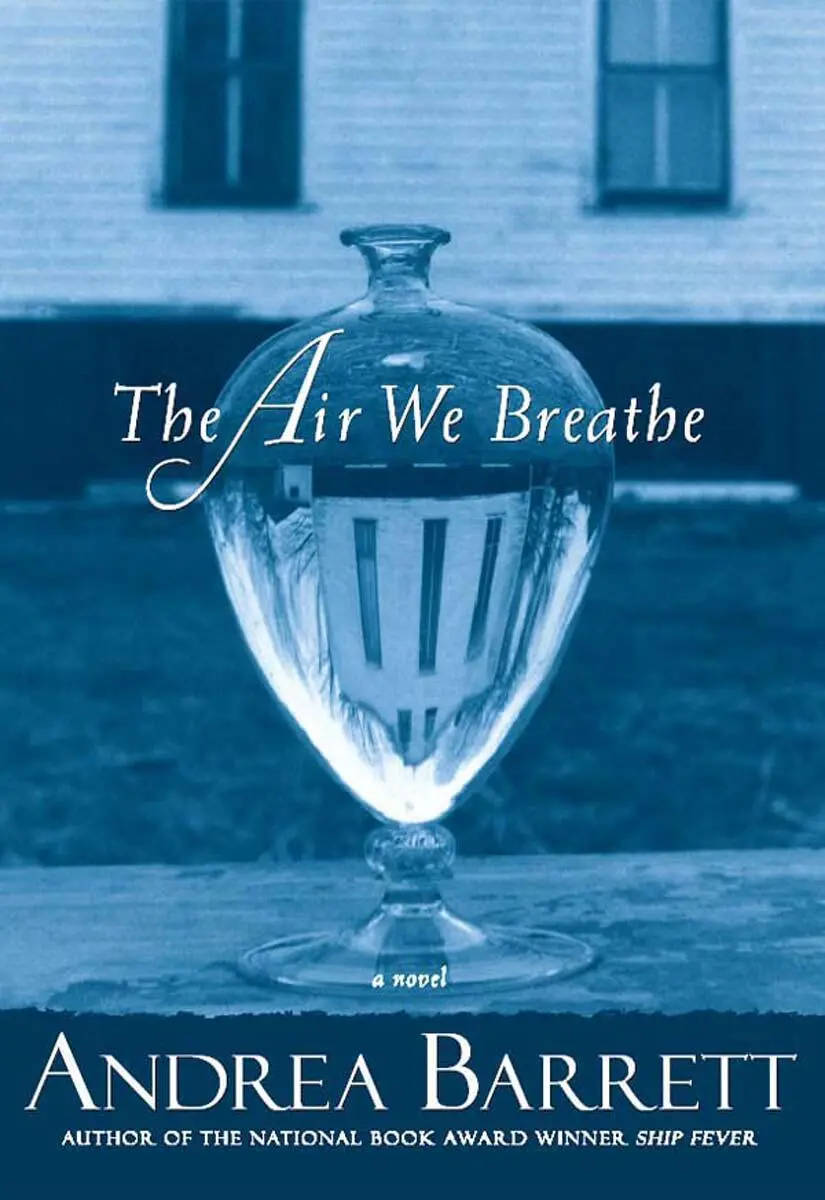
- Название:The Air We Breathe
- Автор:
- Издательство:W. W. Norton & Company
- Жанр:
- Год:2007
- ISBN:нет данных
- Рейтинг книги:3 / 5. Голосов: 1
-
Избранное:Добавить в избранное
- Отзывы:
-
Ваша оценка:
The Air We Breathe: краткое содержание, описание и аннотация
Предлагаем к чтению аннотацию, описание, краткое содержание или предисловие (зависит от того, что написал сам автор книги «The Air We Breathe»). Если вы не нашли необходимую информацию о книге — напишите в комментариях, мы постараемся отыскать её.
) by the National Book Award-winning author of
. In the fall of 1916, America prepares for war — but in the community of Tamarack Lake, the focus is on the sick. Wealthy tubercular patients live in private cure cottages; charity patients, mainly immigrants, fill the large public sanatorium. Prisoners of routine, they take solace in gossip, rumor, and — sometimes — secret attachments. But when the well-meaning efforts of one enterprising patient lead to a tragic accident and a terrible betrayal, the war comes home, bringing with it a surge of anti-immigrant prejudice and vigilante sentiment.
The Air We Breathe — читать онлайн бесплатно полную книгу (весь текст) целиком
Ниже представлен текст книги, разбитый по страницам. Система сохранения места последней прочитанной страницы, позволяет с удобством читать онлайн бесплатно книгу «The Air We Breathe», без необходимости каждый раз заново искать на чём Вы остановились. Поставьте закладку, и сможете в любой момент перейти на страницу, на которой закончили чтение.
Интервал:
Закладка:
Not simply a turkey but also a ham, cornbread stuffing with oysters and mushrooms, clear soup with homemade dumplings, roasted squash glazed with maple syrup, potatoes mashed and scalloped and baked, heaping dishes of corn and carrots, tiny onions creamed and dusted with nutmeg, three kinds of pie. Even with the whole family eating steadily, all five brothers and sisters along with Sally’s and Helen’s husbands and babies, the food left on the table when they were done would have fed another household. Eudora cooked, served, ate, cleared, washed and dried dishes and put them away as if she didn’t have a job of her own; as if she were still a girl.
In between chores she talked with Ernest, home from New York for the holiday, and with Sally, whom she hadn’t seen in weeks. By the time she finished in the kitchen everyone had moved toward the sofas and armchairs, preparing for the naps that followed her family’s holiday feasts as reliably as dessert followed the roast. One by one they nodded off, until the house felt as dead as the Northview Inn, which was slumping into the ground. Once every few months her parents would open the inn’s main door, look at the flies and the holes in the floors, bite their lips, and then do nothing with what they’d inherited. When Eudora’s father, who’d known the place in its heyday, spoke about the guests with their guns and their guides, his uncle presiding over a dining room filled with sportsmen from New York and Boston, it was as if not thirty but a thousand years had passed.
When her father woke — he was snoring now — he would, she knew, return to his taxidermy workshop, hinting how much he could use her help. She’d give in and sit with him, watching the whole night disappear as the day already had. Rebelliously, she hopped on her bicycle and headed away from the lake and her family, toward Mrs. Martin’s house. Naomi might, she calculated, have finished serving dinner herself and be free for an hour or two.
It was colder outside than she expected; she’d forgotten her gloves. She passed Eugene’s garage, the firehouse, and the telephone exchange where, in an unused room two floors above her, the amateur historian wrote the pages from which we were always absent. She passed the library, the theater, two of the churches, the bank, and the electric light company. Climbing the gentle slope of the hill, she passed the rows of cottages, each tier larger and more elegant. At Mrs. Martin’s house, which was near the top, she stopped and dismounted, leaning her bicycle against the tall hedge.
Up the neatly tended pathway, up the steps to the paneled door. She tapped a brass dolphin against the plate and considered the enormous wreath, dripping with gilded pinecones and berries and gold bows stiffened with wire, that had just been hung. Stuffed chickadees with bendable wire legs and feet — her father’s work, she saw, as clearly his as the owl in the solarium at Tamarack State was the work of Uncle Ned — dotted the branches. What would it be like to live where her family wasn’t in evidence everywhere? Again she dropped the dolphin against the plate.
To her dismay, Mrs. Martin herself opened the door, with the discouraging news that Naomi was in the kitchen, making cinnamon rolls for tomorrow’s breakfast and busy — absolutely busy — for the rest of the day. Stepping outside and pulling the door shut behind her, she added, “But it’s just as well; I’ve been wanting to talk to you.” She crossed her arms over her chest. “Cold, isn’t it?”
Then why not ask me in? Eudora thought. Gesturing toward her bicycle, she said, “The exercise keeps me warm.”
“Good,” Mrs. Martin replied. “Because I know it’s convenient for you to accept a ride home with Naomi on Wednesday evenings, when she’s bringing Mr. Fairchild back from the sanatorium, but I was hoping you could get home under your own power for a while.”
“Of course I could, but—” Eudora said, and then stopped, realizing that Naomi hadn’t told her mother about their driving lessons.
“I want Naomi to have some time alone with Mr. Fairchild,” Mrs. Martin continued. “When they can talk without interruption.” Blandly, as if there were nothing odd about what she’d just said, she added, “How are your parents?”
“I don’t interrupt them,” Eudora said. “Why would I? My parents are fine.”
“Good,” Mrs. Martin repeated. “I thought your father was looking a trifle run-down.” Gazing steadily at Eudora, she added, “Miles is a wealthy man. A kind one too. I see the way he looks at Naomi. If she gave him a little encouragement — surely you want what’s best for her? You’ve always been her friend.”
“I still am,” Eudora said stiffly, stepping back. “Would you tell her I came by?”
She pulled her bicycle from the hedge and pedaled down the hill and back along the village streets, wondering, as she overshot the turn to her house and continued westward, how Mrs. Martin could understand so little about her own daughter. Always she seemed to miss what was most obvious, including the fact that in the past two years, Naomi had come close to running away half a dozen times.
Ahead Baker’s Ridge loomed, black against the graying sky and already casting the village into shadow. Eudora pedaled faster, remembering how Mrs. Martin’s clumsiness had helped bring her and Naomi together. Although her aunt employed Naomi’s mother, they might not have become real friends if she hadn’t found Naomi weeping stormily one afternoon under a spruce near her Aunt Elizabeth’s house. Mrs. Martin had visited the school that day, delivering one of her lectures on home economics, and at first Eudora suspected that Naomi was weeping with annoyance; the lecture had been very dull. Instead, Naomi confessed that her mother’s newest boarder, a Mr. Elliot, had that morning pulled her into his bathroom as she’d dropped off his clean towels and then stood there, beaming and naked.
“And then,” Naomi had said — but Eudora, transfixed by that image, had heard nothing for a minute.
“It’s not as if this is the first time either,” Naomi added. “Other men do things like this, like they think their weekly fee covers me along with their meals. Whenever I try to tell my mother she claims I’m exaggerating, or if someone really did say or do something he didn’t mean it, it was just a passing weakness brought on by fever.”
“They touch you?” Eudora said. They’d been, she thought now, thirteen and fourteen then.
Naomi shook her head impatiently. “They don’t really do anything — they’re so feeble, most of them, I could push them over if I had to. But just listening to them, and the way their eyes crawl over me when I’m serving meals — and then this.” She leaned back against the tree and gestured toward the house. “I was going to see if your aunt would talk to my mother about it.”
“Maybe,” Eudora said, thinking of her aunt’s firmness with her housekeepers, “that’s not the best idea.”
Instead she’d talked to Naomi herself, the two of them circumnavigating the lake as Naomi complained about her mother and her chores at the house. Eudora, who had similar chores, was surprised to learn how much Naomi disliked them. At her Aunt Elizabeth’s cure cottage, where she helped out after school and on weekends, she’d found that she liked being useful. Her oldest sister, Helen, had married and had twin daughters by then; Ernest had already moved to New York and Eugene had started sharing quarters above the garage with his two friends. Sally was about to move to Plattsburgh, leaving her — always the baby, the one everyone forgot — with no one to talk to and nothing to do. Her father stayed in the shop out back, struggling to keep up with the changing fashions in taxidermy, always a few years behind. Her mother lived in the kitchen, cooking as if all seven of them were gathered at the table, surprised each time the dinner hour brought only Eudora and, blinking and covered with sawdust, her father. Only at her Aunt Elizabeth’s did she feel she was learning something new each day.
Читать дальшеИнтервал:
Закладка:
Похожие книги на «The Air We Breathe»
Представляем Вашему вниманию похожие книги на «The Air We Breathe» списком для выбора. Мы отобрали схожую по названию и смыслу литературу в надежде предоставить читателям больше вариантов отыскать новые, интересные, ещё непрочитанные произведения.






Обсуждение, отзывы о книге «The Air We Breathe» и просто собственные мнения читателей. Оставьте ваши комментарии, напишите, что Вы думаете о произведении, его смысле или главных героях. Укажите что конкретно понравилось, а что нет, и почему Вы так считаете.