Andrea Barrett - The Air We Breathe
Здесь есть возможность читать онлайн «Andrea Barrett - The Air We Breathe» весь текст электронной книги совершенно бесплатно (целиком полную версию без сокращений). В некоторых случаях можно слушать аудио, скачать через торрент в формате fb2 и присутствует краткое содержание. Год выпуска: 2007, Издательство: W. W. Norton & Company, Жанр: Современная проза, на английском языке. Описание произведения, (предисловие) а так же отзывы посетителей доступны на портале библиотеки ЛибКат.
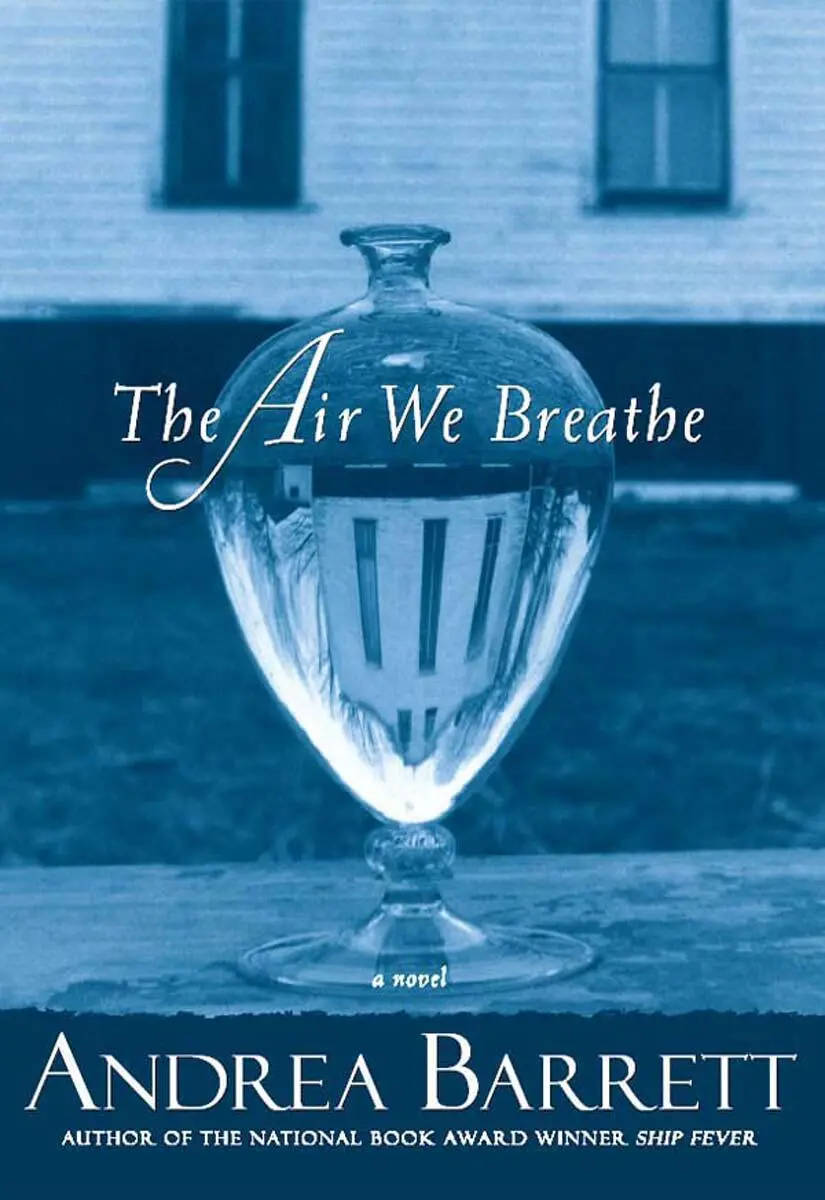
- Название:The Air We Breathe
- Автор:
- Издательство:W. W. Norton & Company
- Жанр:
- Год:2007
- ISBN:нет данных
- Рейтинг книги:3 / 5. Голосов: 1
-
Избранное:Добавить в избранное
- Отзывы:
-
Ваша оценка:
The Air We Breathe: краткое содержание, описание и аннотация
Предлагаем к чтению аннотацию, описание, краткое содержание или предисловие (зависит от того, что написал сам автор книги «The Air We Breathe»). Если вы не нашли необходимую информацию о книге — напишите в комментариях, мы постараемся отыскать её.
) by the National Book Award-winning author of
. In the fall of 1916, America prepares for war — but in the community of Tamarack Lake, the focus is on the sick. Wealthy tubercular patients live in private cure cottages; charity patients, mainly immigrants, fill the large public sanatorium. Prisoners of routine, they take solace in gossip, rumor, and — sometimes — secret attachments. But when the well-meaning efforts of one enterprising patient lead to a tragic accident and a terrible betrayal, the war comes home, bringing with it a surge of anti-immigrant prejudice and vigilante sentiment.
The Air We Breathe — читать онлайн бесплатно полную книгу (весь текст) целиком
Ниже представлен текст книги, разбитый по страницам. Система сохранения места последней прочитанной страницы, позволяет с удобством читать онлайн бесплатно книгу «The Air We Breathe», без необходимости каждый раз заново искать на чём Вы остановились. Поставьте закладку, и сможете в любой момент перейти на страницу, на которой закончили чтение.
Интервал:
Закладка:
Raw-looking stumps where the three middle fingers had been amputated; open sores on the little finger, which was also missing its top joint; dark thickened patches, like calluses, in places where no callus would ever be. On the back of the hand and thumb, Eudora saw crusty growths, but nothing anywhere resembling normal skin.
“For years,” Irene said, looking down at her hand, “I corresponded with a woman in San Francisco, another early experimenter with X-rays. Before I came here I learned that her hands, which had been very bad for some time, had gotten much worse and that she had a kind of cancer. She had her fingers amputated, then her left hand at the wrist, then at the elbow, and finally at the shoulder, but by then the cancer had already spread to the nodes in her armpit. A year later she died. Almost the same thing happened to Mr. Edison’s assistant. The last time I saw him he’d lost his whole left hand. Before he died the doctors had taken one arm off at the shoulder, the other at the elbow.”
She looked down at her ungloved hand as Eudora tried to imagine the whole thing gone, and then the arm: impossible. “Not long after I came here the trouble with my own hands began,” Irene continued. “I had first my index finger and then these other two amputated. It’s happened to so many of us — doctors, people who manufactured and tested the tubes, other technicians: how can I complain? I can still remember the first exhibition of the rays I saw, at a county fair. A line of us, walking one at a time before the open fluorescent screen: on one side people clothed in their flesh, on the other the bones revealed. After that, all I wanted to do was learn how to control those rays, so that I’d be able to see inside.”
“Does it hurt?” Eudora asked.
“More than you can imagine,” Irene said calmly. “It keeps me from sleeping. At night I walk around my room with one hand or the other held up above my head, wrapped in wet bandages or slathered with different ointments. Even Dr. Petrie doesn’t know what will happen next, what part will have to come off.”
She peered sharply at Eudora and then reached for her glove, adding, “But we never do know what will happen to us, really — and nothing like this will happen to you, the equipment is perfectly safe now. That’s what the lead lining in the tube holder is for. And the diaphragm. Why don’t you move over here and take a turn yourself?”
Following her careful instructions, Eudora exposed a film of Irene’s chest. They skipped dinner, nibbling instead on some chocolate and crackers Irene kept in a drawer, and then Irene said that, although it was late, they might go into the darkroom and develop the images. When they were done they inspected the films with Irene’s viewing box.
“Hold the narrow part up to your eyes,” Irene said.
Obediently, Eudora grasped the handle and brought the black pyramid over her face. The bottom, covered by a sheet of glass, formed a rectangle eleven by fourteen inches, the same size as their largest sheets of film. The top narrowed and then flared out again into a shape like an eye mask, its rim padded with black fur that tickled her skin.
“Now press the film against the glass, and face the electric light.”
At first, as Eudora turned her head and the box uncertainly, she saw nothing. Then she found the light and the film lit up, the shadows varied and subtle. Sternum, diaphragm, and encircling ribs, also a thickened central area, which meant nothing to her inexperienced eyes. When she asked what that was, Irene took the box and held it to her own face. Then Eudora saw what she’d looked like: a chimera with a woman’s body and a woman’s mouth, eyeless above a flared black snout that shimmered and refracted light and seemed, as it moved this way and that, to be sniffing for food.
Irene returned the box. “Look at that thickened area again,” she said. “Can you see it?”
“Yes.”
“Good — now follow my hand.” Reaching around the bottom of the box and into the illuminated field, her finger moving like a submarine through the shadows, Irene pointed out Eudora’s backbone and the outlines of her heart.
After Eudora had studied the film a bit longer, Irene took it away and replaced it with the image of her own chest. “See the faint shadows clustered between the ribs? Those are tubercular scars, from when I was sick; that’s a classic presentation.”
Again Eudora inspected the image closely. After a few minutes she removed that film from the glass, replaced it with the first one, and then exchanged them again, memorizing the differences.
“You seem to have a gift for this,” Irene said. “Do you know who Madame Curie is?”
Eudora nodded. “The Frenchwoman who discovered radioactivity with her husband.”
“Polish,” Irene said. “But the Curies have long been heroes of mine, especially Marie. I’ve always remembered what she said about coming into her workroom at night and seeing her jars glowing on the shelves. That’s what made me study chemistry — I wanted my own life to be like that. Hard work but then, afterwards, something I’d made glowing in the dark.”
Not once during the evening had Eudora thought of the metal hexagon lying on her coat, but now she remembered what Leo had said about his own years studying chemistry. For a second she wished he were here with her, listening to Irene.
With her gloved hand Irene tapped the image of Eudora’s chest and said, “In the end, though, I decided to stick with Roentgen’s rays. They’re mysterious and powerful enough for me.”
“For me too,” Eudora echoed, thinking: Compared to what?
“Madame Curie has embraced the X-rays now,” Irene said. “Even though she never studied them before. When the war started, she taught herself what she needed. Then she got various manufacturers to donate parts, and got rich women to give her their automobiles, and she turned them into mobile radiological units. Little curies, the soldiers call them. Each one is fully equipped, the dynamo driven by the automobile’s motor. She takes them to the field hospitals and helps the surgeons locate bullets and shell fragments. The soldiers think she’s a saint. When she can, she leaves fixed radiological stations behind. And she trains technicians, scores of them — she’s trained over a hundred people so far.”
“Who?” Eudora said, struck by the idea.
“Anyone willing,” Irene said. “Nurses, of course, and engineers — but also soldiers and others with only an elementary education. Photographers make excellent X-ray technicians, they’re already familiar with glass plates and film and how to use a darkroom and develop the pictures.”
“Could I do that?” Eudora asked.
“Anyone could,” Irene repeated.
5
SOMETIMES WE SPLIT into factions, half of us disagreeing with the other half over how to relate these events: should this come first or that, should this be emphasized more, or less?
Show them, one side insists. Morris, Edith, Denis. Before they’re gone.
We can’t, the rest of us argue.
Why not? It would mean more, if they stood out .
Less. It would mean less.
Eventually we reach some agreement and move on. We can’t show everyone, and some — Irene was long overdue — have to show up before others. Days and nights that aren’t interesting, we skip. We do our best.
Skip our fifth session then, which was only Miles saying more of the same. And although we love our movies — we don’t have much to look at here, beyond our own rooms, our slivers of porch, the walkways connecting the buildings, and the view which, although beautiful, is hemmed tightly by mountains and trees — skip November’s movie night, during which there were no raging quarrels and no new romances. Skip that weekend, too, which, without the gossip that usually followed a movie night, was unusually dull. By Monday we were already back to our routine, lying cold and damp on the porches. Reading, most of us: plodding through whatever we’d found, longing for something better. Ephraim looked up from the pages of the novel he’d been struggling with for a week and said out loud what he’d meant only to think: “Why would someone write this?” Beyond the railing, branches drooped.
Читать дальшеИнтервал:
Закладка:
Похожие книги на «The Air We Breathe»
Представляем Вашему вниманию похожие книги на «The Air We Breathe» списком для выбора. Мы отобрали схожую по названию и смыслу литературу в надежде предоставить читателям больше вариантов отыскать новые, интересные, ещё непрочитанные произведения.







Обсуждение, отзывы о книге «The Air We Breathe» и просто собственные мнения читателей. Оставьте ваши комментарии, напишите, что Вы думаете о произведении, его смысле или главных героях. Укажите что конкретно понравилось, а что нет, и почему Вы так считаете.