Marcos Giralt Torrente - Paris
Здесь есть возможность читать онлайн «Marcos Giralt Torrente - Paris» весь текст электронной книги совершенно бесплатно (целиком полную версию без сокращений). В некоторых случаях можно слушать аудио, скачать через торрент в формате fb2 и присутствует краткое содержание. Год выпуска: 2014, ISBN: 2014, Издательство: Hispabooks, Жанр: Современная проза, на английском языке. Описание произведения, (предисловие) а так же отзывы посетителей доступны на портале библиотеки ЛибКат.
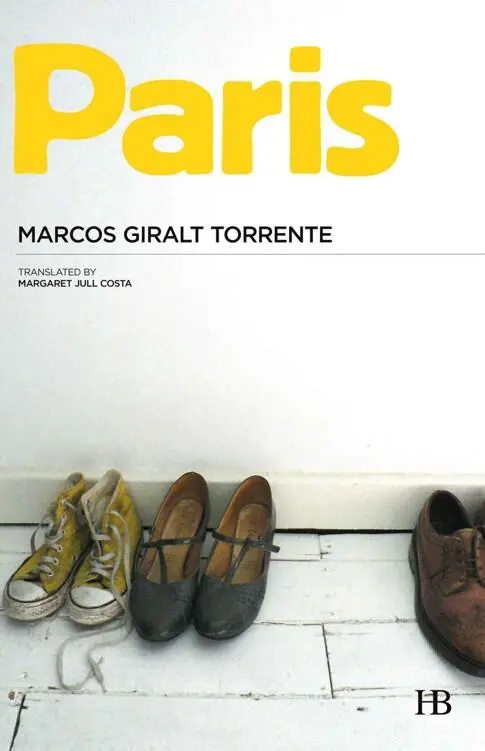
- Название:Paris
- Автор:
- Издательство:Hispabooks
- Жанр:
- Год:2014
- ISBN:9788494228452
- Рейтинг книги:5 / 5. Голосов: 1
-
Избранное:Добавить в избранное
- Отзывы:
-
Ваша оценка:
Paris: краткое содержание, описание и аннотация
Предлагаем к чтению аннотацию, описание, краткое содержание или предисловие (зависит от того, что написал сам автор книги «Paris»). Если вы не нашли необходимую информацию о книге — напишите в комментариях, мы постараемся отыскать её.
Paris — читать онлайн бесплатно полную книгу (весь текст) целиком
Ниже представлен текст книги, разбитый по страницам. Система сохранения места последней прочитанной страницы, позволяет с удобством читать онлайн бесплатно книгу «Paris», без необходимости каждый раз заново искать на чём Вы остановились. Поставьте закладку, и сможете в любой момент перейти на страницу, на которой закончили чтение.
Интервал:
Закладка:
At that moment, while still filling the doorway, he stood slightly to one side, and the space created was immediately occupied by a man who emerged from behind the right-hand side of the doorframe. He was a man of about sixty, bald and very short. His clothes, although conventional, were shabbier. He was wearing a gray, striped overcoat and brown sneakers. Like his companion, his face wore a smile, but there was, I thought, something timid and embarrassed about that smile, as if he were there against his will. He somehow inspired confidence, though, and seemed to me capable of keeping the other man in order.
“He’s with me,” said the man in the black leather jacket. “He’s a friend of your father’s, too.”
Perhaps what tempted me was that unexpected reference to my father, combined with the more reassuring appearance of the older man. Whatever the truth of the matter, after a brief moment during which I hesitated as to whether or not to let them in, I stood involuntarily to one side, a gesture that the younger man immediately interpreted as the invitation I had not intended. It was of little use for me to repeat in a firm voice that my mother was not at home. The younger man had already come in through the door and was walking down the hallway toward the living room. Meanwhile, the older man remained where he was, waiting for me to give him the permission his friend had not felt he needed. I must have taken a while to react, because, with one long stride, he, too, entered the apartment, and pausing by my side only long enough to whisper “Don’t worry, it’s all right,” he followed the younger man down the hallway. I closed the door and walked after them; the first man was already much farther ahead, about to turn the corner into the living room, while the second man was slower, trying unsuccessfully to let me pass. It seemed to me that they knew where they were going, and while I was wondering whether to call the doorman and ask him to come to my aid, I thought for a moment that they must know the apartment. As soon as the younger man went into the living room, however, it was clear that he did not. He was standing in the middle of the room, looking around him, pretending to study everything with great interest.
“Hmm, very nice,” he said, shooting a knowing, ironic glance at his companion, who was standing alongside me in the doorway. “Nobody ever told me your parents lived so well.”
“My father doesn’t live here,” I explained. And repeating what I’d said earlier and at the same time lying slightly, “My mother isn’t in, and I don’t know when she’ll be back. If you’d like to leave a phone number. .”
“It doesn’t matter, we’re in no hurry. We can chat while we wait.”
I averted my gaze. In his voice there was a note of aggression, which he emphasized by fixing me with his eyes, and so I chose to say nothing. I was feeling anxious now and hoping desperately that my mother would arrive soon.
“May I sit down?” he asked, indicating one of the large armchairs facing the sofa, where every night, before we went to bed, my mother and I would sit and talk a little and watch television. I still did not answer, and he sat down anyway, while the other man made no attempt to imitate him. After making himself comfortable, he stretched out his legs, took a cigarette out of his inside jacket pocket, and lit it with a silver butane lighter. He took a long drag on the cigarette, held it between his fingers a few inches from his mouth and, with a gesture of barrack-room coarseness, blew on the lit end to make it glow. Only then did he speak to me again. I was looking down at him, absorbed in thought and still frightened.
“Sit down, don’t be afraid. Your parents are going to be really happy to see us. Go on, sit down.”
He took another drag on his cigarette, and for a moment, silence reigned again. This made his command seem still more of an imperative, and I had no option but to obey. The older man, who hadn’t said a word since he came in, remained standing, resting his hands on the back of the empty armchair next to the one occupied by his companion.
“That’s better, I don’t want to have to look up every time I speak to you,” he added after blowing out the smoke from his cigarette and watching as I walked over to the sofa. “Do you want to talk to me? No, of course not,” he said at once, without even leaving a rhetorical pause. “Why should you, when you don’t even know who I am?”
On that occasion, he did pause. Sitting on the edge of the sofa, I looked into his eyes, and avoiding answering a question to which there was no answer, and purely so as not to appear weak or cowardly, I asked if he’d like a drink of something, a glass of water or a Coke. Then I looked again at his companion to extend the offer to him and, in passing, gauge his mood. He had taken off his overcoat to reveal a tight-fitting, polka-dot shirt, and he winked at me and shook his head.
“I don’t suppose your parents will have talked to you about me,” the other man went on, as if, unlike his friend, he had not heard my offer. “That would be too much to ask. Mind, they never mentioned you, either. Before I got here and saw you open the door, I didn’t even know you existed. That’s normal, I suppose. Things were different then, you didn’t matter.”
At this point, he placed his cigarette in the ashtray on the table immediately in front of him and began to take off his jacket, pulling at the sleeves from behind. When he had done this, he turned and draped the jacket over the back of the armchair. His shirt matched his denim jeans, and on the collar were a couple of embroidered roses. While he was leaning forward again to retrieve his cigarette, I noticed his boots. They had metal-tipped toes, and the heels sloped slightly inwards. I listened hard, in the hope of hearing some sound that would announce my mother’s arrival, but all I could hear was the loud, stertorous breathing of the other man, the breathing of a former smoker whom the slightest physical effort — climbing the stairs or simply standing up — seemed to bring almost to death’s door. As if he had read my thoughts and needed to pretend no longer, the older man took advantage of that silence to leave his post and come wearily over to sit by my side. This time, he did not consider it necessary to ask my consent.
“No,” his friend went on, “I haven’t seen them in ages. I don’t live in Madrid, although as you’ve probably guessed from my accent, this is where I was born, but I don’t live here any more. I have business interests elsewhere, and it’s becoming increasingly difficult to find the time to visit. I’d like to now and again, but I can’t. It would be good, though, even if only to catch up with old friends. Otherwise, well, you know how it is, they forget all about you. Like your father — he’s forgotten me. We were such friends before, but now he doesn’t even want to know me. He hasn’t behaved very well, your father. But I can see that you’re different. You’re polite, you offer your visitors something to drink. Thank you for that. Do you have anything else apart from Coke? Beer or wine, perhaps?”
No, I said, I didn’t.
“Never mind. If I’m going to fill myself up with something bubbly, I’d rather make it worth my while.”
He stubbed out his still-unfinished cigarette and leaned back. He rested his head on one of the wings of the chair and crossed his legs. He had stopped smiling now and was speaking in a deliberately ambiguous manner, as if trying to say something while simultaneously not saying it. He took no notice of his friend, he didn’t even look at him, and I wondered if this wasn’t just part of a game, if they had perhaps divided up the roles the way the police do when they interrogate someone. I immediately dismissed this idea, however, because I thought I noticed a touch of genuine impatience in the older man, as if he really didn’t like the tone adopted by his companion.
Читать дальшеИнтервал:
Закладка:
Похожие книги на «Paris»
Представляем Вашему вниманию похожие книги на «Paris» списком для выбора. Мы отобрали схожую по названию и смыслу литературу в надежде предоставить читателям больше вариантов отыскать новые, интересные, ещё непрочитанные произведения.










Обсуждение, отзывы о книге «Paris» и просто собственные мнения читателей. Оставьте ваши комментарии, напишите, что Вы думаете о произведении, его смысле или главных героях. Укажите что конкретно понравилось, а что нет, и почему Вы так считаете.